BrightStar

Ver Todos los Events

Descubre encuentros conscientes

events

Yoga
Meditation
Breathwork
Qigong
Tai Chi
Sacred Music
World Music
Medicine Music
Sound Healing
Ecstatic Dance
Destinos Populares
BaliSedonaLos AngelesCosta RicaNew YorkSan FranciscoAustinMiamiJoshua TreeTulum
Ver Todas las CategoríasVer Todos los Destinos

Explorar Todas las Características

Herramientas poderosas para hacer crecer tus eventos

Características de la Plataforma

Precios Dinámicos Inteligentes
Categorías de Entradas
Asientos Asignados
Recuperación de Carritos
Recuperación de Visitantes
Donaciones y Escala Móvil
Motor de Afiliados
Escáner de Entradas
Códigos de Cupón
Preguntas Personalizadas
Compartir Entradas
Ventas Adicionales
Análisis e Informes
Secuencias de Email
Lista de Espera / Notificar / Recordar
Personas y Lugares
Artists & TeachersEvent OrganizersVenues & StudiosKnowledge BaseGlossaryInspiration
Ver Todas las CaracterísticasSobre Nosotros
PreciosBlog
Language
Saved events
Ver Todos los Eventos

events

YogaMeditationBreathworkQigongTai ChiSacred MusicWorld MusicMedicine Music

Destinos Populares

BaliSedonaLos AngelesCosta RicaNew YorkSan Francisco

Personas y Lugares

Artists & TeachersEvent OrganizersVenues & StudiosKnowledge BaseGlossaryInspiration

Características de la Plataforma

Precios Dinámicos InteligentesCategorías de EntradasAsientos AsignadosRecuperación de CarritosRecuperación de VisitantesDonaciones y Escala MóvilMotor de AfiliadosEscáner de EntradasCódigos de CupónPreguntas PersonalizadasCompartir EntradasVentas AdicionalesAnálisis e InformesSecuencias de EmailLista de Espera / Notificar / Recordar
Ver Todas las CaracterísticasSobre Nosotros
PreciosBlog
Iniciar sesiónBuscadoresCreadores
  • Ver Todos los Eventos
  • Para Buscadores
  • Yoga
  • Meditación
  • Respiración consciente
  • Qigong
  • Tai chi
  • Música sagrada
  • Música del mundo
  • Música medicina
  • Sanación con sonido
  • Danza extática
  • Retiros
  • Talleres
  • Todas las Categorías →
  • Bali
  • Sedona
  • Los Angeles
  • Costa Rica
  • Tulum
  • Byron Bay
  • San Francisco
  • Austin
  • New York
  • San Diego
  • Denver
  • Seattle
  • Portland
  • Miami
  • Todas las Ciudades →
  • Join the Movement
  • Why we list
  • Sell Globally
  • Para Creadores
  • Para equipos
  • Para Escritores
  • Para Maestros
  • Para Artistas de Kirtan
  • Para Estudios
  • Para Festivales
  • Para Centros de Retiros
  • Para Organizaciones Sin Fines de Lucro
  • Embajador de Marca
  • Entradas sin costo
  • Elevate
  • Amplify
  • Red de +500K Compradores
  • Recuperación de Carritos
  • Precios Dinámicos Inteligentes
  • Categorías de Entradas
  • Eventos Recurrentes
  • Asientos Asignados
  • Motor de Afiliados
  • Lista de Espera / Notificar
  • Escáner de Entradas
  • Widget Embebido
  • Sindicación de eventos
  • Centro de mensajes
  • Integraciones
  • Reportes
  • Todas las Características →
  • Acerca de
  • El ecosistema
  • Blog
  • Glosario
  • Inspiración
  • Centro de Ayuda
  • Contacto
  • Documentación API
  • Recursos de Marca
  • Carreras
  • Prensa
  • Términos de Servicio
  • Política de Privacidad

Eventos

  • Ver Todos los Eventos
  • Para Buscadores
  • Yoga
  • Meditación
  • Respiración consciente
  • Qigong
  • Tai chi
  • Música sagrada
  • Música del mundo
  • Música medicina
  • Sanación con sonido
  • Danza extática
  • Retiros
  • Talleres
  • Todas las Categorías →

Destinos

  • Bali
  • Sedona
  • Los Angeles
  • Costa Rica
  • Tulum
  • Byron Bay
  • San Francisco
  • Austin
  • New York
  • San Diego
  • Denver
  • Seattle
  • Portland
  • Miami
  • Todas las Ciudades →

Para Creadores

  • Join the Movement
  • Why we list
  • Sell Globally
  • Para Creadores
  • Para equipos
  • Para Escritores
  • Para Maestros
  • Para Artistas de Kirtan
  • Para Estudios
  • Para Festivales
  • Para Centros de Retiros
  • Para Organizaciones Sin Fines de Lucro
  • Embajador de Marca
  • Entradas sin costo
  • Elevate
  • Amplify

Características

  • Red de +500K Compradores
  • Recuperación de Carritos
  • Precios Dinámicos Inteligentes
  • Categorías de Entradas
  • Eventos Recurrentes
  • Asientos Asignados
  • Motor de Afiliados
  • Lista de Espera / Notificar
  • Escáner de Entradas
  • Widget Embebido
  • Sindicación de eventos
  • Centro de mensajes
  • Integraciones
  • Reportes
  • Todas las Características →

Empresa

  • Acerca de
  • El ecosistema
  • Blog
  • Glosario
  • Inspiración
  • Centro de Ayuda
  • Contacto
  • Documentación API
  • Recursos de Marca
  • Carreras
  • Prensa
  • Términos de Servicio
  • Política de Privacidad
BrightStar
Descarga la app
Descárgalo en elApp StoreDisponible enGoogle Play
© 2026 BrightStar. Todos los derechos reservados.
Inspiration

Change Your State Instantly: A Therapist's Smile Drill

Mindvalley
Mindvalley
Nov 5, 2026
7 min de lectura

De Mindvalley

Ver · 7

Somewhere in the first minute of a two-and-three-quarter-minute video, a therapist standing in front of a live room asks a hundred or so strangers for their biggest smile. Not a polite one. A real one. The room groans. A few people pull faces that the speaker, with obvious delight, describes as "more like a death threat than a smile." Then comes the bit most viewers won't expect: on a count of three, everyone is asked to turn to the person on either side of them, grin, and make a noise. The video, posted on the Mindvalley channel under the title "Try This To Change Your State Instantly," rests on one idea that fits in a sentence: body and mind are wired into a single feedback loop, so you can reach the mind by working through the body. Stand up straight, smile, and the state you want may follow. The argument is short. The demonstration is loud. It rewards a closer look.

Leer · 6 secciones

What is the physiology-psychology loop the speaker describes?

The speaker opens not with a gimmick but with a clinical observation drawn from years of practice. Nobody, the therapist says, walks into the office and presents depression by standing tall. The physiology of depression looks a particular way: people "look down" and are "slumped." Confident people tend to look up and carry themselves more upright. The point is that posture is not just a readout of mood. It is part of the mood's machinery.

"The physiology and the psychology are talking to each other all the time. They're in a cybernetic loop, right? One's affecting the other." (the speaker, in the Mindvalley video, 2026)

The speaker runs the loop in both directions, which is what makes the idea more than a pep talk. Attack thoughts, the kind that race through a stressed mind, make the body tense at the same moment. The reverse is familiar too: a massage relaxes the body and the mind "slows down." If the body can carry stress into the mind, the argument goes, it can carry something else in just as readily. The exercise is an attempt to point that channel in a deliberate direction.

That is the concept worth holding onto even if you skip the rest. Most advice about changing your mood starts in the head: reframe, reassure, argue yourself out of the spiral. This video starts at the other end, with the face and spine, and treats them as a lever you can pull on purpose.

Does smiling really release serotonin, and should you trust that claim?

The speaker's mechanism is simple: "when you smile, you release more serotonin, more happy neurotransmitters," and, the speaker adds, "even when you're only pretending to smile." This is the weakest link in the video, and it deserves to be named as such. The clip offers no study, no measurement, and no citation. What it offers is a practitioner's explanation, delivered quickly and with conviction, to a room that is mostly laughing.

So treat the neurochemistry as the speaker's framing, not as settled evidence. The part of the argument that does not depend on the chemistry is more modest and more testable: posture and facial expression are things you can set deliberately, and you can notice whether they shift how you feel in the next thirty seconds. You do not have to accept the serotonin story to run the experiment. You only have to be willing to look at what happens afterward.

Why is "silly, but not stupid" the key phrase?

The phrase is repeated twice, and the repetition is doing real work. The speaker first sets up the drill: "we're going to do something that's silly, but it's not stupid." Later, after the room has been asked to grin at strangers and make a noise, the speaker circles back: "Now I said this was silly, but it's not stupid." The line grants the audience permission to look ridiculous. It admits the exercise is absurd and then insists the absurdity is beside the point.

That is a sharp piece of teaching design. Self-consciousness is often the thing that stops people from trying a practice like this at all. By naming the embarrassment in advance and laughing at it alongside the room, the speaker lowers the cost of participation. The skeptics get acknowledged too. "There's a couple of people here who are going, oh for God's sake, I thought I was coming for a talk on confidence," the speaker says, and then delivers the punchline: "You are the ones who most need to do this." It is a neat reversal. The resistance itself becomes evidence for the case.

There is also a practical, slightly funny extension. The speaker imagines using the same expression in everyday life: in the office, on public transport, where a sustained, calm, upright smile might make a person less approachable to anyone who would bother you. The joke has a serious edge. The speaker is describing a posture that works as a settled default, not just a one-off performance for a stage.

How do you try this before a hard moment?

The video's own description gives the most compact version of the practice: next time you're about to walk into "an interview, a hard conversation, a room full of people you don't know," stand up straight and smile for a few seconds first. The description adds a line that sums up the design: "You'll feel ridiculous. Your nervous system won't care."

A workable version, built only from what the video shows:

  • Stand up straight first. The speaker's contrast is between upright and slumped. Lift the chest and let the head come up before anything else.
  • Smile fully, not politely. The speaker asks for "your biggest smile," not a half-committed one. Commit to it for a few seconds.
  • Hold it briefly, then notice. The video's instruction is a few seconds. Pay attention to whether your thoughts, breathing, or shoulders shift in that window.
  • Use the moments named in the description. An interview, a difficult conversation, or a room of strangers are the situations the video itself points to.
  • If you want the group version, make the noise. The speaker's exercise adds a vocal element and a turn toward a neighbor. Alone, the grin and posture are enough to test.

What does this short video not claim?

The clip is two and three-quarter minutes long, recorded in front of an audience, and it is not a course. It does not explain mechanisms in detail, cite research, or address how a physical gesture fits into a larger plan for emotional health. The speaker's clinical example is depression, and a brief exercise is not a substitute for care if you are struggling with it. Read the video as an invitation to experiment with a single lever, not as a complete account of how mood works.

Within those limits, the video does something rarer than a big promise. It makes a specific, checkable claim about the body and the mind, models the practice in front of a room of people who would rather not do it, and then asks them to do it anyway. That tension, between the absurd and the useful, is the whole piece.

Where to go from here

Start small. Before your next moment that calls for composure, stand up straight, smile fully for a few seconds, and notice what changes in your thoughts and your breath. Keep a note of what you observe, so you can judge the effect for yourself rather than taking the serotonin explanation on trust. Watch the full video if you want the speaker's own pacing and the room's reactions, and treat the loop the speaker describes as a working hypothesis: the body can pull the mind along, and the mind can pull the body down, so it is worth paying attention to both.
Comments

Loading the conversation…

Transcript

[0:00] You know, in all the years I've been

[0:01] working as a therapist, nobody is ever

[0:04] come into my office and gone,

[0:05] I'm depressed, right? Because that is

[0:08] not the physiology of depression, right?

[0:11] People who are depressed, you know, look

[0:12] down and you know, they're slumped and

[0:14] that sort of thing.

[0:15] People when they're confident tend to be

[0:17] more upbeat, you know? They tend to be

[0:19] they they look up they they're more

[0:21] upright in their posture. And what

[0:23] happens is see

[0:25] the the physiology and the psychology

[0:28] are talking to each other all the time.

[0:29] They're in a cybernetic loop, right?

[0:31] One's affecting the other, right? So you

[0:33] know what it's like if you've got attack

[0:35] thoughts going on in your mind, your

[0:36] body will tense up simultaneously. You

[0:39] know when you're really stressed out and

[0:41] someone relaxes you with a massage

[0:44] and your body gets nice and relaxed and

[0:46] your mind

[0:48] slows down

[0:50] and everything feels so nice. And so one

[0:54] of the things we're going to do in just

[0:55] a moment, we're going to do something

[0:56] that's silly, but it's not stupid,

[0:58] right? What we're going to do is we're

[1:00] going to use our physiology to change

[1:02] our state, right? We're going to do this

[1:04] in a very simple way because when do you

[1:06] know when you smile, you release more

[1:08] serotonin, more happy neurotransmitters,

[1:10] right? Yeah, when you smile, even if

[1:12] you're only pretending to smile. So what

[1:14] I'd like you to do right now is show me

[1:17] your biggest smile.

[1:20] Oh, for God's sake.

[1:24] There's a couple of you going

[1:27] It's more like a death threat than a

[1:28] smile.

[1:30] No, no, come on, please. Like

[1:32] Remember

[1:33] we want to we want to generate really

[1:34] positive state. By the way, look, when

[1:36] you get good at smiling, right? You can

[1:38] sit like this in your office all day

[1:40] long

[1:42] and no one will bother you.

[1:43] You can get on public transport, right?

[1:46] And you don't need a newspaper to avert

[1:48] eye contact from the lunatic, right? You

[1:50] know, you you can get you can get on

[1:51] public transport and you be sitting

[1:52] there like this and then the the lunatic

[1:54] gets on

[1:57] And and you just go

[2:00] That's That's They won't come near you.

[2:01] So what we're going to do now is

[2:03] something that's silly, but it's not

[2:05] stupid. In a moment on the count of

[2:06] three, I'd like you to pull your biggest

[2:08] smile and turn and look at the person

[2:10] either side of you whilst making this

[2:13] noise.

[2:16] Now I said this was silly, but it's not

[2:18] stupid. SO

[2:19] ALL RIGHT? ONE, TWO, THREE.

[2:29] You know,

[2:31] there's

[2:33] there's a couple of people here

[2:35] who are going, oh for God's sake, I

[2:37] thought I was coming for a talk on

[2:38] confidence.

[2:39] You are the ones who most need to do

[2:41] this. Right, now the reason we're doing

[2:42] this, we're using our physiology to

[2:44] change our state.

Mindvalley
ArtistMindvalley

Watch more from Mindvalley on YouTube.

Ver perfilSitio web
Explorar temas
Body-mind-loopState-changePosture-and-moodSmiling-practiceMind-body-connection

¿Tienes Preguntas?

Preguntas Frecuentes

The video's speaker, a therapist, says smiling releases serotonin and that this works even when you are only pretending to smile. The clip offers no study or citation for that mechanism, so treat it as the speaker's explanation rather than established evidence. The exercise itself is simple enough to test: smile and stand tall, then notice whether your mood shifts over the next few seconds.
The speaker describes the body and mind as a cybernetic loop, where each affects the other continuously. Attack thoughts make the body tense, and a massage relaxes the body so the mind slows down. The idea is that posture and expression can be used as a lever to shift mental state.
The speaker notes that people who are depressed tend to look down and slump, while confident people tend to look up and carry themselves upright. In the speaker's view, posture is part of how a mood is physically expressed and maintained, not just a signal of it. Standing tall is therefore presented as one way to influence your state.
The video's description suggests standing up straight and smiling for a few seconds before walking into an interview, a difficult conversation, or a room of strangers. Commit to a full smile rather than a half-smile, hold it briefly, and notice any changes in your thoughts, breathing, or shoulders. The speaker frames it as silly but not stupid, meaning the self-consciousness is expected and not a reason to skip it.
The speaker uses the phrase to admit that the drill looks absurd while insisting it has a real purpose. Naming the embarrassment in advance lowers the barrier for people who might otherwise refuse to participate. The phrase is repeated to acknowledge skeptics in the room and to frame the resistance as a reason the exercise matters.
No, the video does not present it that way. The speaker uses depression as an example of how the body reflects mood, but a brief posture and smiling exercise is not a substitute for professional care. If you are struggling with depression, speak to a qualified health professional.

Seguir leyendo

More from Mindvalley

Ver Todo
Beatbox Meditation: Zen Rhythm, Breath and Ichigo Ichie
Inspire

Beatbox Meditation: Zen Rhythm, Breath and Ichigo Ichie

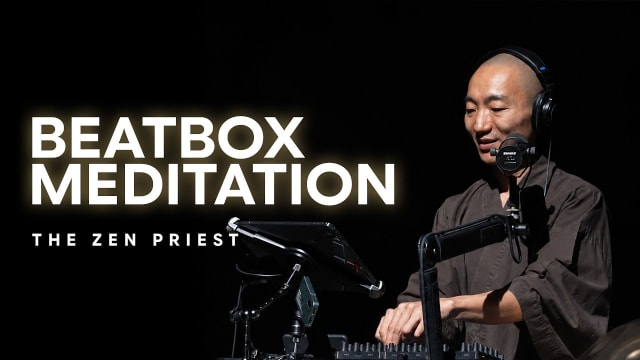
A Zen priest and live-looping artist builds a meditation from voice alone, layering beatbox, breath and Buddhist chant into sound that is ne…

9 min read
Success Meditation: Celebrating the Steps Along the Way
Inspire

Success Meditation: Celebrating the Steps Along the Way

Marie Diamond's guided success meditation releases old setbacks, then moves through colour-coded stages. Its sharpest idea: celebrate the st…

8 min read
Why Arguing Feeds the Pain Body and How to Stop It
Inspire

Why Arguing Feeds the Pain Body and How to Stop It

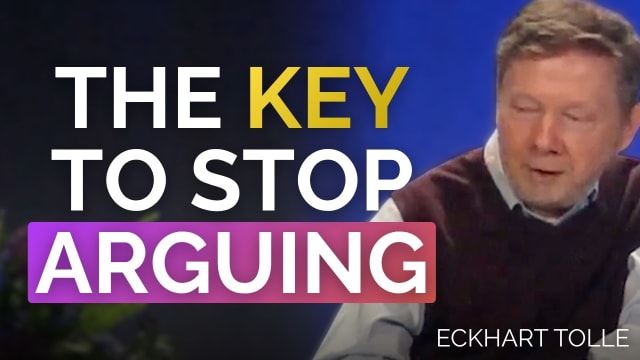
Eckhart Tolle explains why insults hook the ego and how the pain body feeds on every argument. Presence, not a comeback, is the way out of t…

9 min read
Vipassana Meditation Guide: Breath, Body, and Presence
Inspire

Vipassana Meditation Guide: Breath, Body, and Presence

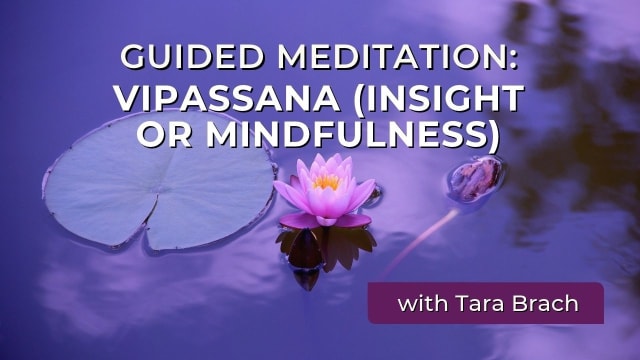
Tara Brach's 20-minute guided vipassana practice uses the breath as a home base, the body as a field of sensation, and kindness as the way b…

10 min read

Sigue explorando

Continúa tu camino

Más sabiduría y encuentros de todo el directorio de BrightStar.

Más artículos

Recorre la biblioteca completa de enseñanzas, entrevistas y guías.

Ver todos los artículos →

Maestros y artistas

Explora los linajes, músicos y guías del mundo consciente.

Explorar artistas →

Encuentra un evento

Kirtan, retiros, baños de sonido, breathwork, festivales — muy pronto.

Ver eventos →