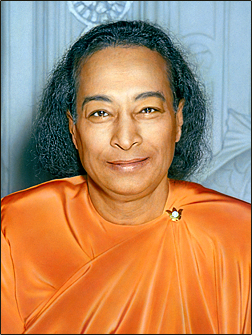
The Alchemy of Thought: Manifesting Reality through Willpower
Paramahansa Yogananda once stated, "If you cling to a certain thought with dynamic will power, it finally assumes a tangible outward form." This assertion invites us to explore the profound relationship between our thoughts and the reality we experience. It suggests that our mental focus, when infused with intention and determination, can shape our external circumstances. The stakes are high; understanding this principle can empower us to take control of our lives, transforming our inner visions into concrete manifestations.
Yogananda's insight resonates deeply in a world where distractions abound and negative thoughts often dominate our mental landscape. The idea that our thoughts possess the power to manifest reality challenges us to cultivate a disciplined mind, one that can harness the energy of willpower. This teaching encourages us to reflect on the nature of our thoughts and the potential they hold, urging us to become conscious creators of our own experiences rather than passive observers of life.
The image / the metaphor
The imagery in Yogananda's quote evokes a dynamic interplay between thought and reality. The phrase "cling to a certain thought" suggests a tenacity, a commitment to a mental focus that transcends mere wishful thinking. The use of "dynamic will power" conveys an active, almost kinetic energy, implying that our thoughts are not static but rather alive with potential. This notion invites us to visualize our thoughts as seeds, which, when nurtured with intention and will, can grow into tangible forms in our lives.
Diving deeper into the metaphor, we can see that the act of clinging to a thought is akin to a sculptor chiseling away at a block of marble. The sculptor's vision, combined with relentless effort, brings forth a masterpiece from raw material. Similarly, our thoughts, when infused with willpower, can carve out the reality we desire from the formless ether of possibility. This process requires not only focus but also a deep belief in the transformative power of our intentions.
In the speaker's tradition
Paramahansa Yogananda's teachings are rooted in the rich spiritual tradition of Hinduism, which emphasizes the interconnectedness of thought, action, and the cosmos. Concepts such as dharma, or one's righteous duty, and prajna, the wisdom that arises from deep understanding, are integral to this framework. Yogananda's assertion aligns with the idea that our thoughts can influence our dharma, guiding us toward fulfilling our purpose in life. The practice of willpower, therefore, becomes a spiritual discipline that aligns our inner world with our outer actions.
In the Bhagavad Gita, a foundational text of Hindu philosophy, Lord Krishna imparts wisdom on the importance of intention and action. He teaches that one must act according to their nature and with a focused mind, which echoes Yogananda's message. The Gita emphasizes that the right thoughts, when coupled with action, can lead to liberation and fulfillment, reinforcing the idea that our mental landscape shapes our spiritual journey.
Living the teaching
Consider a modern scenario where this teaching can be applied: an individual striving for a career change. By clinging to the thought of success in a new field, coupled with dynamic willpower, they can begin to take actionable steps toward that goal. This might involve networking, acquiring new skills, or even visualizing their success daily. The transformation from a stagnant position to one of growth and fulfillment exemplifies how focused thought can manifest into reality.
A reflection
As we contemplate Yogananda's profound statement, we are invited to ask ourselves: What thoughts am I clinging to, and how are they shaping my reality? This question encourages introspection and invites us to examine the narratives we hold about ourselves and our lives. By recognizing the power of our thoughts, we can begin to consciously choose those that align with our highest aspirations, ultimately transforming our inner and outer worlds.


