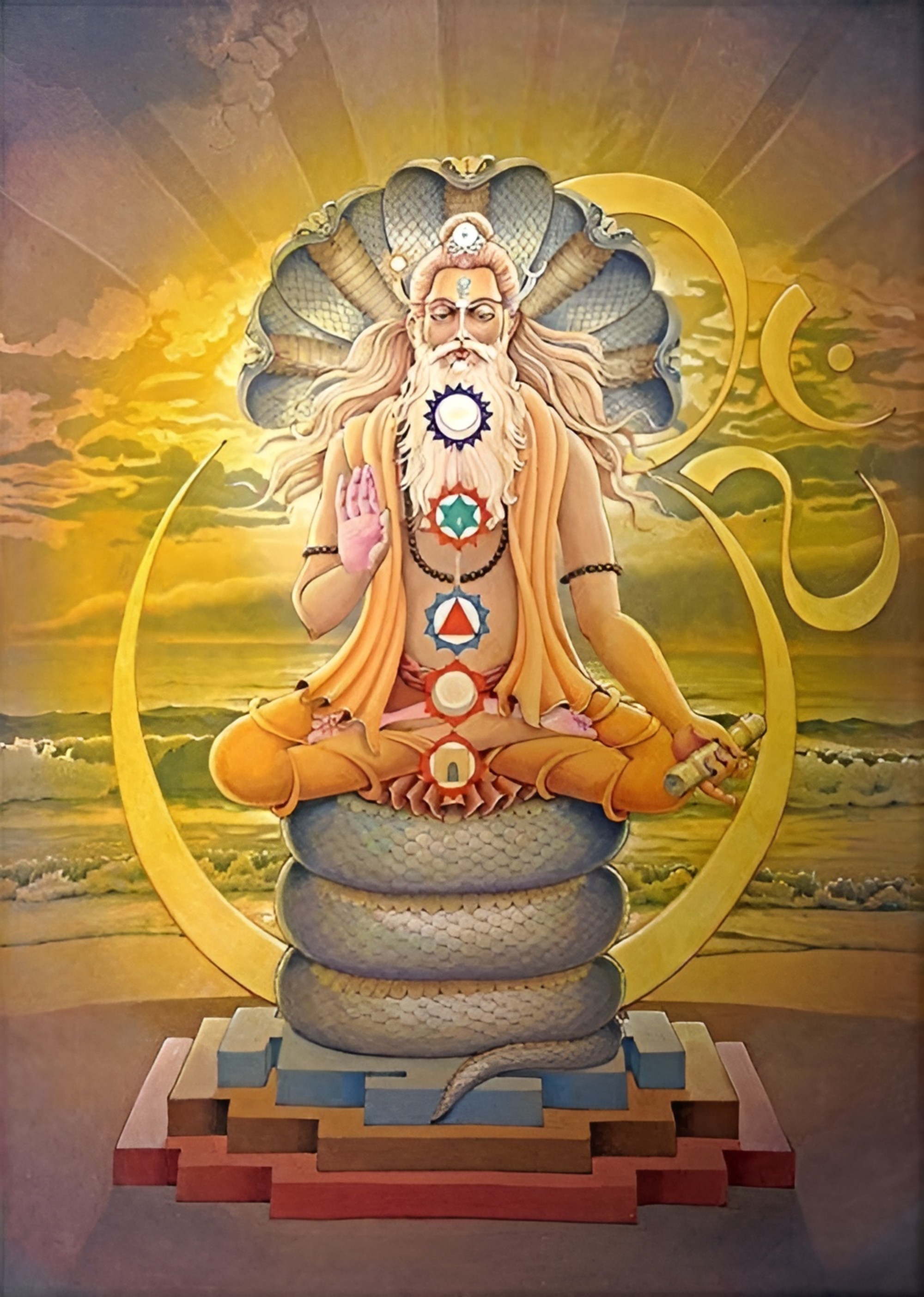
The Resonance of Om: A Journey into Realization
Patanjali's assertion that "Repetition of Om and meditation on its meaning bring realization" invites us to explore the profound depths of sound, intention, and consciousness. This quote encapsulates a transformative practice that transcends mere vocalization, urging us to delve into the essence of Om as a sacred symbol. The stakes are high: in a world often filled with noise and distraction, the call to return to this primordial sound offers a pathway to deeper understanding and self-realization.
At its core, this teaching emphasizes the power of repetition and contemplation, suggesting that through the disciplined practice of chanting Om, one can unlock layers of meaning that lead to enlightenment. It is not merely about the act of saying a word; it is about engaging with the vibrational frequency of Om and allowing it to resonate within us. This process of meditation transforms the sound into a vehicle for spiritual awakening, bridging the gap between the mundane and the divine.
The image / the metaphor
The imagery of "repetition" and "meditation" in Patanjali's quote evokes a sense of rhythmic flow, akin to the waves of the ocean that return to the shore, each time bringing new insights. The verb "repetition" suggests a practice that is both disciplined and intentional, while "meditation" invites a contemplative stillness that allows for deeper engagement with the sound of Om. Together, these elements create a dynamic interplay between action and reflection, where the act of chanting becomes a sacred ritual leading to profound realization.
Diving deeper into the metaphor, Om represents the cosmic sound, the essence of the universe itself. It is a symbol of creation, preservation, and dissolution, encapsulating the entirety of existence. When we engage in the repetition of Om, we are not merely vocalizing a syllable; we are participating in the very fabric of reality. This practice becomes a means of aligning ourselves with the universal consciousness, fostering a sense of unity with all that is.
In the speaker's tradition
Patanjali's teachings are situated within the rich tradition of yoga, which encompasses a holistic approach to life, emphasizing the interconnectedness of body, mind, and spirit. Concepts such as dharma, or one's duty, and prajna, or wisdom, are integral to understanding the broader implications of his work. The repetition of Om serves as a form of bhakti, or devotion, allowing practitioners to cultivate a deep sense of surrender and connection to the divine. This practice aligns with the yogic goal of achieving liberation (moksha) through self-realization and understanding of one's true nature.
In the Yoga Sutras, Patanjali emphasizes the importance of meditation as a means to quiet the fluctuations of the mind (vrittis). The practice of chanting Om can be seen as a tool to achieve this stillness, facilitating a deeper exploration of the self. This resonates with the Buddhist concept of sunyata, or emptiness, where the realization of the non-dual nature of existence leads to liberation from suffering. Both traditions highlight the significance of sound and meditation as pathways to enlightenment.
Living the teaching
Consider a modern scenario where an individual feels overwhelmed by the chaos of daily life—work pressures, family responsibilities, and societal expectations can create a cacophony that drowns out inner peace. In such moments, the practice of repeating Om can serve as an anchor, a grounding technique that allows one to step back and reconnect with the self. By taking a few moments to chant Om, the individual can create a space of stillness, inviting clarity and calm amidst the storm.
In relationships, the teaching of Patanjali can be applied to foster deeper connections. Imagine a moment of conflict where words are exchanged in anger, leading to misunderstandings. By taking a pause to meditate on the meaning of Om, individuals can cultivate a sense of compassion and understanding, transforming the energy of the conversation. This practice encourages a shift from reactive patterns to a more mindful approach, allowing for healing and connection to flourish.
A reflection
As we contemplate Patanjali's profound insight, we are invited to reflect on our own relationship with sound and silence. How often do we allow ourselves the space to engage with the sacred vibrations of Om in our daily lives? In what ways can we deepen our practice of meditation to uncover the layers of meaning that reside within us? These questions serve as a gentle reminder to explore the transformative power of sound and intention, guiding us toward realization and unity with the cosmos.