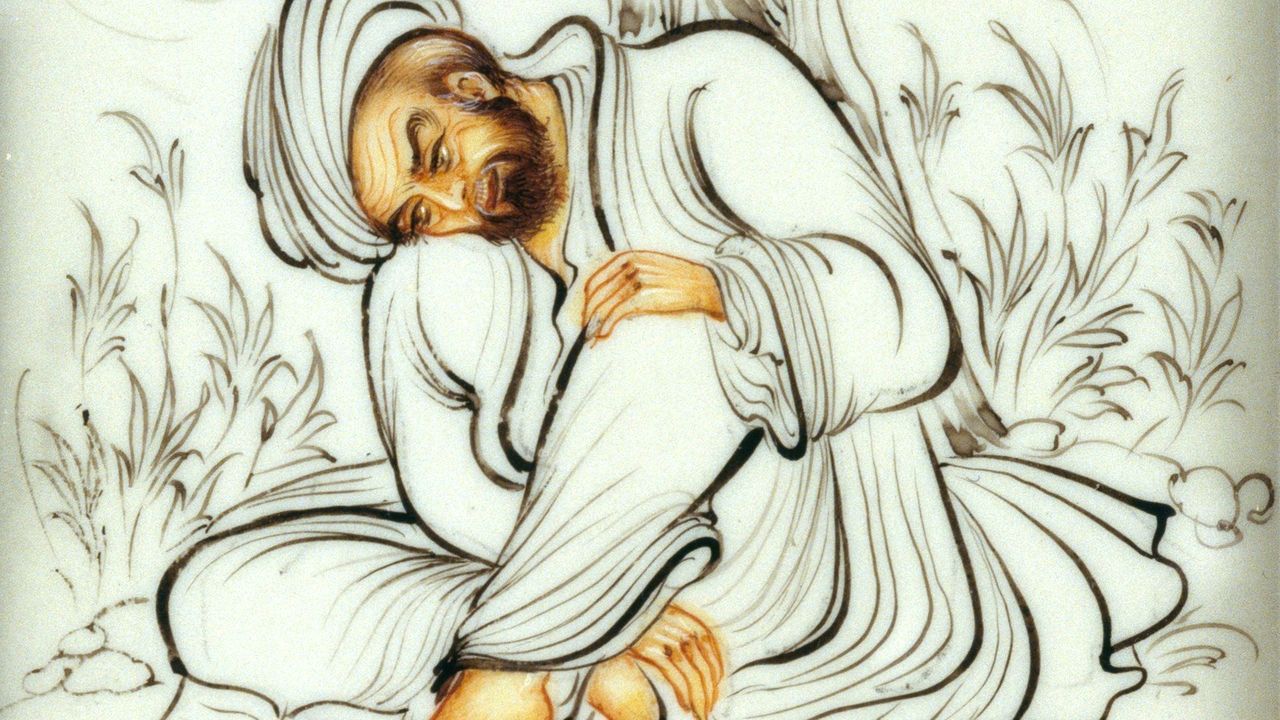
The Robes of Transformation: Embracing Equality at the Threshold
Hafiz's profound assertion, "At the Friend's threshold, all rags are robes of state," invites us to consider the transformative power of love and acceptance. In this poetic expression, the threshold symbolizes a sacred space where societal distinctions dissolve, allowing all individuals to stand equally before the divine. This matters deeply in a world often divided by status, wealth, and identity, as it beckons us to recognize our shared humanity and inherent worth.
Moreover, this quote challenges us to reflect on the nature of our own identities and the roles we play in our lives. The imagery of rags transforming into robes of state suggests a radical shift in perception, where the external trappings of success and failure lose their significance in the presence of true love and connection. It is a call to transcend the superficial and embrace the essence of being, inviting us to explore what it means to be truly seen and accepted.
The image / the metaphor
At its core, Hafiz's quote presents a vivid metaphor that juxtaposes rags and robes, two garments that signify vastly different social standings. Rags evoke images of poverty, struggle, and marginalization, while robes of state symbolize power, dignity, and respect. The act of standing at the threshold implies a moment of transition, a liminal space where one is on the verge of entering a new reality. This imagery evokes a felt sense of vulnerability and potential, as the individual prepares to step into a realm where their worth is not dictated by external appearances.
Diving deeper into the metaphor, we can see that the "Friend" represents a divine presence or a beloved figure, embodying unconditional love and acceptance. The threshold becomes a sacred meeting point where the barriers of ego and identity are dismantled. In this space, the rags of our human experience—our fears, failures, and insecurities—are transformed into robes of honor, suggesting that in the presence of love, we are all dignified and worthy. This transformation is not merely superficial; it speaks to a profound internal shift that redefines our understanding of self and others.
In the speaker's tradition
Hafiz, a luminary of Sufi poetry, draws upon a rich tradition that emphasizes the importance of love, unity, and the dissolution of the self. Central to Sufism is the concept of *fana*, or the annihilation of the ego, which aligns beautifully with the idea of shedding one's rags to don the robes of state. This process of transformation is not merely about external appearances but involves a deep spiritual awakening that leads to a recognition of our interconnectedness with all beings. In this light, the threshold becomes a metaphor for the spiritual journey toward enlightenment and unity.
Furthermore, Hafiz's work resonates with the teachings of other Sufi masters, such as Rumi, who similarly emphasized the importance of love as a transformative force. In Rumi's poetry, we find echoes of the idea that love transcends all boundaries, allowing us to experience the divine in one another. The *Masnavi*, Rumi's seminal work, illustrates this journey of love and transformation, inviting us to recognize the divine essence within ourselves and others. Thus, Hafiz's quote serves as a reminder that at the threshold of love, we are all equal, shedding the illusions of separation.
Living the teaching
Consider a modern scenario where this teaching can be applied: a community gathering where individuals from diverse backgrounds come together. In such a space, the usual markers of status—wealth, education, and social standing—can fade away as people engage in genuine connection. Here, the threshold is not a physical barrier but an emotional one, where participants can choose to leave behind their rags of judgment and preconception, embracing one another as equals. This moment of shared humanity exemplifies how love can transform our interactions, allowing us to see beyond the superficial.
In a more personal context, imagine a difficult moment in a relationship where misunderstandings and grievances have created a divide. By approaching this threshold with the intention to listen and understand, both individuals can shed their rags of resentment and pride. In this sacred space of vulnerability, they can don the robes of compassion and empathy, recognizing that their shared love is far more significant than their differences. This practice of approaching relationships with openness and humility embodies the essence of Hafiz's teaching, reminding us that transformation begins within.
A reflection
As we contemplate Hafiz's words, we are invited to ask ourselves: What rags am I clinging to that prevent me from embracing my true worth and the worth of others? This question encourages introspection and invites us to explore the barriers we erect in our lives, whether they be rooted in fear, pride, or societal expectations. By reflecting on this, we can begin to envision a life where we stand at the threshold of love, ready to transform our rags into robes, celebrating the equality and dignity inherent in every soul.