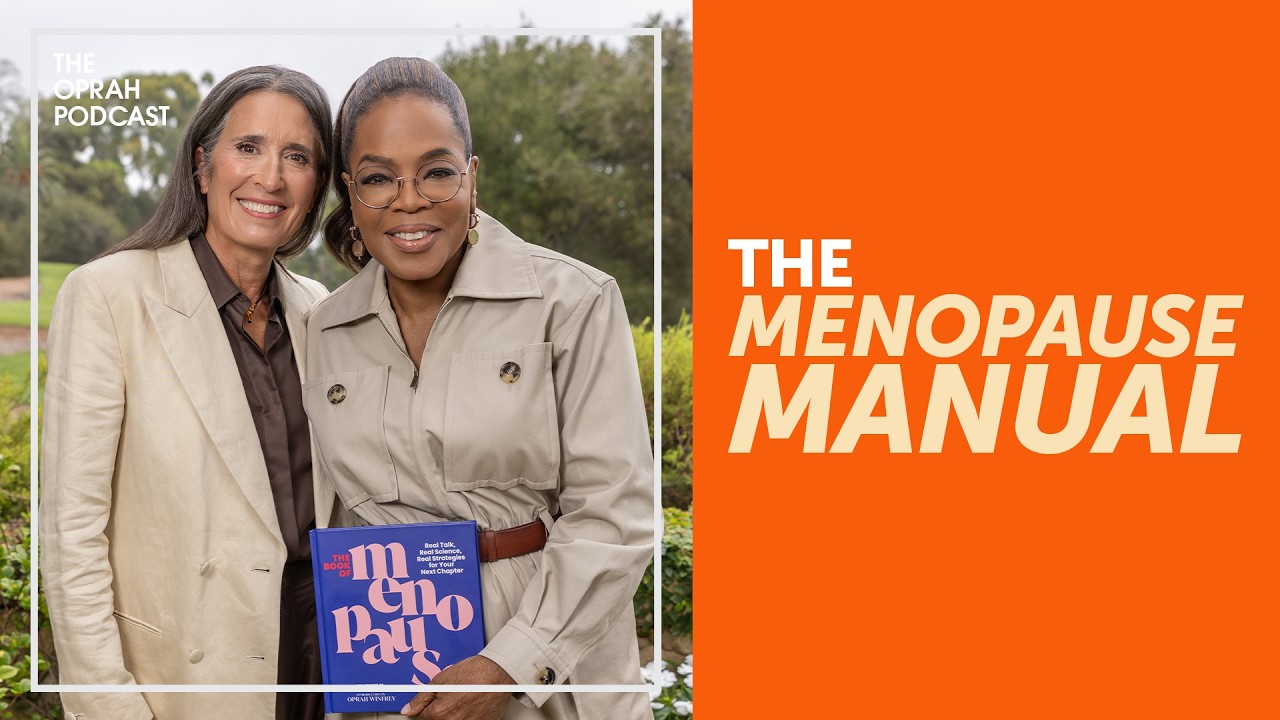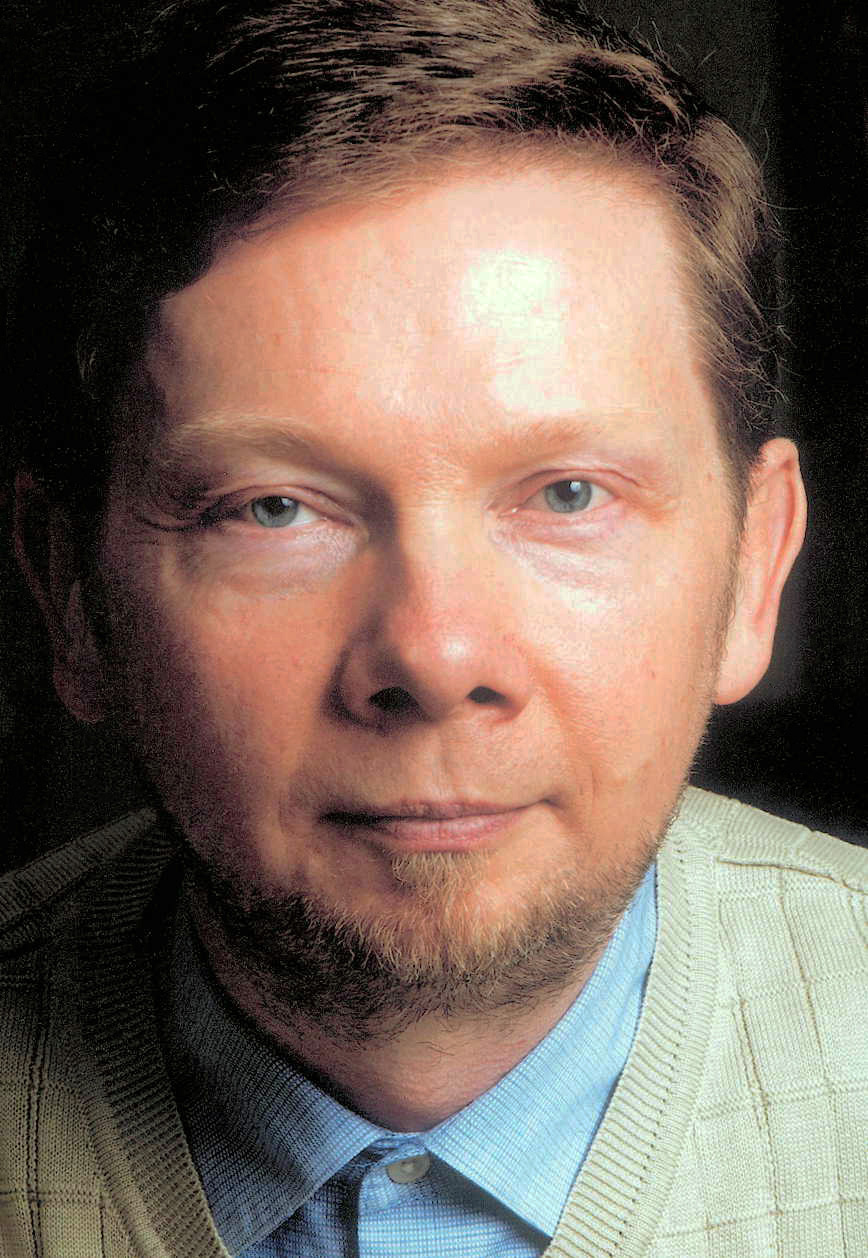
Oprah Winfrey has a habit of ending her interviews with a question that sounds simple and is hard to dodge: what do you know for sure? In a short clip from his YouTube channel, published in October 2026, Eckhart Tolle returns to that question and offers an answer that is not a belief, a memory, or a conclusion drawn from evidence. The one thing he says you can know for sure is that you are conscious, right now. From there he makes a claim about the act of noticing that certainty: becoming conscious that you are conscious stops the thinking mind, because the mind cannot be busy with a thought and also be aware of awareness itself. The clip is only three and a half minutes, but it lays out a complete arc, from a question about knowledge to a suggestion to test it in the present moment, and it ends on a note that is less about insight than about affection for stillness.
Imagine someone asked you, without warning, what you know for sure. The mind reaches for something solid. Your name. The date. The fact that the kettle is on. Then, almost immediately, the doubts arrive: those facts rest on memory, on trust in other people, on inference from what you have seen so far. Each candidate turns out to be a little less certain than it first seemed. This reflex, the search for firm ground in the stream of thought, is exactly the territory Tolle is pointing at. His point is that the search itself is happening inside awareness, and that the one thing the search cannot dislodge is the awareness.
Tolle is direct about the answer. "What you know for sure ultimately is there's only one thing that you know for sure and that is that you are conscious right now," he says in the clip. He does not present this as a clever formula. He presents it as the only item that survives every test of doubt. Everything else you know arrives through belief, memory, or inference. Consciousness does not arrive through any of those channels. You are not conscious because you concluded it; the conclusion, if there is one, is itself a movement within consciousness.
This is worth slowing down on, because it changes what "knowing" means. Most of what we call knowledge is information we hold about the world: facts we have been told, things we remember, patterns we have inferred. Tolle's answer points to a different kind of knowing, one that is closer to direct acquaintance. You do not need to remember that you are aware in order to be aware. The awareness is present before any description of it, and it is present in the mind that is trying to doubt it.
This is the strongest claim in the clip, and Tolle makes it with a small logical argument. "It's amazing to become conscious that you are conscious," he says. "It stops the mind. It has to, otherwise you can't be conscious that you're conscious, because when you're thinking, you're conscious of something." The structure of the argument is worth laying out plainly.
- When the mind is thinking, attention is pointed at an object: a thought, a thing, a story about yesterday or tomorrow.
- Consciousness, in that moment, is conscious of that object.
- To notice that you are conscious, attention has to turn back and rest on the awareness itself rather than on what it is aware of.
- That turn is not compatible with the mind's usual absorption in content, so the thinking pauses.
He puts the same idea in terms of ordinary experience: when you are thinking, you are not conscious of consciousness. You are conscious of the thought. Only when the spotlight swings around to the light itself does the thinking fall quiet. The implication is that the stillness is not something you have to manufacture. It is what happens, almost by definition, when awareness recognizes itself. The mind does not have to be silenced by force; it simply cannot hold its usual grip while attention is resting on the source of attention.
Here Tolle makes a move that many readers will find disorienting. He calls the subject-object split a linguistic trick. "It's just a linguistic construct," he says. "It doesn't mean that there's a subject and an object. It's only when you talk about it there's a subject and an object." In everyday grammar, to be conscious of something requires two things: someone who is conscious, and something they are conscious of. The sentence "I am conscious of consciousness" seems to demand a knower and a known.
Tolle's point is that this grammar is a description imposed after the fact. In the living moment of awareness, he suggests, there is not really a separate observer looking at a separate thing called awareness. There is just awareness. Language divides it into a pronoun and a noun because that is how sentences work. The division is useful for talking, but it is not the experience itself. If you try to locate the "I" that is observing your awareness, you find more awareness, not a second entity standing behind it.
His summary line is the one that gives the clip its title-like weight. "All it means is consciousness has become self-conscious," he says, and then, quickly correcting a possible misreading: "Not self-conscious in the conventional sense. Consciousness has become conscious of itself." The distinction matters. Ordinary self-consciousness is a contracted state, a sense of being watched by an imagined audience, of measuring yourself against a mental image. The self-consciousness Tolle describes has none of that tightness. It is the simple fact of awareness turning and recognizing its own presence, with no story attached.
He names this recognition as awakening. The term is used often in contemplative writing and can sound grand, but in this clip it is described in the most modest possible terms: a moment in which consciousness notices itself and the noise of thought drops away. There is no ceremony required. The awakening is the recognition, and the recognition is available now, in the same room, in the same breath, to anyone willing to look.
Tolle's suggestion is deliberately small. "Just find out if you can be right in here now in thoughtless awareness," he says. "Just being aware of your own presence." He adds that this is what it means to be aware of presence, and to be aware of awareness. The instruction is not to achieve a state, reach a level, or think a more profound thought. It is to check, directly, whether you can be aware of your own presence without a thought in the way.
A practical way to hold this is as an experiment rather than a technique. Pause wherever you are. Notice the sounds, the sensations in the body, the thoughts drifting past. Then turn your attention from what is being noticed to the one who is noticing, and see what is there. Many people find that the attempt itself keeps producing new thoughts ("is this it?", "am I doing it right?"). Tolle's framing suggests that these are simply more objects appearing in awareness, and that the test is not whether the mind goes quiet on command but whether you can rest in the awareness underneath the commentary. The question is an invitation to look, not an exam to pass.
The final lines of the clip shift from insight to feeling. Once the mind is quiet in this way, Tolle says, the next step is to "become comfortable with that stillness." Then comes the line that gives the piece its emotional arc: "And you not only become comfortable, you begin to love it."
This progression matters. Many people approach stillness as a deprivation, a blank space where the usual activity of the mind has been taken away and something uncomfortable rushes in to fill it. Tolle's sequence reverses that expectation. Comfort comes first, then affection. The stillness is not an absence of something; it is the felt texture of awareness being itself. What first feels strange, once recognized as home rather than void, becomes something a person looks forward to returning to. The love he describes is not sentimental. It is the ease of resting in what has been there all along.
It is also worth noting the scope of what the clip is. Tolle says the full session goes much further into this territory, and the video directs viewers toward it. This excerpt offers a foundation: one certainty, one logical argument about why noticing it stops thought, one correction of the subject-object grammar, and one small test to try. Read it as a compass heading rather than a destination, and treat the claims as questions to be checked against your own attention, not as conclusions to accept on authority.
The most useful response to this clip is not to agree or disagree with it, but to run the experiment it describes. Take the question seriously for a minute. Ask what you know for sure, and notice which answers come from memory, belief, or inference, and which one does not depend on any of them. Then look at what happens when you turn attention toward the awareness doing the noticing. Tolle's claim is that the thinking pauses at that point, and that what remains is consciousness recognizing itself. Whether that matches your experience is the only evidence that counts, and it is available to check at any time, in any place, with no tools required.
If the clip raises more questions than it answers, that is a reasonable outcome. Tolle himself points past the excerpt toward the full teaching. For readers who want to keep going, the best next step is a few quiet minutes each day of simply being aware of your own presence, and paying attention to what changes when the commentary in your head softens. The rest of the teaching is, in the end, an elaboration of that single, checkable fact: you are conscious, right now.