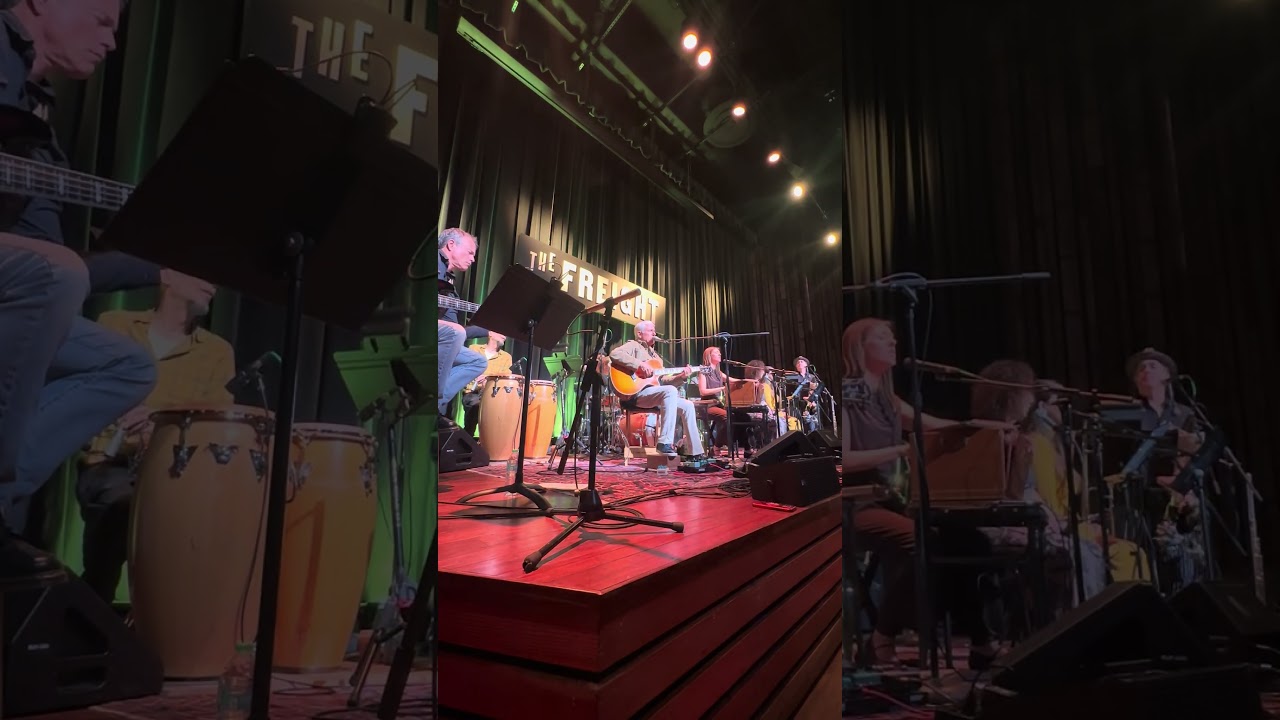
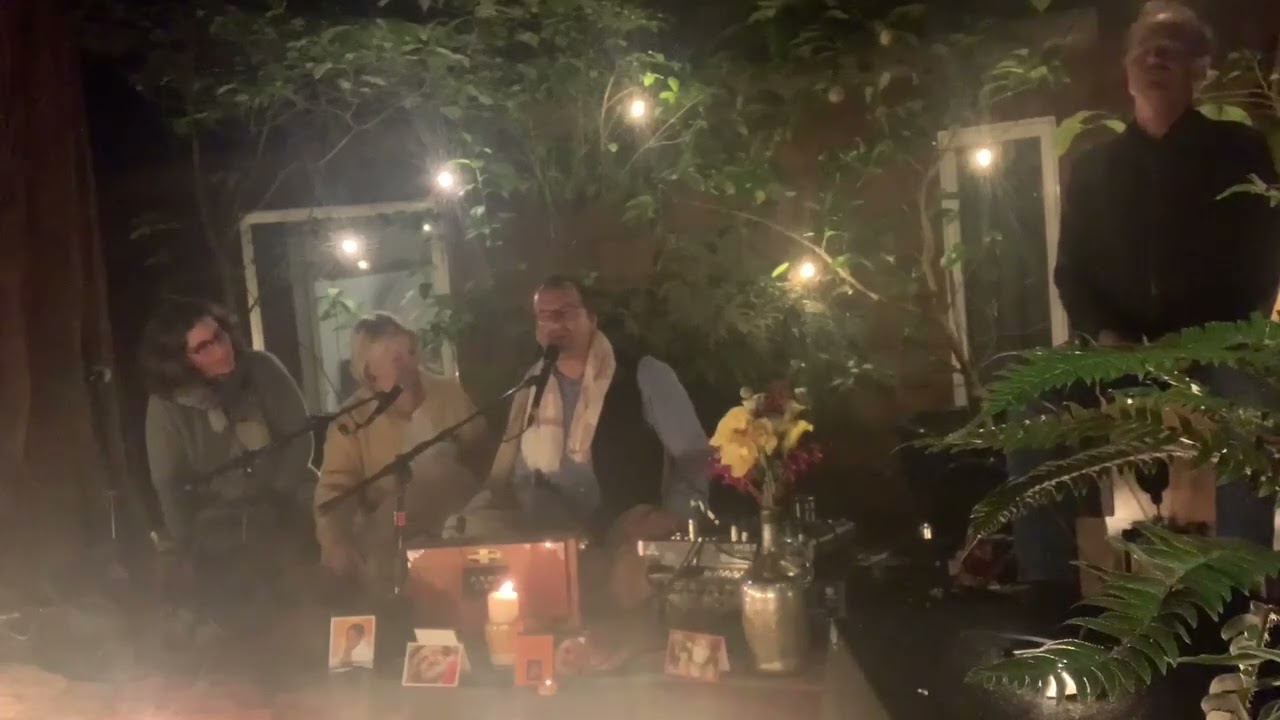
Picture a song that was already a prayer before anyone had a reason to need one. In 2019, before the pandemic rearranged daily life, two musicians who knew each other through the devotional music and yoga festival scene sat down with a single intention: a prayer to help heal ancestral divides and bring people into love of themselves and of one another. That prayer became "Help Us Love," a co-write by Johanna Beekman and the California-based songwriter Mikey Pauker, released as a single and presented in an official music video in February 2021. The song rests on one of the oldest ethical instructions in scripture, Leviticus 19:18, and on the V'ahavta, the prayer from Jewish liturgy that carries the same command at its heart. Production came from Ben Leinbach, whose credits include Jai Uttal and Deva Prema. What the song asks of a listener is simple to say and hard to live: love your neighbor, and in the same breath, love yourself.
Songs written for the yoga and devotional circuit often begin as something closer to a practice than a product. According to the description Beekman posted with the video, the two writers came together in 2019 "with a prayer to heal the ancestral divides and come into love of ourselves and each other." That is a useful detail to hold onto, because it explains the shape of the finished record. A prayer is addressed to something beyond the room. A pop single tends to be addressed to the listener. "Help Us Love" sits in the space between those two, asking for help rather than announcing a feeling.
The timing matters too. The description states plainly that the writers "had no idea how much the world would need this prayer when it finally released this year." The song was written before the pandemic and reached listeners in the middle of it, when many people were isolated from the communities that had once carried them through hard seasons. A devotional song written as an intention can take on a different weight when the world around it changes. Nothing in the material suggests the writers planned for that moment. The description suggests they simply kept the prayer, and waited for the right time to share it.
The lyrics draw on two sources that are rarely placed side by side in the same breath. The first is Leviticus 19:18 of the Torah, which instructs the reader to love one's neighbor as oneself. The second is the V'ahavta, a passage from the Jewish prayer liturgy whose name is the Hebrew word for "and you shall love." Its opening lines are central to daily Jewish prayer, and it places the command to love at the core of a practice, not at the edge of an ethics lecture.
The description then makes a larger claim. It notes that the same teaching appears in the New Testament, where Jesus names it as the second greatest commandment. Beekman frames this as "one of the great ethical links among all faiths," and the song's argument follows from that framing. If the same instruction surfaces in Jewish law and in Christian scripture, the song suggests, then the ground where traditions meet may be wider than the walls that have divided them.
That is a bold thing to say in a three-minute-plus pop-leaning record, and it is worth being precise about what the song is doing with it. It is not making a theological argument in the body of the lyric. It is setting a foundational command to melody and asking people to sing it. The approach is closer to the way devotional music has long worked across traditions: the teaching is carried by repetition, by voice, and by the shared act of singing, rather than by exposition.
Much of the public conversation about Leviticus 19:18 focuses on the first half of the sentence, the love of the neighbor. The clause that does the most quiet work is the last one: "as yourself." The description of "Help Us Love" makes clear that the writers hear both halves together. Their stated goal is to come "into love of ourselves and each other," and the video's closing line in the description reads: "We must love our fellow human beings as ourselves."
"We must love our fellow human beings as ourselves." (Johanna Beekman, video description, February 2021)
This is the practical teaching embedded in the song. The command does not ask for a love that erases the self, and it does not ask for a love that stops at the self. It presumes that the way one treats oneself and the way one treats others are linked. A listener who has spent years hearing the first half preached as a demand to be generous, or a demand to be forgiving, may find the second half a relief. The song offers a reading in which self-regard is not a rival to compassion but a precondition for it.
For anyone who uses music as part of a contemplative life, this is where "Help Us Love" can be most useful. The lyric is short enough to repeat, and repetition is how a teaching moves from the head into the body. Singing "as yourself" over and over asks a practitioner to notice where they are harsh with themselves and where they are harsh with others, and to see that the two often travel together.
The description introduces Pauker as "a popular California based songwriter with roots in Jewish traditions who uses music to transform darkness into light." That line is the kind of phrase that could describe a great many artists, so it is worth noting what the song itself suggests about his part in it. The V'ahavta and Leviticus 19:18 are not decorative references. They are rooted in the Jewish liturgical and textual life that Pauker's roots connect him to, and their presence in the lyric shows that the co-write was built on material from inside one tradition as well as from outside it.
Beekman's own relationship to the project comes through the festival scene. The description says she came to know Pauker through devotional music and yoga festivals, which are spaces where singers from many backgrounds share stages and songs. The collaboration reads less like a fusion experiment and more like two people who already trusted each other's sincerity arriving at a shared text. That trust is audible in the way the song refuses to flatten its sources into a generic spiritual sound.
The description identifies the producer as Ben Leinbach, "one of the most prolific producers in the yoga music genre," and lists Jai Uttal and Deva Prema among his credits. For a song built around a prayer, the production is part of the teaching. Devotional recordings live or die by whether the sound supports the words rather than competing with them, and a producer who has worked extensively in this world knows how to make a voice feel like it is speaking to a room rather than performing for a crowd.
The material for this piece does not go into the arrangement in detail, and it would be a mistake to invent what Leinbach did note by note. What can be said is that the record was made by someone whose catalog sits squarely in the genre the song was written for. That matters for a listener who wants to understand where the sound is coming from.
The release was handled by High Vibe Records, which the description thanks alongside Equanimous Love for "putting this one out." Beekman also thanked listeners for streaming the single, noting that it had passed "5000 streams on Spotify in just 3 days." Those are modest numbers by pop standards, but they are meaningful for a devotional single released independently into a niche that grows by word of mouth. A prayer does not usually spread through algorithmic charts. It spreads when someone plays it for a friend in a hard moment, or sings it at a gathering.
The video itself, at roughly four minutes, is a straightforward official presentation of the song, released to introduce the single to the people who would be most likely to need it. It had 864 views on YouTube at the time of this writing, which means the audience for the visual is still small. The song's larger life is likely to unfold in listening, in repetition, and in the kinds of communities that already gather around this music.
The most useful way to approach "Help Us Love" is the way the writers themselves describe its origin: as a prayer first. Listen once for the melody and once for the words. Notice the two halves of the Leviticus command and let each one land. Then consider the question the song quietly asks, which is not whether you love your neighbor in the abstract but whether you treat yourself with the same basic care you would offer someone you wanted to help.
- Listen for the phrase "as yourself" and pause on it, rather than rushing toward the neighbor.
- Notice the places in your day where you are harsh with yourself and where that harshness spills into how you treat others.
- Sing or hum the lyric if you are inclined. The description's emphasis on prayer suggests it was written to be carried, not just consumed.
- Read the Leviticus passage and the V'ahavta alongside the song if the textual sources interest you.
The song also offers a quiet lesson about patience. A prayer written in 2019 was released in 2021, and its authors describe it as arriving when the world was ready for it. Not every devotional work finds its moment so neatly, but the example is a reminder that some teachings wait for the listener.
To hear "Help Us Love" for yourself, the single is available through the link in the original description, which points to High Vibe Records' distribution page at highviberecords.fanlink.to/helpuslove. The official video is the place to see the song presented as a visual piece, and the description's links to Spotify and Apple Music offer other ways to listen. For the textual sources, read Leviticus 19:18 and the V'ahavta directly, both of which the song is built on. Then return to the lyric and notice how much more it says when you hear the scripture underneath it.