BrightStar

Alle Events durchsuchen

Bewusste Zusammenkünfte entdecken

events

Yoga
Meditation
Breathwork
Qigong
Tai Chi
Sacred Music
World Music
Medicine Music
Sound Healing
Ecstatic Dance
Beliebte Reiseziele
BaliSedonaLos AngelesCosta RicaNew YorkSan FranciscoAustinMiamiJoshua TreeTulum
Alle Kategorien anzeigenAlle Reiseziele anzeigen

Alle Funktionen entdecken

Leistungsstarke Tools für Ihre Veranstaltungen

Plattform-Funktionen

Intelligente dynamische Preisgestaltung
Ticket-Kategorien
Sitzplatzreservierung
Warenkorbabbruch-Wiederherstellung
Besucher-Wiedergewinnung
Spenden & Staffelpreise
Affiliate-System
Ticket-Scanner
Rabattcodes
Individuelle Fragen
Ticket-Teilen
Upsells & Extras
Analysen & Berichte
E-Mail-Sequenzen
Warteliste / Benachrichtigen / Erinnern
Menschen & Orte
Artists & TeachersEvent OrganizersVenues & StudiosKnowledge BaseGlossaryInspiration
Alle Funktionen anzeigenÜber uns
PreiseBlog
Language
Saved events
Alle Veranstaltungen durchsuchen

events

YogaMeditationBreathworkQigongTai ChiSacred MusicWorld MusicMedicine Music

Beliebte Reiseziele

BaliSedonaLos AngelesCosta RicaNew YorkSan Francisco

Menschen & Orte

Artists & TeachersEvent OrganizersVenues & StudiosKnowledge BaseGlossaryInspiration

Plattform-Funktionen

Intelligente dynamische PreisgestaltungTicket-KategorienSitzplatzreservierungWarenkorbabbruch-WiederherstellungBesucher-WiedergewinnungSpenden & StaffelpreiseAffiliate-SystemTicket-ScannerRabattcodesIndividuelle FragenTicket-TeilenUpsells & ExtrasAnalysen & BerichteE-Mail-SequenzenWarteliste / Benachrichtigen / Erinnern
Alle Funktionen anzeigenÜber uns
PreiseBlog
AnmeldenSuchendeKreative
  • Alle Events durchsuchen
  • Für Suchende
  • Yoga
  • Meditation
  • Breathwork
  • Qigong
  • Tai Chi
  • Heilige Musik
  • Weltmusik
  • Medicine Music
  • Klangheilung
  • Ecstatic Dance
  • Retreats
  • Workshops
  • Alle Kategorien →
  • Bali
  • Sedona
  • Los Angeles
  • Costa Rica
  • Tulum
  • Byron Bay
  • San Francisco
  • Austin
  • New York
  • San Diego
  • Denver
  • Seattle
  • Portland
  • Miami
  • Alle Städte →
  • Join the Movement
  • Why we list
  • Sell Globally
  • Für Kreative
  • Für Teams
  • Für Autoren
  • Für Lehrer
  • Für Kirtan-Künstler
  • Für Studios
  • Für Festivals
  • Für Retreat-Zentren
  • Für gemeinnützige Organisationen
  • Markenbotschafter
  • Kostenloses Ticketing
  • Elevate
  • Amplify
  • 500.000+ Käufernetzwerk
  • Warenkorbabbruch-Wiederherstellung
  • Intelligente dynamische Preisgestaltung
  • Ticket-Kategorien
  • Wiederkehrende Veranstaltungen
  • Sitzplatzreservierung
  • Affiliate-System
  • Warteliste / Benachrichtigen
  • Ticket-Scanner
  • Einbettungs-Widget
  • Event-Syndication
  • Nachrichten
  • Integrationen
  • Berichte
  • Alle Funktionen →
  • Über uns
  • Das Ökosystem
  • Blog
  • Glossar
  • Inspiration
  • Hilfe-Center
  • Kontakt
  • API-Dokumentation
  • Marken-Assets
  • Karriere
  • Presse
  • Nutzungsbedingungen
  • Datenschutzrichtlinie

Events

  • Alle Events durchsuchen
  • Für Suchende
  • Yoga
  • Meditation
  • Breathwork
  • Qigong
  • Tai Chi
  • Heilige Musik
  • Weltmusik
  • Medicine Music
  • Klangheilung
  • Ecstatic Dance
  • Retreats
  • Workshops
  • Alle Kategorien →

Reiseziele

  • Bali
  • Sedona
  • Los Angeles
  • Costa Rica
  • Tulum
  • Byron Bay
  • San Francisco
  • Austin
  • New York
  • San Diego
  • Denver
  • Seattle
  • Portland
  • Miami
  • Alle Städte →

Für Kreative

  • Join the Movement
  • Why we list
  • Sell Globally
  • Für Kreative
  • Für Teams
  • Für Autoren
  • Für Lehrer
  • Für Kirtan-Künstler
  • Für Studios
  • Für Festivals
  • Für Retreat-Zentren
  • Für gemeinnützige Organisationen
  • Markenbotschafter
  • Kostenloses Ticketing
  • Elevate
  • Amplify

Funktionen

  • 500.000+ Käufernetzwerk
  • Warenkorbabbruch-Wiederherstellung
  • Intelligente dynamische Preisgestaltung
  • Ticket-Kategorien
  • Wiederkehrende Veranstaltungen
  • Sitzplatzreservierung
  • Affiliate-System
  • Warteliste / Benachrichtigen
  • Ticket-Scanner
  • Einbettungs-Widget
  • Event-Syndication
  • Nachrichten
  • Integrationen
  • Berichte
  • Alle Funktionen →

Unternehmen

  • Über uns
  • Das Ökosystem
  • Blog
  • Glossar
  • Inspiration
  • Hilfe-Center
  • Kontakt
  • API-Dokumentation
  • Marken-Assets
  • Karriere
  • Presse
  • Nutzungsbedingungen
  • Datenschutzrichtlinie
BrightStar
Hol dir die App
Laden imApp StoreJetzt beiGoogle Play
© 2026 BrightStar. Alle Rechte vorbehalten.
Inspire

Drg Drsya Viveka: The Seer Who Is Never Seen

SS
Swami Sarvapriyananda
Oct 17, 2026
7 Min. Lesezeit
Ansehen · 6

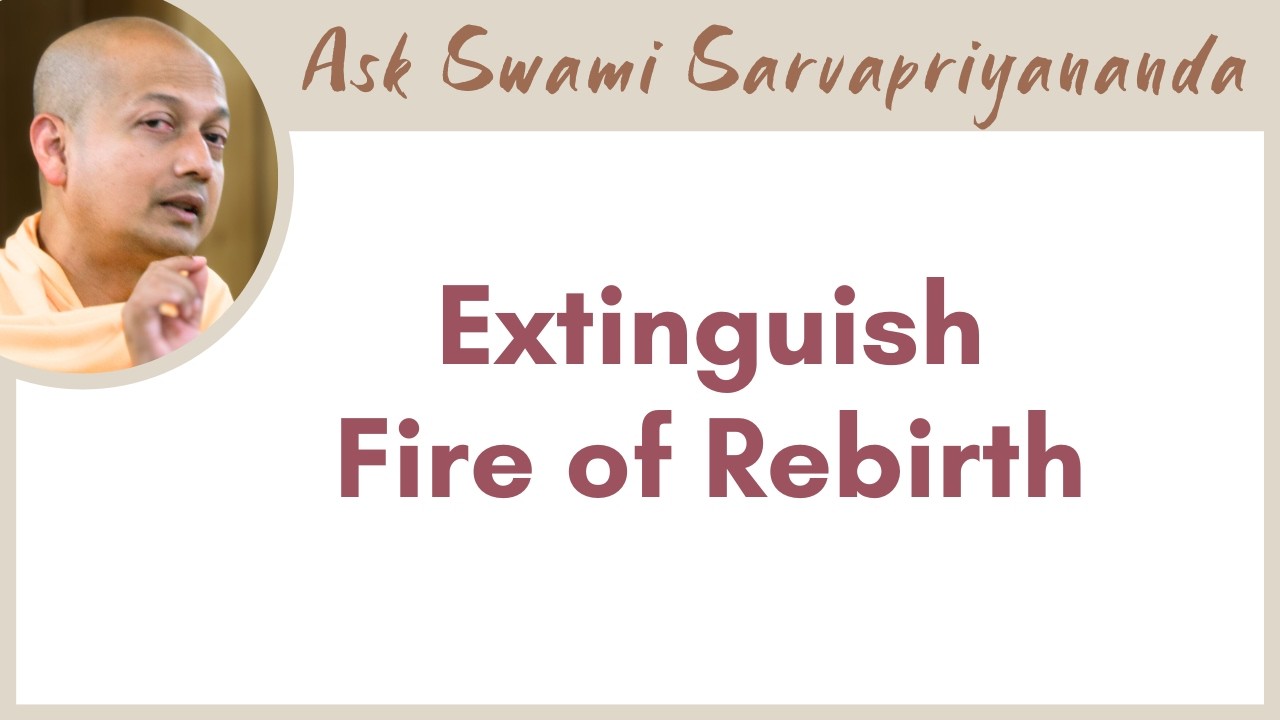
The video runs under two minutes, and nearly all of it is a prayer. Swami Sarvapriyananda stands before the release of a new book and offers it on behalf of the whole team, invoking the teachers of his lineage and asking that the knowledge inside "light up our hearts." Yet the book being introduced is a serious piece of philosophy: the Dṛg-Dṛśya-Viveka, a classical Vedanta text that opens with one question, who is the one who sees, and what is merely seen? The publisher's description says the text is attributed to Vidyaranya and that the book draws on a twelve-part lecture series in which the Swami works through that question slowly, from the eye outward to the Self. This article is about that question, and about why a short blessing at the start of a book points so directly at it.

Lesen · 6 Abschnitte

What does a book-release blessing look like at the Vedanta Society of New York?

The clip opens mid-invocation, with the Swami's voice already in the room. In the first seconds (22s) he is reciting a name, and the transcript is garbled there, so the exact words cannot be reliably reproduced. At 68 seconds the prayer comes into focus: "On behalf of the whole team, I offer it to Sri Sri Thakur." He then names the others in the lineage he is addressing, and the transcription of those names is also uneven, so we will not guess at them here.

What matters is the shape of the gesture. The Swami does not present the book as his own accomplishment. He asks the teachers to bless the people who worked on it, and he asks the blessing extend to "all of us present here." At 88 seconds he says of the book, "this knowledge which flows through these books," which frames the text as something that moves through a tradition and through its readers rather than something owned by an author. Then, at 97 seconds, he hopes the knowledge will make lives "into a blessings for ourselves and blessings to those around us." The video closes with "Om. Peace. Peace. Peace." at 103 seconds, and a brief "Very good" at 106 seconds.

For readers coming to Vedanta for the first time, the blessing is a useful key. In this tradition, a text is not finished when it is printed. It is meant to be read, reflected on, and eventually tested in one's own experience, and the invocation asks that this happen.

Who is the seer, and why can't the seer be an object?

The central move of the Dṛg-Dṛśya-Viveka is a distinction between dṛk, the seer, and dṛśya, the seen. The description of the book states the method plainly: it begins with "the simplest observation that the eye sees but is not the Seer." That sentence carries the whole argument.

Consider what you actually observe. You see a chair, a color, a thought passing through the mind, the rise and fall of your breath. Each of these appears to you. Each can be named, described, and set aside. The eye itself is something you can look at in a mirror, and so it belongs on the side of the seen. Following the same logic, the body, the senses, and finally the mind become objects of awareness rather than the awareness itself. Whatever can be known is, by definition, known by something else.

The text's question is therefore not "what do I see?" but "what is it that sees, such that nothing it sees can be the seer?" The answer the description gives is that the Seer is pure witnessing Consciousness, the same reality the scriptures call Brahman. The inquiry is meant to be carried out by the reader, not simply accepted on authority, which is why the lecture series moves in patient steps.

How do the illustrations of rope, gold, and water make the idea concrete?

Abstract arguments about the Self can slip away from experience, so the Vedanta teachers have long relied on images. The publisher's description says the book is "rich with story, dialogue, and illustration," and it names three of them: the rope mistaken for a snake, gold appearing as ornaments, and water rising as waves.

The rope and snake image describes how something real can be misperceived as something else in dim light. The rope is actually there; the snake is a projection layered over it. The lesson the book draws from this kind of image is that the superimposed object does not have its own independent existence apart from the substrate it appears on. Gold and ornaments make a related point: a bracelet is only gold in a different shape, so its name and form change while its substance does not. Water and waves make the same point about the mind and the world, with the wave appearing as a distinct thing while never being anything other than water.

These images do not prove the conclusion by themselves. They give the reader a way to hold the claim while the inquiry proceeds. The description's own phrasing, that Vedanta is "explained not as abstraction but as something to be seen, here and now, by the one who is seeing," suggests the images are meant to be checked against direct observation.

Where do Māyā and the three states fit in?

The description also names two further pieces of the inquiry: Māyā, and the three states of waking, dreaming, and deep sleep. Both are standard components of the Vedanta method, and the book places them along the same path.

Māyā is presented as the power that makes the seen appear to be the seer, or makes the rope look like a snake. The three states offer a natural test case. In waking life, the world appears as objects. In dream, the objects are internal and yet still seen. In deep sleep, there are no objects at all, and yet one who was present in all three states continues to be. The inquiry asks the reader to notice that the witness is common to all three, and so cannot be identified with any of them. This is a direct, experiential route to the same conclusion the earlier steps reach by logic.

The description adds that meditation is part of the practice. The point is not to think about the seer once and move on, but to keep returning to the one who is aware of every experience, until that awareness becomes the ground of one's attention.

Why does a six-hundred-year-old text still matter?

The publisher's description claims that the text "still speaks directly to anyone asking, quietly or urgently, What am I, really?" That claim is the book's promise, and it is the reason the Swami's prayer asks that the knowledge "shine brightly in our lives." The question is not historical. It arises in any reader who has noticed that their own experience is always filtered through something they cannot quite see.

What makes the text durable, on the account given here, is that it does not ask the reader to believe anything new. It asks the reader to look again at what is already present, the one who sees, and to notice that this one is never the object of seeing. The description calls this "Vedanta explained not as abstraction but as something to be seen." Read this way, the two minutes of blessing are not a preface to the philosophy. They are the first gesture of the same inquiry: asking, before anything else, who is offering, who is receiving, and who is present to both.

Where to go from here

The video is a short invocation, so the full argument lives in the book and the lecture series it draws from. The publisher's materials point to a flipbook preview on the Vedanta Society of New York website, to the book's listing on Amazon, and to the Society's lecture collections, including the scriptural and topical series. Start with the opening question, and keep it with you: who is the one who sees, and what is merely seen? The text's own method suggests that the best answer will come from looking, not from reading alone.
Comments

Loading the conversation…

Transcript

[0:22] Sri Laker.

[0:30] This one will offer to

[0:50] Vanitas.

[1:08] On behalf of the whole team, I offer it

[1:10] to Sri Sri Takur. Sri Shrima and Sri

[1:13] Swami G Maharaj and I pray to them to

[1:18] bless all of us the team especially

[1:21] those who have worked hard on this to

[1:23] bless all of us present here to bless

[1:26] this knowledge which flows through these

[1:28] books. So those who read it may it light

[1:32] up our hearts may this knowledge shine

[1:34] brightly in our lives and make our lives

[1:37] into a blessings for ourselves and

[1:39] blessings to those around us. Om. Peace.

[1:43] Peace. Peace.

[1:46] Very good.

SS
ArtistSwami Sarvapriyananda

Hindu monk and prolific Advaita Vedanta scholar leading the Vedanta Society of New York since 2017, known for making ancient philosophical teachings accessible to modern audiences.

Profil ansehenWebsite
Themen erkunden
Drg-drsya-vivekaVedantaSwami-sarvapriyanandaSeer-and-seenMaya

Hast du Fragen?

Häufig gestellte Fragen

The Drg-Drsya-Viveka is a classical Vedanta text, attributed to Vidyaranya, that opens by asking who the one who sees is and what is merely seen. According to the book's description, it concludes that the Seer is pure witnessing Consciousness, the same reality the scriptures call Brahman.
The seen (drsya) is anything that appears to awareness, including the eye, the body, the senses, and the mind. The seer (drk) is the awareness in which these appear, and it cannot itself be an object, because whatever is known is known by something else.
The rope mistaken for a snake is one of the illustrations the book uses to show how something real can be perceived as something else. The rope is actually there, and the snake is a projection on it, which helps the reader see that appearances do not have independent existence apart from their underlying reality.
The book is drawn from a twelve-part lecture series in which Swami Sarvapriyananda unfolds the text's method of inquiry step by step. The publisher's description says he uses story, dialogue, and illustration, and moves from the observation that the eye sees but is not the Seer through Māyā and the three states of waking, dreaming, and deep sleep.
The three states are waking, dreaming, and deep sleep. The Drg-Drsya-Viveka uses them as a test case, since a witness is present in all three even though objects appear in only two, which shows the witness cannot be identified with any of them.
According to the video's description, the book is available through a flipbook preview on the Vedanta Society of New York website and through Amazon. The Society also lists the Swami's books and lecture series on its site.

Weiterlesen

More from Swami

Alle anzeigen
Buddhism's Hidden Non-Dualism: Beyond the Consciousness Wave
Inspire

Buddhism's Hidden Non-Dualism: Beyond the Consciousness Wave

Buddhism isn't monolithic—four ancient schools wrestle with whether consciousness persists across lives, revealing a profound divide between…

1 min read
Explaining Karma to Children Through Causality and Pictures
Inspire

Explaining Karma to Children Through Causality and Pictures

Can karma be taught to a child without asking for belief? Swami Sarvapriyananda answers a grandparent's question with causality, a cartoon t…

1 min read
Mantra Medicine for Letting Go: Listening to "I Release"
Inspire

Mantra Medicine for Letting Go: Listening to "I Release"

A close listen to Beautiful Chorus's "Mantra Medicine: Release," a seven-minute sung affirmation built on "I release" and what repeating a s…

1 min read
Why Spiritual Seeking Can Keep You From Finding It
Inspire

Why Spiritual Seeking Can Keep You From Finding It

Eckhart Tolle argues that the spiritual search can hide the deep I, which is already present in the now. He reads the Buddha's tree, the 6:3…

1 min read

Weiter erkunden

Setze deinen Weg fort

Mehr Weisheit und Zusammenkünfte aus dem BrightStar-Verzeichnis.

Mehr Artikel

Durchstöbere die ganze Bibliothek an Lehren, Interviews und Leitfäden.

Zu allen Artikeln →

Lehrer & Künstler

Entdecke die Linien, Musiker und Wegbegleiter der bewussten Welt.

Künstler erkunden →

Event finden

Kirtan, Retreats, Klangbäder, Atemarbeit, Festivals — bald in deiner Nähe.

Events ansehen →