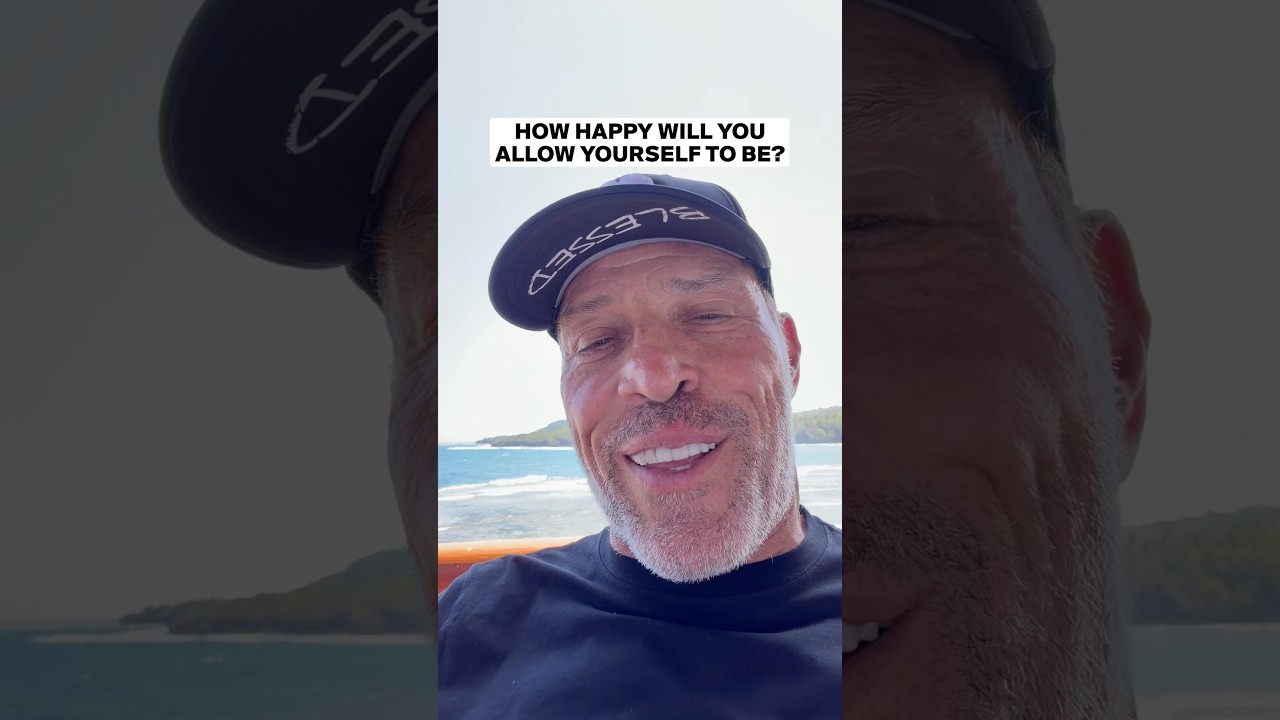
In a 2026 conversation marking ten years since the Netflix documentary I Am Not Your Guru reached audiences, filmmaker Joe Berlinger and Tony Robbins retrace how a self-described tough New York skeptic arrived at Date with Destiny expecting to be unmoved, and how a single guided exercise in the first hours broke open what he had walled off. The story is more than an anecdote about a converted cynic. It raises a sharper question about film and about change: what does it take to bring cameras into a room built for vulnerability, and why would a director known for dark rock documentaries and true-crime work chase one subject for two years? Berlinger's account, Robbins' reflections, and the testimony of a participant named Don Watson together sketch a clear picture of the event's emotional logic and of an idea that runs through all of it: transformation happens inside a person, not on a stage.
Picture the trip as Berlinger tells it. He boards at JFK, flies to Los Angeles, rents a car, and drives into the desert, asking himself the whole way why he is doing this. He had been invited almost on a whim. "You kind of saw some, you know, that I wasn't happy," he says in the video, describing the friendship that led to the invitation. "You were hinting at it. And I didn't even know you did these events."
His defenses were specific. Self-help, seminars, and public sharing of feelings all got lumped into one category in his mind, and he had no intention of sitting inside it. "At the time I considered myself this tough New York skeptical journalist," he told viewers in the video (around 1:01). That self-image mattered. A documentarian who has spent a career looking at dark material from the outside has a professional habit of keeping his distance, and the habit doesn't switch off when he walks into a conference room.
"I realized at that moment that I was being very judgmental about the event and putting up a wall." — Joe Berlinger, in the video (around 2:36)
What makes this more than a confession is the admission underneath it. Berlinger doesn't frame his skepticism as principled. He frames it as insecurity, a wall that was doing a job for him. Most people who walk into a room of strangers doing emotional work recognize that move, even if they never name it.
By his account, the first two hours were close to unbearable. "I was like, oh my god, what have I gotten myself into?" he says of the dancing and the open sharing. Then came the exercise that appears in the film: a guided return to the earliest childhood memory.
Berlinger describes the logic in plain terms. Remembering something that has been repressed about that memory is, in his words, a key to healing. He doesn't walk through the mechanics, and it is worth being careful not to fill that gap with claims the video doesn't make. What he does describe is the decision point. Standing in front of roughly 2,500 people, he closed his eyes and chose to take part. When he opened them, he was flooded with tears.
"If this could make me feel this way even for a minute, I should give it its due." — Joe Berlinger, in the video (around 2:25)
He was not someone who cried easily. He says he hadn't cried in a long time, and that the release left him feeling lighter in the moment. The sequence is worth noticing for its structure. A man arrives with his defenses fully deployed, and the breakthrough doesn't come from being argued into agreement. It comes from a physical, memory-based experience that gets past the argument. That is the core of what Robbins has long emphasized about emotional work: the mind's objections are often the last thing that needs convincing.
Berlinger's reaction to his own tears was professional as well as personal. "Watching the event, I just felt it was highly cinematic," he says in the video. Because the experience had hit him so hard, and because he had been a reluctant participant, he became convinced it deserved to be filmed.
He chased the project for two years. The approach he pitched is the key to the film's identity. He did not want a talking-head analysis of self-help. He wanted to drop the viewer into the event itself.
"I called it a concert of human emotion." — Joe Berlinger, in the video (around 3:24)
That phrase is a musician's framing, and it is apt. Berlinger came out of rock documentary work, and he treated the event the way a concert film treats a live set: the rhythm of the room, the crowd's surges, and the moments when the energy turns. The craft choice has consequences. A film that explains would ask you to agree. A film that immerses asks you to feel, and then to decide what that feeling means.
Robbins' initial resistance matters here too. In the video he recalls the hesitation with real candor: "The idea that we're going to bring cameras in there was like, uh, I don't know about this." He describes a deliberate scale difference. Robbins is used to stadiums of around 15,000 people, while Date with Destiny is capped at about 5,000, which he calls quite intimate by comparison. A camera crew in a room that size is not background noise. It changes what people are willing to show.
Robbins says that every event produces two or three experiences that stand out, and one of them came from a participant he calls Dawn. She had been caught up in a religious group that abused children, which he describes as a cult, and she stood up in the room. Robbins says she is someone Berlinger and Sage Robbins both remember vividly.
The surrounding detail reveals how the event is run. Robbins describes an evening he calls "suicide night," which he admits sounds bizarre. Before participants arrive, he reads their intake forms, roughly 15 pages of questions, and he reads all of them. It can take weeks, and some people turn their forms in the night before. He says he won't remember everyone's name, but the pattern is what stays with him.
"I read them all... the patterns are in me so when people stand up I know what many people have done." — Tony Robbins, in the video (around 4:08)
That approach explains a good deal about the method. Robbins says he uses interventions to reach as many people as possible, and that Dawn's moment was one he had not fully prepared for. The implication is that an event built on this kind of preparation still leaves room for surprise, because the human material is never fully predictable.
The film is only one part of the story. Don Watson, who attended Date with Destiny in 2014 and appears in I Am Not Your Guru, speaks in the video about what came after. He says the event and his return home led him into internal work that he saw as necessary if he wanted to help other people. He has since built his own method, drawing on what he lived through and what he learned from Robbins.
"The only way to go through pain is to navigate through it. Just go right through it and face it head on and really permit pain to show you, to teach you, to transform you." — Don Watson, in the video (around 5:53)
Watson's words are the most practical articulation of the idea running under the whole conversation. Pain is not an obstacle to be avoided on the way to change. It is something to be entered, with attention, until it has something to teach. He describes seeing life "with completely different eyes" now, and he ties that shift to a more honest, vulnerable relationship with someone close to him.
Near the end of the video, the conversation returns to the thread that connects Berlinger's arc, Dawn's moment, and Watson's method. "You're making a change inside of you," Robbins says (around 9:45), pushing back against the idea that transformation is something a speaker hands to an audience. The stage can open a door, the exercise can break a wall, and the film can carry the feeling out into the world, but the work that holds is internal.
That is the real lesson of the Berlinger story. Skepticism is not treated as a character flaw. It is treated as a defense that was doing its job, and a defense can be set down when it is no longer needed. What made the difference was not argument. It was a moment of consent, a closed-eyed decision to participate, followed by a willingness to let the feeling land. The film became a way to share that moment without pretending the feeling could be fully transferred to someone who wasn't in the room.
If you have not seen I Am Not Your Guru, the film is streaming on Netflix (netflix.com/title/80102204), and the video notes that it marks its tenth anniversary on the platform this year. Watch it with the skeptic's question in mind: what is the wall you are defending, and what would it take to let one exercise, one moment, or one honest conversation reach past it?
For readers curious about the live experience, the video describes Date with Destiny as a six-day program running December 4–9, 2026, built around uncovering the patterns that shape emotions, relationships, and direction. The description is Robbins' own, so treat it as the event's stated purpose rather than an independent review, and weigh it against your own readiness.