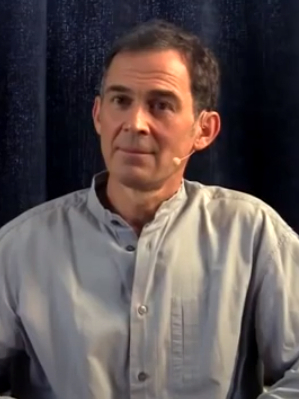
Partway through one of Rupert Spira's in-person retreats at San Damiano in March 2026, a questioner names a problem most busy people will recognize. She is a mother, a doctor, a wife, a daughter, and the demands of those roles never stop. She wants more peace and asks whether she needs to set those roles down, even for a second, in order to experience her true self. Spira's first answer is four words long: "You don't have to let go of anything." What follows, in an eleven-minute excerpt later published on his channel, is a close, almost forensic examination of two small words, "I am," and a claim that the peace people chase is not something to be built or earned but something they already are. The video is a teaching, not a technique, and its power lies in how patiently it asks the listener to check the claim against their own experience.
DoYouHavetoGiveUpYourRolestoFindPeace?
The questioner's worry is a reasonable one. Most spiritual language treats the self as something buried under a pile of identities, and the practical advice that follows often sounds like subtraction: drop the story, release the role, step out of the busy life. Spira does not accept that frame. The video's official description puts his position plainly, quoting him as saying that when you say "I am a doctor" or "I am a wife," the "I am" is "qualified by a temporary activity or relationship."
That single distinction carries the whole teaching. A role is real in the way a weather pattern is real: it happens, it has a shape, and it changes. Spira's point is that the role and the "I am" are not the same thing. The role is attached to the "I am" the way an adjective is attached to a noun. Take away the adjective and the noun remains. Keep the adjective and nothing about the noun has to go anywhere. You can be a doctor on Tuesday and not on Wednesday, and the "I am" that stands behind both sentences does not change.
He makes the logic concrete in the exchange with the questioner ([1s] and onward in the excerpt). Spira does not argue the point abstractly. He asks her to finish the sentence and to notice what the "I am" is pointing to. When she offers "consciousness," he pushes back, saying it sounds like something she read rather than something she tasted. He insists on the experience behind the words: is it true of you, right now, that you are? That is the question the teaching keeps returning to.
WhatDoes"IAm"ActuallyReferTo?
The distinction Spira draws is between the "I am" that is always true and the qualifiers that come and go. He puts it in a line that is easy to repeat and harder to sit with: "You haven't always been a wife. You haven't always been a doctor. But you always are." In the transcript, that sentence arrives at about [214s], after he asks the questioner to test the claim herself.
The test is simple, and it is the most practical part of the video. When she says "I am exhausted," Spira asks whether she is always exhausted. She admits she is not. So exhaustion, he says, is not who she is. "When you say I am exhausted, you're the I am is qualified by a temporary feeling," he tells her, and the same grammar applies to "I am a doctor," which is qualified by an activity, and "I am a wife," which is qualified by a relationship. Each of these is a true statement about a passing condition. None of them is the same as the "I am" that makes the statement possible.
Spira then makes the point that "I am" cannot be said falsely in its bare form. A person can say they are not a doctor, not a wife, not tired, and be telling the truth. But no one can truthfully say, "I am not." The bare "I am" is, in his words from the excerpt, "always always always always always true." That is the thread he wants the listener to follow back.
"You don't have to let go of anything. When you say 'I am a doctor' or 'I am a wife', the 'I am' is qualified by a temporary activity or relationship."
Rupert Spira, quoted in the official description of the video, recorded at his San Damiano retreat, 15–22 March 2026
WhyDoesBeingFeelGood?
The most striking moment in the excerpt is not a philosophical argument but an observation. When the questioner says the bare "I am" "feels good," Spira seizes on it. "Why does it feel good?" he asks, and the answer he builds is the core of the teaching. The good feeling is not a reward for correct thinking. It is what happens when attention rests on the "I am" before it is qualified by experience.
He develops this with a small game. If the questioner had spoken as a two-year-old, she would have said "I am two years old." At three, "I am three." Then "I am tired," "I am lonely," "I am sad." Each time, the "I am" is followed by a qualifier, and each qualifier is temporary. What remains constant is the bare "I am" that was there before any of them. "There's no sorrow there," he says of it. "There's no agitation there."
Spira's claim here is more specific than a general sense of calm. He is saying that the experience of being, without a label, has a quality. The quality is not something you produce by meditating. It is something you notice when you stop qualifying yourself. The questioner's surprise, and her "That's the part that feels good," becomes his evidence. She had not been told that being feels good. She tasted it, and he asked her to trust that taste over borrowed language.
WhatIstheSpaceAnalogyReallySaying?
The most memorable teaching device in the video is an analogy at about [432s], where Spira asks everyone to imagine a hut on this very site a thousand years ago. It was built of leaves and bark, small and dark inside. A storm destroys it, and it is rebuilt a little bigger in wood. Later it is rebuilt in stone, then with glass added, and on through the centuries until the present building stands there.
The container changed every time. The space inside did not. "Nothing's happened to the space," Spira says. "It wasn't really a small space and then a bigger space." The space in this room now is in the same condition as the space inside that first hut, unqualified and unharmed by the walls around it. He describes the room's space as something that does not truly share the limits of the four walls, and he applies the image directly to the person. First the being seemed enclosed in a two-year-old body, then a three-year-old body, then a feeling of sadness, then the role of a wife. Each was a container. None touched the space.
The analogy also answers the questioner's worry. If the space is never harmed by the building, there is no need to demolish the building to find it. "We don't have to destroy this building in order to sample the space," Spira says near the end of the video. The roles are the walls. You can keep them, live in them, and still notice the space they enclose. The teaching is not to flee from the walls but to stop mistaking them for the room.
WhyIsPeaceYourNature?
The final section of the excerpt, beginning at about [596s], moves from the analogy to a claim about the nature of being. Spira describes it as "pristine," "whole," "perfect," "complete," and "at peace." He is clear that he does not mean an exotic or mysterious state reserved for advanced practitioners. When the questioner says it feels good, he says she has tasted her being: "not some mysterious enlightened" version of it, but "just your regular being." The only being there is "the simple fact of being," and that fact, he says, is peaceful. "It's nature is peace," he concludes at about [626s].
Here the video's most useful instruction appears. You do not have to change your life, your schedule, or your emotions to access this. "You don't have to do anything to the building. You don't have to change it." The practice he recommends is attention, not effort: go to the simple fact of being and sample it as it is. That is the entire method, and it is deliberately humble. A busy doctor, parent, or spouse can attempt it in the middle of a day without leaving any role behind.
It is worth being precise about what the video does not claim. Spira does not say roles are unimportant, or that responsibilities disappear once you see the "I am" clearly. He says the opposite: the roles can continue, and the being in which they appear is not disturbed by them. The peace he describes is not the absence of demands. It is the condition in which the demands happen.
Wheretogofromhere
If this teaching is new to you, the clearest way in is the experiment Spira models in the excerpt. Next time you catch yourself saying "I am" followed by a role, a feeling, or an age, pause on the "I am" itself, and ask whether it is true of you right now. Notice what remains when the qualifier is set aside. You do not need to hold onto that for long, and you do not need to come to a conclusion about it. Spira's point is that the sampling is enough.
For a fuller picture, the video's description points to the rest of Spira's work. The description links to a starter playlist for newcomers, to an archive of teachings and guided meditations, and to a schedule of in-person and livestreamed retreats, many of which can be attended online. There is also a free daily meditation app, Luminous, which the description offers as "an invitation to pause and rediscover the stillness of being." These are the places the source itself points to. The video is best read as an invitation to test one simple question in your own experience, and then to see where the question leads.
Source note: quotations are drawn from Spira's own words as published in the video's transcript and official description, recorded at his San Damiano retreat, 15–22 March 2026. Timestamps refer to the video.
Comments
Loading the conversation…
Transcript
[0:01] I want to experience
[0:08] peace more.
[0:11] And in the session
[0:15] last night and this morning
[0:18] um
[0:20] this thought crossed my mind and I
[0:23] wanted to
[0:25] pose it to you for
[0:26] >> [sighs]
[0:28] >> validation or correction.
[0:32] I have so many roles.
[0:35] I'm a mother, I'm a doctor, I'm a
[0:37] wife, I'm a daughter, I'm a
[0:41] >> [sighs and gasps]
[0:44] >> There are so many things I do constantly
[0:47] in life.
[0:49] And
[0:50] in order to better
[0:55] experience
[0:58] my true self.
[1:02] Do I just need to let go of those
[1:03] things? If only for a second.
[1:06] >> You don't have to let go of anything.
[1:10] >> Well, now you confused [laughter] me.
[1:13] Okay.
[1:14] >> You say you say I'm a mother, I'm a
[1:17] daughter, I'm a doctor, I'm a wife, I am
[1:20] a
[1:21] I am a I am a
[1:24] I am a doctor.
[1:26] Who's this I am? What is this I am that
[1:29] is
[1:30] a
[1:31] sometimes playing the role of a
[1:33] daughter, sometimes a wife, sometimes a
[1:35] doctor.
[1:37] What are you referring What's the pure I
[1:39] am before it is qualified by any role or
[1:43] relationship or activity?
[1:45] >> Well, see, that's that's the difference
[1:47] is that
[1:49] so from what I know
[1:53] from listening to you so far
[1:56] >> No. No, no, that that wasn't That wasn't
[1:58] the question. What When you say I am
[2:01] >> Yes.
[2:02] >> I I am a mother, I am a doctor, I am a
[2:04] daughter, I am a wife. I
[2:06] What do you refer to when you
[2:08] You refer to the same
[2:09] >> The person I am. The person I am.
[2:12] >> person you are
[2:13] I am a person. I What is the I am before
[2:15] it is a person, before it is a daughter,
[2:18] before it is a doctor, before it is a
[2:19] wife?
[2:21] What's the pure I am before it is
[2:24] qualified
[2:25] by an activity or relationship?
[2:32] >> Okay, that's consciousness.
[2:36] >> That's one
[2:37] >> Consciousness.
[2:39] I I mean
[2:40] >> Yeah, but I don't feel that came from
[2:43] >> Okay, so
[2:45] okay, be because because the person I am
[2:48] >> I feel that came from a book, not from
[2:49] your
[2:49] No, but that's
[2:51] No, don't You're going into You're
[2:52] avoiding my question. I've asked you the
[2:54] question twice now. You paused briefly,
[2:56] which was good, but then
[2:58] you couldn't stay there for more than a
[3:00] couple of So, you just run away from it
[3:02] into
[3:02] >> Exactly.
[3:04] >> So, what I want you to do is to go
[3:07] to the experience that enables you to
[3:09] say
[3:11] I am.
[3:12] You can say from your experience I am.
[3:15] Yeah?
[3:15] >> I am. I am.
[3:17] >> No, I'm not asking you to say that. I'm
[3:18] just asking you Can you say from your
[3:20] experience Is it true of you
[3:23] that I am?
[3:26] >> Yes.
[3:26] >> Yeah, okay. You haven't always been a
[3:28] wife.
[3:31] You haven't always been a doctor.
[3:34] But you always are.
[3:36] So, I am a wife or I am a doctor are not
[3:40] absolutely true of you.
[3:44] You may not always be a doctor. You may
[3:46] not always be a wife,
[3:48] and so on.
[3:50] So, they're not true of who you
[3:52] essentially are, but
[3:54] the statement I am is
[3:56] always always always always always true.
[4:00] You can never say truthfully
[4:03] I am not.
[4:05] Yeah, so the words I am refer to who you
[4:08] truly and always are.
[4:12] So, tell us what that is from your
[4:14] experience.
[4:18] Can you say now of your experience just
[4:22] I am? Is it true of you I am?
[4:27] >> Honestly,
[4:31] I'm exhausted.
[4:33] >> Okay, I am exhausted. Are you always
[4:36] exhausted?
[4:37] >> No.
[4:37] >> No, so exhaustion is not who you are.
[4:39] So, don't tell us about your exhaustion.
[4:43] When you say I am exhausted,
[4:47] you're the I am is qualified by a
[4:49] temporary feeling.
[4:51] When you say I am a doctor, the I am is
[4:54] qualified by a temporary activity.
[4:57] When you say I am a wife,
[4:59] however long you may be married for, the
[5:01] I am is qualified by a temporary
[5:03] relationship. Sorry.
[5:05] >> [laughter]
[5:07] >> You haven't always been married, but you
[5:09] have always been
[5:11] yourself.
[5:12] Yeah, [clears throat] so I want to know
[5:14] who you are
[5:17] before you are qualified by any
[5:19] particular emotion, activity, or
[5:23] relationship.
[5:25] >> That's the part that feels good.
[5:28] >> That's good. Yeah, it feels good. Okay.
[5:31] >> [sighs and gasps]
[5:32] >> You're right, it feels good. Why does it
[5:34] feel good?
[5:37] That came from that comment came from
[5:38] your experience. You didn't read that in
[5:41] a book.
[5:42] I could tell that that you tasted
[5:44] yourself and you said that feels good.
[5:46] >> Yeah, it feels amazing, but but
[5:49] >> No, no buts, no buts.
[5:50] >> [laughter]
[5:51] >> There are no buts in the I am. What Why
[5:54] why but?
[5:56] >> [snorts]
[5:59] >> If you if you could have spoken as a
[6:03] 2-year-old girl, you would have said
[6:06] "I am 2 years old."
[6:09] A 3-year-old, "I am 3. I am 4. I am
[6:13] tired. I am lonely. I am sad." Always
[6:16] always always always I am plus some
[6:19] temporary qualification.
[6:22] A feeling, an age, a a relationship, an
[6:25] an activity.
[6:27] Always this fundamental
[6:30] "I am."
[6:34] It feels good. Why does it feel good?
[6:39] >> Because that's the starting point.
[6:41] >> It's because who It's because it's who
[6:44] you are
[6:46] >> Yeah.
[6:46] >> before you are qualified by experience.
[6:55] >> Yes.
[6:56] >> And and and it's good. There's no sorrow
[6:58] there. There's no agitation there.
[7:00] There's no
[7:02] That's just your
[7:03] pure identity.
[7:09] >> Thank you.
[7:09] >> Uh imagine I
[7:12] Just want to give you an an analogy.
[7:13] Imagine a thousand years ago
[7:17] on this very site here,
[7:20] there was just a a little hut.
[7:24] A little hut made out of Just a little
[7:27] hut in the middle of this room.
[7:29] Made out of
[7:31] leaves and bark and and trees.
[7:36] And the
[7:37] the space inside the hut would
[7:39] seem to be small and dark.
[7:43] And then imagine the hut was destroyed
[7:45] in a storm.
[7:47] And then it was rebuilt
[7:49] a little bit bigger out of wood.
[7:53] And the
[7:54] space would have been a little bit
[7:55] bigger.
[7:57] A little bit taller, a little bit wider,
[7:58] a little bit lighter, a little bit
[8:00] >> [snorts]
[8:01] >> The space would have been the same.
[8:03] And then it was destroyed in a storm.
[8:05] And it was later rebuilt a little bit
[8:07] bigger out of stone.
[8:09] And then in the next century it was
[8:10] destroyed again and it was built a
[8:11] little bit bigger out of stone and now
[8:13] they added glass and and go on and on
[8:15] and on through the centuries
[8:17] until this building replaced it.
[8:21] So, throughout the centuries
[8:24] the space this space
[8:27] was was
[8:28] contained
[8:31] conditioned contained within different
[8:33] containers but the space itself
[8:37] was always the same space. The space in
[8:38] this room now is the same space and in
[8:42] the same condition as the space in the
[8:44] little hut a thousand years ago.
[8:45] Nothing's happened to the space. It
[8:48] wasn't really a small space and then a
[8:50] bigger space and then a and
[8:53] it was always this unqualified space.
[8:55] Even now it's this unqualified space. It
[8:57] doesn't really share the limits of the
[8:59] of the
[9:00] of the four walls but your being is like
[9:01] that.
[9:03] First it seemed to be enclosed in a
[9:04] two-year-old body and then in a
[9:05] three-year-old body and then by the
[9:07] feeling of sadness and then by being a
[9:08] wife and then by being your your being
[9:10] is is is is clothed
[9:13] temporarily in all these different
[9:15] experiences but your being
[9:18] is like the space of this room. It has
[9:20] never been touched or harmed or hurt or
[9:23] qualified or modified or changed
[9:26] by the
[9:27] by the temporary layers of experience
[9:29] within which it has been
[9:32] closed.
[9:34] But the pure I am, that's
[9:36] that's the empty space of this room
[9:38] that's always in the same condition.
[9:40] Your being is in the same condition now
[9:42] as it was when you were a two-year-old
[9:43] child. Nothing that has happened to you
[9:46] in the intervening years has affected
[9:48] your being just as nothing that has
[9:50] happened in the last thousand years has
[9:52] affected the space
[9:54] of this room. But your being is like
[9:56] that. It's just it's pristine. It's
[9:58] whole. It's perfect. It's complete. It's
[10:01] at peace.
[10:04] >> [sighs]
[10:06] >> And when you say it feels good
[10:09] you you just tasted your being.
[10:12] That's where that when you when you go
[10:14] there and you have that feels good. It's
[10:15] because you're you're tasting your
[10:17] being, not some mysterious enlightened
[10:20] just your regular being. The only being
[10:23] there is just the simple fact of being
[10:26] that and it feels good. It's nature is
[10:28] peace.
[10:35] Thank you.
[10:36] >> And last thing, you don't have to let go
British non-dual teacher and ceramic artist. His teaching, deeply influenced by Francis Lucille and the lineage of Atmananda Krishna Menon (Direct Path), is unusually clear and pre…
According to Rupert Spira in this video, you don't have to let go of anything. He distinguishes the bare 'I am,' which is always true, from qualifiers like 'I am a doctor' or 'I am a wife,' which are temporary and do not define who you essentially are.
Spira uses 'I am' to point to the simple fact of being that exists before any role, age, feeling, or relationship is attached to it. He asks listeners to check, from their own experience, whether the bare 'I am' is true of them, noting that no one can truthfully say 'I am not.'
Spira describes a hut on the same site, rebuilt over centuries from leaves to wood to stone to glass, with the container changing each time while the space inside stayed the same. He uses it to show that your being is never harmed or changed by the temporary layers of experience that surround it.
In the video, Spira says the good feeling comes from resting attention on the 'I am' before it is qualified by experience. He argues that the bare being has no sorrow or agitation in it, so when you notice it, you are tasting your own nature rather than a special state.
Spira's instruction in this excerpt is not to change anything or add effort. He recommends going to the simple fact of being and sampling it as it is, without destroying the 'building' of your life to find the 'space.'
The video's official description points to a starter playlist for newcomers, a full video archive of teachings and guided meditations, and a schedule of retreats, many attendable by livestream. It also mentions the free Luminous meditation app for daily practice.