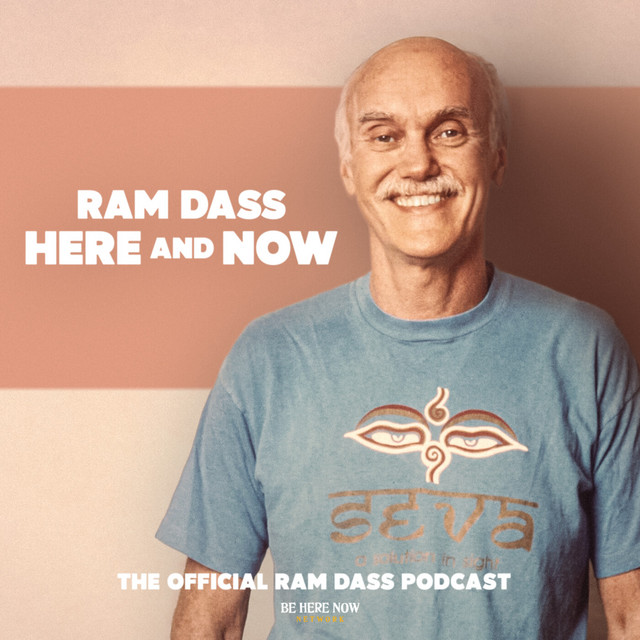
Across five decades of social upheaval—from the Civil Rights Movement to the Trump era—Ram Dass articulates a vision of service and social action rooted in spiritual practice rather than reactivity. He emphasizes responding to suffering with love rather than anger, integrating spiritual work with activism, understanding the difference between dharma and seva, managing attachment to outcomes to prevent burnout, and cultivating the intuitive wisdom needed to navigate crises with an open heart. This teaching positions activism not as separate from contemplative life but as an extension of it.
In 1969, during the height of the Civil Rights Movement, anti-war protests, and Women's Liberation uprisings, Ram Dass introduced a countercultural perspective on activism itself. Rather than condemning anger as invalid, he reframed the source from which meaningful action flows. When we protest or engage in social action from a place of anger—even righteous anger—we remain locked in the dualistic framework that created the suffering in the first place. Anger perpetuates the us-versus-them consciousness that sustains injustice.
Service motivated by love operates from a different consciousness. It recognizes the shared humanity of all beings, including those perpetuating harm. This does not mean passivity or acceptance of injustice. Rather, it means acting to stop suffering while simultaneously holding compassion for the systems and people caught within those systems. When we protest from love, we are not trying to destroy an enemy; we are trying to awaken people to their own higher nature. This shift in motivation transforms the activist's relationship to their work and, paradoxically, often makes the work more effective because it is not consumed by the activist's own emotional reactivity.
By 1983, with the Iran hostage crisis, the Reagan administration's rise to power, and the emerging AIDS epidemic, Ram Dass addressed how activists and compassionate people could discern the right response to suffering without becoming paralyzed by complexity or overwhelmed by the magnitude of need. He taught that we must learn to trust our intuitive inner voice—the subtle knowing beneath the conditioned mind's chatter and fear.
This intuitive response is not mere feeling; it is a direct perception of what is needed in a given moment. When we quiet the mind through spiritual practice, we become available to this deeper knowing. A person working with AIDS patients, for instance, might intuitively know whether a particular action will genuinely serve or whether it will project the helper's own agenda onto those suffering. Trust in intuition means developing enough clarity through meditation and contemplative work that we can distinguish between our projections and genuine responsiveness to the actual situation before us.
This intuition is also collective. When many people tune into their inner voice, patterns of right action emerge across communities, and movements gain coherence that no central plan could manufacture. The civil rights activists, for instance, were not following a manual; they were responding intuitively to an inner call for justice, which aligned them with millions of others doing the same.
In 1985, as the world watched apartheid violence in South Africa and the Reagan administration's rollback of civil liberties, Ram Dass distinguished between two Sanskrit concepts essential to understanding spiritual activism. Dharma refers to one's unique purpose or duty within the larger cosmic order—the particular role and gifts that a person is meant to embody. Seva, often translated as "service," refers to selfless action performed without attachment to personal gain or recognition.
The convergence of dharma and seva is where authentic social action lives. A person's dharma might be to be a teacher, a healer, an organizer, a nurse, or an artist. When that person performs their dharma as seva—without ego attachment, without needing the fruits of their labor, without seeking credit—their work becomes aligned with the deepest currents of the universe rather than merely with personal ambition. An activist who is enacting their dharma as seva is not trying to prove something or build a resume; they are simply doing what they are called to do, what their gifts and the world's needs have aligned them to do.
This distinction is crucial because it reveals why some activists burn out while others sustain their work across decades. Those acting from dharma without attachment to outcomes have an inexhaustible source of motivation. Those seeking validation through their activism, or trying to single-handedly solve systemic problems, rapidly deplete themselves.
By 1993, as technology began transforming the world, Ram Dass addressed a problem visible across activist communities: burnout. Activists often become attached to seeing specific results from their work—passing a particular law, changing a person's mind, ending a war. When those results do not materialize, or when the change is slower than hoped, the activist's motivation collapses. This is the fruits of action trap that the Bhagavad Gita warns against.
Krishna teaches Arjuna that we have a right to our action but not to the fruits of our action. The activist's work is to do the work skillfully and with full commitment; the outcome is not in their control. A person might organize a community, raise awareness, and present a powerful case for change, yet the political system might still resist. By becoming attached to the outcome, the activist takes on a burden that is not theirs to carry. They also make their sense of self-worth conditional on success as defined by external circumstances.
When activists release attachment to outcomes, several things shift. First, they can persist through setbacks without despair because their motivation is not outcome-dependent. Second, they remain open to unexpected paths forward because they are not rigidly focused on a particular result. Third, they model a spiritual maturity that inspires others: the willingness to show up fully without needing to control the results. This does not mean working without strategy or intention; it means holding strategy lightly, remaining responsive, and finding meaning in the work itself rather than in victories.
From the 1960s through 2018, Ram Dass consistently returned to the paradox that animates all authentic spiritual activism: we must simultaneously acknowledge and respond to real suffering while maintaining the openness and compassion that prevents us from becoming hardened. This is not about denying suffering or adopting false positivity. It is about refusing to let suffering close our hearts.
When we witness injustice, violence, or systemic cruelty—whether apartheid in South Africa, the AIDS epidemic, wars, or political oppression—there is a natural impulse to close down, to harden ourselves against the pain. We create us-versus-them narratives that give us a sense of control and clarity. But this hardening fragments our consciousness and diminishes our capacity to act wisely.
An open heart does not mean naive optimism. It means feeling the full reality of suffering without letting that suffering calcify into hatred. It means seeing the humanity in those we oppose while still opposing their actions. It means recognizing that the systems causing suffering are themselves expressions of human delusion and fear, and that changing those systems requires compassion, not vengeance.
This stance requires spiritual practice. Meditation, prayer, chanting, or other contemplative disciplines keep the heart open by regularly reconnecting the activist to the deepest truth: all beings want to be happy and free, and all beings are already perfect in their essence even when their behavior is destructive. This perspective does not lead to passivity; it leads to action motivated by genuine care rather than reactivity.
Throughout these decades of teachings, Ram Dass emphasizes that spiritual practice and social action are not separate realms. Spiritual practice is not an escape from the world's suffering; it is the very thing that allows us to engage with suffering authentically and sustainably. Without it, activism becomes either a form of spiritual bypassing (believing we are doing good while avoiding our own inner work) or a form of burnout (trying to fix the world while fragmenting ourselves in the process).
Spiritual practice serves social action in several ways. First, it clarifies the activist's own mind so they can distinguish between genuine response and conditioned reactivity. Second, it opens the heart so the activist can hold compassion even for those perpetuating harm. Third, it reduces the activist's attachment to outcomes, allowing sustained engagement even when results are slow. Fourth, it connects the activist to the larger spiritual currents moving through society, aligning individual action with collective awakening. And fifth, it modeled for others that another way of being—less driven by ego, more rooted in love and service—is possible.
If you are drawn to social action or activism, consider how your practice sustains your work. Do you have a meditation practice, a prayer practice, or other discipline that keeps your heart open and your mind clear? If not, beginning one—even fifteen minutes daily—can transform your activism from a source of stress into an expression of your deepest values. If you are already spiritually active, examine whether your practice is leading you toward greater service or greater withdrawal from the world. True spiritual practice should enhance your capacity to meet suffering with clarity and compassion.
Reflect on whether your activism is rooted in love or in reactivity. Notice if you are attached to specific outcomes, and if so, experiment with releasing that attachment while maintaining full commitment to the work. Study the concepts of dharma and seva to discern your unique role in the world. And remember that the most radical act in a fragmented world is to remain whole—to keep your heart open, your mind clear, and your actions aligned with love rather than fear.