Transcript
[0:01] Hello.
[0:36] Can you stop meditation?
[1:03] It's got a few stri
[1:26] She lets
[1:46] Okay, great. So let's start by uh
[1:48] saluting the shrine, saluting the three.
[2:06] [chanting]
[2:10] more
[2:12] than
[2:16] [chanting]
[2:19] more
[2:21] higher.
[2:24] [chanting]
[2:33] [chanting]
[2:35] Home.
[2:37] >> Home.
[2:41] Home.
[2:42] >> Home.
[3:07] >> [clears throat]
[3:09] >> Okay. So, yeah, really really warm
[3:11] welcome uh to the center to this special
[3:13] Friday evening class. Welcome to
[3:15] everybody in the room and also welcome
[3:17] to you online as well. Uh so yeah, an
[3:20] extra special uh Friday night class
[3:22] today where we're going to be
[3:24] remembering, recollecting, celebrating
[3:26] uh Urgen Sangar, the founder uh of uh
[3:31] the Tribna Buddhist order and community
[3:33] and uh my my Buddhist teacher. Um and
[3:38] we're going to start by doing a
[3:40] meditation. Uh we're going to do the
[3:42] mindfulness of breathing quite for those
[3:44] of you who are regular to the class,
[3:45] it's going to be a shorter meditation uh
[3:47] than usual. And then after that um I'm
[3:50] going to ask um Sad and a few questions
[3:54] and we're going to get to know uh Bante
[3:57] Sangra a bit through us talking.
[4:01] Okay. So if you'd like to set yourselves
[4:03] up in your meditation posture, I'll lead
[4:05] us into the practice and then I'll just
[4:07] ring uh bells to mark the stages.
[4:29] >> [clears throat]
[4:55] >> Okay. Really settling into your posture,
[4:59] feeling the weight of the body
[5:02] flowing down into the floor,
[5:05] into the earth beneath you.
[5:23] all of the heaviness of the muscles and
[5:26] the bones
[5:29] flowing down
[5:36] and taking your seat, taking your place
[5:39] in the room.
[6:13] So, just tuning in a little bit to how
[6:15] you're feeling right now. You might be
[6:17] feeling a bit tired or grumpy,
[6:25] dull or neutral or not know how you're
[6:27] feeling.
[6:32] Or you may be feeling reasonably relaxed
[6:34] and well.
[7:23] And right in the center of your
[7:24] experience, right in the heart of your
[7:26] experience, whatever it is,
[7:29] is your own breathing
[7:32] quietly sustaining you and giving you
[7:34] life.
[8:29] And we're going to spend some time now
[8:31] just being with ourselves,
[8:34] being with our own breathing.
[9:26] the mindfulness of breathing practice.
[9:40] >> [music]
[21:23] [cough]
[21:23] [clears throat]
[21:31] [clears throat]
[21:51] [snorts]
[29:19] [music]
[29:29] [snorts]
[29:50] [snorts]
[29:53] [laughter and cough]
[30:03] >> Okay. So, yeah, do sit comfortably.
[30:05] Height. So, now I need to come to the
[30:07] front. And
[30:10] so Mitch, I need to move the speaker to
[30:12] the table.
[30:15] >> Yeah.
[30:18] >> Do I need to move the speaker?
[30:20] >> Yes.
[30:21] >> Yeah.
[30:42] Okay. So, uh yeah, good to do a bit of
[30:44] mindfulness practice just to self myself
[30:47] at least and hope you've got into your
[30:50] practice. It's been a bit more fully. Uh
[30:52] yes, I'm really pleased um that uh Sadin
[30:55] Andy was able to come on this evening.
[30:58] Um
[31:00] uh I got to know Sadini. I I looked back
[31:03] in on my in my emails track back it was
[31:05] 2020 so six years ago and we jointly led
[31:10] an order retreat to Adashana on on
[31:12] Shakiuni and uh you I knew you a little
[31:15] bit before then but I really got to know
[31:17] you through collaborating with you and I
[31:19] was really struck by um uh well just how
[31:23] engaged you were with that situation and
[31:26] uh committed and loyal to Bante and also
[31:30] um you could all hold it hold things
[31:32] very lightly as well. I could see, you
[31:33] know, there was a lot to hold and you
[31:35] seem to be able to hold it lightly. So,
[31:36] I was really struck by that when we did
[31:38] that retreat together.
[31:41] Um, so just a little bit of uh uh um
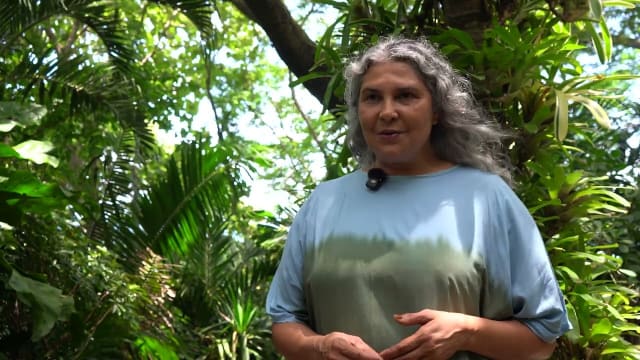
[31:45] about sudden Andy before we uh start
[31:48] talking a bit more. So uh she trained as
[31:51] an artist at the central school of
[31:53] London and was initially involved with
[31:55] the Cuden Sand SA before moving to
[31:58] Glasgow in 1983 where she attended the
[32:01] Buddhist center and lived in a women's
[32:03] community there. And then in in uh 1994
[32:07] she moved to Tara Loka and lived there
[32:10] for 20 years and was chair there for the
[32:13] last 13 of those years. um and before
[32:17] being before being asked to move to
[32:20] Allesana and Taraoka for those of you
[32:22] who don't know is a a tree ratner
[32:25] retreat center for women
[32:28] and then during the next few years she
[32:30] got to know whilst at Adishana she got
[32:32] to know Sangaracha whilst doing a series
[32:34] of interviews uh with him and through
[32:37] meeting up with him very regularly as a
[32:39] friend and also in your capacity as
[32:41] chair of Adishana and uh once again For
[32:45] those of you don't who don't know,
[32:46] Adishana is um in in the Midlands and
[32:49] it's our our tree ratner central if you
[32:52] like where [snorts] the uh uh Bante
[32:55] Sandra's body is um buried and uh
[32:59] there's all his books are collected and
[33:01] there's a large community of men and
[33:03] women who live there.
[33:06] Okay. So just a little preamble. Uh so
[33:09] in terms of thought we'd just you know
[33:12] talk I'm going to ask you a few
[33:13] questions and I hope just get you
[33:15] started and then you can tell us about
[33:17] your experience.
[33:18] >> Yeah. Yeah.
[33:19] >> So I thought maybe we could start by
[33:21] telling us why um what was your first
[33:24] contact with Bante with urgian sancture
[33:27] and the movement that he'd started.
[33:29] >> Yeah.
[33:30] >> Okay. Yeah. So um this is all going to
[33:32] be a bit about me. So I'm sorry about
[33:34] this. So just warming up to bante we're
[33:36] going there. We are heading there in
[33:37] that direction. Okay. Uh yes, I got
[33:40] involved in the movement in 1983 uh in
[33:43] Cuddon. I didn't particularly want to
[33:45] get involved with Buddhism or
[33:47] meditation, but I had a guy in my life
[33:49] who was getting very involved. And he
[33:50] said, "Would you go to the Buddhist
[33:52] center?" I'm in Glasgow. There's Glasgow
[33:54] Buddhist Center. You're in Cuddon.
[33:55] There's a Cuddon Buddhist Center. Can
[33:57] you go there? I was like, "Right, okay,
[33:59] whatever." And [laughter]
[34:01] I got I got [clears throat] taught by
[34:02] somebody who looked like a well I always
[34:04] thought he looked like a rugby player
[34:05] but everyone if you weren't if you
[34:07] didn't go to art school you look like a
[34:08] rugby player basically it came down to
[34:11] any years later I said to Pamadra did
[34:14] you teach me to meditate I did
[34:18] and I think he was going to India and
[34:21] being in Cudon at that time I was going
[34:22] backwards and forwards quite a bit
[34:24] >> and I moved to Glasgow and um uh
[34:27] suddenly I was in this situation
[34:30] And I started going to the Buddhist
[34:32] center there. And then I was hearing
[34:34] lectures by Sangaraja.
[34:36] Strange slow lectures. Yeah. And um I
[34:42] think then I just sort of started just
[34:44] listening to a lot. I think I I'm
[34:46] probably somebody who I don't know maybe
[34:48] I'm a research person or somebody. I
[34:50] just started listening to a lot of tape
[34:52] lectures by him and [clears throat] and
[34:54] writing down all the notes and writing
[34:55] down which ones I'd listen to and
[34:57] everything. And then uh I would I think
[35:01] probably the first time I really really
[35:03] started I met him probably was um when
[35:07] two of the women in Glasgow got ordained
[35:09] the first women that got ordained in
[35:11] Glasgow which was maybe in 80 maybe in '
[35:14] 86 or something and he was on that
[35:17] retreat and being the preceptor to them
[35:19] and then we were around there. There was
[35:21] like 13 of us on that retreat. I was one
[35:23] of the people there and I got a chance
[35:25] to meet with him. But I think
[35:30] yeah um
[35:32] I think quite early on I realized having
[35:35] met him onetoone
[35:37] this is not a method that's going to
[35:39] really work for me. I cannot get to know
[35:41] this person through meeting with him
[35:42] onetoone because the communication has
[35:45] felt very stilted and awkward. And I
[35:47] thought I'm just going to get to know
[35:49] him through his his talks. Actually,
[35:52] that's who I'm going to meet. I read his
[35:54] seminars. I listened to his talks. I was
[35:57] very um yeah, it was very simple for me
[36:01] actually. There weren't many other
[36:02] dharma teachers at that time. You you
[36:05] nowadays you go to the library, you go
[36:06] to the bookshop, it's just full of
[36:08] people writing books. I mean there was
[36:10] like hardly anything I think at that
[36:12] time really and Sanger was one of them
[36:14] that was writing and I was listening to
[36:17] a lot of his talks and then I wrote to
[36:20] him to ask for ordination which is what
[36:22] you did you didn't write to anybody else
[36:23] he wrote to Sang Rasha and I meant to
[36:26] bring a postcard with me which he wrote
[36:27] back you know I still remember it I sort
[36:30] of say in his tone of voice I sort of
[36:32] dear sodandi well it's I'm very pleased
[36:35] that you've asked for ordination or dear
[36:37] Rachel sorry that's so I've got two
[36:39] names. You will dear Rachel as I was
[36:41] then. Um I'm very pleased to hear that
[36:44] um you've wanted to ask for donation and
[36:46] no doubt um the order members in your um
[36:49] area will be giving you feedback as to
[36:51] when that might happen and I look
[36:53] forward to that one day happening
[36:55] something like that and a very nice
[36:57] picture on the front or something. And
[36:59] then I think um I went on some very
[37:02] intensive solitary retreats where I was
[37:04] just there on my own for two or three
[37:06] weeks just as this young woman and then
[37:08] I'd write him really long letters
[37:11] >> like 16 pages. [laughter]
[37:15] >> I mean eventually when I was ordained I
[37:17] received women writing to me 16 pages. I
[37:21] thought I know what this looks like
[37:22] anyway. But he wrote two p postcards to
[37:25] me like really within a couple of weeks
[37:28] in reply to them. It was very nice.
[37:30] >> And I've got this horrible feeling that
[37:32] somewhere in the loft in above the
[37:34] women's community that is going to be in
[37:36] an archive box under the [clears throat]
[37:38] name whatever I had at that moment, you
[37:40] know, um 1987 or whatever it was.
[37:44] >> And then um I think you sort of build up
[37:49] your own relationship. It's not like I
[37:51] really thought I needed to have a
[37:52] sangria. You know, I had relationships
[37:54] with the order members I was in contact
[37:56] with, the women that I was living with,
[37:58] the dharma that were coming up from
[38:00] London to lead retreats, which was
[38:02] needed because we had we just had two
[38:05] very young dharma in Glasgow and um
[38:08] nobody else there. I mean, the nearest
[38:09] Dharmache at that moment was probably
[38:13] London, which is still quite far away.
[38:16] and um yeah really loyal daties like
[38:20] Parami and Anoma and people coming up
[38:23] and my relationship with them was
[38:25] developing the Sangraster then I didn't
[38:28] really get to I didn't get to know this
[38:29] guy this this isn't the Sangra I knew
[38:33] the Sangra I got to know was um there
[38:35] was this beautiful black and white
[38:37] photograph in um a newsletter with him
[38:40] sitting at his desk I suppose possibly
[38:43] at Pamela at that time got books on one
[38:46] side and he's just sitting at a desk and
[38:47] he's just writing something and you just
[38:49] see him sideways
[38:50] >> and it's a full um A3 you know spread
[38:54] >> and I thought that is the teacher that I
[38:56] know the guy that writes lectures the
[38:59] guy that's writing letters to me
[39:01] postcards to me
[39:02] >> just sitting quietly at a desk and
[39:04] thinking things through uh dressed in
[39:06] very ordinary clothes and um yeah that
[39:09] was the Sangra I got to know and then
[39:12] and then through his dharma lectures and
[39:14] I will just say gradually Over the
[39:16] years, what I learned was I'm not
[39:18] looking for information about the
[39:20] dharma. I'm looking for words of power.
[39:23] And he spoke words of power. That's what
[39:25] it comes down to.
[39:26] >> And uh
[39:28] >> what do you mean by power?
[39:29] >> Yeah.
[39:31] And this is probably I just realized one
[39:32] of the questions you I know you were
[39:33] going to ask me was like what made me
[39:35] think he was my teacher?
[39:37] >> This is probably answering this.
[39:38] >> So words of power are words that are
[39:41] going to change your life. And um
[39:45] so I was in contact with them through
[39:48] his lectures where I you know I would
[39:51] hear something he would say and I'd hear
[39:54] um it could be something very simple. I
[39:57] remember in one of the lectures on
[39:58] awareness where he just says you need to
[40:01] know what your positive emotions are or
[40:03] you need to know your emotional
[40:04] experience and you need to name them.
[40:05] And I thought how often do I just say me
[40:08] I feel all right. And I thought what
[40:11] would it feel like if I said I'm feeling
[40:13] faith or I'm feeling resentment or if
[40:16] you name it accurately it makes such a
[40:19] difference
[40:20] >> and I thought my goodness that could
[40:22] make quite a big difference to my life.
[40:24] So there was one thing or like another
[40:27] one would be the nature of samsara is
[40:30] compulsion.
[40:32] >> You can go a long way with that. Yeah.
[40:35] [laughter]
[40:35] I mean when you feel that compulsion in
[40:37] you, you know samsara is working the
[40:40] system. Yeah.
[40:41] >> Or what about this one? Um
[40:45] um energy uh vira. The lack of energy is
[40:50] not so much uh the lack of the lack of
[40:54] vira is not so much the lack of energy,
[40:57] it's the lack of vision.
[41:00] >> Very nice. Because when we when we're
[41:02] feeling lazy, when we're not applying
[41:05] ourselves, we think we don't have
[41:07] energy. But how different would it feel
[41:09] if you thought I don't have vision? And
[41:11] it is it takes you in a different place
[41:13] and that helps you understand what
[41:16] you're doing. Yeah.
[41:18] I mean, this is why I end up as my
[41:20] teacher. Okay. And there's this great
[41:22] one where um he says uh patience is not
[41:26] so much the ability to withstand pain
[41:30] that gets stronger and stronger. It's
[41:32] the thing that we think is getting hurt
[41:35] gets weaker and weaker. Go a long way on
[41:38] that one as well.
[41:39] >> Can you say that one again?
[41:42] >> Uh patience is not so much our ability
[41:45] to withstand pain that gets stronger and
[41:48] stronger. It's more that the thing that
[41:52] ex that thinks it's getting hurt gets
[41:55] smaller and smaller or weaker and
[41:57] weaker.
[41:58] >> Yeah. Is that making sense?
[42:00] >> Yeah.
[42:02] >> So, he spoke words of power and the
[42:05] these words I could live by and that
[42:08] meant he was my teacher.
[42:10] >> Yeah.
[42:11] >> Great. Great.
[42:13] Um, okay. Okay. So, there was this like
[42:16] process of getting to know him through
[42:18] his lectures and through some meetings
[42:21] and through a correspondence which which
[42:23] went on a long way, didn't it? Um
[42:26] >> and uh you trained for nation and then
[42:28] you got ordained.
[42:29] >> It did. I did.
[42:30] >> Um [laughter]
[42:33] uh and and I wasing what what inspired
[42:36] you particularly to maybe move to Torok
[42:39] and take up responsibilities there? How
[42:42] did that how did that sort of come? It
[42:43] is a bit on you at the moment, but it's
[42:45] relating to Bante and the movie. Okay.
[42:48] >> I think um
[42:50] yeah, I was working in Winter's
[42:51] Publications, which was based in the
[42:53] women's community in Glasgow at the
[42:55] time. That was in 1993
[42:57] 94. And um I was beginning to realize I
[43:01] probably was going to step out of that.
[43:04] And at that time around that time my
[43:07] father got I got a diagnosis of um um
[43:11] high level you know very um what's it
[43:14] basically cancer of the liver which was
[43:16] only secondary so they never even
[43:17] bothered finding the primary site
[43:19] because once you got cancer of the liver
[43:20] you're on your way out basically
[43:22] >> and um I went down and lived with him in
[43:26] Cuden while he went through that process
[43:29] and uh I just lived with a man who was
[43:33] 56 years
[43:35] living out the last three months of his
[43:36] life. Mostly I was doing a lot of the
[43:38] care although I have got sisters and a
[43:41] mother who was they weren't living you
[43:43] know with we weren't living with him but
[43:45] um uh and I lived a very focused life in
[43:51] a way you could say I lived a very
[43:53] immersive life around this guy
[43:56] >> and um the effect that that was having
[43:59] on him and it was beginning to affect
[44:01] his brain and um just just being in this
[44:05] world of
[44:08] Uh yeah, a very immersive three months
[44:10] or so while he moved through having the
[44:14] first maybe yeah first sort of diagnosis
[44:17] to dying
[44:19] and um I could see by then I could see
[44:23] my dharma life was really starting to
[44:25] add up to something. Maybe all of us in
[44:29] our dharma lives need it tested
[44:30] somewhere and I'd lived my life always
[44:33] in tree ratner movements community
[44:34] center whatever maybe you do need to
[44:37] eventually step out into a much
[44:39] universal piece of like life like death
[44:43] and see it there and then you start
[44:45] realizing it's now adding up
[44:48] >> and that made me think I need a life
[44:52] that's got much stronger focus and then
[44:56] I when I got back to Glasgow which is
[44:58] where I was living um somebody phoned me
[45:00] from Taroka and said would you come to
[45:02] Taroka for nine months [laughter] and
[45:05] >> yes I do
[45:06] >> but then my Kalan Richard said you just
[45:08] got back from being in Cudon for three
[45:10] or four months why would you go to
[45:11] Tarokus I said okay well not now
[45:15] >> and then during that next few months I
[45:17] read a few books one of them was Brian
[45:18] Keenan's evil cradling
[45:21] >> and uh there he also speaks words of
[45:23] power in the same sort of way which I
[45:26] won't quote but he did he does and there
[45:29] he but he will he does say each person
[45:32] needs to choose their freedom when it
[45:34] comes to not do so would be belittle
[45:37] others I had a very strong loyalty to
[45:40] Glasgow been I've got friends that were
[45:42] 10 years 11 years alongside me and when
[45:46] Taroka asked me the second time will you
[45:49] come to Taroka I said yes
[45:51] >> and it was me stepping into maybe a more
[45:55] objective situation or going forth maybe
[45:57] bits of going forth in that moment
[45:59] >> riding on that experience of my father's
[46:01] death and then Brian Kean's words of
[46:04] power as well
[46:05] >> and um as soon as I got there I thought
[46:09] I think I maybe I'm going to end up
[46:11] chair in this place which was
[46:13] >> five years later
[46:16] >> uh and then um yeah I just lived at
[46:19] Taroka and I met Banty a few times
[46:21] during that time he came to Tarlo
[46:23] sometimes on a women's mre conveners
[46:25] meeting and I met him during that time
[46:27] >> but I think I just could feel I was a
[46:30] very broad associative
[46:33] extroverted woman and I needed a strong
[46:36] container and
[46:37] >> a retreat center is a strong container
[46:39] like a man's death is as well.
[46:41] >> Yeah.
[46:42] >> And did you feel you know in some ways
[46:44] that you know living at Toroka was
[46:46] helping to spread Bante's vision of the
[46:48] dharma or
[46:49] >> or was it not quite like that?
[46:51] >> Uh yeah it is like that. Um, I was also
[46:55] just a young woman running her own
[46:57] business. Actually, [laughter] I was
[46:58] making money. I was creating programs. I
[47:01] was just being very creative with a
[47:03] bunch of women that were all right
[47:05] there. You know, we're all doing
[47:06] something
[47:07] >> and um
[47:09] >> you know, it was probably possibly the
[47:11] only women's retreat center in the world
[47:13] sort of stuff. Yes. And uh we were
[47:17] teaching that armor strongly and um I
[47:22] was also trying to teach it at a level
[47:23] which we were moving out of the 70s and
[47:25] moving into a more sophisticated level
[47:28] of teaching than dharma which because it
[47:30] was just much more available.
[47:32] >> Uh but you know I I it's surprising that
[47:35] you can look everything up now online.
[47:36] It's so easy. But I just go to the
[47:38] library, you know, someone would say,
[47:40] "We need to give a talk on X, you know,
[47:44] um, why is simplicity important?" And I
[47:46] would be going through an index of all
[47:48] the seminars and looking up the word
[47:50] simplicity and then going through every
[47:52] single seminar to find what he says
[47:56] about simplicity and then
[47:58] >> finding the words of power in that and
[48:00] giving the talk or something.
[48:01] >> And what what did I think? I think I
[48:04] thought of myself as well particularly
[48:07] making the dharma available to women and
[48:10] seeing it being taught by women which
[48:12] was also quite radical
[48:14] >> and um uh and that was his vision.
[48:17] [clears throat] Yes.
[48:18] >> I was certainly serving him. Um when I
[48:22] eventually was working closer to him
[48:24] more in person, I felt we were both
[48:26] serving a project together
[48:28] >> and he and when I asked him once
[48:31] [clears throat]
[48:32] what were you saving were you serving
[48:34] Ambbeck when you were doing all that
[48:35] work in India or and he said no sandy I
[48:38] was serving the Buddha like that was all
[48:40] very simple to him and I think
[48:42] >> I also [clears throat] felt that as
[48:44] well.
[48:45] >> That helps a bit.
[48:47] >> Okay. So a big chunk of your life was at
[48:49] Tara Loka and then there was another
[48:51] change wasn't there how you were asked
[48:52] to move to Adishana. So can can you tell
[48:54] us the story about that?
[48:57] >> That's a [laughter] horrible story.
[48:59] >> Yeah. So I just started running my first
[49:02] order retreat at Toroca
[49:05] and um and it was so it starts on
[49:09] Friday. Then Saturday morning
[49:12] uh I got a phone somebody came to me and
[49:14] said sundi
[49:16] um Pammy has called has called from
[49:19] Adistana. She says Sabbouti is going to
[49:22] come and visit and I knew exactly what
[49:26] that was what exactly what that was. I
[49:28] just knew that. And uh and I said, "I'm
[49:31] running a retreat paramei." She said,
[49:34] "He's on his way. [laughter]
[49:36] He got lost on the on the way." And so
[49:39] it took him hours and hours and hours
[49:40] and he had to call in and see somebody
[49:42] else first. But he arrived at something
[49:44] like past 5 or 6 7:00 in the evening. It
[49:47] was all crazy. And
[49:49] >> And was Subuti the chair of the
[49:52] preceptor college then or was that?
[49:54] >> No, Darati was.
[49:55] >> Okay. I think I think that's what it
[49:58] was. Uh I think he was just he was on a
[50:02] mission
[50:03] >> and uh he was the man for the job kind
[50:05] of thing and uh he arrived with all his
[50:09] subuti energy and just saying and we sat
[50:11] in the room while I'm trying to run this
[50:13] other retreat and he just said will you
[50:15] come to Adistana and be chair
[50:18] >> and um I just didn't know how to think
[50:22] about that actually. Um,
[50:25] and maybe I don't know. It's like I
[50:30] don't know. I just didn't know how to
[50:31] think about it. And um, I thought
[50:36] well the thought of suddenly leaving
[50:37] Tarloa felt very strong and also I
[50:41] didn't know what I was stepping into and
[50:42] it was a I knew it was going to be a big
[50:44] project and I was getting old I felt and
[50:48] um,
[50:49] >> uh, the request was too strong. sort of
[50:52] too strong.
[50:53] >> Yeah.
[50:54] >> Um
[50:56] and then I just said I'll just have to
[50:58] think about it. And I know that when he
[50:59] when he got back to Parammy, he said,
[51:01] I've had a very beautiful conversation
[51:02] with Sadandi and uh I don't know how
[51:05] she's going to I'm I don't know how
[51:07] she's going to make the decision, but
[51:09] I'm sure she will. And that's what
[51:11] happened.
[51:12] >> I did speak to my mother about it as you
[51:14] do.
[51:15] >> And what did your mom say? blind moms.
[51:18] She said, "Well,
[51:21] um, that situation will need a strong
[51:23] woman, and you're a strong woman."
[51:25] She said, "You're getting old now. Do
[51:28] you really want that a [clears throat]
[51:28] level of stress? You'll have to think
[51:30] about that." [snorts] And she said, "Um,
[51:35] you're good at making decisions. You'll
[51:37] work out what to do."
[51:39] >> And [snorts] then,
[51:40] >> sage advice from [laughter] mom.
[51:42] [clears throat]
[51:42] >> She's a good woman. And uh yeah anyway I
[51:46] made the decision.
[51:47] >> Yeah.
[51:50] >> And then you know when you moved to
[51:53] Adashana um um you know then you you
[51:57] really started you know getting to know
[51:59] Bante in a more personal way. Can you
[52:02] talk us through the journey of that a
[52:03] little bit?
[52:04] >> Yeah. Yeah. I think when I moved there
[52:05] we didn't know each other really. I
[52:07] hadn't written to him for a long time
[52:09] and
[52:11] I think he felt a bit wary of me. I was
[52:13] quite polite. You say I hold things a
[52:14] bit lightly and sometimes got this humor
[52:16] and he wasn't sure about that and I was
[52:19] [laughter]
[52:20] bit nervous of him myself. So we both
[52:23] had slightly different styles and we
[52:24] weren't we weren't sure about each other
[52:26] and yet we were in this you know it's
[52:29] important in some ways that we did have
[52:31] some sort of rapport
[52:34] and uh we met a few times just sort of
[52:37] as I was at Adistana and becoming chair
[52:40] and uh we talked about things a bit but
[52:43] then Paramatha had this lovely idea that
[52:46] um there could be an exhibition of
[52:48] Bante's um objects through his uh life
[52:52] because he was going to turn 90 I think
[52:54] that year and um yeah it would have been
[52:57] that year and we'd have an exhibition in
[53:00] the library of his objects like
[53:01] different objects that belong to
[53:03] different stages of his life and I would
[53:05] interview him a bit like that you know
[53:07] those has anyone heard those uh history
[53:09] of the whole world in 100 objects if
[53:12] you've heard that forget that guy from
[53:13] the British Museum did it yeah
[53:15] >> and he'd been listening to that paramura
[53:17] and him had been listening to those
[53:18] interviews or that those recordings and
[53:21] he thought maybe I could do something
[53:22] like that which was a good it was a very
[53:24] good request. So suddenly I was with a
[53:28] very old person like nearly 90 asking
[53:31] them about their life which was perfect
[53:34] >> and um he chose the objects for each
[53:38] decade and he taught me through them all
[53:41] a bit and then I would go away and I'd
[53:43] create a list of questions like you
[53:45] would have done for me probably and then
[53:47] come and sit with him do a dress
[53:49] rehearsal if you like. talk them through
[53:51] and then a few days later we do the
[53:53] whole interview right the way through
[53:55] >> uh him just just sitting there quietly
[53:58] and just replying very beautifully and
[54:01] uh it was it was lovely because that
[54:03] there you're really getting to know
[54:05] someone's life and we had some charming
[54:08] moments where you didn't always that
[54:10] they didn't always get included in the
[54:12] actual they didn't they got edited out
[54:15] of the public recordings if you see what
[54:18] I mean
[54:19] >> I remember there was one where there was
[54:21] this little um uh a sort of um little
[54:25] jacket, green jacket, silk jacket from I
[54:28] think China or Burma or somewhere like
[54:30] that where his uncle had lived and this
[54:32] had been given to the family and this
[54:35] was one of the articles. Yeah. So I was
[54:37] saying at one point I was saying to him
[54:39] so what he he said I said do you
[54:41] remember this from your childhood? This
[54:43] was an article that got rescued or you
[54:46] know carried through from the war. He
[54:48] said, "Yes, I do remember it very well."
[54:49] And I said, "Um, and did you always like
[54:52] it?" He said, "Yes." He said, "I used to
[54:53] dress up in it and stand in front of the
[54:55] mirror and think how handsome I looked."
[54:57] [laughter]
[54:58] I don't think that I don't think that's
[54:59] on record anyway, you know. and he was
[55:02] just very charming around some things,
[55:04] you know. And um
[55:08] uh I think I remember this one moment
[55:10] where I said to him, "What was it like?
[55:13] What was it like, Banty, to go from this
[55:15] very energetic, lively, playful young
[55:18] man to a man, a boy who couldn't get out
[55:21] of bed because he'd been given this this
[55:23] condition which meant he couldn't, you
[55:25] know, he couldn't have any uh what was
[55:28] the word? high quick movements or
[55:30] anything like and I said, "How did you
[55:32] manage that?" He said, "I think I was
[55:34] drugged."
[55:36] [laughter]
[55:37] She probably was actually.
[55:40] So, you know, there was these lovely
[55:42] moments. Yes. And um
[55:45] there was this Yeah. And then I remember
[55:47] going to see him where um he'd um he
[55:50] there was one decade which was all about
[55:52] him traveling
[55:53] >> and he went all over the place. He was
[55:55] setting up, you know, different centers
[55:56] like Australia, New Zealand, um,
[55:58] Amsterdam, wherever. He was going a lot
[56:01] of different places, America. It was a
[56:03] bit of a later decade maybe. and um he
[56:05] went to New Zealand and he'd written
[56:07] this poem called the greenstone
[56:10] >> and um I'd gone into I'd gone to do the
[56:12] interview with him and he said I want
[56:15] you to and I'd gone there and the clocks
[56:17] had just changed and just changed and so
[56:20] suddenly what was supposed to be I
[56:22] always met him at half past 9 in the
[56:24] morning and it's really half past 8 in
[56:26] the morning if you if you me it was
[56:27] Sunday morning it the clocks had changed
[56:30] it wasn't half past 8 it wasn't half
[56:31] past 9 in the morning it was half past 8
[56:33] so it was quite early and we were still
[56:36] you know in my mind it was still quite
[56:38] early and he said now soni I want us to
[56:40] rehearse there's this poem called the
[56:42] greenstone I want us to rehearse this I
[56:45] said it's half past 9 in the morning
[56:48] >> it's really half past 8 surely I've
[56:50] [clears throat] got to rehearse a poem
[56:51] with you he said yes I said what are you
[56:54] like [laughter]
[56:55] and he said and I off I go it's a green
[56:57] stone this poem and he said I think it
[57:01] needs to be more dramatic I'm
[57:02] >> [laughter]
[57:03] >> It's half past 9 in the morning on a
[57:05] Sunday morning like that. He said, "I
[57:07] know. We'll just have to work work
[57:08] together more often or something."
[57:10] Anyway, I do this we do this interview
[57:12] about the Greenstone and him going to
[57:13] New Zealand. And then months later after
[57:16] all the interviews have been done, the
[57:18] exhibition's happened. I go to see him
[57:21] and he said, "I want to give you a
[57:22] present
[57:23] >> for the interviews." And uh I want to
[57:26] give you a present that wasn't given to
[57:27] me personally, but which I bought
[57:29] myself. and he handed me a piece of he
[57:32] handed me the greenstone,
[57:34] >> this big piece of greenstone about as
[57:35] big as my hand
[57:37] >> and he handed to me and I know this is a
[57:39] real this is a ritual object in of New
[57:42] Zealand. It's just really handed from
[57:44] one chief to another
[57:46] >> and uh it was just very moving to
[57:49] receive it. I mean, I've now since now
[57:52] handed it over to Adistana and said,
[57:54] "This from one chair to another, from
[57:57] the founder to the chair to the next
[57:59] chair, this is now the Adistana emblem."
[58:03] >> And what's so beautiful about stone and
[58:05] the green stone is it's a very open
[58:07] emblem. It's not Buddhist. It's just a
[58:11] stone. This stone these these stones
[58:13] have myths that belong to outside
[58:15] Buddhism, if you like. And Adistana
[58:18] needs to be a really open
[58:21] context, you know, based in principles
[58:24] but not kind of prescriptive. And the
[58:26] greenstone is the emblem of that.
[58:31] >> Interviews.
[58:33] >> Go on. Tell me
[58:34] >> wonderful little anecdotes within all of
[58:36] that. Um after we did that the retreat
[58:38] together um I became aware of the
[58:40] interviews you did around some of his
[58:42] poems and the bodhic sappers reply after
[58:44] that retreat. I listened to that and
[58:46] found that very engaging. Could you tell
[58:47] us a little bit about that sequence as
[58:49] well?
[58:49] >> Okay. Yeah. Yeah. So then Vant had this
[58:51] idea that I would interview him about
[58:53] some of his poems. I didn't know his
[58:54] poems very well and uh he we asked
[58:58] Papadra what poems should we interview?
[59:00] What what should I do with these? And he
[59:02] gave us a few um lists a little list but
[59:05] then Banty also started choosing them
[59:07] himself and that again is a very
[59:09] intimate space to go into and talk to
[59:12] somebody about their poetry. Uh I
[59:14] remember the one about the family
[59:16] reunion which is about a dream where he
[59:18] meets different members of his family
[59:21] and again talking very movingly about
[59:23] his different members of his family
[59:25] >> and um and also some very unusual ones
[59:29] like Advent which is about somebody
[59:32] sitting in a house and waiting for a
[59:35] stranger to knock at the door and just
[59:37] what that means in terms of spiritual
[59:39] life and him drawing that out.
[59:41] uh but then we did this classic poem the
[59:44] the bodhicattas reply
[59:48] >> it's a very strong poem and each verse
[59:50] is um about sort of images from India
[59:55] mostly from his life in India so um
[59:59] prostitutes he was teaching prostitutes
[1:00:01] in India un uh yeah he's teaching
[1:00:03] prostitutes in India and um um dates you
[1:00:07] know living very roughly very poorly his
[1:00:10] contact with beg we talked a bit about
[1:00:12] whether he well whether he'd actually
[1:00:15] had an altruistic dimension to his life
[1:00:18] and his spiritual life
[1:00:20] >> wanting to serve other people in that
[1:00:21] sort of way that he's describing in the
[1:00:23] bodhis sappa's reply
[1:00:25] >> and he said no not until I met Ambbeeka
[1:00:27] I didn't really have that until then it
[1:00:29] was only then that I began to realize
[1:00:30] that that aspect of my life became more
[1:00:33] sort of enriched
[1:00:35] >> and um the poem the images are very
[1:00:39] strong and I had to keep reading ing
[1:00:40] them out and then he would talk about
[1:00:42] it. But I was in this very poetic sort
[1:00:45] of world, these images of India and it
[1:00:48] was almost too strong and it was just
[1:00:50] that over and over again just trying to
[1:00:52] go into those images and uh him talking
[1:00:55] about them and I remember right at the
[1:00:58] end the last verse where the bodhic
[1:01:01] sappa he's asking over and over again
[1:01:02] what would you say in this situation to
[1:01:04] like to the bodhic sappa so what would
[1:01:06] you say like here right here with all
[1:01:08] this poverty with this pain what would
[1:01:11] you say to this situation situation.
[1:01:13] What would you say to this situation
[1:01:14] where people are just living like
[1:01:15] machines and just creating things for
[1:01:18] rich people to buy? What would you say
[1:01:19] to them?
[1:01:21] >> And then the bodice says, I would say
[1:01:23] nothing. And then there's this verse.
[1:01:25] And I was trying I read it and then I
[1:01:29] think I'm crying slightly and I'm trying
[1:01:31] to think of questions that I could ask
[1:01:33] him. And I know that the question I
[1:01:36] don't have the big enough perspective on
[1:01:39] this verse to ask the right questions.
[1:01:42] Sometimes in the med in the interviews I
[1:01:45] was big enough to find quite tricky
[1:01:47] questions for him and I would ask him a
[1:01:49] question that he knew was slightly left
[1:01:51] of field and he'd always go
[1:01:53] [laughter]
[1:01:56] but I didn't have the questions there. I
[1:01:58] was not big enough for it. And he was he
[1:02:02] was replying and I couldn't he was
[1:02:04] trying to describe to me what the verse
[1:02:06] says. And I think it's very simple in a
[1:02:08] way, but in another way I didn't have
[1:02:11] the
[1:02:13] big bigness to be able to ask him
[1:02:16] another question that would take us even
[1:02:18] further into the material, which is what
[1:02:19] I would have loved to have done. And I
[1:02:21] felt in that moment, I'm limited here. I
[1:02:25] wished I was bigger in this moment.
[1:02:27] Yeah.
[1:02:28] Yeah. And there was but there was a
[1:02:30] lovely moment when when we started the
[1:02:32] interview I said to him I'm gonna have
[1:02:34] to ask you about and is becker bodhis
[1:02:37] sappa
[1:02:39] and that's I think that would be good to
[1:02:42] answer and he said all right then
[1:02:44] suddenly [laughter]
[1:02:46] and uh and then we I hadn't asked him
[1:02:49] that question and then right at the end
[1:02:50] I said is there anything else you want
[1:02:52] to say and he said this beautiful thing
[1:02:54] he said um
[1:02:56] well some people would say that I'm Dr.
[1:02:59] Ambbeck is um is a bodhic sappa and
[1:03:02] certainly when you see what he's done in
[1:03:05] India he has he has made a difference to
[1:03:09] those people's lives he has done what
[1:03:10] the bodhic sappa says he should do he
[1:03:14] was the one with vision and he was the
[1:03:17] one that that could give the vision and
[1:03:19] therefore give them the courage to do
[1:03:20] what they needed to do so in that
[1:03:23] respect he is a bodhic sappa he is he
[1:03:25] was like the bodhic sappa and he
[1:03:29] It just goes to show what one person,
[1:03:32] what one what one man, one woman can do.
[1:03:36] Not everybody's at such high caliber as
[1:03:38] Dr. Hanbecka, but nevertheless, it does
[1:03:42] go to show what one individual can do in
[1:03:45] this world. Yeah. And make a change.
[1:03:47] >> So beautiful.
[1:03:49] >> And he's just he just he's just there's
[1:03:51] no ums and he's not stopping and
[1:03:53] starting. He's just word perfect all the
[1:03:55] way through it.
[1:03:59] Okay. Um, so I've got a few questions
[1:04:02] left and um, but maybe we can just open
[1:04:06] up and just see if there's any any
[1:04:07] questions from anybody in the room. Any,
[1:04:09] you know, quite short, simple, direct,
[1:04:11] real questions if there are any.
[1:04:15] >> Yeah.
[1:04:15] >> Where were these places? So Glasgow, but
[1:04:18] the places [snorts] that you were based
[1:04:20] I didn't recognize.
[1:04:21] >> No, fair enough. So you're asking where
[1:04:23] I was based in my life.
[1:04:26] Yeah. Yeah. Yeah. Yeah. So I was
[1:04:27] originally I was in London going to art
[1:04:29] school in London. Then I moved to
[1:04:30] Glasgow to live with this guy who's
[1:04:32] getting involved with the Buddhist
[1:04:33] center there. So Glasgow is way up
[1:04:35] north. Yeah.
[1:04:36] >> And then I moved to Talloko which is
[1:04:38] quite near Crew. It's like 15 miles
[1:04:40] outside Crew. Do you know where that is?
[1:04:42] >> It sounds English.
[1:04:44] >> Not. Yeah. No, it's not not the in the
[1:04:46] name Talloka is a Buddhist name. So
[1:04:49] you've got Tara which is the a green um
[1:04:51] bodhis sat but in a female form and loca
[1:04:55] means the realm of so the realm of this
[1:04:58] sata tara female form so just and the
[1:05:02] reason why it's just outside crew is
[1:05:04] because we were buying the women's wing
[1:05:06] was buying a property that where they
[1:05:08] felt they needed a lot of transport um
[1:05:10] access to get people to the retreat
[1:05:13] center so crews ideally placed so that
[1:05:16] people from Invenesse or Brighton
[1:05:18] can arrive pretty much within the same
[1:05:20] amount of time. Yeah.
[1:05:21] >> Transport link is always important.
[1:05:23] >> Exactly. And then I got I got asked to
[1:05:26] move to Adistana and that's it's about
[1:05:28] um it's about 50 miles south of
[1:05:32] Birmingham and slightly towards the
[1:05:34] west. So it's sort of between sort of
[1:05:37] between Manchester and Bristol almost if
[1:05:39] you see what I mean like that sort of
[1:05:40] line and then quite uh we're about about
[1:05:43] 40 miles north of Bristol. Is that
[1:05:46] giving you a kind of Yeah. Right near
[1:05:47] the Mulvin. So actually when you're
[1:05:50] standing in the land of Adistana, we've
[1:05:52] got 26 acres there and you you've got
[1:05:55] the hills around you.
[1:05:58] >> Yeah.
[1:06:00] >> Um are your interviews with Sandra on
[1:06:02] free audio?
[1:06:03] >> Yes. So all the interviews are on free
[1:06:06] audio. Of course you only get the edited
[1:06:07] versions mostly. Yeah.
[1:06:10] And uh if you just go on free a studio,
[1:06:12] I don't always know how to find it, but
[1:06:14] basically if you put into the search
[1:06:15] engine decades, you'll get a whole
[1:06:18] website which is about the decades
[1:06:20] interviews and if you get if you put in
[1:06:22] poetry interviews maybe with Sanger or
[1:06:24] just poetry interviews, you'll get a
[1:06:26] list of different poetry interviews like
[1:06:28] with um Maitra bandu but the top one I
[1:06:30] think will be the Sangar ones. Yeah.
[1:06:33] >> Great.
[1:06:35] Pete,
[1:06:37] >> you said if you'd been bigger then you
[1:06:40] would have asked him a different
[1:06:42] question.
[1:06:42] >> Yeah.
[1:06:43] >> About the poem. Do you know what
[1:06:44] questions you would ask him now?
[1:06:49] >> That's a good one. [laughter]
[1:06:54] >> It's always got to be
[1:06:55] >> in my community, [laughter]
[1:06:58] >> but I haven't set him up.
[1:07:00] [clears throat]
[1:07:03] I mean actually since he's died there's
[1:07:07] been lots of moments where people have
[1:07:08] said to me did you ever ask Bounty about
[1:07:10] this and I think I was so
[1:07:14] I didn't quite realize the opportunity I
[1:07:16] had I was focused on just the work we
[1:07:18] were doing this the project we were
[1:07:19] sharing like the poetry interview I
[1:07:21] wasn't thinking
[1:07:23] people are going to wonder why I didn't
[1:07:25] ask him this which sometimes I wish I
[1:07:27] had done
[1:07:29] um
[1:07:31] Maybe what I would have said was maybe I
[1:07:33] would have said something like
[1:07:36] well I did try and he he says I would
[1:07:40] the bodhis would say I would say nothing
[1:07:42] but oh what is it give me the last verse
[1:07:45] something like um but become like them
[1:07:48] until I become just um between custom
[1:07:51] and circumstance and I think
[1:07:53] >> I think I still didn't understand are
[1:07:55] you trying to say the bos get small like
[1:07:57] everybody else like you you amplify you
[1:07:59] um you have so much empathy sympathy for
[1:08:01] them, you become like them. He does try
[1:08:03] and explain it. I think he's trying to
[1:08:06] say something like the bodhicatta just
[1:08:09] is functioning alongside those people or
[1:08:12] you're just functioning with people and
[1:08:15] you're different and you're just willing
[1:08:18] to do what they're doing or something.
[1:08:20] He's trying to say something there and I
[1:08:22] just couldn't do it. What would I say
[1:08:23] now? I think I'd have to sit down and
[1:08:25] think about it. But probably what I'd
[1:08:27] think is I don't really know how to talk
[1:08:31] to him about this verse and is there
[1:08:33] someone that I think might know the
[1:08:35] answer to that and I'd probably go and
[1:08:36] find them, but I'd realize I didn't know
[1:08:39] enough to do it and I didn't know that
[1:08:41] before I did the interview that that was
[1:08:43] the case. Maybe that would have been the
[1:08:45] best thing that I could have done. Does
[1:08:46] that answer the question? Answers it a
[1:08:48] roundabout way.
[1:08:49] >> Yeah. I haven't got a nice neat strap,
[1:08:52] I'm afraid.
[1:08:54] Okay. Maybe maybe one one or two more.
[1:08:58] >> Yeah.
[1:08:59] >> Oh, yeah. I was going to ask the same
[1:09:01] thing.
[1:09:01] >> You can ask the same thing.
[1:09:02] >> I guess like if you met, what would you
[1:09:05] ask him?
[1:09:07] >> Like if you could just have one
[1:09:09] question. I could have [clears throat]
[1:09:11] one question. Maybe what I'd say is,
[1:09:14] Banty, I'm only allowed one question.
[1:09:17] [snorts]
[1:09:18] What question should I ask? [laughter]
[1:09:22] and he would go
[1:09:25] well sudden and [clears throat]
[1:09:28] um
[1:09:34] I don't know God your mind goes in so
[1:09:36] many different directions.
[1:09:39] Um it would have I probably have to
[1:09:41] think about it. I mean, there was one
[1:09:43] time where I stepped into the when we
[1:09:46] had this routine. I would go I'd go
[1:09:47] through the door. I go, "Hi, Banty. It's
[1:09:49] Sadin Andy." Because he didn't have good
[1:09:51] eyesight. So, I often would announce
[1:09:53] myself, although he always knew I was
[1:09:54] coming. I'd go over to him. We'd shake
[1:09:57] hands. He'd go, "Cold hands." Because
[1:09:59] he's living in boiling hot temperatures
[1:10:01] and I was coming in from the cold. He
[1:10:04] cold hands. I'd sit down. And then he
[1:10:07] said once, [clears throat] "We grow
[1:10:09] more. We grow more as plants than people
[1:10:13] realize.
[1:10:15] And people afterwards have asked me what
[1:10:17] do you think he was meaning when he said
[1:10:19] that? And I said I think he's meaning
[1:10:21] you can look at yourself in terms of
[1:10:23] scandas. You can deconstruct yourself.
[1:10:25] You can work out all these different
[1:10:27] things in your mind. But that's only
[1:10:29] part of the story. It only takes you in
[1:10:30] a certain direction. If you think of
[1:10:32] yourself as a plant, how would you grow
[1:10:35] then?
[1:10:36] >> And it's to do with nourishing yourself.
[1:10:38] and it's very broad and well-rounded and
[1:10:41] you're going to
[1:10:43] grow beautifully and in your own
[1:10:45] particular way. And uh I think I
[1:10:48] probably I would say again is that
[1:10:51] really true? And he would probably
[1:10:54] reinforce it because I think he does he
[1:10:58] he saw people much more rounded than
[1:11:00] that than than the kind of
[1:11:01] deconstruction sort of model that we
[1:11:03] have in the dharma as well and that was
[1:11:05] very much an emphasis that was going on
[1:11:07] in the movement at that time.
[1:11:09] >> There's probably something around that.
[1:11:11] >> Yeah.
[1:11:13] >> Great. Thank you. Okay. So um
[1:11:17] just to move us on a bit now. So in a
[1:11:19] way you were you you you were living at
[1:11:21] Adishana while Bante was there for quite
[1:11:24] a few years weren't you? And um and then
[1:11:26] you were you were with him in in the
[1:11:28] final year of his life as well.
[1:11:30] >> So can you just talk a little bit about
[1:11:32] that period in in Bante's life?
[1:11:34] >> Yeah, he was very happy. He used to say
[1:11:37] that that period of his life had been
[1:11:38] one of his happiest. Um, I think he just
[1:11:42] got more and more confidence and relaxed
[1:11:45] about his life at Adistan even though
[1:11:46] his life his his world got his his
[1:11:49] eyesight got worse and his just his
[1:11:51] health generally got worse.
[1:11:53] >> Um,
[1:11:56] but he was seeing loads of people.
[1:11:58] >> How how old was he then in
[1:11:59] >> So he died in um he died in 198 uh sorry
[1:12:04] 2018.
[1:12:06] So he was 93
[1:12:07] >> 93
[1:12:08] >> 93 in that last year. He was 93
[1:12:12] >> and he was seeing
[1:12:15] um he was sometimes seeing 100 people a
[1:12:18] week
[1:12:19] >> actually something like that
[1:12:21] >> and uh I remember if we ran like um the
[1:12:24] eight guidelines or the six guidelines
[1:12:25] retreat which was just this women's GFR
[1:12:28] retreat at Adistana and there'd be like
[1:12:29] 80 women he was seeing three women a day
[1:12:33] >> coming through that retreat you know
[1:12:35] they would just write up on the notice
[1:12:36] board they wanted to see bante and he
[1:12:37] would list them and then they will be
[1:12:39] seeing things like that. He really he
[1:12:41] was really putting himself out there if
[1:12:43] you like
[1:12:44] >> and Adistana provided a lot of access to
[1:12:48] him.
[1:12:49] >> You it was a big mixed um situation. And
[1:12:51] there were a lot of different you the
[1:12:53] order was coming and then you had you
[1:12:55] know women coming on the GFR retreat or
[1:12:57] some people coming on um their um SA
[1:13:00] retreats like the winter retreats and
[1:13:01] things like that and at the LBC
[1:13:04] >> big range of people and then people were
[1:13:06] coming and and seeing him sometimes you
[1:13:08] know just a lot of times making and then
[1:13:10] making appointments to see him.
[1:13:12] >> So he was just really putting himself
[1:13:14] out there
[1:13:15] >> knowing in a way that it was that these
[1:13:18] were going to be last sort of
[1:13:19] opportunities.
[1:13:20] >> Yeah.
[1:13:21] And then um about a month um let's see
[1:13:28] about six weeks before he died we ran at
[1:13:31] a styler we ran um the EBU conference.
[1:13:34] So we we ran um an event just for
[1:13:37] European Buddhist teachers and um they
[1:13:41] would regularly meet like maybe every
[1:13:43] six months or maybe every year and at
[1:13:45] this time it was going to be at
[1:13:46] Adistana. So he really he met me and he
[1:13:49] said I want this to go really well
[1:13:51] >> and I really want them to see what
[1:13:53] Adistana is and see what the movement
[1:13:55] is.
[1:13:56] >> And so we had about maybe 25 30
[1:14:00] different Buddhist teachers coming in
[1:14:01] from different movements for over all
[1:14:03] over Britain and Europe come to stay at
[1:14:06] Adistana for about five days something
[1:14:08] like that have their own conference and
[1:14:11] about a third of them met um Bante
[1:14:13] during that time and have gifts for him
[1:14:15] as well. and um just got a window into
[1:14:19] the tree ratner world. They were saying
[1:14:21] things like we're now beginning to
[1:14:23] understand what tree ratner is doing,
[1:14:24] what it is
[1:14:25] >> through at this contact here.
[1:14:28] >> And um again he attended some of that
[1:14:31] conference but he met loads of them and
[1:14:34] I remember when I went to see him
[1:14:35] afterwards he said well Sania please you
[1:14:37] did that really well. Thank you so much
[1:14:39] for doing such a good event. And I said,
[1:14:41] "No, I didn't do it. The operations team
[1:14:43] did it."
[1:14:44] >> But I said, "You you're a big spin
[1:14:46] doctor. You're the one out there putting
[1:14:48] out there, you know, receiving gifts and
[1:14:50] making contact and stuff like that." In
[1:14:52] fact, actually, I did bring
[1:14:54] >> actually I bought um Munisha sent me
[1:14:57] comments from that event and I'll read
[1:14:59] you one of them. This is very lovely.
[1:15:02] It's from um the Norwegian
[1:15:04] who was he
[1:15:07] president of the Norwegian Buddhist
[1:15:08] Union said meeting Bante was the
[1:15:10] highlight of his stay that he'd met him
[1:15:13] in the 1970s but never since and that he
[1:15:16] would remember this second meeting for
[1:15:17] the rest of his life. He described him
[1:15:19] as a towering pioneer in Western
[1:15:22] Buddhism.
[1:15:24] >> So that's the sort of stuff that was
[1:15:25] going on.
[1:15:26] >> Yeah.
[1:15:28] Uh so he met them and then in the last
[1:15:32] in the last month of his life not we
[1:15:34] didn't know know this at the time we
[1:15:37] were running a a 4-week residential
[1:15:39] course for order members that we'd
[1:15:41] invited particularly because they were
[1:15:43] taking more responsibility in the
[1:15:44] movement worldwide so India America
[1:15:49] Australia New Zealand um Spanish
[1:15:51] speaking and um
[1:15:54] they've been they were living and
[1:15:55] working they were living at Adistano and
[1:15:57] we were going going through a whole
[1:15:58] training program with them and looking
[1:16:00] at the dharma and he was meeting them a
[1:16:02] bit and I was trying to arrange a
[1:16:03] meeting with them with him to talk about
[1:16:05] ambeeka and uh yeah we were h exchanging
[1:16:10] emails very regularly like sometimes
[1:16:12] within a couple of hours of each other
[1:16:13] because he would arrange a meeting and
[1:16:15] then he wouldn't show up
[1:16:17] >> or he'd say I think I can do this
[1:16:19] meeting with them and then he said no
[1:16:21] actually I'm not feeling so good and
[1:16:24] I've got some very lovely emails which I
[1:16:25] was going to read if that's a good
[1:16:28] moment.
[1:16:30] >> Just these little moments where
[1:16:36] [clears throat]
[1:16:38] >> so like sat so this is October the 13th
[1:16:41] and he dies on October the 30th. Yeah.
[1:16:45] Dear Sadnandi, thank you for your note
[1:16:46] and your suggestions regarding tomorrow.
[1:16:48] I should be very happy to meet the order
[1:16:50] members on the international course and
[1:16:51] to be interviewed by you. 4:30 does not
[1:16:54] really suit me though. Could we say 445
[1:16:56] classic? [laughter]
[1:17:00] You could ask me some questions relating
[1:17:02] to Dr. Ambbecker and the mass conversion
[1:17:04] and then go on to some other topics you
[1:17:06] have mentioned. I would not want to uh
[1:17:08] answer questions from the floor so to
[1:17:10] speak but let me know what you think
[1:17:12] with love sanga and then I say yes bante
[1:17:15] 445 lecture hall fine
[1:17:18] and then he doesn't show up and I write
[1:17:20] to him again I'm really sorry did you
[1:17:22] weren't very well
[1:17:24] and he says yes and he writes back to me
[1:17:26] again a few hours later dear son Andy
[1:17:28] thank you for your email I just received
[1:17:30] I'm really sorry that I had to let you
[1:17:32] and the others down on Sunday the truth
[1:17:34] is that after lunch I went to bed as
[1:17:36] usual and woke up after only an hour
[1:17:38] feeling quite unwell in a strange sort
[1:17:40] of way. I will tell you more when we
[1:17:43] meet. By all means, let us have the
[1:17:44] interview if you can find a time that
[1:17:46] suits us both.
[1:17:49] So then we carry on trying to sort this
[1:17:50] out a bit and trying to arrange a
[1:17:52] meeting between us.
[1:17:56] Uh on the 22nd of October writes to me,
[1:17:58] "Many thanks for yesterday's email.
[1:18:00] Tomorrow, Tuesday, will suit me very
[1:18:02] well if it suits you." So now we're just
[1:18:04] down to me meeting him. He's not going
[1:18:06] to meet the group. This morning I had a
[1:18:08] visit from a beautiful black cat.
[1:18:10] Unfortunately, decided not to stay. He
[1:18:13] loves cats. Looking forward to seeing
[1:18:14] you and with love. Sangra and I write.
[1:18:17] Great. See you tomorrow at 12. Okay. So,
[1:18:20] I go to see him. That's my last time
[1:18:22] with him. So, it's the t I go to see him
[1:18:25] on the Tuesday. Is it
[1:18:28] >> I go to see him? Yeah. Tuesday at 12.
[1:18:31] The Tuesday. That's the 23rd. I go to
[1:18:33] see him on the 23rd of October
[1:18:36] and um
[1:18:40] and I say and he's living off yogurt and
[1:18:43] Jaffa cakes [laughter]
[1:18:46] and uh he says I'm just eating a few
[1:18:49] things and we have a cup of tea and have
[1:18:51] a Jaffa cake each and um and uh he said
[1:18:54] for some reason I write off my I just
[1:18:56] can't eat food and I think by then the
[1:18:58] all the helpers were all thinking this
[1:19:00] is to do with some sort of stomach
[1:19:02] thing, but it turns out to be heart
[1:19:04] failure, which I think as soon as a
[1:19:06] doctor or nurse sees him, they say this
[1:19:09] is heart failure. And um but we don't
[1:19:12] know that. And then on the sun, uh I
[1:19:15] think maybe the Saturday, Sunday or the
[1:19:17] Monday maybe, he gets a message. I'm
[1:19:19] sitting in the dining room and a
[1:19:21] messenger comes up to me. I think
[1:19:23] somebody one of his assistants comes to
[1:19:25] me and says, "An ambulance is going to
[1:19:27] arrive and and he's in a wheelchair.
[1:19:30] revealed him out. We He's going to go
[1:19:33] into hospital. We don't want this news
[1:19:34] to go anywhere else yet because until we
[1:19:37] get a proper an official announcement,
[1:19:39] nothing can be said. And what I regret
[1:19:44] is that I didn't go out in that moment
[1:19:47] and say goodbye.
[1:19:49] >> And the reason this is that so I'm just
[1:19:51] going to say this to you guys because
[1:19:53] the reason is because when I first went
[1:19:55] to Adistana, I saw him in the courtyard
[1:19:58] one day and I went up to him and said,
[1:19:59] "Hello." blah blah blah and he sort of
[1:20:02] felt a bit affronted by me doing that to
[1:20:04] him and he'd written to me at some point
[1:20:07] written to somebody saying oh suddenly
[1:20:09] he sort of came and found me in the
[1:20:11] courtyard which was a bit much or
[1:20:12] something so I think that's blocked me
[1:20:18] and a moment where you just think oh
[1:20:20] there'll be another moment but I'll just
[1:20:22] say to you maybe there isn't another
[1:20:24] moment and in that moment there wasn't
[1:20:25] another moment
[1:20:27] >> so he then got wheeled into the
[1:20:29] ambulance
[1:20:29] And then he died. I think he died the
[1:20:32] next day. And Paramatha and Yashad were
[1:20:34] with him. Went with him whole night and
[1:20:37] chanted mantras and uh and then um yeah
[1:20:42] suddenly
[1:20:43] he died. Yeah.
[1:20:46] >> And then I mean it's just really
[1:20:48] naturally just everybody at Adistana
[1:20:49] just goes to the shrine room. Shall I
[1:20:51] talk a bit more about this with this
[1:20:52] work? And um the international course is
[1:20:57] there and we the international we're
[1:20:59] with we're we're all involved in
[1:21:00] teaching them and stuff and everything
[1:21:02] then just falls apart. systems fall
[1:21:04] apart or from now on we're just in the
[1:21:06] shrine room and we there is somebody in
[1:21:09] the Adistana shrine room chanting
[1:21:11] certain mantras from then on every every
[1:21:14] hour
[1:21:15] >> until the funeral that's and everyone
[1:21:18] just signs up on the rotor and that goes
[1:21:20] on all the way through for the next
[1:21:22] period of time
[1:21:23] >> and his body arrives back a few days
[1:21:25] later and I get told at the beginning of
[1:21:28] the day your chair you need to welcome
[1:21:30] the body back I'm like yeah yeah
[1:21:32] whatever
[1:21:33] And then I realized some sometime during
[1:21:35] the day, oh, this is a big thing
[1:21:37] >> and film cameras are arriving and
[1:21:41] this is going to be a ritual space and
[1:21:44] um it's a cold November day and I stand
[1:21:48] in the courtyard when the coffin or it
[1:21:50] was not a coffin. It's just a it's just
[1:21:52] like a hurst arrives but it's just like
[1:21:54] a it's just a platform
[1:21:57] with a blanket over a body. That's what
[1:21:59] it is. It's very raw. And um it's come
[1:22:03] straight from the morg or the hospital
[1:22:06] bed. I don't know where I suppose it's
[1:22:07] come from. And these guys in these
[1:22:11] robes, his friends step through the
[1:22:16] courtyard,
[1:22:17] walk through the courtyard and pick up
[1:22:20] this platform.
[1:22:22] It's just so moving to see friends carry
[1:22:27] this body of their friend out of it just
[1:22:30] it's you just don't see that. You know
[1:22:32] what I mean?
[1:22:33] >> And they carry it down to this smaller
[1:22:36] shrine room and then from then on that's
[1:22:38] where we're also then
[1:22:41] uh sitting around him and stuff like
[1:22:43] that. Yeah,
[1:22:46] >> I'm just thinking that and yeah. Uh is
[1:22:49] there anything else? Maybe. No, maybe
[1:22:52] that's it. That's just
[1:22:54] And oh, I know what I was going to say.
[1:22:56] The men's order weekend, which is
[1:22:58] happening in a few days time now. Yeah.
[1:23:00] >> Well, of course, then a few days later
[1:23:03] after the body's been bought, the men's
[1:23:04] order weekend is happening.
[1:23:07] >> And we watch man you men go to the
[1:23:12] burial mound and dig the grave. Again,
[1:23:15] it's archetypal.
[1:23:16] >> Watching people with spades dig a hole,
[1:23:20] >> wheelbarrows,
[1:23:22] spades, you know, it's not dig, it's not
[1:23:24] a digger, it's not electronic, you know
[1:23:26] what I mean?
[1:23:27] >> Wheelbarrowing soil out and then um and
[1:23:31] knowing the body is going to be lifted
[1:23:32] into that later.
[1:23:35] >> You can ask me about the funeral. Do you
[1:23:36] want me to keep talking or what?
[1:23:38] >> Um I don't know. [laughter] It's very
[1:23:41] I'm really with you. [clears throat]
[1:23:43] Um
[1:23:45] I was just going to ask one more
[1:23:46] question and um which is maybe takes us
[1:23:49] in a slightly different direction.
[1:23:52] >> But in a way this is a bit more of an
[1:23:53] open question. So I just wanted to um
[1:23:56] you know is there anything about your
[1:23:58] connection your friendship with Bante
[1:24:00] >> uh that you haven't said that you'd like
[1:24:02] to say to close. You know maybe
[1:24:05] something that's come to mind since he's
[1:24:06] died for example but it doesn't have to
[1:24:08] be that. I think um partly what's come
[1:24:12] to mind is what a privilege those
[1:24:14] interviews were
[1:24:15] >> and also people come up to me when
[1:24:17] they've heard them and it's the first
[1:24:19] time that they've had they've seen him
[1:24:21] in real relationship and rapport with
[1:24:23] somebody because we built up a rapport
[1:24:25] together
[1:24:26] >> and uh it shows Sangra in a slightly
[1:24:29] different light. Yeah. you see him with
[1:24:32] humor or you know you see different
[1:24:35] sides of him I think in those interviews
[1:24:36] especially as we get build we build up
[1:24:38] our relationship
[1:24:41] >> um
[1:24:43] and [clears throat] I think possibly in
[1:24:47] hindsight I didn't use him as well as I
[1:24:49] could have done as a teacher for myself
[1:24:51] personally because I was always
[1:24:53] >> in a way in service to the project which
[1:24:56] was Adistana and his life in him
[1:24:59] >> and there was lovely moment moment
[1:25:01] together where I realized yeah we were
[1:25:02] we were both in service
[1:25:04] >> and he was serving me and I was serving
[1:25:06] him because we were both serving
[1:25:08] something else
[1:25:09] >> and that was uh very touching to realize
[1:25:11] that and the fact that he'd given me
[1:25:12] this stone
[1:25:14] >> um but he did there's this love there is
[1:25:17] this lovely memory where um well what
[1:25:20] maybe a very small thing which was I
[1:25:22] found this very good baker and he baked
[1:25:25] Danish pastries and he baked something
[1:25:27] called Chelsea buns which some of you
[1:25:29] might know and I would buy a Chelsea
[1:25:32] barn and I put it in to the his
[1:25:34] Sangrish's pigeon hole and he knew it
[1:25:38] was come from me and then Paramtha one
[1:25:40] day bought a Chelsea barn and put it in
[1:25:43] his pigeon hole and Banty and said I've
[1:25:45] left you a Chelsea bar and Banty didn't
[1:25:47] like it [laughter]
[1:25:48] and I said but Paramatha you need to get
[1:25:50] it from a special bakery he said no
[1:25:53] sandy it needs to come from you
[1:25:55] [laughter]
[1:25:56] and I every now and then I realized we
[1:25:58] had a very particular relationship ship
[1:25:59] and I maybe sometimes I didn't realize
[1:26:02] that at the time
[1:26:03] >> and he did once I did say to him shall
[1:26:05] we go out because it's my birthday shall
[1:26:07] we go out one day
[1:26:09] >> and he said no I I don't think we would
[1:26:11] go out but you come around and see me
[1:26:12] and I took a took cake there and then
[1:26:16] his assistant said go in and see him
[1:26:18] you're going to be surprised
[1:26:21] I said really I go into his living room
[1:26:24] this um living room where some of you
[1:26:26] have been there you know what that looks
[1:26:27] like yet he wasn't there so that was a
[1:26:29] surprise. [laughter]
[1:26:31] That was a surprise. He was in his
[1:26:33] conservatory, right? And I go into the
[1:26:37] conservatory and he's sitting at a table
[1:26:40] with a tablecloth with cups of with cups
[1:26:44] on it. He said, "We're in a cafe." He
[1:26:46] said, [laughter]
[1:26:48] "We are in a cafe. I didn't realize
[1:26:51] we're in a cafe. We're in the
[1:26:52] conservatory cafe." I sit down. waiter
[1:26:56] arrives, ask [laughter] takes her order,
[1:27:00] >> coffee, cake, tea, whatever, rhubos tea
[1:27:02] or whatever. We order a pot and uh and
[1:27:05] then halfway through he said, "I need
[1:27:07] more tea, son, and I said okay." He's
[1:27:10] got a very strong he had very strong
[1:27:11] sense of etiquette.
[1:27:13] >> And um and I said, "I'll have to go and
[1:27:15] ask the waiter." He said, "But you
[1:27:17] shouldn't have to. It was your
[1:27:18] birthday." And I said, "I know, but I'm
[1:27:20] the one that can go and ask the waiter."
[1:27:21] So I had to go into the kitchen and say,
[1:27:23] "Can we have more tea?" and then and
[1:27:24] then I go and sit down and then the more
[1:27:26] tea arrives or something like that. But
[1:27:28] there was this lovely moment where he
[1:27:29] was totally enrolled. Do you know what I
[1:27:31] mean? He was absolutely in play mode in
[1:27:34] the sense that
[1:27:35] >> it was like a child. You know when you
[1:27:37] know children just say
[1:27:39] >> when that happen a tea party. He really
[1:27:41] was in a tea party. I just couldn't
[1:27:43] believe that he could just go into it
[1:27:46] like that. Yeah. Just right there.
[1:27:47] Beautiful.
[1:27:50] >> Thank you very much. Thank you very very
[1:27:52] much.
[1:27:53] >> [applause]
[1:27:58] [applause]
[1:28:07] [applause]
[1:28:12] >> Yeah, I'm so pleased that you came when
[1:28:14] you spoke here. I I I sort of knew that
[1:28:16] you'd be able to talk about Bent in a
[1:28:18] very very personal and engaging way, and
[1:28:19] you really have done it. So, thank you
[1:28:21] very very much. I feel as though we've
[1:28:23] all been with you as you've unfolded
[1:28:25] little
[1:28:26] >> stories and vignettes and images and so
[1:28:29] yeah, thank you very very much. And we
[1:28:30] just got a very small gift for you to
[1:28:32] thank you as well. So let's give her
[1:28:34] another round of applause. [applause]
[1:28:45] >> [applause]
[1:28:48] >> Well, if I if if he was still alive now,
[1:28:50] when I got back to Adistana, he I would
[1:28:52] go to him and I'd say, "Guess what I've
[1:28:53] been doing?" [laughter] And he would
[1:28:55] say, "Uh, and how was it at the London
[1:28:58] Buddhist Center?" And I'd tell him a bit
[1:29:00] more. And he'd say, "And who was
[1:29:02] leading?" And I said, "My my Roger." And
[1:29:04] how is my [laughter]
[1:29:06] how's he doing now? Like that. He would
[1:29:07] ask me these very detailed questions and
[1:29:09] he would really know what was going on
[1:29:11] >> actually right up to the last moment and
[1:29:14] even then he still like a few days
[1:29:16] before he dies he's still really trying
[1:29:18] to serve the movement. Yeah, he would
[1:29:20] know everything was going on.
[1:29:22] >> He didn't even need email sometimes.
[1:29:24] >> It's terrifying.
[1:29:26] >> Anyway, thank you.
[1:29:27] >> So, we'll go through now and of course
[1:29:29] there's tea and cake. So, enjoy. And
[1:29:31] then we're going to have a ritual and
[1:29:33] before the ritual we'll hear the bante's
[1:29:36] poem the bodhic.
[1:29:41] >> Thank you so much. That was so good.
[1:29:43] >> A thank you very much.
[1:29:57] It's quite nice doing it in format where
[1:29:59] you're not you're not talking and you
[1:30:01] know you don't have to prepare but you
[1:30:03] brought some things but you get drawn
[1:30:05] out things come out which you wouldn't
[1:30:08] have said.
[1:30:09] >> Yeah.
[1:30:10] >> Yeah. And it's just a nice format you
[1:30:12] know here.
[1:30:13] >> Hi.
[1:30:13] >> Well said.
[1:30:14] >> Thank you very much. It was great having
[1:30:16] you there in the front row. [laughter]
[1:30:18] Yeah. Such a disciple. Such a good
[1:30:21] disciple.
[1:30:24] >> Yeah. I know. I mean, I look at you and
[1:30:25] I think, well, you could easily be
[1:30:27] sitting here. [laughter]
[1:30:29] >> Yeah. Lovely.
[1:30:35] >> Yeah. [clears throat] You should be
[1:30:36] sitting here one [laughter] day.
[1:30:40] >> Anyway, thank you very much.
[1:30:41] >> Thank you.
[1:30:43] Good.
[1:30:54] That was so lovely.
[1:30:55] >> Yeah, really lovely.
[1:31:22] Thank you.
[1:31:29] >> Yeah.
[1:31:37] Yes.
[1:31:39] Good.
[1:31:59] Wow.
[1:32:10] That was great.
[1:32:11] >> Was it?
[1:32:11] >> Yeah, it was.
[1:32:31] >> [clears throat]
[1:32:33] >> Please seriously noisy. The door closes.
[1:32:37] I mean,
[1:32:39] anyone
[1:32:44] crazy.
[1:32:54] They spend more money.
[1:33:02] >> Yes.
[1:33:26] I'm tired of
[1:34:06] Hello
[1:34:08] friend. What are we going to
[1:34:22] do? [laughter]
[1:34:43] I guess
[1:35:15] Please
[1:35:57] Um,
[1:36:35] Okay.
[1:36:36] >> Yeah. I'm fine. Thank you very much.
[1:37:15] Oh yeah.
[1:37:51] Oh yeah, it's famous.
[1:38:21] You know,
[1:38:48] Yeah,
[1:39:11] there
[1:40:37] >> [clears throat and cough]
[1:40:38] >> What we use today is these lines.
[1:41:08] video.
[1:41:51] Oh yes.
[1:41:58] Oh, it's been done. It's been done. And
[1:42:00] the candles have been lit.
[1:42:03] >> Fantastic.
[1:42:04] >> What What can I do?
[1:42:13] >> Okay, great stuff.
[1:42:29] How long do you think you need? I'm just
[1:42:32] thinking about when I do the
[1:42:33] announcement.
[1:42:35] >> Oh, uh, how long do we need? Not very
[1:42:38] long. I mean,
[1:42:43] >> probably
[1:42:45] 20 minutes past 9 is the latest. Oh, I
[1:42:48] see. Yeah. Well, f that's fine. If I do
[1:42:49] it in five minutes or so.
[1:42:51] >> Five minutes. Yeah.
[1:42:52] >> Cuz it will take me five few minutes to
[1:42:53] do it. I'll just do a short one.
[1:42:55] >> Okay.
[1:42:56] >> And then that will leave you 20 minutes.
[1:42:58] Shall I do it soon?
[1:43:00] >> It won't take longer than 20 minutes.
[1:43:02] It's a very cut down is it pa? It's
[1:43:05] shortest pu I think. [laughter]
[1:43:12] >> Okay. People have said lots of nice
[1:43:15] things about your talk last week.
[1:43:17] >> A really lovely.
[1:43:19] >> Yeah.
[1:43:20] >> Yeah, they are. Thank you. I'm really
[1:43:22] >> Yeah, they are. Thank you for that. It's
[1:43:24] don't quite know what to do with that,
[1:43:25] but it's it's positive, you know.
[1:43:28] >> It's positive.
[1:43:29] >> Yeah.
[1:43:31] >> Yeah.
[1:43:33] You sort of let it in like then you got
[1:43:36] credit for when somebody says [laughter]
[1:43:46] >> it's kind of new newish. I've only done
[1:43:49] that was my fourth one.
[1:43:51] >> That's pretty good.
[1:43:54] >> I think it was probably
[1:43:55] >> Yeah.
[1:43:56] >> Well, it it went down well and that's
[1:43:58] that's the that's the right. I'll leave
[1:44:00] you.
[1:44:00] >> That's fine. Thank you.
[1:44:15] >> Did you get tea?
[1:44:41] both Mary
[1:44:45] thinking.
[1:45:15] Tickle straight.
[1:45:44] Good evening everyone.
[1:45:50] Just
[1:45:58] earlier on when we started the group
[1:46:00] meeting I was yawning
[1:46:02] >> and I thought I don't have any and
[1:46:04] actually I realized I didn't have
[1:46:09] any
[1:46:14] question.
[1:46:30] Okay. So, I just want to say
[1:46:35] of course all this is possible because
[1:46:42] the center and all our other centers
[1:46:45] that you might have visited
[1:46:48] and this global
[1:46:50] worldwide
[1:46:54] essential.
[1:47:16] But part of that kind of transformation
[1:47:19] process
[1:47:21] making
[1:47:39] return
[1:47:45] like
[1:47:52] world.
[1:48:02] And so we connect
[1:48:22] You don't have to
[1:48:40] attention to actually next
[1:48:52] know
[1:48:56] more and more
[1:49:05] I'm not
[1:49:14] It's free book online.
[1:49:21] >> Yeah.
[1:49:25] So
[1:49:27] number
[1:49:39] 10.
[1:50:03] It's a great [snorts]
[1:50:12] many times.
[1:50:22] Extraordinary man.
[1:50:43] really
[1:50:50] connection.
[1:51:07] Very
[1:51:17] very cool.
[1:52:08] All
[1:52:20] right.
[1:52:43] This is
[1:53:09] >> [clears throat]
[1:53:18] [clears throat]
[1:53:36] >> Okay. [clears throat]
[1:53:48] Hello. Uh so my name is Pio Vadra and
[1:53:51] I'm going to complete the evening and uh
[1:53:57] basically what's going to happen is I'm
[1:54:00] going to read out the poem that was
[1:54:02] mentioned uh earlier the bodhic sapper's
[1:54:05] reply
[1:54:06] and then we're going to have a threefold
[1:54:10] pujo and after the first section
[1:54:15] um
[1:54:16] David is going to no diabra.
[1:54:21] Is that right? Diabadra is going to read
[1:54:23] the shaki mantra.
[1:54:27] >> Yeah.
[1:54:28] >> Is that right? Or
[1:54:29] >> we was it [clears throat]
[1:54:32] >> no it's not
[1:54:34] doing
[1:54:36] >> the
[1:54:37] >> better. So can you do
[1:54:38] >> I will do the shaky
[1:54:39] >> shaky mantra. Thank you. And then
[1:54:45] >> we're we're slick. [laughter]
[1:54:49] >> We don't make this up as we go along
[1:54:52] proper. Um and then at the end of the
[1:54:56] will uh end the evening with great
[1:54:58] tarantra. Everybody happy? Good.
[1:55:04] All right. So let's just sit quietly for
[1:55:05] a few moments and
[1:55:11] When it's still I should begin
[1:55:39] The bodhicappa's reply.
[1:55:44] What will you say to those whose lives
[1:55:46] spring up between custom and
[1:55:48] circumstance?
[1:55:50] as weeds between wet stones whose lives
[1:55:55] corruptly flower warped from the
[1:55:58] beautiful
[1:55:59] refu and sediment their means of
[1:56:02] sustenance.
[1:56:04] What will you say to them?
[1:56:09] That woman night after night must
[1:56:14] sell her body for bread. The boy with
[1:56:18] welloiled hair and the incidents, the
[1:56:22] innocents dead in his face
[1:56:25] must lubricate the obscene bodies of
[1:56:28] gross old men and both must be merry all
[1:56:32] day
[1:56:34] for thinking would make them mad.
[1:56:39] What will you say to them?
[1:56:43] Those dullied men must tend machines
[1:56:47] till they become machines or till they
[1:56:51] are cogs in the giant wheel of industry
[1:56:56] producing the clothes that can they
[1:56:59] cannot wear and the cellophane luxury
[1:57:02] goods they can never hope to buy. What
[1:57:06] will you say to them?
[1:57:13] of these dim shadows which through the
[1:57:17] pale gold top tropic down
[1:57:21] from the outcast village
[1:57:24] flirt balancing on their heads baskets
[1:57:28] to bear away garbage in excrement
[1:57:32] hugging the wall for a fear
[1:57:35] of the scorn
[1:57:37] and their fellow men.
[1:57:40] What will you say to them?
[1:57:44] and wasted lives that litter the streets
[1:57:47] of modern cities. Souls like butt ends
[1:57:50] tossed in the gutter
[1:57:53] and trampled on.
[1:57:56] Human refuge dumped at the crossroads
[1:57:59] where civilization and civilization meet
[1:58:03] to breed the unif.
[1:58:07] What will you say to them?
[1:58:11] I shall say nothing but only fold in
[1:58:14] compassion's arms their frailty till it
[1:58:17] becomes strong with my strength their
[1:58:22] limbs bright with my beauty their souls
[1:58:25] with my wisdom luminous
[1:58:30] until I have become like them
[1:58:33] a seed between wet stones
[1:58:36] of custom and circumstance.
[1:59:02] >> [music]
[1:59:05] [bell]
[1:59:07] >> Three fold push.
[1:59:10] Opening reverence. [bell]
[1:59:13] We reverence the Buddha.
[1:59:15] >> We reverence the Buddha.
[1:59:17] >> The perfectly enlightened one.
[1:59:20] >> The perfectly enlightened one.
[1:59:22] >> The shower of the way.
[1:59:24] >> The shower of the way.
[1:59:26] >> We reverence the dharma.
[1:59:28] >> We reverence the dharma.
[1:59:30] >> The teaching of the Buddha.
[1:59:32] >> The teaching of the Buddha.
[1:59:33] >> Which leads from darkness to light.
[1:59:36] which leads from darkness to light.
[1:59:39] >> We reverence the SA
[1:59:41] >> We reverence the SA
[1:59:43] >> the fellowship of the Buddha's
[1:59:44] disciples.
[1:59:46] >> The fellowship of the Buddha's disciples
[1:59:49] >> that inspires and guides
[1:59:51] >> that inspires and guides.
[2:00:01] Oh money
[2:00:05] sh
[2:00:11] Oh
[2:00:13] [singing]
[2:00:19] SW.
[2:00:25] [singing]
[2:00:31] [singing]
[2:00:33] [chanting]
[2:00:37] [singing]
[2:00:46] Oh,
[2:00:50] [singing] moon
[2:00:55] sh.
[2:00:57] [singing]
[2:01:04] [singing]
[2:01:06] [music]
[2:01:11] [singing]
[2:01:16] Oh,
[2:01:18] [singing]
[2:01:22] sh.
[2:01:24] [singing]
[2:01:29] Oh, moon [singing]
[2:01:35] sh.
[2:01:43] Oh, [singing]
[2:01:45] moon
[2:01:49] sh.
[2:01:52] [music]
[2:01:54] [chanting and singing]
[2:01:57] Oh,
[2:02:03] sh.
[2:02:05] [singing]
[2:02:10] Oh, moon [singing]
[2:02:16] sh.
[2:02:19] [singing]
[2:02:25] [singing]
[2:02:32] [singing]
[2:02:37] Oh [chanting] my [singing] moon
[2:02:43] sh
[2:02:52] [singing]
[2:02:59] [singing]
[2:03:05] Oh
[2:03:07] [singing]
[2:03:08] >> [music]
[2:03:11] >> Sh. [chanting]
[2:03:12] [singing]
[2:03:19] [music]
[2:03:20] [singing and chanting]
[2:03:32] Oh, [music]
[2:03:34] [singing] moon
[2:03:38] sh
[2:03:46] Oh, moon [singing and music]
[2:03:52] shaky.
[2:03:55] >> [singing]
[2:03:56] >> SW.
[2:04:00] Oh my [singing and chanting]
[2:04:06] sh
[2:04:09] [singing and music]
[2:04:15] [singing]
[2:04:16] [music]
[2:04:28] Oh, [singing]
[2:04:32] [chanting]
[2:04:35] Back
[2:04:44] [singing]
[2:04:48] shi.
[2:04:59] [singing]
[2:05:04] peace.
[2:05:10] Oh,
[2:05:12] moon [singing]
[2:05:16] sh.
[2:05:25] [singing]
[2:05:31] [singing]
[2:05:37] Oh honey [singing and music]
[2:05:43] shoomy.
[2:05:52] [singing]
[2:06:26] >> [music]
[2:06:28] >> reverence to the three jaws.
[2:06:31] We reverence the Buddha.
[2:06:33] >> We reverence the Buddha. and aspire to
[2:06:36] follow him.
[2:06:37] >> and aspire to follow him.
[2:06:40] >> The Buddha was born as we are born.
[2:06:42] >> The Buddha was born as we are born.
[2:06:45] >> What the Buddha overcame, we
[2:06:47] >> What the Buddha overame,
[2:06:49] >> we too can overcome.
[2:06:51] >> We too can overcome.
[2:06:53] >> What the Buddha attained,
[2:06:55] >> What the Buddha attained,
[2:06:57] >> we too can attain.
[2:06:59] >> We too can attain.
[2:07:01] >> We reverence the Dharma. We reverence
[2:07:04] the dharma
[2:07:05] >> and aspire to follow it
[2:07:07] >> and aspire to follow it
[2:07:09] >> with body, speech, and mind.
[2:07:12] >> with body, speech, and mind.
[2:07:15] >> Until the end.
[2:07:16] >> Until the end.
[2:07:18] >> The truth in all its aspects.
[2:07:20] >> The truth in all its aspects.
[2:07:22] >> The path in all its stages.
[2:07:25] >> The path in all its stages.
[2:07:27] >> We aspire to study.
[2:07:29] >> We aspire to study.
[2:07:31] >> Practice. Practice,
[2:07:33] >> realize,
[2:07:34] >> realize.
[2:07:35] >> We reverence the SA.
[2:07:37] >> We reverence the SA
[2:07:39] >> and aspire to follow it.
[2:07:42] >> And aspire to follow it.
[2:07:44] >> The fellowship of those who tread the
[2:07:46] way.
[2:07:47] >> The fellowship of those who tread the
[2:07:49] way.
[2:07:49] >> As one by one,
[2:07:51] >> as one by one,
[2:07:53] >> we make our own commitment.
[2:07:55] >> We make our own commitments.
[2:07:57] >> An ever widening circle. An ever
[2:08:00] widening circle.
[2:08:02] >> The SA grows.
[2:08:03] >> The SA grows.
[2:08:09] [music]
[2:08:12] >> Offerings to the Buddha.
[2:08:14] >> Reverencing the Buddha.
[2:08:16] >> Reverencing the Buddha.
[2:08:18] >> We offer flowers.
[2:08:19] >> We offer flowers.
[2:08:21] >> Flowers that today are fresh and sweetly
[2:08:23] blooming.
[2:08:24] >> Flowers that today are fresh and sweetly
[2:08:28] blooming. Flowers that tomorrow
[2:08:30] >> Flowers that tomorrow
[2:08:32] >> are faded and fallen
[2:08:34] >> are faded and fallen.
[2:08:36] >> Our bodies too
[2:08:38] >> Our bodies too
[2:08:40] >> like flowers
[2:08:41] >> like flowers
[2:08:42] >> will pass away.
[2:08:44] >> will pass away.
[2:08:46] >> Reverencing the Buddha
[2:08:48] >> reverencing the Buddha.
[2:08:50] >> We offer candles.
[2:08:51] >> We offer candles
[2:08:53] >> to him who who to him who is the light.
[2:08:56] To him who is the light,
[2:08:58] >> we offer light.
[2:08:59] >> We offer light.
[2:09:01] >> From his greater lamp, a lesser lamp we
[2:09:04] light within us.
[2:09:05] >> From his greater lamp, a lesser lamp we
[2:09:08] light within us.
[2:09:10] >> The lamp of Bodhi.
[2:09:12] >> The lamp of Bodhi
[2:09:14] >> shining within our hearts.
[2:09:16] >> shining within our hearts.
[2:09:18] >> Reverencing the Buddha.
[2:09:20] >> Reverencing the Buddha.
[2:09:22] >> We offer incense.
[2:09:24] >> We offer incense. Incense whose
[2:09:26] fragrance pervades the air.
[2:09:29] >> Incense whose fragrance pervades the
[2:09:31] air.
[2:09:32] >> The fragrance of the perfect life.
[2:09:34] >> The fragrance of the perfect life.
[2:09:37] >> Sweeter than incense.
[2:09:38] >> Sweeter than incense.
[2:09:40] >> Spreads in all directions
[2:09:42] >> spreads in all directions
[2:09:44] >> throughout the world.
[2:09:46] >> throughout the world.
[2:09:52] >> [singing]
[2:09:53] >> TW.
[2:09:58] Boom. Tot. To
[2:10:02] raise
[2:10:06] [singing]
[2:10:07] to
[2:10:09] race
[2:10:13] to
[2:10:16] race
[2:10:21] [singing] to TW
[2:10:27] [chanting]
[2:10:28] [singing]
[2:10:35] [singing]
[2:10:44] [singing]
[2:10:50] [chanting]
[2:10:51] To
[2:10:53] raise [singing]
[2:10:58] to tah
[2:11:04] [singing]
[2:11:06] tow
[2:11:12] [singing and chanting]
[2:11:20] [singing]
[2:11:20] To
[2:11:23] raise
[2:11:28] to [singing]
[2:11:30] raise
[2:11:35] to [singing]
[2:11:36] tah
[2:11:41] [singing]
[2:11:49] [music and singing]
[2:11:50] to tah
[2:11:56] [singing]
[2:11:57] to
[2:12:00] raise
[2:12:04] [singing and music]
[2:12:05] to
[2:12:11] [singing]
[2:12:18] Om
[2:12:19] [singing] to [music]
[2:12:25] om
[2:12:36] to
[2:12:42] [singing and music]
[2:12:49] to
[2:12:51] raise
[2:12:58] Fore.
[2:13:23] [music]
[2:13:28] >> [bell]
[2:13:32] [music]
[2:13:49] >> So that's the end of the evening. Uh
[2:13:52] thank you for coming. Thank you to Nandy
[2:13:56] for uh yeah something very special. Very
[2:14:00] special.
[2:14:02] Um,
[2:14:04] if when you came in you put something in
[2:14:06] the bowl, thank you very much. That
[2:14:08] helps pay for all the biscuits and the
[2:14:10] tea and things. Uh, if you didn't and
[2:14:14] would like to, then
[2:14:17] well, we can keep the place running.
[2:14:22] It does make a difference.
[2:14:25] Uh, but again, thank you very much for
[2:14:28] coming and hope to see you all again.
[2:14:30] Thank you. Thank you.
[2:14:44] [clears throat]
[2:14:56] >> So relax compared to the other glasses.
[2:15:00] I'm super
[2:15:19] teaching everywhere
[2:15:22] at the moment I am
[2:15:29] also see
[2:15:41] Yeah.
[2:15:59] Oh yeah.
[2:16:38] You should join the team. Yes, she
[2:16:40] joined