BrightStar

Alle Events durchsuchen

Bewusste Zusammenkünfte entdecken

events

Yoga
Meditation
Breathwork
Qigong
Tai Chi
Sacred Music
World Music
Medicine Music
Sound Healing
Ecstatic Dance
Beliebte Reiseziele
BaliSedonaLos AngelesCosta RicaNew YorkSan FranciscoAustinMiamiJoshua TreeTulum
Alle Kategorien anzeigenAlle Reiseziele anzeigen

Alle Funktionen entdecken

Leistungsstarke Tools für Ihre Veranstaltungen

Plattform-Funktionen

Intelligente dynamische Preisgestaltung
Ticket-Kategorien
Sitzplatzreservierung
Warenkorbabbruch-Wiederherstellung
Besucher-Wiedergewinnung
Spenden & Staffelpreise
Affiliate-System
Ticket-Scanner
Rabattcodes
Individuelle Fragen
Ticket-Teilen
Upsells & Extras
Analysen & Berichte
E-Mail-Sequenzen
Warteliste / Benachrichtigen / Erinnern
Menschen & Orte
Artists & TeachersEvent OrganizersVenues & StudiosKnowledge BaseGlossaryInspiration
Alle Funktionen anzeigenÜber uns
PreiseBlog
Language
Saved events
Alle Veranstaltungen durchsuchen

events

YogaMeditationBreathworkQigongTai ChiSacred MusicWorld MusicMedicine Music

Beliebte Reiseziele

BaliSedonaLos AngelesCosta RicaNew YorkSan Francisco

Menschen & Orte

Artists & TeachersEvent OrganizersVenues & StudiosKnowledge BaseGlossaryInspiration

Plattform-Funktionen

Intelligente dynamische PreisgestaltungTicket-KategorienSitzplatzreservierungWarenkorbabbruch-WiederherstellungBesucher-WiedergewinnungSpenden & StaffelpreiseAffiliate-SystemTicket-ScannerRabattcodesIndividuelle FragenTicket-TeilenUpsells & ExtrasAnalysen & BerichteE-Mail-SequenzenWarteliste / Benachrichtigen / Erinnern
Alle Funktionen anzeigenÜber uns
PreiseBlog
AnmeldenSuchendeKreative
  • Alle Events durchsuchen
  • Für Suchende
  • Yoga
  • Meditation
  • Breathwork
  • Qigong
  • Tai Chi
  • Heilige Musik
  • Weltmusik
  • Medicine Music
  • Klangheilung
  • Ecstatic Dance
  • Retreats
  • Workshops
  • Alle Kategorien →
  • Bali
  • Sedona
  • Los Angeles
  • Costa Rica
  • Tulum
  • Byron Bay
  • San Francisco
  • Austin
  • New York
  • San Diego
  • Denver
  • Seattle
  • Portland
  • Miami
  • Alle Städte →
  • Join the Movement
  • Why we list
  • Sell Globally
  • Für Kreative
  • Für Teams
  • Für Autoren
  • Für Lehrer
  • Für Kirtan-Künstler
  • Für Studios
  • Für Festivals
  • Für Retreat-Zentren
  • Für gemeinnützige Organisationen
  • Markenbotschafter
  • Kostenloses Ticketing
  • Elevate
  • Amplify
  • 500.000+ Käufernetzwerk
  • Warenkorbabbruch-Wiederherstellung
  • Intelligente dynamische Preisgestaltung
  • Ticket-Kategorien
  • Wiederkehrende Veranstaltungen
  • Sitzplatzreservierung
  • Affiliate-System
  • Warteliste / Benachrichtigen
  • Ticket-Scanner
  • Einbettungs-Widget
  • Event-Syndication
  • Nachrichten
  • Integrationen
  • Berichte
  • Alle Funktionen →
  • Über uns
  • Das Ökosystem
  • Blog
  • Glossar
  • Inspiration
  • Hilfe-Center
  • Kontakt
  • API-Dokumentation
  • Marken-Assets
  • Karriere
  • Presse
  • Nutzungsbedingungen
  • Datenschutzrichtlinie

Events

  • Alle Events durchsuchen
  • Für Suchende
  • Yoga
  • Meditation
  • Breathwork
  • Qigong
  • Tai Chi
  • Heilige Musik
  • Weltmusik
  • Medicine Music
  • Klangheilung
  • Ecstatic Dance
  • Retreats
  • Workshops
  • Alle Kategorien →

Reiseziele

  • Bali
  • Sedona
  • Los Angeles
  • Costa Rica
  • Tulum
  • Byron Bay
  • San Francisco
  • Austin
  • New York
  • San Diego
  • Denver
  • Seattle
  • Portland
  • Miami
  • Alle Städte →

Für Kreative

  • Join the Movement
  • Why we list
  • Sell Globally
  • Für Kreative
  • Für Teams
  • Für Autoren
  • Für Lehrer
  • Für Kirtan-Künstler
  • Für Studios
  • Für Festivals
  • Für Retreat-Zentren
  • Für gemeinnützige Organisationen
  • Markenbotschafter
  • Kostenloses Ticketing
  • Elevate
  • Amplify

Funktionen

  • 500.000+ Käufernetzwerk
  • Warenkorbabbruch-Wiederherstellung
  • Intelligente dynamische Preisgestaltung
  • Ticket-Kategorien
  • Wiederkehrende Veranstaltungen
  • Sitzplatzreservierung
  • Affiliate-System
  • Warteliste / Benachrichtigen
  • Ticket-Scanner
  • Einbettungs-Widget
  • Event-Syndication
  • Nachrichten
  • Integrationen
  • Berichte
  • Alle Funktionen →

Unternehmen

  • Über uns
  • Das Ökosystem
  • Blog
  • Glossar
  • Inspiration
  • Hilfe-Center
  • Kontakt
  • API-Dokumentation
  • Marken-Assets
  • Karriere
  • Presse
  • Nutzungsbedingungen
  • Datenschutzrichtlinie
BrightStar
Hol dir die App
Laden imApp StoreJetzt beiGoogle Play
© 2026 BrightStar. Alle Rechte vorbehalten.
Inspiration

Music Therapy for Special Needs Children: Inside One Session

Ryan judd
Ryan judd
Apr 1, 2013
6 Min. Lesezeit

Von Ryan Judd

Ansehen · 6

A piano, a hand guided onto the keys, a shaker hidden somewhere in the room, and a therapist who keeps asking the same question: where is the sound coming from? That is the texture of a short 2013 video by Ryan Judd, a music therapist who works with children with special needs, and it runs just over six minutes. The clip offers no lecture and no diagnosis chart. What it offers is a window into a practice built on turn-taking, invitation, and patience, along with one brief, unusually candid explanation from the therapist about why the goals in this work are not the goals most parents hold for their kids. Read closely, the video makes a case that the measure of a session is not how much a child performs, but how fully the child is met.

Lesen · 5 Abschnitte

What actually happens in a music therapy session with a child?

The clip opens with a simple, almost conversational exchange. The therapist asks, "Do you want to play the piano?" The child answers "Yes," and the therapist answers that yes with an invitation: "Play the piano with me." Early on, the therapist asks for a hand, then offers the other one. Those small moves are the first lesson in the video. Music therapy begins with a question the child can answer, and it accepts whatever answer comes, whether that is a word, a reach, a sound, or a shift in attention.

Around the 1:40 mark the dynamic becomes more playful. The therapist says, "Let's play a little louder," and then, a little later, "Little bit louder." The sound changes because the therapist is shaping it in real time, with the child as a co-player rather than an audience. Then the game moves to the shaker. The therapist asks, "Where is the shaker? Please tell me," and counts "One, two, three," creating a cue the child can anticipate. Moments of affirmation follow: "Good job. Good job. Say it again." Near the end the clip includes a bright "Yay!" and a rapid sequence of stops and starts, ending with the therapist asking, "What should we do?"

That final question is worth pausing on. It hands the child a choice. Whether the child responds in words, gestures, or simply keeps playing, the therapist has made room for a decision to be made, and then follows it with sound. In a session like this, the structure is less about teaching a song and more about building a conversation in which the child's contribution matters.

Why do parents of children with special needs set different goals?

The most revealing passage in the video comes not from the piano but from the therapist's voice-over, which arrives near the five-minute mark. Ryan Judd explains that "the client you work with is special needs and those parents often have a completely different set of goals for their children than maybe other parents," and adds that these families often work on a different timeline. The therapist's example is a child named Zoe, and the explanation is direct: "I know with Zoe, we don't know how long she'll be here. So, we prioritize what we want for her life probably a little differently than a parent who expects their child to outlive them."

That is a hard sentence to say plainly, and the clip does not dress it up. What it does is reorder the priorities of the work. If the horizon is uncertain, the value of a given moment changes. The question stops being "what skill will she have in five years?" and becomes "is this moment good for her now?"

"I want her moments here where she can feel honored and validated and heard and understood and where her spirit is free to be enlivened and be engaged in her way." (Ryan Judd, 2013 YouTube video; lightly cleaned of filler words)

This is the emotional center of the piece. The therapist names four experiences (being honored, validated, heard, and understood) and one condition (that her spirit be free to be enlivened). None of those are clinical outcomes in the narrow sense. They are relational, and they are the reason the session exists.

Why does this approach matter beyond one therapist's practice?

It would be easy to watch this clip as a pleasant demonstration of playful music-making and move on. The more useful reading is that it asks adults to notice what a child is doing, not only what the adult hopes the child will do. The call-and-response pattern, the choice offered by "What should we do?", and the steady affirmations all keep attention on the child's engagement. Whatever the outcome of a given session, the therapist is tracking whether the child is present and responding.

The clip also has limits. It is brief, it does not show long-term progress or outcomes for any child, and the narration covers only a few minutes. Readers looking for research findings or clinical protocols will need to look elsewhere. What it does provide is a clear, honest picture of intent: the therapist is not trying to make the child look typical. She is trying to make the child feel seen.

How can parents and caregivers borrow from this approach?

Without overstating what the video proves, several habits are visible in the clip and can be carried into everyday interaction. Offer a question the child can answer in whatever way is available to them. Wait for the response, and treat any response as a contribution. Use clear, simple cues before a change, such as a count of "One, two, three." Affirm the attempt as well as the result. And when a moment is working, let it run longer than feels necessary, because for this therapist the moment itself is the point.

Where to go from here

Watch the original clip with the sound turned up and the goal of noticing the child rather than the music. Pay attention to the pauses, the choices, and the places where the therapist waits. Then consider the closing statement again: the aim, as Ryan Judd describes it, is not to hurry toward a future the family cannot count on, but to make the present one where a child with special needs is honored, heard, and free to take part in her own way. For anyone working with or caring for children with special needs, that reframing may be the most useful thing the video has to offer.

Comments

Loading the conversation…

Transcript

[0:09] Do you want to play the piano?

[0:14] Yes. Play the piano with me.

[0:20] Yes. Want to play some music?

[0:27] Yes. Yes. Play some music with me.

[0:31] Should we play some more piano?

[0:42] Slip that hand in.

[0:46] There you go.

[0:51] That

[0:53] How about this hand?

[0:56] Very

[0:58] nice.

[1:30] [Music]

[1:39] [Music]

[1:40] Let's play a little louder. Little bit

[1:43] louder.

[1:48] Oh my god.

[1:50] [Music]

[2:12] [Music]

[2:16] Over

[2:20] [Music]

[2:21] the

[2:23] overp.

[2:30] over the

[2:34] shaker.

[2:36] Where could it be?

[2:39] Where is the shaker? Please tell me.

[2:50] One, two, three.

[2:57] Good job.

[3:01] Good job.

[3:03] Say it again.

[3:18] [Music]

[3:22] Yay!

[3:26] [Music]

[3:42] [Music]

[3:49] Stop!

[3:55] What should we do?

[3:58] [Music]

[4:17] [Music]

[4:22] Yeah, it goes.

[4:32] [Music]

[4:36] Yeah,

[4:42] [Music]

[4:47] that's the music.

[4:50] [Music]

[5:04] But um the client you work with is

[5:07] special needs and those parents

[5:11] often have a completely different set of

[5:14] goals for their children than maybe

[5:16] other parents. They also have perhaps a

[5:19] different timeline. I know with Zoe, we

[5:22] don't know how long she'll be here. So,

[5:25] we prioritize what we want for her life

[5:28] probably a little differently than a

[5:30] parent who expects their child to

[5:32] outlive them. And so with Zoe, I want

[5:35] her moments here

[5:38] where she can feel honored and validated

[5:41] and heard and understood and where her

[5:44] spirit is free to

[5:47] be enlivened and be engaged uh in her

[5:51] way. And that's part of what music

[5:53] therapy um does best for Zoe. That's

[5:57] beautiful.

Ryan judd
ArtistRyan judd

Ryan Judd is a board-certified music therapist, fingerstyle guitarist and meditation teacher. He supports neurodivergent children and adults and composes instrumental guitar music…

Profil ansehenWebsite
Themen erkunden
Music-therapySpecial-needs-childrenCall-and-responseChild-developmentCaregiving

Hast du Fragen?

Häufig gestellte Fragen

In the 2013 clip by Ryan Judd, the therapist describes the aim as giving the child moments where they feel honored, validated, heard, and understood, and where their spirit is free to be engaged in their own way. The video shows this through call-and-response play, simple choices, and steady affirmation rather than through stated clinical outcomes.
The clip shows a therapist inviting a child to play piano together, guiding the child's hand to the keys, adjusting volume, and hiding a shaker for the child to find. Sessions rely on turn-taking, short verbal cues like counting to three, and open questions such as 'What should we do?' that let the child respond in their own way.
Ryan Judd explains in the video that these parents often have a different set of goals and a different timeline than other parents. Using the example of a child named Zoe, he says the team prioritizes moments of meaning now, since the family does not know how long the child will be present.
The clip suggests habits that are easy to borrow: offer questions the child can answer in any form, wait for responses, use clear cues before changes, and affirm attempts as well as results. The video does not present these as a home treatment program, so families should work with a qualified music therapist for structured goals.
Call-and-response is a pattern where one person makes a sound or gesture and the other answers it. In the clip, the therapist plays a phrase, invites the child to answer on the piano, and repeats cues like 'Say it again,' building a back-and-forth exchange that makes the child a participant rather than an audience.
The source is a roughly six-minute YouTube video titled 'How Does Music Therapy Benefit Children with Special Needs?' posted by Ryan Judd in April 2013. It shows a music therapist working with several children and includes the narration about goals and timelines.

Weiterlesen

More from Ryan judd

Alle anzeigen
Letting Go of Worries with Balloons: A Kids' Meditation Guide
Inspire

Letting Go of Worries with Balloons: A Kids' Meditation Guide

A bedtime meditation from Ryan Judd turns worry into balloons a child can release one by one. Here is how its posture, breath, imagery and r…

9 min read
A Four-Minute Gratitude Meditation, Guided Over Music
Inspire

A Four-Minute Gratitude Meditation, Guided Over Music

A four-minute guided gratitude meditation by music therapist Ryan Judd: breath, heart, color, and a slow spread of warmth through the body. …

9 min read
Om Namah Shivaya Live Kirtan: Call, Response and the Shiva Chant
Inspire

Om Namah Shivaya Live Kirtan: Call, Response and the Shiva Chant

A live kirtan of Om Namah Shivaya, recorded at Medicine Festival 2026 in Reading, moves from slow mantra into ecstatic chant. Here is what t…

6 min read
Om Namah Shivaya: Inside a Live Maha Shivaratri Chant
Inspire

Om Namah Shivaya: Inside a Live Maha Shivaratri Chant

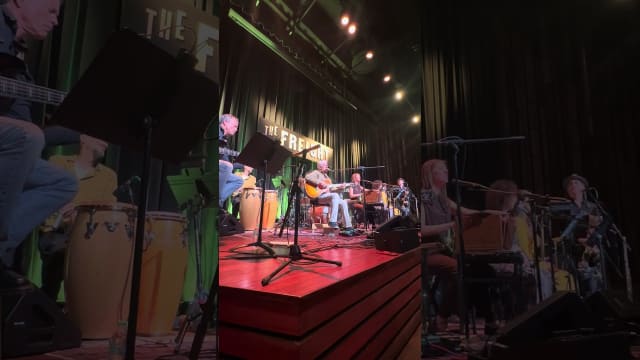
A two-and-a-half-minute recording of Om Namah Shivaya, captured live at The Freight in Berkeley on Maha Shivaratri 2020. Here is what the ch…

6 min read

Weiter erkunden

Setze deinen Weg fort

Mehr Weisheit und Zusammenkünfte aus dem BrightStar-Verzeichnis.

Mehr Artikel

Durchstöbere die ganze Bibliothek an Lehren, Interviews und Leitfäden.

Zu allen Artikeln →

Lehrer & Künstler

Entdecke die Linien, Musiker und Wegbegleiter der bewussten Welt.

Künstler erkunden →

Event finden

Kirtan, Retreats, Klangbäder, Atemarbeit, Festivals — bald in deiner Nähe.

Events ansehen →