BrightStar

Alle Events durchsuchen

Bewusste Zusammenkünfte entdecken

events

Yoga
Meditation
Breathwork
Qigong
Tai Chi
Sacred Music
World Music
Medicine Music
Sound Healing
Ecstatic Dance
Beliebte Reiseziele
BaliSedonaLos AngelesCosta RicaNew YorkSan FranciscoAustinMiamiJoshua TreeTulum
Alle Kategorien anzeigenAlle Reiseziele anzeigen

Alle Funktionen entdecken

Leistungsstarke Tools für Ihre Veranstaltungen

Plattform-Funktionen

Intelligente dynamische Preisgestaltung
Ticket-Kategorien
Sitzplatzreservierung
Warenkorbabbruch-Wiederherstellung
Besucher-Wiedergewinnung
Spenden & Staffelpreise
Affiliate-System
Ticket-Scanner
Rabattcodes
Individuelle Fragen
Ticket-Teilen
Upsells & Extras
Analysen & Berichte
E-Mail-Sequenzen
Warteliste / Benachrichtigen / Erinnern
Menschen & Orte
Artists & TeachersEvent OrganizersVenues & StudiosKnowledge BaseGlossaryInspiration
Alle Funktionen anzeigenÜber uns
PreiseBlog
Language
Saved events
Alle Veranstaltungen durchsuchen

events

YogaMeditationBreathworkQigongTai ChiSacred MusicWorld MusicMedicine Music

Beliebte Reiseziele

BaliSedonaLos AngelesCosta RicaNew YorkSan Francisco

Menschen & Orte

Artists & TeachersEvent OrganizersVenues & StudiosKnowledge BaseGlossaryInspiration

Plattform-Funktionen

Intelligente dynamische PreisgestaltungTicket-KategorienSitzplatzreservierungWarenkorbabbruch-WiederherstellungBesucher-WiedergewinnungSpenden & StaffelpreiseAffiliate-SystemTicket-ScannerRabattcodesIndividuelle FragenTicket-TeilenUpsells & ExtrasAnalysen & BerichteE-Mail-SequenzenWarteliste / Benachrichtigen / Erinnern
Alle Funktionen anzeigenÜber uns
PreiseBlog
AnmeldenSuchendeKreative
  • Alle Events durchsuchen
  • Für Suchende
  • Yoga
  • Meditation
  • Breathwork
  • Qigong
  • Tai Chi
  • Heilige Musik
  • Weltmusik
  • Medicine Music
  • Klangheilung
  • Ecstatic Dance
  • Retreats
  • Workshops
  • Alle Kategorien →
  • Bali
  • Sedona
  • Los Angeles
  • Costa Rica
  • Tulum
  • Byron Bay
  • San Francisco
  • Austin
  • New York
  • San Diego
  • Denver
  • Seattle
  • Portland
  • Miami
  • Alle Städte →
  • Join the Movement
  • Why we list
  • Sell Globally
  • Für Kreative
  • Für Teams
  • Für Autoren
  • Für Lehrer
  • Für Kirtan-Künstler
  • Für Studios
  • Für Festivals
  • Für Retreat-Zentren
  • Für gemeinnützige Organisationen
  • Markenbotschafter
  • Kostenloses Ticketing
  • Elevate
  • Amplify
  • 500.000+ Käufernetzwerk
  • Warenkorbabbruch-Wiederherstellung
  • Intelligente dynamische Preisgestaltung
  • Ticket-Kategorien
  • Wiederkehrende Veranstaltungen
  • Sitzplatzreservierung
  • Affiliate-System
  • Warteliste / Benachrichtigen
  • Ticket-Scanner
  • Einbettungs-Widget
  • Event-Syndication
  • Nachrichten
  • Integrationen
  • Berichte
  • Alle Funktionen →
  • Über uns
  • Das Ökosystem
  • Blog
  • Glossar
  • Inspiration
  • Hilfe-Center
  • Kontakt
  • API-Dokumentation
  • Marken-Assets
  • Karriere
  • Presse
  • Nutzungsbedingungen
  • Datenschutzrichtlinie

Events

  • Alle Events durchsuchen
  • Für Suchende
  • Yoga
  • Meditation
  • Breathwork
  • Qigong
  • Tai Chi
  • Heilige Musik
  • Weltmusik
  • Medicine Music
  • Klangheilung
  • Ecstatic Dance
  • Retreats
  • Workshops
  • Alle Kategorien →

Reiseziele

  • Bali
  • Sedona
  • Los Angeles
  • Costa Rica
  • Tulum
  • Byron Bay
  • San Francisco
  • Austin
  • New York
  • San Diego
  • Denver
  • Seattle
  • Portland
  • Miami
  • Alle Städte →

Für Kreative

  • Join the Movement
  • Why we list
  • Sell Globally
  • Für Kreative
  • Für Teams
  • Für Autoren
  • Für Lehrer
  • Für Kirtan-Künstler
  • Für Studios
  • Für Festivals
  • Für Retreat-Zentren
  • Für gemeinnützige Organisationen
  • Markenbotschafter
  • Kostenloses Ticketing
  • Elevate
  • Amplify

Funktionen

  • 500.000+ Käufernetzwerk
  • Warenkorbabbruch-Wiederherstellung
  • Intelligente dynamische Preisgestaltung
  • Ticket-Kategorien
  • Wiederkehrende Veranstaltungen
  • Sitzplatzreservierung
  • Affiliate-System
  • Warteliste / Benachrichtigen
  • Ticket-Scanner
  • Einbettungs-Widget
  • Event-Syndication
  • Nachrichten
  • Integrationen
  • Berichte
  • Alle Funktionen →

Unternehmen

  • Über uns
  • Das Ökosystem
  • Blog
  • Glossar
  • Inspiration
  • Hilfe-Center
  • Kontakt
  • API-Dokumentation
  • Marken-Assets
  • Karriere
  • Presse
  • Nutzungsbedingungen
  • Datenschutzrichtlinie
BrightStar
Hol dir die App
Laden imApp StoreJetzt beiGoogle Play
© 2026 BrightStar. Alle Rechte vorbehalten.
Inspiration

Mindfulness Through Every Cell: The Whole-Body Breath Practice

PV
Plum Village App
Oct 19, 2026
6 Min. Lesezeit
Ansehen · 6

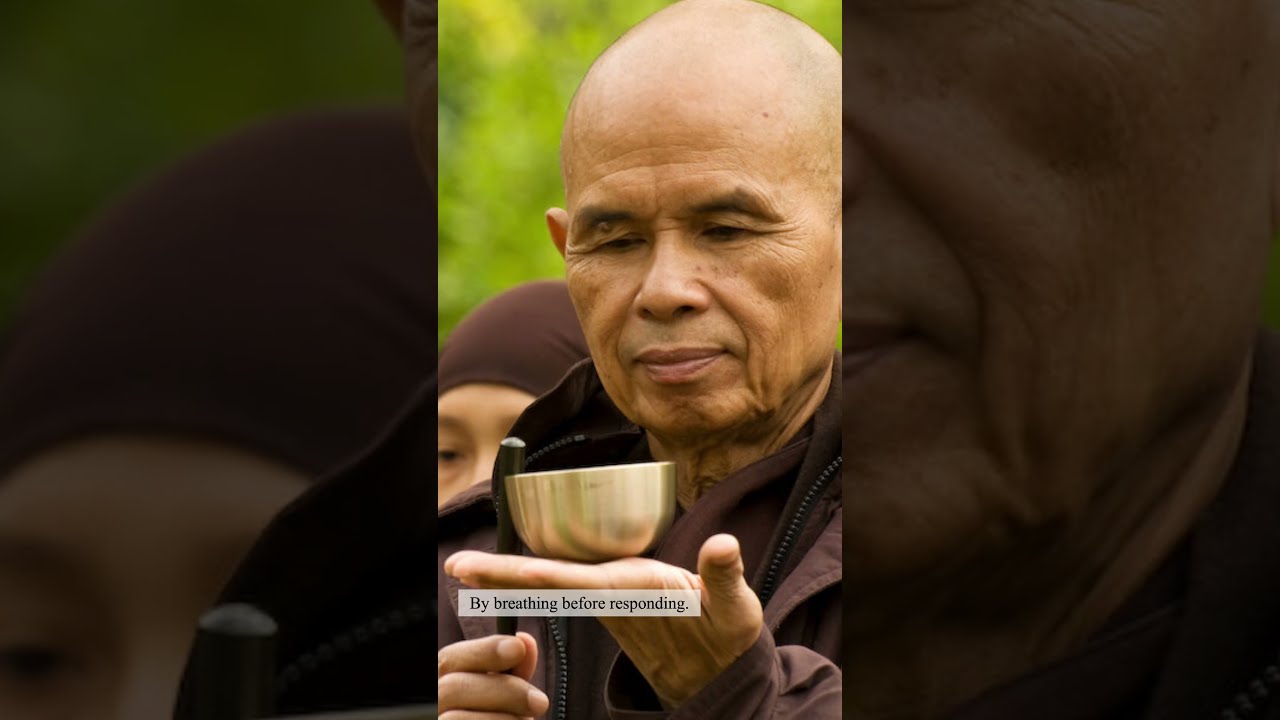
In a short excerpt from a 2005 Dharma talk given at Upper Hamlet in Plum Village, France, Thich Nhat Hanh takes one instruction from the Buddha's sutra on mindful breathing and stretches it until it covers the entire body. The instruction is simple to say and easy to underestimate: breathing in, be aware of your whole body; breathing out, release the tension in every cell. In this teaching, mindfulness is not meant to stay in the head. It is meant to touch, recognize, and relax the body down to its smallest living units, whether you are sitting or walking. The clip runs about two and a half minutes, but it gives a practice that can travel with you into any moment of the day.

Lesen · 6 Abschnitte

What does "sarva kaya" mean in the mindful breathing sutra?

The teaching turns on a Sanskrit phrase. Thich Nhat Hanh describes the Buddha as "our teacher" who gave "very concrete" practices, and points to the sutra of mindful breathing as the place where a few exercises are offered for realizing mindfulness. The first of these is an awareness of the body: breathing in, I am aware of my body. Then comes the word that gives the passage its weight. In his words, "Sarva kaya. Sarva means the totality." The instruction is no longer simply awareness of the body but awareness of "the totality of my body. My whole body."

The gap between "my body" and "my whole body" is small in words and large in practice. The first phrase invites attention to the body in general. The second asks for attention that has no edges, one that does not leave out an arm, a shoulder, or the belly because they feel less interesting or less accessible.

Why does mindfulness need to reach every cell?

Here the teacher makes the idea concrete. As he put it in the 2005 talk, "It means every cell in my body. Your mindfulness should touch every cell in your body, not just a number of cells in the brain." The phrase "not just a number of cells in the brain" reads as a deliberate pushback against a practice that stays in the head. Many people, in the first stage of meditation, feel their attention as a thought-stream located behind the eyes. The teaching asks that attention descend, and spread.

What makes the passage useful is that it describes a sequence of actions rather than a feeling. The energy of mindfulness, he says, "should touch all the cells in the body and should recognize the presence of the cell in the body." Then it "should turn on all the cells in the body and allow all the cells in the body to relax." Read closely, there are four verbs: touch, recognize, turn on, relax. Contact comes first, then acknowledgment, then activation, and finally release. The practice is not finished when the body is noticed. It is finished when the noticed body has been allowed to let go.

How do you practice the in-breath and the out-breath?

The clip repeats two lines, and they are worth keeping close. On the in-breath: "Breathing in, I'm aware of my whole body." On the out-breath: "Breathing out, I relax my whole body." Later, the out-breath is restated more specifically: "Breathing out, I release the tension in all the cells of my body."

Taken together, the breath gives the practice its rhythm. The in-breath is a movement of receiving and noticing. The out-breath is a movement of letting go. Neither is meant to be forced. One simple way to try the teaching, drawn directly from the clip's wording, is to take a few breaths while sitting and silently hold the in-breath as "aware of my whole body," then let the out-breath carry "release the tension in all the cells." Repeat for a few minutes, and notice where the attention keeps narrowing back to a single area. That narrowing is the thing the instruction is designed to reveal.

"And that is why I said that when you practice, you have to involve your whole body. Not a part of it. While sitting or walking."

— Thich Nhat Hanh, Dharma talk, Upper Hamlet, Plum Village, 2005

Does whole-body mindfulness apply to walking as well as sitting?

The teacher's last line is explicit. The whole-body instruction is not reserved for the cushion. "While sitting or walking" closes the excerpt, and the word "involve" matters here: the whole body is to be included in the practice, not observed from a distance. Walking, in this light, is not a break from the breath but another place where the same breath-based awareness can be applied, so that the body in motion is held with the same attention as the body at rest.

This is also where the teaching becomes portable. A sitting posture can be arranged. A walk, a stop at a doorway, a wait in a line can all carry the same two-part pattern: notice the whole body on the in-breath, release its tension on the out-breath. The clip does not describe a special setting. It describes an attitude toward ordinary movement and stillness.

What is the main takeaway from this short teaching?

The lesson is that partial attention is the default, and the teaching asks for something larger. A practitioner who attends only to the mind, or only to the breath at the nostrils, is working with a part. Thich Nhat Hanh's phrasing treats the whole body as the field of practice: a body whose cells can be touched, recognized, activated, and relaxed. Whether that is achieved in a single session or over years, the clip's own instruction is modest. Start with the whole body, on the in-breath. Let the out-breath release what it has been holding.

Where to go from here

The excerpt is one of several short teachings from the Plum Village App, which the channel describes as free. For the full context, the 2005 talk from Upper Hamlet is available in its entirety at https://www.youtube.com/watch?v=jrncYE3g4oc. Watching the longer talk will show how this short passage sits within the wider instruction on mindful breathing. In the meantime, the practice is small enough to test today: a few minutes of sitting, a few minutes of walking, and the two lines held steadily on each breath.
Comments

Loading the conversation…

Transcript

[0:01] The Buddha our teacher

[0:04] gave us

[0:06] very concrete uh

[0:09] practices.

[0:12] In the sutra of mindful breathing

[0:17] he uh he offer us a few uh

[0:23] a few exercises in order to realize

[0:25] that.

[0:28] Breathing in

[0:32] I'm aware of my body.

[0:35] He said, breathing in, I'm aware of

[0:40] my whole body.

[0:45] Sarva kaya

[0:48] Sarva means the totality.

[0:51] Breathing in, I'm aware of the totality

[0:55] of my body.

[0:57] My whole body.

[0:58] It means every cell in my body.

[1:03] Your mindfulness should touch every cell

[1:05] in your body, not just a number of cells

[1:10] in the brain.

[1:13] Sarva kaya means

[1:16] the whole body. Breathing in,

[1:18] I am aware of

[1:24] my whole body.

[1:26] It's very clear.

[1:28] Breathing out

[1:31] I relax

[1:33] my whole body.

[1:36] So, the the energy of mindfulness

[1:39] should touch all the cells in the body

[1:42] and should

[1:44] recognize the presence of the cell in

[1:47] the body.

[1:48] Should allow

[1:51] should turn on all the cells in the the

[1:53] body

[1:54] and allow all the cells in the body to

[1:57] relax.

[2:01] Breathing in, I'm aware of my whole

[2:03] body. Breathing out,

[2:08] I

[2:09] release the tension in all the cells of

[2:13] my body.

[2:16] And that is why I said that when you

[2:18] practice, you have to involve your whole

[2:20] body.

[2:21] Not a part of it.

[2:24] While sitting or walking.

PV
Artist
Plum Village App

Watch more from Plum Village App on YouTube.

Website
Themen erkunden
Whole-body-mindfulnessSarva-kayaMindful-breathingThich-nhat-hanhDharma-talk

Hast du Fragen?

Häufig gestellte Fragen

In this 2005 Dharma talk, Thich Nhat Hanh explains that "sarva means the totality," so sarva kaya means the whole body. The instruction becomes breathing in, being aware of the totality of the body, rather than awareness of only part of it.
Thich Nhat Hanh gives two lines: on the in-breath, be aware of your whole body, and on the out-breath, release the tension in all the cells of your body. He stresses that the whole body should be involved, not just a part of it, whether sitting or walking.
In the talk, Thich Nhat Hanh says mindfulness should touch every cell rather than only a number of cells in the brain. He describes a sequence in which mindfulness touches, recognizes, turns on, and then allows the cells to relax.
Yes. The excerpt closes with the instruction to involve the whole body "while sitting or walking," so the same breath-based awareness is meant to apply to movement as well as stillness.
The excerpt is drawn from a 2005 Dharma talk at Upper Hamlet, Plum Village, France. The full talk is linked in the video description at https://www.youtube.com/watch?v=jrncYE3g4oc.
He says, "When you practice, you have to involve your whole body. Not a part of it." The point is that attention limited to the head or a single area leaves most of the body outside the practice.

Weiterlesen

More on Inspiration

Alle anzeigen
How Thay's Legacy Continues Through Us
Inspire

How Thay's Legacy Continues Through Us

On Continuation Day, Plum Village invites us to embody Thay's teachings by asking: what practice or way of seeing did you receive that now c…

1 min read
Music Meditation on Breath, Earth, and Stillness Explained
Inspire

Music Meditation on Breath, Earth, and Stillness Explained

A close reading of a June 2026 music meditation from Upper Hamlet, France, where breath, poetry and chant become one practice. Here is how t…

1 min read
Liberation Through Grief and Self-Worth in Buddhist Practice
Inspire

Liberation Through Grief and Self-Worth in Buddhist Practice

Br. Phap Huu explores how recognizing our inherent goodness and learning to grieve openly within community liberates us from suffering and s…

1 min read
Living Gems Archive: Preserving Thích Nhất Hạnh's Dharma for the World
Inspire

Living Gems Archive: Preserving Thích Nhất Hạnh's Dharma for the World

Living Gems is a searchable digital archive of Thích Nhất Hạnh's teachings, built by Plum Village to preserve and share the dharma globally …

1 min read

Weiter erkunden

Setze deinen Weg fort

Mehr Weisheit und Zusammenkünfte aus dem BrightStar-Verzeichnis.

Mehr Artikel

Durchstöbere die ganze Bibliothek an Lehren, Interviews und Leitfäden.

Zu allen Artikeln →

Lehrer & Künstler

Entdecke die Linien, Musiker und Wegbegleiter der bewussten Welt.

Künstler erkunden →

Event finden

Kirtan, Retreats, Klangbäder, Atemarbeit, Festivals — bald in deiner Nähe.

Events ansehen →