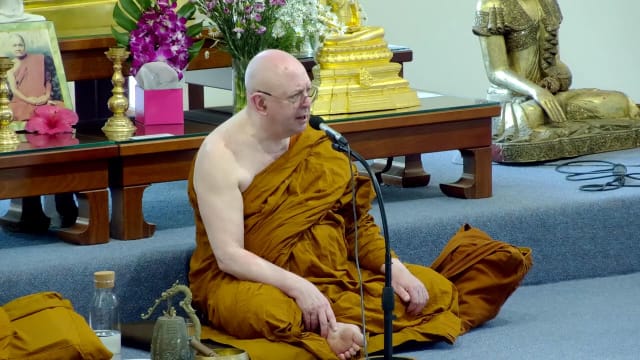
Somewhere in a secluded woodland hamlet near Oxford sits a house that has become the centre of a quiet, unusual project: a monastic residence for Buddhist nuns, the first of its kind in the United Kingdom. The Anukampa Bhikkhuni Project, which runs the residence and publishes Dhamma talks online, has built its public life around that single goal. A recent recording on its channel, titled "How to Live Fearlessly," brings the project's teaching voice to a general audience. This article does not report what the talk says. The only material available for it was the video's title and the channel's description, so what follows is the context those two sources establish: who is behind the talk, where the project started, what Anukampa Grove is, and how the work is supported.
According to the channel's description, the Anukampa Bhikkhuni Project was founded in 2016 by Ven Canda and Ajahn Brahm. The charity states two aims. The first is to spread the Buddha's teachings. The second is to give women the opportunity to practise as bhikkhunis, fully ordained Buddhist nuns, for the first time in UK history. The description also lists the project's channel as its speaker, and the talk is credited to the channel rather than to a single named teacher in the metadata, even though the video title names Ajahn Brahm.
The second aim is the more unusual one, and the project's own account marks it as a turning point. The description says that aim was accomplished in March 2024, when the charity procured a property in a secluded woodland hamlet near Oxford. The property is called Anukampa Grove, and the description identifies it as the project's new bhikkhuni residence, the first of its kind in the UK. Ven Canda now lives there.
That detail changes the shape of the project. A teaching channel can exist anywhere with a microphone. A residence is a place where monastic life is lived day to day, with a roof, a routine and a community. The move from aspiration to address is the story the channel's own text tells, and it is the reason the project's public talks now come from a place that was, until recently, only an intention.
The name does some of the work. The description places the grove in a woodland hamlet, a setting that suggests seclusion and a slower pace than urban practice centres allow. For a monastic residence, that setting is more than scenery. Bhikkhuni life is organised around daily discipline, study and meditation, and a residence gives those practices a physical home. Whatever is said in any individual talk, the existence of this residence is the project's most concrete result to date.
The description is direct about money. Donations of any amount are welcome, as one-off gifts or standing orders. Standing orders, the channel says, help the project plan ahead and cover running costs, while the donations themselves support the monastics' requisite needs, the basic material necessities of monastic life. UK taxpayers can claim Gift Aid, which the channel says increases a donation by 25 percent. International donors can send bank transfers via Wise. Further information is available at the project's donate page, and the finance team can be reached at the address listed on the channel.
It is worth noting how plainly this is presented. The project does not describe its funding as a campaign, and the appeal sits alongside the teaching rather than replacing it.
If you want the teaching itself, watch "How to Live Fearlessly" on the Anukampa Bhikkhuni Project channel. This article cannot tell you what was said in it, and the title alone is not a substitute for listening. If you want to understand the project's history, the description is the best primary source available: the 2016 founding, the March 2024 property, and the residence's status as the first bhikkhuni home of its kind in the UK. If you want to support the work, the donation page and the Gift Aid and Wise options are listed in the channel's description. The most useful next step is to watch the talk with the project's stated aims in mind: a teaching voice that now has a home of its own.