The lights dim in a Florida yoga studio, and the first notes of a harmonium fill the room. But these aren't pre-recorded tracks playing through a speaker system. A musician sits at the front, fingers moving across the strings in real time, responding to the breath of the students, the pace of the asanas, the energy shifting through the space. This is the essence of Live Music for Yoga—a performance discipline that treats the yoga class itself as a concert venue, and the students' practice as collaborative partners in a live musical experience.
For most yoga practitioners, the soundtrack to class comes from somewhere invisible: a carefully curated playlist, ambient recordings designed in studios far removed from the mat. There's nothing wrong with that approach. But there's something qualitatively different about live music performed in the room. The musician responds to silence, to breath, to the collective energy of a group moving through poses. The music isn't fixed; it breathes. A chord can linger longer if the teacher holds a pose. A transition can soften or sharpen based on what's happening in the room. The studio becomes a stage, and the practice becomes something hybrid—neither purely a concert nor purely a yoga class, but a genuine fusion of the two.
By 2010, Jim Beckwith had established a touring schedule that took this concept across the United States. Events were booked throughout the country, with specific studios hosting his performances—places like The Lotus Room, Lotus Pond, Jai Dee, The Salvador Dali Museum in St. Petersburg, White Orchid in Dunedin, Yoga in the Park in St. Pete, Awaken Yoga, The Pilates Loft in Clearwater, and the Standard Hotel in Miami. The geographic spread reveals a touring musician's hustle: building relationships with studios, establishing a reputation, creating a calendar that keeps him on the road. This isn't a one-off event model; it's a sustainable performance practice built around a specific audience and intention.
The announcement of upcoming dates in Hawaii and Colorado in April 2010 signals something important: the model was expanding beyond Florida. A musician had found his audience. Yoga studios, often hungry for authentic experiences that distinguish them from competitors, saw the value in live performance. It's a service that costs more than a Spotify subscription, but delivers something irreplaceable—the presence of an artist, the specificity of a live interpretation, the shared experience of sound created in real time in a dedicated space.
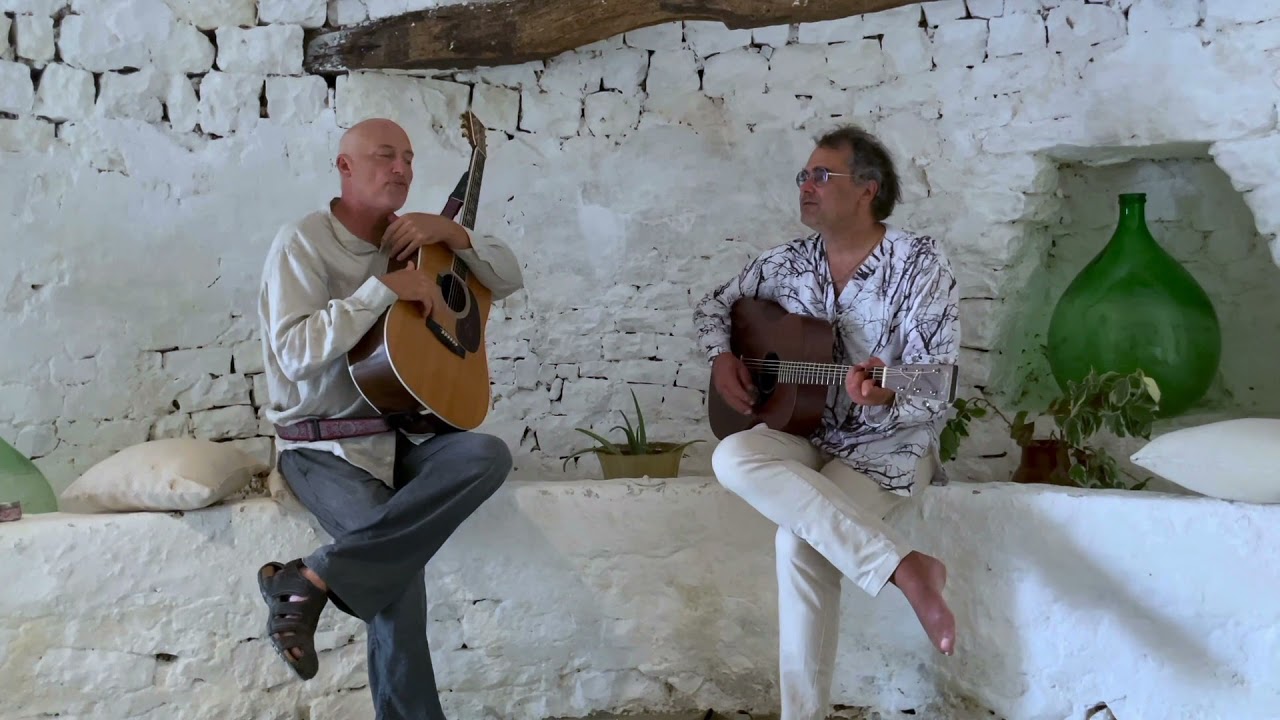
Beckwith didn't work alone. Eluv, a collaborator mentioned in the video materials, accompanied him from time to time. The presence of a second musician adds another dimension to the work. A harmonium and voice can create a complete soundscape, but add another instrument and you create harmonic depth, textural variety, interplay. In yoga's kirtan and devotional music traditions, call-and-response and ensemble playing are fundamental practices. Beckwith's collaboration with Eluv echoes that lineage—the idea that live music is fundamentally social, and that multiple musicians create something neither could alone.
To support the touring work, Beckwith released an album called Music for Yoga. Like so many musicians navigating the digital era around 2010, he made it available on iTunes as a digital download while also offering physical CDs directly through his website at livemusicforyoga.com. One track from the album, "Illumination," appears prominently in the promotional video showcasing his live performances across different studios.
The song title—"Illumination"—offers a clue to the intention behind the work. In yoga philosophy, illumination often refers to clarity, awakening, or enlightenment. The music isn't incidental; it carries purpose. A musician doesn't compose specifically for yoga class by accident. He's thought about what the body needs to hear while in deepening stretches, what the mind requires during meditation, what the nervous system responds to during relaxation poses. The album title itself asserts that this isn't ambient background music; it's music for a specific practice, created with intentionality.
The specific studios listed in the video reveal something about the yoga landscape in 2010, particularly in Florida. Studios like The Lotus Room, Lotus Pond, and Jai Dee suggest a thriving yoga community. The inclusion of venues like the Salvador Dali Museum (a surrealist artist's museum hosting yoga events) and the Standard Hotel (a contemporary hotel chain) shows that yoga was expanding beyond dedicated studios into cultural institutions and hospitality spaces. A museum and a hotel aren't traditional yoga venues, yet they're hosting yoga events with live music. This reflects a broader cultural moment when yoga was becoming embedded in mainstream American wellness and cultural spaces, and when venues were experimenting with creating distinctive experiences to attract practitioners.
There's a specific craft in performing live music for yoga that differs from concert performance or studio recording. A concert musician plays for an audience facing the stage. A yoga class musician plays for practitioners whose attention is often turned inward or focused on a teacher's instructions. The music isn't meant to demand attention; it's meant to support it. Dynamic curves matter differently—a crescendo might distract rather than inspire. Rhythm might need to be flexible, responsive to the teacher's pace rather than metronomic. The musician must listen not just to the sounds he's creating, but to the teacher, the breathing, the quality of the room's attention.
This is why a live musician is fundamentally different from a recording. A recording is fixed, optimized for an imagined average class. A live musician adapts in real time. If students are holding a warrior pose longer than expected, the music can expand. If the teacher moves through transitions quickly, the music can follow. If the room feels like it needs more spaciousness, a live player can thin the texture. If it needs grounding, a player can deepen the resonance. This responsiveness is the core value proposition.
Beckwith's web presence reveals a musician thinking about community and promotion in the early social media era. A website (livemusicforyoga.com) served as home base, offering album downloads and booking information. A Facebook page created a space for fans to follow his work and stay informed about upcoming performances. Eluv's separate website (eluvmusic.com) indicated a collaborative network. These platforms, standard now but newly significant in 2010, show a working musician using available tools to sustain and grow a touring practice. Word-of-mouth within yoga communities is powerful, but digital platforms extend reach and make booking easier.
The video itself is a promotional tool, but it's built on photographs documenting actual performances across different studios. The credit to photographer Mary Panton underscores that this work was being visually documented and shared. In an era before Instagram made every moment shareable, someone was deliberately taking photos at performances, preserving the visual record of live music in yoga spaces. That documentation is part of the artist's toolkit—proof of concept, portfolio material, shareable content for promotion.
For those interested in exploring live music for yoga further, several paths open up. Seeking out local musicians offering live accompaniment for classes—checking with yoga studios in your area about whether they feature live performers. Exploring Beckwith's album Music for Yoga and the track "Illumination," whether as a study aid for personal practice or to experience the composed work outside a class setting. Considering the broader movement of musicians creating music specifically for yoga, healing, and contemplative practice—a lineage that includes both traditional Indian classical musicians trained in accompaniment for dance and yoga, and contemporary Western musicians bringing instrumental performance to wellness spaces. And perhaps most fundamentally: paying attention to the difference between recorded and live music in your own practice, noticing what shifts when a musician is actually present and responding to the room in real time.