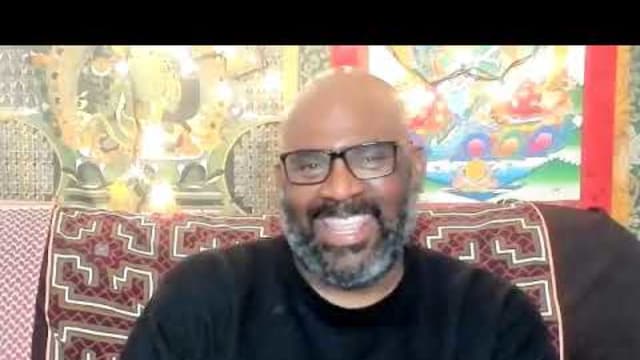
The heat arrives first. In a closed infrared sauna, before any thought has time to organize itself, the body registers warmth on the skin, and a guided meditation can either fight that sensation or work with it. The 30-minute practice at the center of this article chooses the second path. Camilla Sacre-Dallerup, who narrates the session, opens by framing it as a collaboration with Breedlove Beauty Lab and Zen Me, designed to "enhance your sauna experience." Across its length she moves listeners through four tools: the breath as the first anchor, a visualized light that travels from scalp to soles, the image of thoughts drifting past like clouds, and a silent "I am" affirmation that the listener completes with a word of their own. Each tool is simple. Taken together, they form a sequence that starts with attention, moves into the body, and ends with a chosen intention.
Whydoesameditationstartwithanumberaboutthinking?
Before the first breath instruction, Sacre-Dallerup offers what she calls her favorite fact. "We have 60 to 80 thousand thoughts a day," she says at 0:27, "and those thoughts are going to come and go all day long even when we meditate." The number does practical work. It removes the idea that a good meditation is one with no thoughts in it. Instead, she tells listeners that "throughout this meditation you will catch yourself thinking and that's totally okay," and that the skill is in noticing and returning.
That reframing shapes the whole session. Nearly every section ends with the same instruction, repeated in different words: when you catch yourself thinking, come back. The return is the practice. A listener who expects silence will judge every wandering thought as failure. A listener who has been told the number expects the wandering and treats it as the ordinary texture of a mind at work.
Howdoesbreathworkasthefirstanchor?
Sacre-Dallerup begins with the breath because, as she puts it, it is "always available as a point of focus." The instructions are concrete. Notice the breath flowing in and out through the nose. Notice the chest rising and falling, the belly expanding on the in-breath and falling on the out-breath. Then she narrows the attention to something smaller: the pause at the end of the out-breath, before the next in-breath.
That pause is a useful object for a beginner because it is hard to find and easy to lose. At 2:55, she asks listeners to "see if you can notice how long that pause is," and then to rest in "that stillness right there." The instruction does not ask for a longer pause or a deeper breath. It asks for observation. The breath becomes a place to rest rather than a technique to perform, which matters in a hot room where the temptation to push, control, or hurry the breath is strong.
She also connects the breath to the heat itself. Listeners are asked to notice "the heat in the sauna and how that's feeling on the body," and to feel that heat "nurturing you." The sauna is not treated as a distraction from the meditation. It is part of the object of attention.
Whatisthebasketbythedoorfor?
At 3:53, the meditation introduces a visualization that many guided practices use in some form: a container for what you are carrying. Sacre-Dallerup asks listeners to imagine a basket outside the sauna door and to place into it "anything you don't need for the next 30 minutes." Her examples are ordinary and specific: "your to-do list, phone calls, emails, conversations, responsibilities, worries."
The image works because it separates letting go from forgetting. The listener is not told to erase their obligations. They are told they can leave them in the basket "knowing that you can pick it up" on the way out. That promise is what makes the release possible. A mind that believes it must hold everything will keep gripping. A mind that has been given a safe place to set things down can loosen its hold for a defined period, then retrieve everything at the end.
Whatdoesasking"howamIfeelingtoday"do?
Around 5:23, Sacre-Dallerup makes a small but deliberate shift in the question listeners ask themselves. "We asked everybody else all day long how are you," she observes, "but just for now I'd like you to ask yourself how am I feeling in this moment." The turn inward is brief. She asks the listener to "just listen" and "notice what the response is," without supplying an answer.
This is less a technique than a reorientation. Most of the day is spent answering questions from other people about our state. The meditation asks for a different kind of attention, one that receives an answer without grading it. The question sits between the breath and the body scan that follows, so the feelings it surfaces can be met with the same non-judgment the session has been practicing.
Howdoesthelight-meltingbodyscanwork?
The body scan is the longest stretch of the meditation and the most visual. Sacre-Dallerup asks listeners to imagine "a bright light above your head" and to let it "melt down through the body from the scalp and all the way down to the soles of the feet, very slowly." The light moves in stages: the scalp, forehead, back of the head, eyes, nose, ears, cheeks, chin, jaw, throat, neck, shoulders, chest, spine, lower back, solar plexus, belly, hips, thighs, knees, shins, calves, ankles, the tops of the feet, and finally the toes and soles.
What distinguishes this scan from a purely anatomical one is the job the light is given. She describes it as melting away "stress or tension worries that are no longer serving you." At the shoulders, the instruction becomes more pointed: "you're releasing an attention or anything you've been carrying here that's not even yours to carry any longer." The scan is a way of physically locating what the listener has been holding, then giving it permission to go.
She also leaves room for how the light feels. "Maybe it feels warm like the heat in the room," she says, "maybe it feels cold, whatever works for you." That flexibility matters. The visualization is not a test of vivid imagination. Listeners who cannot see light can still attend to sensation, and the instruction covers both.
"Surrounded by this light the mind and body feeling calmer now and you're noticing now that you're becoming the observer of your own thoughts." (Camilla Sacre-Dallerup, guided meditation, around 11:33)
Whypicturethoughtsasclouds?
At 11:33, the meditation moves from the body to the mind. Sacre-Dallerup reminds listeners that "you are so much more than your thoughts and feelings and the stories that you tell yourself on repeat in your mind." The cloud image follows: "You could imagine that your thoughts are simply floating on by like clouds in the sky, and you are just staying one with your breath watching them as they float on by."
The image has a specific instruction attached. Listeners may notice "the shape of the clouds" and "the color of the sky," and may even notice "what thoughts they are representing." What they are asked not to do is "reach out and touch any of these clouds or interact with any of those thoughts." Engagement is the trap. Once a thought is grabbed, followed, or argued with, the observer has become a participant again. The cloud image keeps the observer in position: aware, close, and not pulled in.
She extends the image into release. Listeners may "stick any stress or concerns on to the clouds and let it go," and watch "as they drift on by." The cloud is not a bin for suppressed thoughts. It is a moving surface that carries thoughts out of view without the listener having to push them away.
Howdoesthe"Iam"mantrapracticework?
The final stretch turns from receiving to choosing. At 15:27, Sacre-Dallerup asks listeners to "choose a word to focus on today, something you need more of in this moment." Her examples include calm, happiness, and confidence. The base phrase is "I am," and the practice is precise about its rhythm: the "I" is silently repeated on the in-breath, the "am" on the out-breath. The listener then adds the chosen word, so the full phrase becomes "I am calm," "I am confident," or "I am energized."
She is explicit that the word can change. "The word might even change throughout this practice today and that's okay." The mantra is a focus, not a vow. It is also tied to the same return instruction as everything else. When the mind wanders, the listener comes back to the breath and the phrase.
Later, the meditation offers sample lines to try, including "I'm feeling relaxed," "I'm enjoying the way the heat is," "I'm feeling strong and aligned," and "I feel that my immune system is boosted." These are presented as prompts the listener can use inside the session. They are not medical claims, and the material does not present them as such. They are affirmations for mood, offered as part of a practice Sacre-Dallerup introduced at the start as "positive affirmations to boost your mood."
Whatisthepointofthesession,intheend?
The closing moments are brief. Listeners are invited to feel the state they have reached "from this calm and peaceful place," and then to open their eyes "in your own time." The session does not end with an instruction to carry anything forward into the day. It ends with a return to the room.
That restraint is typical of the practice. The meditation asks for three things across thirty minutes: notice the breath, notice the body and the thoughts without grabbing, and choose a single word. Each of these is small enough to repeat in a hot room on an ordinary afternoon.
Wheretogofromhere
If you are new to guided meditation, start with the structure rather than the sauna. The core moves are breath as anchor, body scan with a visualized light, thoughts as clouds, and a short chosen phrase. You can run these in any warm room, or in silence. If you have a sauna at home or access to one, the session is built to be used there, and Sacre-Dallerup's own framing treats the heat as part of the practice.
Pay attention to the moments when you catch yourself thinking. Sacre-Dallerup repeats that this is expected, and the return is the skill. The number she gives, 60 to 80 thousand thoughts a day, is her figure as presented in the video; the excerpt does not cite a source, so treat it as an invitation to notice your own mind rather than as a settled statistic. At the close of the video she says she wants to try other meditations with listeners, which is an invitation to keep practicing with her guidance.
Camilla Sacre-Dallerup teaches you how to use powerful mind tools to combat stress, anxiety and work through challenges, creating a happy & healthy relationship with yourself. Life…
Sit in the heat, close your eyes, and begin with the breath, noticing the chest and belly rising and falling and the pause before each in-breath. Camilla Sacre-Dallerup then guides a light-melting body scan, a cloud-watching exercise for thoughts, and a silent "I am" affirmation before opening your eyes.
Sacre-Dallerup presents the figure of 60 to 80 thousand thoughts a day as her favorite fact in the video. The excerpt does not cite a study, so it is best read as her stated figure rather than a verified measurement.
Silently repeat "I" on the in-breath and "am" on the out-breath, then add a word that matches what you need, such as calm, happiness, or confidence. Sacre-Dallerup says the word can change during the practice, and that you should return to the phrase whenever you notice your mind wandering.
Imagine a bright light above your head slowly melting down through each part of the body, from the scalp to the soles of the feet. The light can feel warm or cold, and it is imagined as carrying away tension or worries that are no longer useful.
Picturing thoughts as clouds drifting across the sky lets you notice them without grabbing or following them. Sacre-Dallerup asks listeners not to reach out and touch the clouds, only to watch them float by while staying with the breath.
No prior experience is assumed. Sacre-Dallerup tells listeners at the outset that thinking is expected and that the practice is to notice it and come back, so beginners are not asked to empty the mind.