BrightStar

Alle Events durchsuchen

Bewusste Zusammenkünfte entdecken

events

Yoga
Meditation
Breathwork
Qigong
Tai Chi
Sacred Music
World Music
Medicine Music
Sound Healing
Ecstatic Dance
Beliebte Reiseziele
BaliSedonaLos AngelesCosta RicaNew YorkSan FranciscoAustinMiamiJoshua TreeTulum
Alle Kategorien anzeigenAlle Reiseziele anzeigen

Alle Funktionen entdecken

Leistungsstarke Tools für Ihre Veranstaltungen

Plattform-Funktionen

Intelligente dynamische Preisgestaltung
Ticket-Kategorien
Sitzplatzreservierung
Warenkorbabbruch-Wiederherstellung
Besucher-Wiedergewinnung
Spenden & Staffelpreise
Affiliate-System
Ticket-Scanner
Rabattcodes
Individuelle Fragen
Ticket-Teilen
Upsells & Extras
Analysen & Berichte
E-Mail-Sequenzen
Warteliste / Benachrichtigen / Erinnern
Menschen & Orte
Artists & TeachersEvent OrganizersVenues & StudiosKnowledge BaseGlossaryInspiration
Alle Funktionen anzeigenÜber uns
PreiseBlog
Language
Saved events
Alle Veranstaltungen durchsuchen

events

YogaMeditationBreathworkQigongTai ChiSacred MusicWorld MusicMedicine Music

Beliebte Reiseziele

BaliSedonaLos AngelesCosta RicaNew YorkSan Francisco

Menschen & Orte

Artists & TeachersEvent OrganizersVenues & StudiosKnowledge BaseGlossaryInspiration

Plattform-Funktionen

Intelligente dynamische PreisgestaltungTicket-KategorienSitzplatzreservierungWarenkorbabbruch-WiederherstellungBesucher-WiedergewinnungSpenden & StaffelpreiseAffiliate-SystemTicket-ScannerRabattcodesIndividuelle FragenTicket-TeilenUpsells & ExtrasAnalysen & BerichteE-Mail-SequenzenWarteliste / Benachrichtigen / Erinnern
Alle Funktionen anzeigenÜber uns
PreiseBlog
AnmeldenSuchendeKreative
  • Alle Events durchsuchen
  • Für Suchende
  • Yoga
  • Meditation
  • Breathwork
  • Qigong
  • Tai Chi
  • Heilige Musik
  • Weltmusik
  • Medicine Music
  • Klangheilung
  • Ecstatic Dance
  • Retreats
  • Workshops
  • Alle Kategorien →
  • Bali
  • Sedona
  • Los Angeles
  • Costa Rica
  • Tulum
  • Byron Bay
  • San Francisco
  • Austin
  • New York
  • San Diego
  • Denver
  • Seattle
  • Portland
  • Miami
  • Alle Städte →
  • Join the Movement
  • Why we list
  • Sell Globally
  • Für Kreative
  • Für Teams
  • Für Autoren
  • Für Lehrer
  • Für Kirtan-Künstler
  • Für Studios
  • Für Festivals
  • Für Retreat-Zentren
  • Für gemeinnützige Organisationen
  • Markenbotschafter
  • Fallstudien
  • Kostenloses Ticketing
  • Elevate
  • Amplify
  • 500.000+ Käufernetzwerk
  • Warenkorbabbruch-Wiederherstellung
  • Intelligente dynamische Preisgestaltung
  • Ticket-Kategorien
  • Wiederkehrende Veranstaltungen
  • Sitzplatzreservierung
  • Affiliate-System
  • Warteliste / Benachrichtigen
  • Ticket-Scanner
  • Einbettungs-Widget
  • Event-Syndication
  • Nachrichten
  • Integrationen
  • Berichte
  • Alle Funktionen →
  • Über uns
  • Das Ökosystem
  • Blog
  • Glossar
  • Inspiration
  • Hilfe-Center
  • Kontakt
  • API-Dokumentation
  • Marken-Assets
  • Karriere
  • Presse
  • Nutzungsbedingungen
  • Datenschutzrichtlinie

Events

  • Alle Events durchsuchen
  • Für Suchende
  • Yoga
  • Meditation
  • Breathwork
  • Qigong
  • Tai Chi
  • Heilige Musik
  • Weltmusik
  • Medicine Music
  • Klangheilung
  • Ecstatic Dance
  • Retreats
  • Workshops
  • Alle Kategorien →

Reiseziele

  • Bali
  • Sedona
  • Los Angeles
  • Costa Rica
  • Tulum
  • Byron Bay
  • San Francisco
  • Austin
  • New York
  • San Diego
  • Denver
  • Seattle
  • Portland
  • Miami
  • Alle Städte →

Für Kreative

  • Join the Movement
  • Why we list
  • Sell Globally
  • Für Kreative
  • Für Teams
  • Für Autoren
  • Für Lehrer
  • Für Kirtan-Künstler
  • Für Studios
  • Für Festivals
  • Für Retreat-Zentren
  • Für gemeinnützige Organisationen
  • Markenbotschafter
  • Fallstudien
  • Kostenloses Ticketing
  • Elevate
  • Amplify

Funktionen

  • 500.000+ Käufernetzwerk
  • Warenkorbabbruch-Wiederherstellung
  • Intelligente dynamische Preisgestaltung
  • Ticket-Kategorien
  • Wiederkehrende Veranstaltungen
  • Sitzplatzreservierung
  • Affiliate-System
  • Warteliste / Benachrichtigen
  • Ticket-Scanner
  • Einbettungs-Widget
  • Event-Syndication
  • Nachrichten
  • Integrationen
  • Berichte
  • Alle Funktionen →

Unternehmen

  • Über uns
  • Das Ökosystem
  • Blog
  • Glossar
  • Inspiration
  • Hilfe-Center
  • Kontakt
  • API-Dokumentation
  • Marken-Assets
  • Karriere
  • Presse
  • Nutzungsbedingungen
  • Datenschutzrichtlinie
BrightStar
© 2026 BrightStar. Alle Rechte vorbehalten.
Inspiration

How Suffering and Dying Awaken Us to Our Full Humanity

Be Here Now Network
Be Here Now Network
Feb 1, 2025
8 Min. Lesezeit

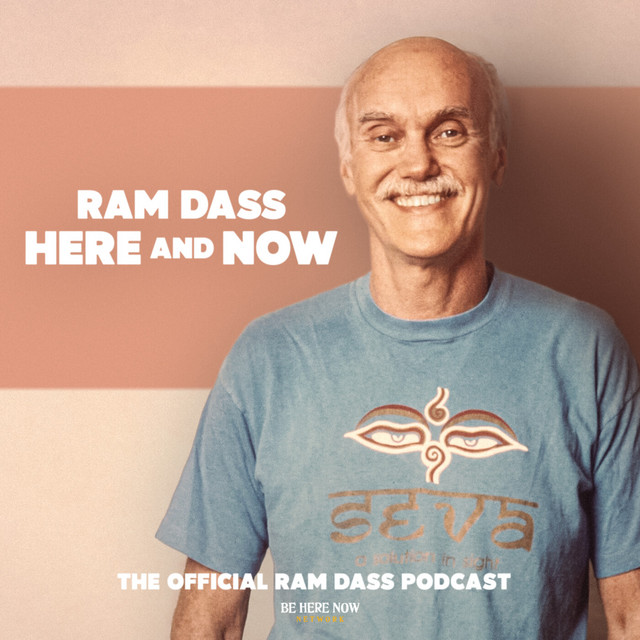
A dialogue between Ram Dass and Stephen Levine explores the paradox that all human experience—suffering, loss, the dying process itself—contains hidden invitations to awaken. Rather than treating difficulty as something to escape, these teachers argue that when we remain present with life's fullness, including pain and mortality, we dissolve the illusion of separation and discover our authentic, whole nature. This is not optimism about suffering; it is a framework for meeting what is already here with consciousness and love.

Lesen · 7 Abschnitte

What Does It Mean to Live the Fullness of Our Humanity?

Ram Dass and Stephen Levine begin from a premise that most spiritual practitioners encounter but rarely name clearly: the fullness of our humanity includes the parts we wish to transcend. In contemporary spirituality, there is often an implicit hierarchy—light experiences are "spiritual," dark ones are "shadow" to be worked through. But the dialogue suggests a different understanding: all of it is the path.

Levine, a poet and Buddhist teacher who spent decades contemplating death and dying, understood that human beings are not fragmentary beings trying to become whole through adding light. We are already whole; we are simply unaware of it. The experiences that make us feel broken—grief, fear, physical decline, the knowledge of our mortality—are not obstacles to awakening. They are the very material that awakening works with and through.

This is a crucial distinction. It is not that suffering is good or that we should cultivate it. Rather, when suffering arrives, which it inevitably does, we have a choice: we can contract around it, deny it, spiritualize it away, or medicate it into invisibility. Or we can meet it with presence and curiosity, asking not "How do I escape this?" but "What is this showing me about the nature of mind, attachment, and separation?"

Why Is the Dying Process a Gateway to Awakening?

Levine's particular genius was in recognizing that the dying process—far from being a punishment or failure—is one of life's most concentrated teaching opportunities. As the body weakens and social roles fall away, the habitual structures that defend the ego become transparent. There is nowhere left to hide in the usual ways.

Ram Dass and Levine suggest that dying offers a kind of forced mindfulness. When someone is dying, they cannot pretend to have unlimited time. The stories we tell ourselves about who we are—our accomplishments, our failures, our relationships—begin to lose their grip. What remains is something simpler and more direct: awareness itself, and the capacity to meet what is arising without resistance.

This does not mean that dying is easy or that everyone welcomes it. Fear, regret, and physical pain are real. But the dialogue suggests that conscious engagement with dying—staying present, feeling love, forgiving, letting go—transforms it from a private tragedy into a profound teaching. Families who sit with the dying report that presence and acceptance in those final hours changes not only the dying person but everyone present.

What Is the Illusion of Separateness That These Teachers Keep Returning To?

Throughout their discussion, Ram Dass and Levine reference awakening "out of the illusion of separateness." This phrase deserves unpacking, because it appears frequently in Buddhist and Advaita Vedanta traditions but can sound abstract until it is lived.

The illusion of separateness is the felt sense that you are a separate, isolated consciousness trapped in a bag of skin, fundamentally alone, fundamentally defending yourself against a world of other separate beings. This illusion is not false intellectually—it is a persistent experiential reality as long as awareness is identified with the body-mind's perspective. And it generates enormous suffering: competition, defensiveness, greed, loneliness, fear of death.

Awakening, in this context, is not about developing a new belief system. It is about a shift in the center of gravity of consciousness itself. When presence deepens enough, the boundary between self and world becomes permeable. You experience—not as metaphor, but as direct perception—that you are not a separate observer of reality but an expression of it, that consciousness is not locked inside your head but is the medium in which all experience occurs.

Dying can precipitate this shift because the ego's defenses naturally soften. Fear remains, but it sits within a larger openness. Grief remains, but it no longer feels like an attack on a solid self; it feels like love moving through form. This is what the dialogue is really about: the mechanics of how our most contracted, defended moments can crack open into something vast.

How Does Bhakti Practice Address the Fullness of Experience?

Ram Dass's teaching path centers on Bhakti—the yoga of devotion and unconditional love. This is relevant to the fullness-of-humanity conversation because Bhakti does not require you to first purify yourself or transcend your emotions. It invites you to pour all of what you are—your longing, your fear, your joy, your confusion—into the container of love and service.

Rather than treating the heart as something that needs to be opened or healed by spiritual technique, Bhakti says: whatever is in your heart right now, offer it. The hardness, the grief, the resistance—all of it is fuel. This is radically inclusive. It means that someone who is angry can practice Bhakti by pouring that anger into devotion. Someone who is grieving can transform grief into love through practice.

The dialogue suggests that Ram Dass learned this from his guru, Maharaj-ji, who embodied a kind of unconditional love that did not require people to first get their consciousness in order. He met people as they were, in their fullness, and somehow that meeting itself was transformative.

What Is the Relationship Between Presence and Growth?

A central thread in the conversation is that growth does not happen through striving or self-improvement campaigns. It happens through presence—through the simple act of being with what is true right now, without judgment or agenda.

This runs counter to much of contemporary self-help culture, which frames life as a problem to be solved: "You are anxious; you need to fix that." Or, "You are grieving; you should process it quickly." The dialogue suggests that this framing itself is part of the illusion. The moment you decide that what is happening is wrong and you are wrong for experiencing it, you have already contracted away from the fullness of the moment.

Instead, growth emerges when consciousness becomes large enough to hold what is painful without collapsing into it, and without trying to escape it. A person who is dying and who can say "Yes, I am afraid, and yes, I am also grateful, and yes, I am curious about what comes next" has already awakened in a real sense. They are no longer at war with their experience.

How Does Understanding Impermanence Change Our Approach to Life?

Both Levine and Ram Dass are rooted in traditions that place impermanence (anicca in Pali) at the center of reality. Everything that arises passes away. The body ages and eventually dies. Relationships end. States of mind come and go. Civilizations rise and fall.

Rather than treating this as depressing, the dialogue suggests that clearly seeing impermanence is actually liberating. When you truly understand that this moment, this breath, this conversation is temporary, it becomes precious. The people you love are not promises; they are gifts. The struggles you are in will change. The identity you have built will not follow you when you die.

This understanding does not make people passive or nihilistic. If anything, it makes them more attentive, more kind, more willing to forgive. Because the clock is ticking—for all of us—wasting energy on resentment or self-protection seems increasingly unwise.

Where to Go From Here

The dialogue between Ram Dass and Stephen Levine is an invitation, not a prescription. The practices they point toward are not complex: presence, honesty about what is true, willingness to remain open even when it hurts, love offered without condition.

If you are drawn to this teaching, you might begin by noticing one moment today where you feel contracted—where you are resisting, judging, or defending. And instead of trying to fix that moment, simply observe it. Feel it. Ask what it is protecting. This is not self-improvement; this is simple attention, and it is the doorway to everything these teachers are pointing toward.

For those interested in deeper engagement with these ideas, the full dialogue is available through the Be Here Now Network, and Levine's written works on death and dying offer years of contemplative material. But the teaching does not require more input; it requires more presence with the life that is already happening.

Comments

Loading the conversation…

Be Here Now Network
ArtistBe Here Now Network

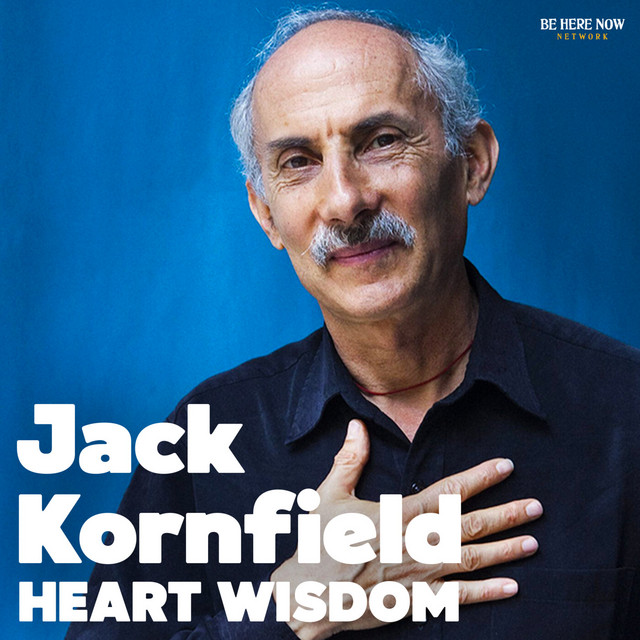
Be Here Now Network is the creator of Heart Wisdom with Jack Kornfield, a podcast exploring consciousness, spirituality, and personal transformation. With 313 episodes, they have c…

Profil ansehenWebsite
Themen erkunden
Dying-and-deathPresence-awarenessUnconditional-loveSuffering-growthImpermanence

Hast du Fragen?

Häufig gestellte Fragen

According to the dialogue, dying strips away the ego's usual defenses and social roles, creating a concentrated opportunity for presence and acceptance. When someone meets the dying process consciously—remaining present with fear, grief, and love—they often experience a shift beyond the illusion of separation into a sense of connection and wholeness. This does not make dying pleasant, but it transforms it from a purely tragic event into a profound teaching.
Living your fullness means including all human experience—suffering, fear, grief, desire—in your spiritual path rather than trying to transcend or escape it. Ram Dass and Levine suggest that awakening happens not by rejecting the difficult parts of being human, but by meeting them with presence, honesty, and love, discovering that wholeness includes everything.
When you genuinely see that everything is temporary—your body, your relationships, your time—life becomes more precious and urgent in a healthy way. This clarity tends to reduce wasted energy on resentment and self-protection, and increases attention, kindness, and willingness to forgive, since you recognize that your time is limited.
The illusion of separateness is the felt sense that you are an isolated consciousness trapped in a body, fundamentally alone and defending against a world of other separate beings. Awakening involves a shift where consciousness recognizes itself as the medium of all experience, not a separate observer locked inside your head, dissolving the boundary between self and world.
Bhakti practice, or the yoga of devotion, does not require you to first purify yourself or transcend your emotions. Instead, it invites you to pour all of what you are—including anger, grief, confusion, and longing—into love and service. This transforms difficult emotions into fuel for spiritual practice rather than obstacles to be overcome.
The dialogue suggests that while presence and acceptance do not eliminate pain, they transform the relationship to it. When you stop resisting suffering and meet it with consciousness and love, the suffering itself becomes a teacher. Grief, for example, remains but no longer feels like an attack on the self; it becomes love moving through form.

Weiterlesen

More from Be

Alle anzeigen
Your Life as Preparation for Dying: Lessons from Banaras
Inspire

Your Life as Preparation for Dying: Lessons from Banaras

Ram Dass recalls the burning ghats of Varanasi, a devotee's vision at his guru's death, and Huxley's last words on letting go. Here is what …

1 min read
Dying as Spiritual Awakening: Lessons from a 1976 Retreat Talk
Inspire

Dying as Spiritual Awakening: Lessons from a 1976 Retreat Talk

A 1976 retreat talk, now released as Here and Now Ep. 314, uses stories of Maharaj-ji, a dying student, and Varanasi to reframe death as an …

1 min read
Stories as Medicine: How Compassion Heals Division and Builds Connection
Inspire

Stories as Medicine: How Compassion Heals Division and Builds Connection

In this profound exploration of human connection, renowned spiritual teacher Jack Kornfield reveals how stories serve as medicine for our di…

1 min read
Walking the Tightrope: How to Serve Both Heaven and Earth Without Losing Your Balance
Inspire

Walking the Tightrope: How to Serve Both Heaven and Earth Without Losing Your Balance

Ram Dass reveals the spiritual challenge of our time: staying connected to divine consciousness while remaining present to human suffering a…

1 min read

Weiter erkunden

Setze deinen Weg fort

Mehr Weisheit und Zusammenkünfte aus dem BrightStar-Verzeichnis.

Mehr Artikel

Durchstöbere die ganze Bibliothek an Lehren, Interviews und Leitfäden.

Zu allen Artikeln →

Lehrer & Künstler

Entdecke die Linien, Musiker und Wegbegleiter der bewussten Welt.

Künstler erkunden →

Event finden

Kirtan, Retreats, Klangbäder, Atemarbeit, Festivals — bald in deiner Nähe.

Events ansehen →