BrightStar

Alle Events durchsuchen

Bewusste Zusammenkünfte entdecken

events

Yoga
Meditation
Breathwork
Qigong
Tai Chi
Sacred Music
World Music
Medicine Music
Sound Healing
Ecstatic Dance
Beliebte Reiseziele
BaliSedonaLos AngelesCosta RicaNew YorkSan FranciscoAustinMiamiJoshua TreeTulum
Alle Kategorien anzeigenAlle Reiseziele anzeigen

Alle Funktionen entdecken

Leistungsstarke Tools für Ihre Veranstaltungen

Plattform-Funktionen

Intelligente dynamische Preisgestaltung
Ticket-Kategorien
Sitzplatzreservierung
Warenkorbabbruch-Wiederherstellung
Besucher-Wiedergewinnung
Spenden & Staffelpreise
Affiliate-System
Ticket-Scanner
Rabattcodes
Individuelle Fragen
Ticket-Teilen
Upsells & Extras
Analysen & Berichte
E-Mail-Sequenzen
Warteliste / Benachrichtigen / Erinnern
Menschen & Orte
Artists & TeachersEvent OrganizersVenues & StudiosKnowledge BaseGlossaryInspiration
Alle Funktionen anzeigenÜber uns
PreiseBlog
Language
Saved events
Alle Veranstaltungen durchsuchen

events

YogaMeditationBreathworkQigongTai ChiSacred MusicWorld MusicMedicine Music

Beliebte Reiseziele

BaliSedonaLos AngelesCosta RicaNew YorkSan Francisco

Menschen & Orte

Artists & TeachersEvent OrganizersVenues & StudiosKnowledge BaseGlossaryInspiration

Plattform-Funktionen

Intelligente dynamische PreisgestaltungTicket-KategorienSitzplatzreservierungWarenkorbabbruch-WiederherstellungBesucher-WiedergewinnungSpenden & StaffelpreiseAffiliate-SystemTicket-ScannerRabattcodesIndividuelle FragenTicket-TeilenUpsells & ExtrasAnalysen & BerichteE-Mail-SequenzenWarteliste / Benachrichtigen / Erinnern
Alle Funktionen anzeigenÜber uns
PreiseBlog
AnmeldenSuchendeKreative
  • Alle Events durchsuchen
  • Für Suchende
  • Yoga
  • Meditation
  • Breathwork
  • Qigong
  • Tai Chi
  • Heilige Musik
  • Weltmusik
  • Medicine Music
  • Klangheilung
  • Ecstatic Dance
  • Retreats
  • Workshops
  • Alle Kategorien →
  • Bali
  • Sedona
  • Los Angeles
  • Costa Rica
  • Tulum
  • Byron Bay
  • San Francisco
  • Austin
  • New York
  • San Diego
  • Denver
  • Seattle
  • Portland
  • Miami
  • Alle Städte →
  • Join the Movement
  • Why we list
  • Sell Globally
  • Für Kreative
  • Für Teams
  • Für Autoren
  • Für Lehrer
  • Für Kirtan-Künstler
  • Für Studios
  • Für Festivals
  • Für Retreat-Zentren
  • Für gemeinnützige Organisationen
  • Markenbotschafter
  • Kostenloses Ticketing
  • Elevate
  • Amplify
  • 500.000+ Käufernetzwerk
  • Warenkorbabbruch-Wiederherstellung
  • Intelligente dynamische Preisgestaltung
  • Ticket-Kategorien
  • Wiederkehrende Veranstaltungen
  • Sitzplatzreservierung
  • Affiliate-System
  • Warteliste / Benachrichtigen
  • Ticket-Scanner
  • Einbettungs-Widget
  • Event-Syndication
  • Nachrichten
  • Integrationen
  • Berichte
  • Alle Funktionen →
  • Über uns
  • Das Ökosystem
  • Blog
  • Glossar
  • Inspiration
  • Hilfe-Center
  • Kontakt
  • API-Dokumentation
  • Marken-Assets
  • Karriere
  • Presse
  • Nutzungsbedingungen
  • Datenschutzrichtlinie

Events

  • Alle Events durchsuchen
  • Für Suchende
  • Yoga
  • Meditation
  • Breathwork
  • Qigong
  • Tai Chi
  • Heilige Musik
  • Weltmusik
  • Medicine Music
  • Klangheilung
  • Ecstatic Dance
  • Retreats
  • Workshops
  • Alle Kategorien →

Reiseziele

  • Bali
  • Sedona
  • Los Angeles
  • Costa Rica
  • Tulum
  • Byron Bay
  • San Francisco
  • Austin
  • New York
  • San Diego
  • Denver
  • Seattle
  • Portland
  • Miami
  • Alle Städte →

Für Kreative

  • Join the Movement
  • Why we list
  • Sell Globally
  • Für Kreative
  • Für Teams
  • Für Autoren
  • Für Lehrer
  • Für Kirtan-Künstler
  • Für Studios
  • Für Festivals
  • Für Retreat-Zentren
  • Für gemeinnützige Organisationen
  • Markenbotschafter
  • Kostenloses Ticketing
  • Elevate
  • Amplify

Funktionen

  • 500.000+ Käufernetzwerk
  • Warenkorbabbruch-Wiederherstellung
  • Intelligente dynamische Preisgestaltung
  • Ticket-Kategorien
  • Wiederkehrende Veranstaltungen
  • Sitzplatzreservierung
  • Affiliate-System
  • Warteliste / Benachrichtigen
  • Ticket-Scanner
  • Einbettungs-Widget
  • Event-Syndication
  • Nachrichten
  • Integrationen
  • Berichte
  • Alle Funktionen →

Unternehmen

  • Über uns
  • Das Ökosystem
  • Blog
  • Glossar
  • Inspiration
  • Hilfe-Center
  • Kontakt
  • API-Dokumentation
  • Marken-Assets
  • Karriere
  • Presse
  • Nutzungsbedingungen
  • Datenschutzrichtlinie
BrightStar
Hol dir die App
Laden imApp StoreJetzt beiGoogle Play
© 2026 BrightStar. Alle Rechte vorbehalten.
Inspiration

Headstand Workshop: Building Shirshasana Step by Step

Chris Chavez
Chris Chavez
Nov 12, 2018
9 Min. Lesezeit

Von Chris Chavez

Ansehen · 8

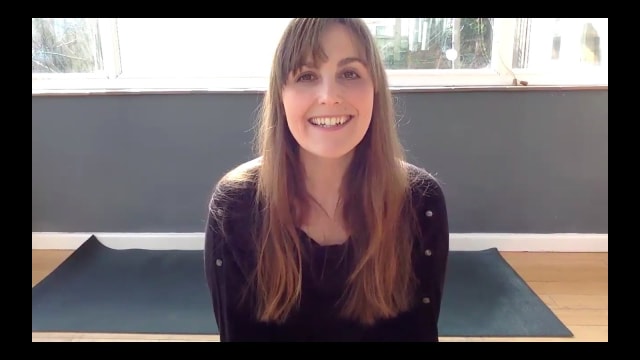
The first thing Chris Chavez asks you to do in this workshop is not to stand on your head. He asks you to get down on your forearms, lock your fingers, and wait. The video, a 2018 workshop titled "Headstand," treats Shirshasana as the pose it is: an inversion that rewards patience. The teacher's method is a chain of small, checkable stages that begins with dolphin pose, moves to a forearm base with the crown of the head on the floor, uses a wall as honest feedback, and only then asks for a free balance. Each stage has a rule attached. Build the base before you lift. Let the wall tell you the truth about your shoulders. Move on only when you feel stable and strong where you are. This article walks through that progression and the reasoning behind it, for readers who have not seen the video and for those who want a plan to practice from.

Lesen · 8 Abschnitte

Why does a headstand begin with dolphin pose?

Because the headstand is mostly an arm problem, and the arms have to be trained before they are asked to carry the body. Chavez opens with dolphin pose as a way to build strength and stamina, the foundation the rest of the pose depends on. The setup is precise. You bring the forearms to the mat, elbows directly beneath the shoulders, and interlace the fingers. Tuck your toes under and lift the hips, so the weight moves into the arms.

The critical instruction is about the shoulders. As the hips lift, there is a natural tendency for the shoulders to drift forward, past the elbows. Chavez's cue is to keep them exactly where they are, stacked over the elbows. Then the feet walk forward only as far as the shoulders can stay over the elbows, hold for a few breaths, walk back, and sit on the heels. The video recommends repeating this for a few cycles. Over time, the arms and chest get strong enough to support the work that comes next.

There is a quiet logic here that a musician will recognize. You do not learn a difficult passage by playing it at full tempo on the first day. You learn the mechanics in a slower, simpler form, and the speed comes later as a consequence of control. Dolphin pose is the slow version of the inversion.

How do you set up the forearm base for a headstand?

This is where the pose changes shape. Once the dolphin work is steady, you return to the forearms and interlace the fingers again. Chavez gives a specific detail: one finger sits on the bottom of the clasp, and you tuck it in so the heel of the hand lies flush against the floor. That flat contact is what makes the base stable.

He also points out a choice that most beginners do not know they are making. The palms can be pressed heel to heel, which gives you more power and strength, or opened slightly apart, which gives you more freedom and fluidity. Chavez's answer is pragmatic: it depends on what you need. Whatever makes the body feel stable and strong is the right answer for that day. A structure that feels secure beats a textbook one that feels shaky.

Then comes the crown of the head. You place the very top of the head on the floor, just in front of the hands, and make firm contact so that the back of the head is included in the support. The instruction is to extend out through the top of the head so that all sides lengthen. Chavez stresses that this is not a balance yet. It is a tripod, forearms and crown, and the rest of the pose is built on it.

What does the forearm stage teach that a wall cannot?

With the base set, the feet walk toward the body and the hips rise. The key words in the video are "energetic lift." Chavez asks you to keep the arms continuously working so that the lift travels all the way up toward the hips. The most common failure at this point is collapse: the shoulders or upper back fold toward the spine, and the weight slumps into the chest. Chavez's remedy is to keep the shoulders over the elbows and let the arms hold the structure.

For readers who are ready for a test, the video offers an optional variation: from this stage, lift one leg, then the other, while keeping the legs held steady. It is presented as a way to check your strength at home, not as a requirement. The pattern repeats throughout the workshop. Each stage is a place to hold, not only a place to pass through.

Why use a wall to learn the headstand?

The wall in this video does something a teacher's eye cannot always do from across the room. It gives you a reference point that does not lie. Chavez moves the same forearm base to the wall. As the feet walk forward, the goal is to arrive near the wall without the upper body leaning into it. If the shoulders or upper back touch the wall, the teacher's diagnosis is blunt: it means you are not using your strength enough. The wall is not a crutch to be pushed against. It is a measure of how well the body is holding itself.

When the collapse is there, Chavez tells you to pull off the wall. The next step is a lift of one leg, with the knee bent and the foot brought up close to the wall, then tapping the wall with that foot and coming back. The wall, in this stage, is a place for the foot to touch and return, not a support to lean on. He describes the posture he wants to see: the body is not falling into the wall, there is balance, the power is held, the student feels stable, strong, and secure. That is the place to stay for a while before going further.

From there, the legs straighten, one at a time, with both feet still resting against the wall. Chavez asks you to find balance here first, pressing the legs together so the contact with the wall is firm. Then one foot lifts away from the wall, and the balance is found again before the other leg follows. If you lose the connection, the instruction is simple: the legs return to the wall. The wall is always there to bring you back.

When is it time to move to the next stage?

This may be the most useful principle in the video, and it is stated almost in passing. Chavez says that when you progress from one stage to the next, you always want to be stable and feeling strong where you are. If you feel wobbly or unstable, the stage you are in is the place to work for a while. That reverses the common impulse to rush toward the full pose. Progress is not measured by how far you have walked your feet. It is measured by how solid you feel at the level you are on.

The sequence then compresses. Chavez runs the same stages again, a little faster: forearms, interlaced fingers, crown to the floor, a lift to the wall, legs straight, the one-foot-at-a-time release from the wall. The full form follows, with the wall kept as a reference point rather than a support. He describes a light hop to bring both feet up, a moment of finding a connection point, and then the feet lifting away one at a time. The legs work, the arms work, and the balance is held through the body rather than gripped in the neck.

"Inversions cultivate strength, balance and resilience of perspective which will serve you at any level of your practice," the workshop description reads. (Chris Chavez, video description, 2018)

How do you come out of a headstand safely?

The exit is part of the pose. Chavez does not treat the descent as an afterthought. From the full balance, you lower one leg, then the other, so the movement is controlled rather than dropped. The knees come down to the floor, and the video's final instruction returns to the base: once the legs are down, sit back on the heels. The control on the way down is the same control that got you up.

After the work in the upper body, Chavez finishes with a shoulder opener, because the arms are doing a lot and the upper shoulders and neck can tighten. The sequence is gentle: sit, take one arm behind you, reach toward the shoulder blades, and tilt the head to the opposite side. You do not need to force it. The aim is to bring a sense of opening back to muscles that have been working hard.

What safety cues does the teacher keep returning to?

Three cues run through the whole video. The first is the shoulder check: if the upper back collapses toward the spine or into the wall, the strength is not there yet. The second is the stability test: move forward only when you feel secure in your current stage. The third is the non-strain principle: the work is to bring the body to a place of support, not to push into discomfort. Chavez is explicit that you should not strain. Use the wall as a reference, not as a challenge, and let each stage earn the next.

Where to go from here

If you want to practice this progression, follow the video's own order and give each stage the time it needs. Start with dolphin pose for several cycles until the arms and chest feel steady. Build the forearm base with the crown of the head on the floor and the hips lifting only as far as the shoulders stay over the elbows. Move to the wall, and treat any shoulder collapse as information rather than failure. Practice the single-leg lift and the one-foot-away balance before you attempt the full form. Finish each session with the shoulder opener and a seated pause. The headstand is not a single moment of arrival. It is a set of stages, each one stable enough to stand on before you ask the next one of you.

Comments

Loading the conversation…

Transcript

[0:04] so welcome everyone today we're gonna

[0:07] work on the heads - it's also know what

[0:09] and if you're brand new to yoga and

[0:11] you've never done this pose before this

[0:12] is a great place to start

[0:14] I'm gonna give a few tips and how to

[0:15] build strengthen the bows to be able to

[0:17] do the pose on your own but also give a

[0:19] few safety tips things to watch out for

[0:21] as you're progressing along the way

[0:23] this is Mecca and Sunnah which is gonna

[0:25] be helping me out today let's get

[0:26] started okay we're gonna start with

[0:29] dolphin pose and this is a great place

[0:31] to start to build your strength in your

[0:33] stamina so you get strong to support you

[0:35] in the pose so we're gonna bring cinimon

[0:37] 2 or 4 up to come onto your poncho and

[0:40] then interlace the fingers now when you

[0:43] interlace the fingers one of the fingers

[0:45] will be on the bottom you're just going

[0:46] to tuck that in and that allows the

[0:48] bottom of the has to make flush to the

[0:50] fly you can see the position of her arms

[0:53] her elbows are directly under the

[0:54] shoulders so we're going to use that

[0:56] energy to support the upper body not

[0:59] tuck your tips your toes under and lift

[1:01] your hips up so as you lift the hips up

[1:04] there's going to be a lot more weight on

[1:05] the arms and there's going to be a

[1:06] tendency for the shoulders to fall

[1:08] forward we're gonna keep the shoulders

[1:10] exactly where they are and then she's

[1:12] gonna start to walk the feet floor as

[1:14] she walks the feet forward she's gonna

[1:16] keep the shoulders right over the elbows

[1:18] and this is far enough and then right

[1:20] here she's gonna work to just hold the

[1:22] boat steady to hold the bus strong well

[1:24] hold this for a few breaths and then to

[1:27] walk the feet out just a little bit and

[1:29] then bring the knees back down to the

[1:31] floor sit back on your heels

[1:32] yeah and sit up so we'll do this a

[1:35] couple of times a couple of cycles and

[1:37] over time you're gonna get strong your

[1:39] arms and strong in your chest and then

[1:41] we'll do another variation where the

[1:43] head

[1:43] come to the floor and this would be more

[1:45] fun we're going to be working on in head

[1:46] step so whenever you put the head on the

[1:49] floor you want to put the very top part

[1:51] of your head on the floor and extend out

[1:53] to the top to make sure that all sides

[1:55] of the next day lengthening so sitting

[1:58] on the same position bring your forearms

[1:59] to the ground and then interlace your

[2:01] fingers it's the same thing and in this

[2:04] one what I find for me is that I like to

[2:07] bring this set the plug the heel of the

[2:09] palms together to touch and then some

[2:11] people like to have a little bit of

[2:12] space and they open the palms apart the

[2:14] heels together to gives you more power

[2:16] more strength but the hands opening

[2:18] gives you a little bit more freedom in

[2:19] fluidity and flexibility so it just

[2:22] depends what you need whatever it makes

[2:23] your body feel stable and strong that's

[2:25] what you wanna go for bring the top of

[2:27] the head to the floor she's going to

[2:28] place the top of the head to the floor

[2:30] just in front of the hands and it has to

[2:32] make strong contact to the back of the

[2:34] head tuck the toes under and then walk

[2:37] the feet forward

[2:37] I'm sorry lifting himself and then walk

[2:40] the feet for now we're gonna Majan a

[2:42] vertical wall as soon as you start to

[2:44] walk the feet forward we don't want the

[2:45] shoulders or the upper back collapsing

[2:47] towards the backbone we want to

[2:49] continues the arms to create an

[2:51] energetic lift all the way up to the

[2:53] hips

[2:54] she keeps this really strong she'll keep

[2:56] the legs down but if you're at home and

[2:58] you want to try something different and

[2:59] test your strength one link in the sky

[3:01] or the other leg she'll keep your legs

[3:04] down yeah and then walk your feet back

[3:06] up and then bring your knees to the

[3:08] ground sit back on your heels

[3:14] okay now we're gonna take it to the wall

[3:16] and we're gonna try stage one of this

[3:18] pose so we're just building on the same

[3:20] things we've just worked on previously

[3:22] sit down bring your forearms to the

[3:24] ground interlace your fingers and you

[3:27] can take your knees back to sliver and

[3:28] bring the top of your head steps away

[3:31] so once you bring the top and head to

[3:34] the floor or arms plugging in for apples

[3:36] are still staying underneath the

[3:37] shoulders just what we worked on before

[3:38] lift this up and walk the feet forward

[3:41] and then process far enough so if she

[3:44] walks any further in the body will tend

[3:46] to want to collapse where's the wall if

[3:48] you're collapsing first walk your

[3:49] shoulders or your upper back touch the

[3:51] wall it means that you're not using your

[3:53] strength enough try to pull off the wall

[3:55] lift one leg up bend the knee and then

[3:59] she bends me the foot is pretty close to

[4:00] the wall so with the light top from the

[4:02] bottom leg she can touch the wall come

[4:04] back touch the wall the wall means once

[4:15] the feet touch she were to see that

[4:16] she's working to keep the body falling

[4:18] into the wall she's got a lot of balance

[4:21] here she's got her power she feels

[4:23] stable she feels strong she feels secure

[4:24] this is the place she wants to hang out

[4:26] for a little bit then she'll just lower

[4:29] one leg to the floor all right now we're

[4:39] going to go to the final stage of the

[4:41] pose whenever you're progressing from

[4:43] one stage to the next

[4:45] you always want to make sure that you're

[4:46] stable and feeling strong where you're

[4:48] at if you're feeling a little bit wobbly

[4:50] and unstable or in

[4:51] here you just stand that's the place

[4:53] you're gonna work for a while so cinemas

[4:55] going to go into the full form of the

[4:56] quote but we're still gonna run through

[4:58] the same stages but a little bit faster

[5:00] bring the forearms to the ground in the

[5:03] next two fingers to bring the top of

[5:04] your head to the wall this is where we

[5:20] ended the last stage right from here

[5:22] she'll stretch one leg straight but it

[5:24] stays in the wall there you go and then

[5:26] the other leg straight stays in the wall

[5:29] now first find the balance here and when

[5:32] house with balances if the legs are

[5:34] pressing together so she can press the

[5:35] legs together make sure you're making

[5:37] contact good and then one foot can come

[5:40] away through the wall one third come

[5:42] away from the wall but she just finds

[5:44] her balance death and then you should do

[5:46] a super stable and strong with the other

[5:47] leg to come off the wall to media in any

[5:52] point you lose your balance you lose

[5:54] your connection if it just goes back to

[5:55] the wall you know where it's up

[6:09] all right now we're just going to go

[6:10] into the full form of the pose but we're

[6:13] gonna use the wall just as a reference

[6:14] point so I've seen them come to your

[6:17] forearms intervention fingers and bring

[6:18] the top of your head to the floor

[6:20] yeah lifting himself and then start to

[6:24] walk with you boy

[6:25] she'sshe's super simple already and

[6:27] she's she's got a lot of strength she

[6:29] can balance we know we bought into that

[6:31] so she can come off the wall so now

[6:33] she's gonna go up with straight leg one

[6:34] leg goes up and then she's gonna do a

[6:36] light hop to the wall yeah and then both

[6:39] legs come up it's perfect she finds a

[6:41] connection point here so she's super

[6:43] solid connected good Center holding her

[6:45] power and then the feet can start to

[6:47] come off one at a time work together and

[6:52] she holds her balance look how her legs

[6:54] are really working her arms are working

[6:56] everything's holding strength and how in

[6:59] the body and she finds her balance to

[7:03] come down and just lower one leg one leg

[7:05] at a time

[7:09] bring the knees to the floor so that's

[7:16] just awesome at what pets done one and

[7:18] to wrap it up I'm going to do a little

[7:20] shoulder opener because you're using

[7:22] your arms so much and using a lot of

[7:23] care in the upper body sometimes the

[7:25] upper shoulder muscles and neck muscles

[7:28] can get tight so we're just going to do

[7:30] a super sweet opener sitting take your

[7:32] right arm behind you and as the arm

[7:35] comes around we're going to try to reach

[7:36] your arm towards the shoulder blades

[7:38] don't have to go crazy with it we're

[7:40] just trying to get besides these muscles

[7:43] up curricle done and then she's going to

[7:45] tilt her head to the left and she chose

[7:47] to head to the left you can start to see

[7:49] that there's a little bit of a stretcher

[7:51] even the shoulder with the arm behind

[7:53] she can pull that shoulder got just a

[7:55] little bit don't go crazy whether you

[7:57] don't want to strain you're just trying

[7:58] to bring a sense of opening back to the

[8:01] muscles that have been contracted the

[8:03] left hand if you want to go to the head

[8:06] and help the head just a little bit

[8:07] don't pull super strong this is just a

[8:10] light easy giving the head direction a

[8:12] little bit of connection let's try the

[8:18] other side behind you she tilts towards

[8:26] the side we're just getting more length

[8:28] out of that whole left side of the neck

[8:30] and shoulder right hand can go to the

[8:32] head and it's just adding just a little

[8:34] bit of weight and weight something if

[8:44] you're good if your head falls off and

[8:47] you break your neck you've got to fly

[8:49] really sad bring the head back to nature

[8:56] and that's it thanks for listening

[9:00] watching I hope you found some help

[9:02] for sure sauce and um one headstand one

[9:04] and it's great for building balance and

[9:06] strength and stamina in your practice

[9:08] have a beautiful day and don't forget to

[9:11] live your truth thank you for listening

[9:13] and watching namaste

[9:14] [Music]

[9:21] you

Chris Chavez
ArtistChris Chavez

Chris Chavez is an Istanbul-based yoga teacher, creator of the CY Method and co-owner of Cihangir Yoga, who also works as a musician and trains teachers worldwide.

Profil ansehenWebsite
Themen erkunden
HeadstandShirshasanaInversionsWall-practiceForearm-base

Hast du Fragen?

Häufig gestellte Fragen

Chris Chavez's 2018 workshop recommends a staged approach: start with dolphin pose to build arm strength and stamina, then move to a forearm base with the crown of the head on the floor. Only progress to lifting the hips and feet when the shoulders stay stacked over the elbows and you feel stable. Repeat each stage until it feels secure.
The video treats dolphin pose as the foundation for the whole sequence, because the headstand depends on arm and shoulder strength. Chavez uses it to build strength and stamina before any head-on-floor work begins. Practicing it for several cycles helps the arms and chest carry the weight later on.
In this workshop the wall acts as honest feedback. If your shoulders or upper back touch it as your feet walk forward, Chavez says it means you are not using your strength enough. The wall also provides a safe reference point for one-leg and two-leg lifts and for finding balance before coming off it.
Chavez says it depends on what you need. Pressing the heels of the palms together gives more power and strength, while opening them slightly gives more freedom and fluidity. Choose whichever position makes your body feel most stable and strong.
Move on only when you feel stable and strong where you currently are. Chavez explicitly says that if you feel wobbly or unstable, that stage is the place to keep working. Progress is judged by the quality of your balance, not by how far you have lifted.
Lower one leg at a time rather than dropping out of the pose, then bring the knees to the floor and sit back on the heels. Chavez finishes with a gentle shoulder opener, since the arms and upper shoulders work hard in inversions. Avoid forcing any stretch.
Chavez says the upper shoulder and neck muscles can tighten from supporting the body in inversions. His opener involves sitting, reaching one arm behind toward the shoulder blades, and tilting the head to the opposite side without straining. It is meant to restore a sense of openness to contracted muscles.

Weiterlesen

More on Inspiration

Alle anzeigen
Intention-Setting Yoga: Finding Your Own Flow in 35 Minutes
Inspire

Intention-Setting Yoga: Finding Your Own Flow in 35 Minutes

A 35-minute intention-setting yoga class that starts with a vision of your happiest life and turns that feeling into a flow built around you…

8 min read
Warrior I and II for Beginners: A Morning Alignment Flow
Inspire

Warrior I and II for Beginners: A Morning Alignment Flow

Liza Colpa's 30-minute beginner class builds from child's pose and sun salutations into Warrior I and Warrior II, teaching alignment as a wa…

10 min read
Kripalu Yoga at Home: Breath and Compassion Practice
Inspire

Kripalu Yoga at Home: Breath and Compassion Practice

A bell jingles on a cat's collar, a neighbor's dog barks, and a teacher opens her first online class during the 2020 pandemic. Here is how h…

8 min read
Slow Down to Speed Up: Online Hatha Yoga, Explained
Inspire

Slow Down to Speed Up: Online Hatha Yoga, Explained

Annemaree Rowley's short introduction to an online Hatha yoga series argues that slowing down makes you more effective, not less. Here is wh…

6 min read

Weiter erkunden

Setze deinen Weg fort

Mehr Weisheit und Zusammenkünfte aus dem BrightStar-Verzeichnis.

Mehr Artikel

Durchstöbere die ganze Bibliothek an Lehren, Interviews und Leitfäden.

Zu allen Artikeln →

Lehrer & Künstler

Entdecke die Linien, Musiker und Wegbegleiter der bewussten Welt.

Künstler erkunden →

Event finden

Kirtan, Retreats, Klangbäder, Atemarbeit, Festivals — bald in deiner Nähe.

Events ansehen →