Transcript
[0:02] [bell]
[0:21] [bell]
[0:22] [music]
[0:43] [music]
[1:16] >> Dear respected teachers, dear
[1:19] beloved community,
[1:23] how many of you is first time here
[1:25] today?
[1:28] Okay, about third.
[1:30] Welcome.
[1:52] And some of you know today is our
[1:54] uh the opening day of the rains retreat.
[1:58] And uh
[2:00] last night we uh
[2:02] had a ceremony to
[2:05] to inventory who is here.
[2:07] And my brother brother Monta kept saying
[2:10] that you if you get a stick, that means
[2:12] you you have food to eat.
[2:14] >> [laughter]
[2:15] >> I think he said it twice.
[2:17] As if you
[2:18] like you're not going to get food if you
[2:20] you don't get a stick.
[2:23] Um
[2:26] Yeah, it's a funny uh
[2:28] uh
[2:30] tradition that
[2:31] uh not funny. It's very ancient
[2:34] tradition. It comes from the Buddha's
[2:36] time, called the rains retreat.
[2:40] And at the time of the Buddha, they
[2:42] wandered a lot around and
[2:46] they recognize it's very difficult
[2:48] during the rainy season. So, they
[2:51] decided to stay still
[2:53] for 3 months or more so that they don't
[2:56] walk around and it's muddy and you step
[2:59] on all kinds of things
[3:01] and animals.
[3:03] So, it kind of starts from
[3:05] a wandering tradition
[3:07] to stay put. And during that time,
[3:10] because they stay put, you know, they
[3:14] began to also
[3:16] study with each other and have
[3:17] discussion and to look at their lives
[3:21] um
[3:22] as wanderers, as
[3:25] >> [bell]
[3:27] >> as uh spiritual speakers.
[3:29] So, that's a very beautiful image that I
[3:32] always remind myself
[3:34] every time it's rains retreat, to
[3:36] reflect on the origin of our tradition,
[3:40] which is
[3:41] a nomadic tradition.
[3:44] We actually traveled a lot
[3:47] uh as in 2,500 years ago in India.
[3:52] And they did it barefoot. Can you
[3:53] imagine? Some of my brothers are now
[3:55] barefoot.
[3:57] It uh
[3:58] it's not very welcome in the meditation
[4:00] hall, but uh
[4:01] >> [laughter]
[4:02] >> they make all the brown mats white
[4:04] again.
[4:06] Um so that's our tradition. We uh moved
[4:08] a lot.
[4:09] And our teacher, when he
[4:13] started creating the monastic tradition
[4:15] in the West, in France, Southern France,
[4:19] yeah, he also would travel a lot around
[4:22] the world to teach.
[4:24] Springtime, summertime, autumn time,
[4:28] wintertime.
[4:30] I had a uh
[4:32] a extra-thick passport. You know, they
[4:35] uh
[4:36] they give you an option, you can get
[4:37] extra pages.
[4:39] After I became a monk, I had to get one
[4:41] with extra pages cuz I traveled a lot.
[4:44] And we travel I travel with them every
[4:47] spring and uh autumn at least.
[4:51] Uh and in between those two.
[4:54] And so Thay was uh mm
[4:57] you know, leading laying a foundation
[4:59] for kind of Buddhism that is very
[5:02] engaged and very
[5:03] uh you know, these retreats help people
[5:07] uh heal and transform and find uh
[5:10] a direction, a purpose, a meaningful uh
[5:13] purpose for their lives.
[5:15] As well as incorporating children into
[5:18] the tradition.
[5:19] Our our retreats always had children,
[5:22] families.
[5:24] So we traveled a lot.
[5:26] And so that's when Thay uh formed the
[5:30] 3-month rains retreat to revive it.
[5:33] So it's been
[5:35] uh kind of
[5:37] deteriorated in the West cuz it's
[5:40] very busy, especially with monastics as
[5:42] well.
[5:44] But Thay was very, very strict with 3
[5:46] months.
[5:47] Like
[5:48] you got to stay put, no traveling, no
[5:50] special anything. Even Thai had to drop
[5:53] many invitations during the rain
[5:55] retreat.
[5:57] So, I'm reminded that of that every time
[6:00] they come to rain retreat.
[6:02] For us to all come together and stay in
[6:05] one place.
[6:07] And uh
[6:08] uh also in our tradition we change
[6:10] rooms. Many of us have new rooms now.
[6:14] Um new roommates.
[6:17] The the monks uh
[6:20] last Monday, they uh changed rooms. I
[6:23] think the sisters uh did it before.
[6:26] But um
[6:28] yeah, we we we I love watching the room
[6:31] rearrangement.
[6:33] Like they were the brothers uh they
[6:35] choose rooms and then they a lot of
[6:37] where you put the name and then you pick
[6:39] and see
[6:41] whose turn it is to choose next, the
[6:43] order of choosing.
[6:45] And uh it's quite a
[6:47] uh it's like a sports game or something.
[6:50] You see how things land up.
[6:53] So, that is uh
[6:55] uh an ongoing
[6:57] uh every year we have to do that.
[7:01] And you get to look back at all your
[7:03] stuff and see
[7:05] things that you haven't touched for a
[7:06] year.
[7:07] And you say, "Did I really need that in
[7:09] my room?"
[7:11] So, you the brothers begin to reflect
[7:13] and they they they
[7:15] We have a corner this year was behind
[7:17] the veranda where you put all your
[7:19] freebies.
[7:20] And it becomes like a garage sale.
[7:23] Uh
[7:24] a little uh you know, a room
[7:26] room sale. You know, you just leave it
[7:28] there and you can actually uh go there
[7:30] and uh
[7:32] you know, take think invite things to
[7:34] come home to come back to your room.
[7:37] Freebies, right?
[7:39] This year one sister called up and say,
[7:41] "Hey, when is your uh free bee opening?"
[7:44] >> [laughter]
[7:45] >> It's like, "No, it's not It's in the
[7:47] back now, so you can't really access it,
[7:50] you know?"
[7:51] And we we joke with her.
[7:53] And then soon it's still there. It's
[7:55] still some uh stuff. And then we wait
[7:58] for a week and then we go donate it
[8:00] somewhere.
[8:01] So, this is a kind of uh
[8:04] practice to reflect on the material
[8:06] things as well as the the comforts that
[8:08] we uh associate with.
[8:11] As well as your roommate.
[8:13] You know, you like your roommate? Now
[8:14] you got to let them go. Ah,
[8:16] you know? Oh, boy, I got to go.
[8:18] New roommates. Oh, boy.
[8:20] >> [laughter]
[8:22] >> Okay. So, some of you uh
[8:24] is going to be a practice.
[8:26] >> [snorts]
[8:26] >> So, our community practice is very uh
[8:29] very real, very alive.
[8:32] Mhm.
[8:33] I remember one uh in France, there was a
[8:36] English young man who is at
[8:39] at the range retreat. And he was part of
[8:42] a wake-up movement for young people and
[8:44] they love community. They talk about
[8:46] community.
[8:47] And then during a panel, he was up and
[8:50] he said uh "I don't trust anybody who
[8:53] speak about community until they uh live
[8:56] through 3 months with four roommates."
[8:59] >> [laughter]
[9:01] [gasps]
[9:01] >> You know, like afterwards he saw the
[9:04] conversation as very idealistic.
[9:08] And uh he experienced
[9:11] uh not only 3 months, but he stayed
[9:13] longer even.
[9:14] So, he knows the reality of, you know,
[9:17] the What is it? The uh
[9:19] uh after the honeymoon, there's the
[9:21] laundry or something. There's like a
[9:22] book on it, right?
[9:24] Something about laundry and and
[9:26] Buddhism.
[9:28] Yeah, and that's a very very real. And
[9:30] our tradition,
[9:31] laundry.
[9:34] Whose turn is it?
[9:36] Whose turn is it to wash the dishes?
[9:40] How come I always wash the dishes?
[9:43] You know that one, right? Those of you
[9:45] in partner, you have that? It's like
[9:48] the honeymoon now is the dishes.
[9:51] You know, in the sink, you're like,
[9:53] "It's your turn." "No, it's my turn."
[9:56] So, that's reality in our tradition.
[9:59] Um all of that is to uh train. And what
[10:02] are we training here?
[10:04] Let's say
[10:06] to train to watch and to know our mind.
[10:08] And without the rubbing,
[10:10] uh you're just comfortable all the time.
[10:13] Uh you know, avoiding triggers
[10:15] everywhere.
[10:17] Then you actually just uh become more
[10:19] and more uh
[10:20] how do you call it? Mm.
[10:22] How do you call it? Always uh cautious
[10:25] everywhere. And that's not exactly
[10:28] happiness.
[10:30] Just because you're not triggered
[10:31] doesn't mean you're okay.
[10:34] So, in a way it is It's not like we
[10:36] intentionally trigger anything. But in
[10:38] fact, the trigger
[10:40] is a way to for us to recognize
[10:43] stuff that's happening.
[10:45] And so, our tradition is, you know, is
[10:47] quite uh
[10:49] um interactive.
[10:51] You know, Thich Nhat Hanh says uh he's
[10:53] known for engaged Buddhism.
[10:55] And everyone's like, "Yes, engaged
[10:57] Buddhism." As if it's like outward
[11:00] arrow.
[11:01] And so, Thich Nhat Hanh at some point he
[11:04] changed it to uh
[11:06] applied Buddhism.
[11:08] Much better word. So, it's not
[11:11] misunderstood as an outward engagement.
[11:15] But apply to your daily life.
[11:18] So, this is our tradition for those who
[11:21] are new.
[11:22] And the rainy retreat
[11:24] is to apply. It's like,
[11:26] you know, the researcher going to the
[11:29] lab. The 3-month is a lab
[11:32] to experiment
[11:34] and to see, "Ooh, what happens if I get
[11:36] more food? What happens if I eat a lot?
[11:41] What happens if I eat less?"
[11:44] At such far away my range you treat of
[11:47] Like I never had problem with food
[11:51] before I be
[11:52] you know, I came to the monastery.
[11:55] But after being in the monastery
[11:57] I had this thing with food. I would
[11:59] stand in line and it goes like, "Oh, how
[12:01] much do I take now?"
[12:02] >> [laughter]
[12:03] >> "Ooh, that smells so good." You know,
[12:06] and so it was a constant battle in my
[12:08] mind.
[12:10] Cuz in the monastery there's not so much
[12:12] stimulation.
[12:14] And the most stimulating thing is
[12:17] cooking.
[12:18] Especially when the sisters come up and
[12:20] cook together with the brothers. Oh,
[12:21] boy. I would be like,
[12:25] I still have that problem now.
[12:27] >> [laughter]
[12:28] >> So you watch your mind, yeah? So you
[12:30] learn uh a lot about yourself.
[12:33] You see that?
[12:34] That is the I used to call it the
[12:36] 3-month crucible, but crucible is so
[12:40] so painful, right?
[12:42] So it's kind of laboratory.
[12:44] So you are your own lab. Kind of like
[12:47] And actually some people is the
[12:49] crucible. Yeah.
[12:50] People really like
[12:52] like their volcano goes.
[12:54] >> [laughter]
[12:55] >> And it's good.
[12:57] Cuz then, you know, the volcano gets to
[12:58] chill and cool down, you know? But you
[13:01] had all this repent uh lava that you
[13:03] didn't know you had.
[13:05] And we don't wish that on anybody, but
[13:07] it does happen.
[13:09] And uh but we're here for each other.
[13:11] And
[13:12] we we're not afraid of that. Um
[13:15] So that's a little bit of uh
[13:18] you know.
[13:21] And it's uh in knowing ourselves, mhm,
[13:24] we begin to understand ourselves.
[13:28] And we can uh understand others.
[13:31] And so
[13:32] I think in understanding
[13:35] ourself and others, our heart uh become
[13:38] a little bit more tender and soft,
[13:40] right?
[13:41] And that's the gift of being human
[13:44] that we have this ability to
[13:46] mm
[13:48] and you know to uh
[13:51] be more tolerant, to be more accepting.
[13:55] Cuz you know not goes our way.
[13:59] So I think that is the kind of freedom
[14:01] that is very
[14:02] uh
[14:03] practical and very applied freedom, not
[14:06] ideological freedom
[14:09] as in some political or idealistic way.
[14:14] But freedom here is like I'm no longer
[14:16] pushed and pulled by these habits of
[14:19] mine.
[14:20] I'm no longer pushed and pulled by other
[14:22] people.
[14:24] You see that you have a choice.
[14:26] That freedom is very practical.
[14:29] Mm I can choose differently.
[14:35] So this is a little bit kind of
[14:38] for those who are new, our tradition of
[14:40] 3 months.
[14:43] And first month you
[14:46] there's a rhythm to it.
[14:48] You know there's I'm in love, everything
[14:50] is now.
[14:52] And
[14:53] >> [clears throat]
[14:53] >> and the many brothers came from France
[14:56] to come and practice with us and
[14:59] you know I like to borrow their eyes to
[15:01] see everything through their eyes.
[15:05] Look at the mountain with their eyes.
[15:08] So you it's a chance for us to renew our
[15:11] uh
[15:12] complacent kind of
[15:15] routine
[15:16] uh
[15:18] you know taking things for granted eyes.
[15:21] We begin to like
[15:25] you know, wow, there are plates and
[15:27] bowls for me to use.
[15:29] So, you begin to to to recite that. It's
[15:32] like, wow.
[15:33] I get to join
[15:36] in the sitting in the morning. How
[15:38] precious.
[15:40] Cuz it might become routine after many,
[15:42] many years.
[15:44] So, it's also for a practice for all of
[15:46] us to renew our beginner's mind.
[15:52] Uh
[15:52] we don't take things for granted.
[15:54] So, this is uh
[15:56] an ongoing training for all of us.
[16:00] Mhm.
[16:08] In preparing, I knew I was going to
[16:11] share today and
[16:13] I actually been reflecting a lot
[16:17] about um
[16:20] you know, the what Thich Nhat Hanh built
[16:23] here,
[16:25] uh which
[16:26] was uh initiated through his being
[16:29] exiled from the West
[16:32] from during the time of war
[16:34] in our country, in Vietnam.
[16:36] And so, he couldn't go back.
[16:39] He wanted so much to go back
[16:41] to to build a Plum Village, uh Phuong
[16:44] Boi, uh fragrant palm leaves
[16:47] uh hermitage in uh in Vietnam for
[16:51] activists and engage uh people
[16:54] uh
[16:55] in in during the war time. He built the
[16:57] school youth for social service and
[17:01] and but he was in the West, he slowly
[17:03] built Plum Village.
[17:06] Very similar aspiration.
[17:09] Not as a a Buddhist uh
[17:11] uh tradition or monastic tradition, but
[17:14] a as a vision for social
[17:17] uh development. How to change and
[17:20] improve society. That's why you call it
[17:22] Plum Village, not Plum Monastery.
[17:26] So, this is something we I've been
[17:28] reflecting a lot about Thich Nhat Hanh's
[17:30] life and how, you know, he is not just a
[17:32] Buddhist monk. He was a social
[17:35] um
[17:36] He wanted to change how society was
[17:39] organized.
[17:40] And this is something
[17:42] runs very deep within my heart.
[17:45] You know, I was trained as an architect
[17:47] and I also wanted to improve the living
[17:50] physical condition of people, especially
[17:53] in LA. Can you believe that? I was very
[17:55] idealistic
[17:58] What is it? Idealistic fresh after
[18:01] college, you know?
[18:02] People who just graduate, they have
[18:03] like, "I'm going to change the
[18:05] environment. I'm going to help clean.
[18:07] I'm going to help"
[18:08] You know, it's And then, you know, after
[18:10] 1 year, "Oh my god."
[18:13] >> [laughter]
[18:13] >> The bureaucracy, the
[18:16] the corporate culture.
[18:18] >> [laughter]
[18:18] >> The money involved in things, right?
[18:21] And so, I got disillusioned.
[18:25] But I've been reflecting a lot about
[18:26] Thich Nhat Hanh's life and his uh
[18:30] wanting to create different models
[18:34] >> [snorts]
[18:34] >> for society.
[18:37] And he
[18:39] And he saw that
[18:40] great component to that is the spiritual
[18:43] development, the training of the person
[18:45] who's engaged, who's
[18:47] helping social change.
[18:50] And to to have that person have a
[18:52] spiritual dimension, to train to to have
[18:55] a spiritual life.
[18:58] Meaning
[18:59] developing yourself
[19:01] in terms of your humility, your pride,
[19:04] your
[19:06] all the baggage that you bring from your
[19:08] family. If you don't have that as a
[19:12] you know, your directive
[19:14] all your engagement, all your social
[19:16] activism will be undermined because of
[19:19] that
[19:21] uh personal development. And now you
[19:23] know, as you know, many movements are
[19:26] destroyed
[19:27] because of human uh
[19:30] I don't know how you call it, but human
[19:32] uh soap opera, right?
[19:34] This is a truth of any movement.
[19:38] So, the I uh
[19:40] solitary
[19:42] uh the the contemplative life, the
[19:45] mm
[19:45] the the the life of meditation and
[19:48] self-development
[19:50] and the active life, the engagement life
[19:53] is very crucial and they go hand in
[19:55] hand. It's not one after the other. It's
[19:58] not like, "Oh, now I'm I'm enlightened.
[20:00] Now I can do social work."
[20:03] Or you do social work and then you you
[20:05] kind of like put this uh whenever you
[20:07] can get it, but they need to happen.
[20:10] So, in your daily life, in your
[20:15] mm everything you do needs to be infused
[20:18] with development of spiritual personal
[20:21] development.
[20:23] So, in the monastery, this rangy tree,
[20:25] that is what we're practicing.
[20:27] To wash our dishes
[20:31] and just enjoy washing our dishes.
[20:34] And ask yourself, what does this have to
[20:36] do with the environmental
[20:39] crisis that we're in?
[20:42] I sometimes do that.
[20:46] What does washing your dishes mindfully
[20:48] have to do with anything?
[20:51] Your relationship.
[20:54] Ask yourself when you open the door
[20:57] mindfully
[20:59] how does that
[21:01] fit
[21:02] in the world that's so
[21:05] people are so discriminated and so much
[21:07] inequality.
[21:09] What is opening the door mindfully have
[21:11] to do with any of that?
[21:14] It's a good question.
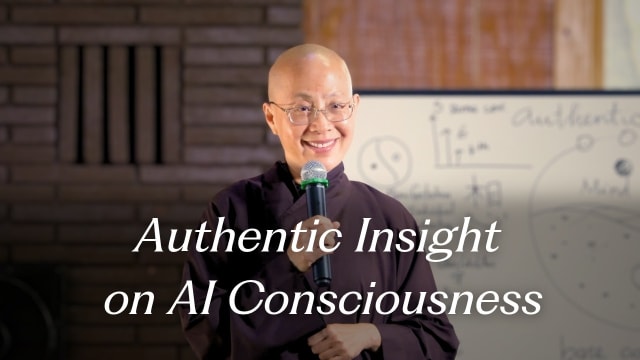
[21:17] When I get on the computer,
[21:20] what does I have to do with all the
[21:22] anxiety about AI coming?
[21:27] So you these things is it for us to look
[21:30] and contemplate in our activity.
[21:34] So this is the uh
[21:36] the the the inseparable nature of action
[21:41] and contemplation
[21:43] as we engage, as we work
[21:46] with the earth.
[21:48] What does that have to do with the
[21:50] environment and the healing of Mother
[21:53] Nature?
[21:54] You see it? So the the koan of Thai is
[21:57] not like
[21:58] why did Buddha Dharma come from the west
[22:01] or what is my hand
[22:04] sound of my hand, one hand clapping.
[22:07] Those things are great for a certain
[22:09] time. They don't work now.
[22:11] They actually create more overthinking.
[22:14] God, I have so many people come up and
[22:16] ask me and tell me about
[22:18] their discovery about a koan
[22:21] and it's so cerebral.
[22:23] And uh I almost feel like Thich Nhat
[22:25] Hanh would go
[22:27] It's like drink your tea, man.
[22:30] >> [laughter]
[22:32] >> Cuz koans are not supposed to be like uh
[22:36] yeah, some of you probably
[22:38] don't understand that, but Zen masters
[22:40] do that. It's not a physical slap, but
[22:42] you feel like you got slapped.
[22:45] And uh you either go home more awakened
[22:49] or uh at least more humble.
[22:51] >> [laughter]
[22:53] >> Or you like go still and
[22:56] and die in your pain. It's very
[22:59] I and I felt that with Thich Nhat
[23:02] people, too. He's got me so angry that,
[23:06] "Oh my god."
[23:07] And it it's like uh
[23:10] And it's a good medicine cuz a lot of us
[23:12] are very proud. We're very proud and
[23:15] very protective of our uh
[23:19] our our story, our identity, whatever it
[23:22] is that we we build ourselves with.
[23:25] And
[23:26] I don't want to tangent here. Let's get
[23:28] back to the
[23:30] So, asking ourselves, "What does this
[23:32] have to do with what's happening in the
[23:35] world?"
[23:36] Coming here 3 months, you know,
[23:38] monastics practicing.
[23:41] What is this Is are we retreating from
[23:43] the challenges and the troubles of our
[23:45] time?
[23:48] So, that's a good question to
[23:49] contemplate.
[23:51] And uh yeah, close your eyes and ask
[23:53] yourself,
[23:55] "Am I running away?"
[24:15] >> [bell]
[24:47] >> Recently, there is there is a trend in
[24:49] our tradition to always say "Enough."
[24:52] You know, cuz it's like reaction to the
[24:55] abundance.
[24:57] You know, the
[24:59] Yeah, everything is like super size.
[25:03] Recently, where where were we? We were
[25:06] somewhere and everything we get is huge
[25:09] amount.
[25:11] All right, it was after the ceremony and
[25:13] then the lay friend took monastic to
[25:16] eat.
[25:17] And I don't know you know banh xeo is a
[25:19] kind of like a crap crunchy uh
[25:23] When I was growing up, you know, you go
[25:25] to the restaurant and it's small like
[25:27] this. And that's it.
[25:29] Gosh, but the food ordered one and it
[25:32] came out it was huge.
[25:35] You know, and that's the nature of being
[25:38] here, I guess. Just everything gets
[25:40] super sized.
[25:43] So, this is something
[25:46] you know, in reaction of this being in
[25:49] in America. I've also
[25:52] you know,
[25:53] uh
[25:54] like everything's like our whim to have,
[25:56] right? You can get anything.
[25:58] Um
[26:00] So, anyway, in our community there's a
[26:01] lot of are you enough? And you are
[26:03] enough. There's always this kind of like
[26:06] brainwashing of
[26:08] >> [laughter]
[26:09] >> the word enough.
[26:10] Um also another word of relevance. Are
[26:14] we relevant? Is this relevant?
[26:17] And this is a
[26:19] interesting question to ask.
[26:21] What we doing here?
[26:25] Um yet to be careful, too, because it
[26:27] usually it can make us
[26:29] strive and try to attain
[26:33] or see the
[26:35] the other
[26:36] What is it? The other hill is greener?
[26:39] So, we have to be very careful. There's
[26:41] a fine
[26:43] fine tuning
[26:44] so that you are not striving
[26:47] or you don't become complacent. And
[26:50] that's a constant practice.
[26:53] But it is a good question to know that
[26:55] what ties form
[26:57] after 40 years to this moment.
[27:00] Do you park? We have Magnolia. They will
[27:05] They will do the rains retreat next
[27:08] week or so and Blue Cliff coming up.
[27:10] Plum Village as well. So many of our
[27:12] centers are
[27:14] having the 3-month retreat.
[27:17] It's a good time to reflect on what what
[27:20] what we do What are we doing in terms of
[27:22] serving? Is it relevant?
[27:26] There's a lot of
[27:29] dismantling
[27:32] of normal
[27:34] Recently I heard about coders, people
[27:37] who do coding.
[27:39] There's so much anxiety because their
[27:41] their job
[27:44] is on the line and people are being
[27:47] laid off. But I hear other coders are
[27:50] learning how to prompt and they're
[27:52] catching up.
[27:53] And so it's a matter of shifting.
[27:56] Musicians,
[27:59] artists,
[28:00] you know, with AI, you know, creativity
[28:03] is becoming quite easy.
[28:07] So, you know,
[28:09] people who know how to play music and
[28:11] make song, they
[28:13] they're coming up with that.
[28:15] Like now, what is their contribution? Is
[28:20] it relevant? Is it needed still?
[28:23] With the machines that can mimic and
[28:26] recreate so many things.
[28:29] So, that's a question that not just with
[28:33] the Buddhist practice, with monks and
[28:34] nuns and practitioners,
[28:37] to ask ourselves
[28:38] are what we doing still relevant?
[28:42] Being mindful of the door,
[28:47] eating and being present
[28:51] properly.
[28:53] Is that relevant still?
[28:56] Uh, that's a good question for the 3
[28:58] months, okay? At the end of the 3
[29:00] months, I'm going to interview each one
[29:02] of everyone, all the monks, nuns, all of
[29:04] us.
[29:06] And uh
[29:07] not just say yes or no, but maybe, you
[29:10] know,
[29:11] a deeper answer.
[29:15] So, that's uh and homework for you this
[29:17] month.
[29:19] Uh, for the 3 months.
[29:21] Mhm.
[29:25] I think in terms of about seeing myself
[29:28] um
[29:31] as a human being exploring.
[29:35] Uh,
[29:35] and I think being a monk is a
[29:39] great opportunity to really
[29:43] you know, it's not really a job. You
[29:45] know, in Buddhism they say the monastic
[29:48] life, it is uh
[29:50] what is it? To attain wisdom is our
[29:53] having insight is our
[29:56] highest career. Our career
[29:58] is to have insight.
[30:01] You know, that is
[30:03] a well-known quote.
[30:05] That is your job.
[30:07] Is to produce insight.
[30:11] You know, some people produce a wall by
[30:12] stacking bricks and cement.
[30:16] Monastics
[30:17] or practitioner
[30:20] we
[30:21] produce insight.
[30:23] That's interesting, huh?
[30:26] Uh,
[30:27] what is that? Do you Can you stack up
[30:29] that?
[30:32] So, that is our career.
[30:34] And in the evolution of humans
[30:37] is very [clears throat]
[30:38] interesting, too. Then that's how I see
[30:42] my endeavor, how I why I changed from a
[30:45] architectural career to a career of
[30:49] insight.
[30:52] And uh
[30:52] and uh actually I came to that uh
[30:55] realization from uh a few incidents.
[30:59] Like in Vietnam, like going to the
[31:01] village, poor village in Quang Tri area,
[31:04] the area that was most bombed.
[31:07] I I had a monk take me there when I was
[31:10] still a young uh I was just come out of
[31:13] college.
[31:14] And I had a a scholarship to go and
[31:16] study
[31:17] the Vietnamese architecture.
[31:20] But I was just using that opportunity,
[31:22] the uh four or five months to just
[31:24] explore Vietnam.
[31:26] And they paid for it.
[31:29] My university, you know. So I rode my
[31:31] bike and I met this man and I'll never
[31:33] forget. He was maybe really old. He
[31:36] looked like a raisin, like his face.
[31:39] And he had like black teeth and he lived
[31:41] in the hut.
[31:42] And I remember riding
[31:44] and uh there like these bombs that
[31:47] became I found out they they became
[31:50] little ponds for the country folks. Can
[31:53] you believe that? The bombs left such
[31:55] big hole that they made ponds out of it.
[31:59] It became very useful.
[32:01] So I remember [snorts] riding through
[32:04] and then just meeting diff- random
[32:05] people. But I met this man, he was the
[32:07] happiest man uh
[32:09] I'll never forget his smile.
[32:12] So I had a translator with me and I
[32:14] asked him, "What do you think about all
[32:15] the West coming to build
[32:17] the high-rises and stuff?" That time
[32:19] Saigon was already uh
[32:22] opening.
[32:23] And all these Marlboro and Coca-Cola and
[32:27] you know, they got great they're coming.
[32:30] And I remember him laughing. And I go,
[32:31] "Oh." I think he said something like,
[32:34] "Oh, let them come. I I our country many
[32:36] people have come and go.
[32:40] But I will never forget his like black
[32:41] teeth. I can still remember it. I was
[32:44] like, "God, what he must have
[32:46] experienced through the war
[32:48] and all his family died."
[32:51] This you know, this is a you don't want
[32:52] to compare suffering but
[32:55] like he can still smile with
[32:58] uh
[32:59] you know,
[33:00] tears. And I think it was very deep for
[33:03] me because that laughter never left me.
[33:07] Like this man who has nothing, lost
[33:09] everything,
[33:10] can still find joy
[33:13] and still laugh at the ridiculousness of
[33:15] human endeavors.
[33:17] >> [laughter]
[33:18] >> So, anyway, I didn't ask any more
[33:20] question, you know.
[33:21] And then
[33:23] came back to do work.
[33:25] And we're designing
[33:28] for a very wealthy couple
[33:30] a big giant build a
[33:33] you know, a mansion with a huge glass
[33:36] window and
[33:38] I had to stay over the weekend on
[33:41] Saturday
[33:43] to work extra hour for this couple.
[33:46] And in my gut, I knew by the end of this
[33:49] project, they're going to get a divorce.
[33:52] >> [laughter]
[33:52] >> I was like, "Why am I here doing this?"
[33:57] You see my mind how it was I was like,
[33:59] "Man, this couple is not going to last."
[34:01] Cuz I would meet with them about it and
[34:03] I know, "Oh my god, this is not going to
[34:05] happen. It's not going to go very long."
[34:07] >> [laughter]
[34:08] >> And this building will be left for
[34:09] spiders and cockroaches, you know.
[34:12] And I remember feeling kind of like a
[34:15] little bit used and kind of like, man,
[34:17] and with this old man.
[34:19] So, anyway, many things, but those are
[34:21] like my two and
[34:25] where the end of the bookshelf kind of
[34:27] thing.
[34:28] Kind of made me reflect a lot about
[34:33] the state of our mind.
[34:35] Mhm. So, it kind of took precedence over
[34:38] architecture
[34:39] and human
[34:41] habitation, right?
[34:44] Yeah, it just you know, not only that,
[34:46] but you know, that's a little bit
[34:47] thinking, but in my heart I was also
[34:50] becoming less disgruntled and less
[34:52] angry.
[34:53] So, there's a lot of transformation that
[34:55] began
[34:57] to reveal to me that the what the Buddha
[34:59] had formed. And I didn't know much about
[35:01] Buddhism
[35:03] back then.
[35:05] I read Thich Nhat Hanh's Old Path White
[35:06] Clouds,
[35:07] Miracle Mindfulness,
[35:09] and many philosophy books on Buddhism.
[35:13] So, I didn't know what monk the whole
[35:16] monk
[35:17] and nun tradition was about. And so, I
[35:20] began to hear from our teacher and
[35:22] sharing more about
[35:24] you know, the history of monasticism
[35:28] and the the that tradition, the
[35:31] continuous tradition for 2,500,
[35:35] 600 years. Can you believe that?
[35:38] I I like to joke and say it's the
[35:40] longest living
[35:41] startup.
[35:44] The Buddha was a He was a startup, man.
[35:46] He went and found four friends and said,
[35:48] "Hey, let's do a startup, man."
[35:51] Go spread and market our uh
[35:54] our platform.
[35:56] >> [laughter]
[35:58] >> You know, this is uh
[36:00] and it's also been compared as the the
[36:03] the counter institution to military
[36:07] organizations. Isn't that cool? I love
[36:10] that. Robert Thurman, I think he was the
[36:11] first to
[36:13] say that the monastic institution is the
[36:16] counter balance to the militarization of
[36:19] our
[36:20] of our human species.
[36:22] I love that, too. He's like, "We're like
[36:24] soldiers."
[36:25] All right.
[36:27] Peace.
[36:29] >> [laughter]
[36:31] >> That's uh
[36:32] you know, they they go like this, right?
[36:34] We go
[36:36] >> [clears throat]
[36:38] >> And this is
[36:40] not a joke. In Vietnam during the war,
[36:43] that is exactly what the monks and nuns
[36:46] did. You see some of the image?
[36:48] That is not fear.
[36:51] That is compassion.
[36:53] That is our tradition.
[36:55] So, we're not retreating.
[36:58] We're building ammunition.
[37:02] Love, compassion for ourselves.
[37:06] This is the monastic
[37:08] or the I don't want to say monastic, the
[37:11] tradition.
[37:13] Whether you're a monastic or a lay
[37:14] person,
[37:17] this is our task.
[37:20] And you know it is so needed.
[37:22] >> [laughter]
[37:22] >> Oh my god.
[37:24] What's happening, you know? So much
[37:26] hate, so much division, so much blaming
[37:30] others,
[37:31] and not working together.
[37:33] So, you know,
[37:35] mm
[37:37] I think the last century and more,
[37:40] yeah, we've been fed a kind of worldview
[37:43] that's a little bit not working.
[37:47] Competition,
[37:49] control, power.
[37:52] Yeah, those things are
[37:54] not working.
[37:56] So, we need to
[37:58] another up update upgrade.
[38:01] And this is nothing new. It's a
[38:04] kind of a pendulum of transformation and
[38:08] and change. During time of the Buddha,
[38:12] while he was still a young prince, this
[38:15] was also happening.
[38:17] There was a high militarization
[38:19] of the
[38:21] uh
[38:21] of the villages as well.
[38:25] It's because there were accumulation of
[38:27] wealth.
[38:28] Like his father wealthy, you know.
[38:31] So, when you have wealth, you need
[38:33] military. You need guards. You need
[38:35] protection. So, the same exact thing
[38:39] that's happening.
[38:41] So, it's nothing new. But, we have to
[38:44] remember the Buddha finding alternative
[38:47] pathway, diverging and finding
[38:49] alternative ways to be in the world.
[38:53] Oh, you want my stuff? Oh, have it.
[38:56] >> [laughter]
[38:58] >> You know, it's a very uh
[39:02] How you call it?
[39:05] Not hoarding, but going, "Here, have
[39:07] it."
[39:10] I hear some of the monks did that. And
[39:12] it was a little painful. They did that
[39:14] with their tea pots, too. They let go of
[39:16] their favorite tea pot.
[39:18] So, the practice is many
[39:21] levels.
[39:30] Another contemplation that's been on my
[39:33] mind is we had a recent science retreat.
[39:37] The science and the Buddha or the Buddha
[39:39] and the scientist? Which one goes first?
[39:43] The Buddha's first? All right.
[39:45] Don't be proud of it.
[39:47] I remember saying that if the Buddha's
[39:50] If the Buddha's is not a scientist, then
[39:53] he's not a real Buddhist.
[39:56] And then the other question if you flip
[39:57] it, if the scientist is what?
[40:01] Can somebody help me with that?
[40:03] If the Buddha's is not a scientist,
[40:07] not a real Buddhist. Can you accept
[40:10] that?
[40:11] I find that makes sense.
[40:13] But, I was trying to struggling with if
[40:15] a scientist is
[40:19] if not practicing
[40:21] He's practicing. He's in the lab looking
[40:23] at things.
[40:25] If a scientist, yeah, please finish that
[40:28] for me and write it to me. Cuz I'm kind
[40:30] of stuck with it.
[40:32] You know, scientists
[40:33] You don't want them to become spiritual,
[40:35] do you? Really?
[40:38] That's what people want. They want them
[40:39] to do, you know, have the lab and then
[40:41] light an incense, you know, before they
[40:43] do their lab on their mouse scissors and
[40:45] stuff.
[40:48] So, it's a very interesting situation
[40:51] we're in with science and technology.
[40:54] Because without something
[40:57] that is where we're at now.
[41:01] Our situation based on science, the
[41:05] nuclear
[41:07] bomb
[41:08] is a technological scientific
[41:12] invention.
[41:15] AI
[41:17] and what is it?
[41:19] Uh no, not AI anymore. It's super super
[41:22] AI, right? Or super
[41:25] Yeah, yeah.
[41:27] You think that Who who made that?
[41:30] Yeah, the science, the tech technicians
[41:34] or they are
[41:37] And it's kind of scary that they don't
[41:38] know what they made.
[41:40] You read articles like
[41:42] I have no idea.
[41:44] And so, they're all scared, the ones who
[41:46] made it.
[41:47] So, it's a very interesting uh
[41:50] situation we're in
[41:52] compared to the Buddha's time.
[41:55] It's a little bit a little bit, I would
[41:58] say uh
[42:01] Yeah, we'll see in 10 20 years. I
[42:04] welcome it. Uh
[42:06] because it's I have a feeling mm
[42:09] our practice can can be quite uh
[42:13] um
[42:17] be present to it.
[42:20] And we will
[42:21] I really do have that belief.
[42:24] Cuz I've seen, you know, I grew up with
[42:27] uh
[42:29] you know,
[42:30] no no cell phone. Like you had to get
[42:33] two dimes and go to a
[42:36] telephone to put it in.
[42:39] Do you remember that?
[42:40] And then I grew up with uh
[42:42] dialing with the circle. There was no
[42:45] square buttons yet. It was
[42:50] Do you remember that? I forget the
[42:51] sound, but it's like uh
[42:54] So, when we first came from Vietnam and
[42:56] they you know, it's like that.
[42:58] And the the the phone thing you have to
[43:00] like uh the phone was outside in the
[43:02] hall, so I had to come in my room and
[43:04] pull get a long cable and close my door
[43:07] so I can have like conversation without
[43:10] my whole family hearing.
[43:12] Do you remember that? And then you have
[43:13] to do it so it doesn't creak the
[43:17] Now, you know, it's like technology.
[43:19] Mhm.
[43:21] But what I uh learned from the science
[43:23] retreat was one of the scientists. He uh
[43:26] he studied the neural uh
[43:29] the neural triggers.
[43:32] And he actually explored um
[43:35] non-self and how the non-self how the
[43:38] self is formed. And he presented like a
[43:41] scientific study like in terms of uh
[43:45] uh the different um things that happens
[43:48] in our mind and where it happens and so
[43:50] on.
[43:51] Can you believe that? He was actually as
[43:54] a scientist exploring Buddha's concept.
[43:58] And he uh even presented how the self
[44:01] are uh he called it self-appraisal.
[44:05] Um it was a technical word. Anybody
[44:07] remember brothers?
[44:09] It was like a It had the word
[44:10] appraising.
[44:12] And that really stuck with me because
[44:15] there's some truth to it. We like to
[44:17] create our sense of self, right?
[44:20] You know, we we There's something that
[44:22] we're proud that we're unique and we're
[44:25] like different.
[44:27] And that's very special as human beings,
[44:29] that capacity. But it's also it is the
[44:32] root of our suffering.
[44:34] And that's what he was uh the his main
[44:37] thesis.
[44:38] Very cool, huh? It's like But uh he's
[44:41] going to send us his presentation. I
[44:43] would love to share it with you. That
[44:45] actually
[44:46] non-self and self, I think, I've never
[44:49] seen it presented like that in terms of
[44:52] scientific diagrams. And he even had
[44:54] like micro uh time in how it's triggered
[44:58] in here.
[45:00] So, that's a uh I leave with that and
[45:02] that's been really
[45:05] mm
[45:06] inspiring as well as uh
[45:09] mm
[45:11] Yeah, that's one of the What do you call
[45:13] it?
[45:14] mm the window which I'm looking in the
[45:17] next 10 or 20 years.
[45:20] In terms of with AI and with uh
[45:24] mm new new studies of our brain.
[45:27] Cuz now Did you hear the Nobel Prize uh
[45:32] to the chemists? The one who studied the
[45:36] glowing algae?
[45:39] Anyone? You know that? It's crazy. It's
[45:42] going to be
[45:44] for uh like
[45:48] Science is I wish I was go into science,
[45:51] yeah. That That is an amazing new door.
[45:55] So, anyway, it's just
[45:56] uh
[45:57] they were awarded two or three, I think.
[46:00] One and then a couple
[46:01] uh They discovered a way now to actually
[46:05] study
[46:07] single neurons firing. Before it was
[46:10] just random. Oh yeah, there's blotches
[46:12] here, blotches there. Now
[46:15] they can actually change the DNA in that
[46:18] neuron.
[46:19] And then when they use a light, they can
[46:21] turn it on.
[46:23] So they can make neurons fire. Basically
[46:27] is where it's heading. You know that,
[46:28] right?
[46:29] >> [laughter]
[46:31] >> Anyway, they they show the experiment
[46:33] that these scientists did and
[46:36] they had
[46:37] I don't know if I should share with you
[46:38] because is it going to scare you guys,
[46:40] you know?
[46:41] >> [laughter]
[46:42] >> But you got to know what's happening,
[46:44] you know? They had a mouse, right? And
[46:46] it's just like
[46:48] it it it just randomly moves around in
[46:52] the the space.
[46:54] And they turn it on
[46:56] and it what they hooked it up to is to
[47:00] be preferential to the left.
[47:05] So the motor towards the left movement.
[47:08] So when they turn it on, the mice goes
[47:10] around like this.
[47:11] And they turn it off and the mouse is
[47:14] moving normal.
[47:16] I know. I know that's painful for the
[47:18] animal lovers.
[47:20] But this is what scientists do. They and
[47:22] they turn it on, the mouse goes.
[47:24] They turn it off.
[47:26] And that
[47:27] freaks me out.
[47:29] That they can actually and then mhm
[47:32] they did another one. They figured out
[47:34] where are the thirst
[47:37] trigger the firing.
[47:39] And so they hooked it up.
[47:41] And then they would turn it on and then
[47:43] the mouse goes and has water. Ignores
[47:46] the food.
[47:47] Just drinks.
[47:49] Turns it off and the mouse eats and does
[47:52] whatever freely.
[47:54] And then turns it on and then it goes
[47:56] just goes to water.
[48:00] I mean, it sounds crazy, but think about
[48:03] what we do with our phone.
[48:07] Think about what we do with shopping.
[48:10] Christmas is coming.
[48:15] Are we free?
[48:18] >> [laughter]
[48:24] >> This is what we're up against.
[48:27] Freedom.
[48:29] Isn't it powerful?
[48:32] Yeah, we look at the mouse, and we say,
[48:34] "Oh, poor mouse."
[48:37] So, this is really
[48:40] affected me [clears throat]
[48:41] to know that they awarded
[48:45] that what the highest Nobel, something
[48:48] you can get, everyone pays attention,
[48:49] everybody wants it,
[48:52] to praise the discovery. Of course, they
[48:55] are doing it to actually study, uh,
[48:58] Alzheimer, schizophrenia, uh, the the
[49:02] the disorganized firing in the brains of
[49:05] all the mental disease.
[49:07] So, there is a noble, uh, endeavor to
[49:10] that.
[49:11] But, wherever there is convenience,
[49:13] there is also
[49:15] the cruelty that can come with it, as
[49:18] you know with technology, if it is not,
[49:23] you know, if the scientist is not,
[49:26] you know, that question I asked you.
[49:29] So, it's not to stop development, but
[49:31] it's something else. And I, you know, I
[49:35] And many scientists in the AI world are
[49:37] starting to wanting to come and sit
[49:39] together
[49:40] and discu- look for a way that is safe.
[49:44] Can you believe it?
[49:45] Did you hear all the, uh, AI,
[49:49] you know,
[49:50] um, heads meeting,
[49:52] and then one of the interview he said,
[49:54] "We got to win, but we have to win
[49:56] safely."
[49:58] I think those two don't really go
[50:00] together.
[50:02] Cuz win you need an enemy to win, you
[50:04] know?
[50:05] And so it's funny the the the same
[50:10] So this is
[50:12] sheds light on our practice.
[50:16] And our
[50:17] um
[50:19] recognizing
[50:21] the firing that happens because
[50:25] the algorithms, the
[50:28] the story that we've been fed.
[50:31] You understand?
[50:33] Are you guys
[50:34] Am I making Am I making sense? Okay.
[50:38] If this practice
[50:40] is to be free
[50:42] that is the Buddha's uh
[50:45] and to cause less suffering.
[50:47] It's not just to be free and like la la
[50:49] la la and Kansas, right?
[50:52] But it's to be free and go back to
[50:54] Kansas and help.
[50:57] It's not to say, "Oh, you know,
[51:00] I'm fine. Forget about others."
[51:03] So the Buddhist practices has both the
[51:06] wisdom, the insight, and the compassion.
[51:10] That is Taizé.
[51:13] That is our tradition.
[51:15] So it's to
[51:18] come back to ourself
[51:20] doing this rain retreat
[51:22] and remember the mouse. Are you a mouse?
[51:31] Do we do things automatically?
[51:34] Are we being
[51:36] forced
[51:38] to do something without our choice?
[51:42] And
[51:43] it goes very subtle.
[51:46] In the rain retreat, you will find
[51:48] someone that triggers you. A man really
[51:52] bugs me.
[51:57] You see and then you go, "Oh, left."
[51:59] You see, oh, left.
[52:01] You do exactly what the mouse does.
[52:06] They're not here. No.
[52:09] Yeah.
[52:12] No one is controlling us. It is our own
[52:18] whatever narrative we have.
[52:22] Pretty cool, huh?
[52:24] I know. It's It's not easy. I'm still
[52:27] handling that. I have so many like
[52:31] uh mind controls
[52:33] that I'm still discovering.
[52:36] And I You know what the hardest thing I
[52:38] learned from Thai?
[52:41] And still to this day, I still I'm
[52:44] looking for a loophole.
[52:48] And Thai challenged me during a Dharma
[52:50] talk when I sat there like you and I
[52:53] realized from now on I cannot blame
[52:56] anybody.
[52:58] I hated that.
[53:01] >> [laughter]
[53:01] >> Up to now, I'm still finding a way to
[53:03] like, "No, there's got to be something
[53:05] wrong with this."
[53:07] I hate that about Buddhism.
[53:11] I don't accept it yet.
[53:14] >> [laughter]
[53:15] >> I can't blame anybody. I'm like, "Come
[53:17] on, you've got to be kidding me. Look at
[53:19] them."
[53:23] You know, because it was Thai making me
[53:25] realize that we are all victims.
[53:28] We are all victims of our own mind
[53:30] control.
[53:33] And we are very sophisticated to hide
[53:35] it, to make it seem like someone else's
[53:38] problem.
[53:39] >> [laughter]
[53:41] >> You see that? Wow, when I realized that
[53:43] was like, "Oh my god, we are so
[53:46] intelligent for our own wrong, you know,
[53:48] our own demise, you know?"
[53:51] You know, I realized that's exactly what
[53:53] I do. I I actually um I am very smart
[53:57] with like
[53:58] manipulating it so it seemed like, "Ah,
[54:00] you see?"
[54:03] Oh man.
[54:04] >> [laughter]
[54:05] >> I'm still kind of stuck. So, if you find
[54:07] a way, let me know, right?
[54:09] >> [laughter]
[54:10] >> But that's the hardest thing I found
[54:12] about this path.
[54:14] Because uh
[54:15] yeah, I'm a really stubborn, rebellious,
[54:19] >> [snorts]
[54:20] >> very suspicious of happy people.
[54:24] That's where I was born and raised.
[54:27] Yeah. How many of you suspicious of
[54:29] happy people? Come on.
[54:32] You know what I mean, yeah? Yeah, it
[54:34] could be said more nicely, but that's a
[54:36] LA way of saying it. It's like, "Man,
[54:38] no, man."
[54:40] Get out of town.
[54:42] >> [laughter]
[54:43] >> You know, and that's why I have that
[54:46] nature.
[54:47] So, in this range you treat where you
[54:50] can discover, okay? And it's not
[54:53] like you have to get rid of everything,
[54:54] all right? It's just to be kind.
[54:58] Because, you know, we
[55:00] we've been given a lot from our
[55:02] ancestors and our culture and our, you
[55:05] know, hundreds of years of narrative of
[55:08] what is happiness,
[55:10] what is real freedom,
[55:15] and the habit of just holding and being
[55:19] comfortable with what
[55:21] is our own comfort and not thinking of
[55:24] others.
[55:26] This is our ingrained habit.
[55:30] And also, you know, our our
[55:33] What is it? The
[55:35] What is it? Fight flight? The
[55:38] fight fight fight fight fright is to
[55:40] retreat, right? Fright. When you fear,
[55:42] you can't you know, you're hesitant. You
[55:45] you have every you're very afraid of
[55:47] being triggered and you you want to like
[55:49] live in a place where, you know, you
[55:51] don't get triggered.
[55:52] And the other one is the the fight one
[55:55] where you like you always look for
[55:56] something to go against.
[55:59] It's like mhm.
[56:01] Mhm.
[56:03] You know that one? You you you you love
[56:06] to fight and you can't fight if you
[56:07] don't have an opposition.
[56:09] So, you make it. It could become the
[56:11] schedule. Like, "Oh man, who came up
[56:13] with this?
[56:16] I'm going to have my own schedule within
[56:18] the schedule."
[56:20] Watch that. It's so cool. I did that
[56:22] really well, by the way. You want some
[56:24] tip? I'll let you know.
[56:26] >> [laughter]
[56:27] >> How to get away with stuff. That's
[56:29] fight. You just like, "You're not going
[56:31] to be trapped."
[56:33] The range you teach is
[56:35] like, "Oh man."
[56:38] You know, to bring that pride down.
[56:41] To bring all your system down. Man, it
[56:44] was It's still hard now, but it's a
[56:47] little little bit lighter.
[56:50] So, the training is really really
[56:52] amazing if you put your whole heart to
[56:53] it.
[56:55] So, remember the breath we heard from
[56:57] Thayaphan.
[56:59] The breath training, okay? Anywhere you
[57:02] feel something tight, strong.
[57:05] Take a breath.
[57:07] And actually we also learn from
[57:08] neuroscience the in-breath.
[57:12] Deep one.
[57:13] It clears cavity There's a part in your
[57:16] brain back there when this go and touch
[57:19] it.
[57:20] It relaxes the the
[57:22] I'm sorry, I'm not very technical. I'm
[57:24] such a bad student, you know. The head,
[57:26] the brain, and your spine has a
[57:30] a cleaning system.
[57:34] Breathe out your mouth.
[57:37] It actually has physical influence. So,
[57:41] when you feel like your brain is getting
[57:43] lighter, it is actually getting cleaner.
[57:47] And he actually said you feel like you
[57:49] you know, it's a good word It's a good
[57:52] uh
[57:52] a
[57:53] reuse of the word brainwashing.
[57:57] Like your brain needs washing.
[58:00] >> [laughter]
[58:01] >> I mean, he this fellow was scientist,
[58:03] huh? It's not like some religious uh you
[58:05] know, guru, right?
[58:07] So, it's like
[58:08] So, anytime you feel you really
[58:09] something uh at the food line
[58:13] or you see someone in the tea room that
[58:15] you're like, "Oh, they're in there." You
[58:17] kind of go out. Remember the mouse,
[58:19] okay? Go in there, just chill.
[58:22] It's just a mouth.
[58:25] And so, we practice to free the mouth.
[58:30] Free your mouth.
[58:32] Don't let it be
[58:34] controlled by anyone, including your own
[58:38] narrative.
[58:44] Fun, huh?
[58:47] Did I scare any of you? Um I hope I
[58:49] don't.
[58:51] But it is uh in light of human uh
[58:54] development, okay? Don't see it as a
[58:56] Buddhist thing.
[58:57] But this is uh founded on the the
[59:01] potential of us
[59:04] to know and call it out.
[59:08] To be our own whistleblowers. Like, "No,
[59:11] that's really not what is happening.
[59:13] I'm being pushed by something."
[59:16] That is our hope
[59:18] for the next decade or two or century
[59:22] as new
[59:24] things come and mimic us
[59:26] as human beings.
[59:28] they will mimic us very well.
[59:31] People already
[59:33] relying on it as a friend, as a
[59:37] girlfriend, or what partner.
[59:39] This this digital language model, it
[59:43] says exactly what we want to hear. It's
[59:46] like your pet. It's like it doesn't
[59:48] argue back, and it's like, "Mhm, but it
[59:50] feels so good." Sorry, animal lovers. I
[59:53] don't mean it derogatory, but it is
[59:56] something that we do
[59:58] a retreat to because we want to avoid
[1:00:01] the human
[1:00:04] difficulty in connection.
[1:00:07] So, this will be the
[1:00:11] the most important thing for us as a
[1:00:13] human. You know, they say that this will
[1:00:15] be the most challenging as a human
[1:00:18] species.
[1:00:20] So, what is the most important thing for
[1:00:22] us to do as a human being?
[1:00:27] Is to know
[1:00:28] this is not an authentic connection.
[1:00:32] You're not really here with me, are you?
[1:00:35] Are you really here with me,
[1:00:37] Charles?
[1:00:39] Is that a real smile?
[1:00:41] Or are you just got some button there?
[1:00:44] Smile. Smile for you when it's talking
[1:00:46] to me.
[1:00:48] So, I can you know, and you can tell,
[1:00:50] right?
[1:00:52] Are you really happy?
[1:00:54] Or is that some chemical you're taking?
[1:00:59] Some triggering your neurons, some
[1:01:02] automatic button that you have attached
[1:01:05] to you.
[1:01:06] So,
[1:01:07] I will be able to pick that up.
[1:01:10] I have that trust. Cuz it's happening.
[1:01:14] And I do that because I know myself. And
[1:01:17] I know what makes me human
[1:01:20] because of my suffering.
[1:01:22] I have cried, I have laughed.
[1:01:25] So, I can tell when it's authentic.
[1:01:28] It's because I have come back to take
[1:01:30] care of myself.
[1:01:32] I know how to do that.
[1:01:34] Therefore, I can recognize it in you.
[1:01:38] When you're suffering,
[1:01:43] So, these are some uh
[1:01:47] some uh what do you call it? Uh
[1:01:48] exploration that I Yeah, I'm I'm
[1:01:51] exploring this rain retreat.
[1:01:54] And I'm here just to share with you uh
[1:01:58] this
[1:01:59] rain retreat. We uh
[1:02:02] all the
[1:02:03] monastics will share their Dharma talk
[1:02:06] based on a poem.
[1:02:07] So, I want to
[1:02:09] uh offer you one for to practice this
[1:02:11] rain retreat, okay?
[1:02:14] It's a poem of Thai. It's one of my
[1:02:16] favorite poem because it's very simple
[1:02:18] and very uh
[1:02:20] Mhm.
[1:02:21] Very very usable. You can use it. It's
[1:02:24] called frogglessness.
[1:02:27] Okay?
[1:02:29] So, this is uh and the other Dharma
[1:02:32] teacher for the rain retreat will offer
[1:02:33] different poems of our teacher.
[1:02:37] Frogglessness, the [snorts] first
[1:02:38] fruition of the practice is the
[1:02:41] attainment of frogglessness. Like Look.
[1:02:44] Look. Yeah?
[1:02:45] When a frog is put on the center of a
[1:02:48] plate,
[1:02:49] they will jump out of the plate after
[1:02:52] just a few seconds.
[1:02:54] And if you put the frog back again on
[1:02:56] the center of the plate, they will again
[1:02:59] jump out.
[1:03:01] You have so many plans.
[1:03:04] There is something you want to become.
[1:03:07] Therefore, you always want to make a
[1:03:09] leap, a leap forward.
[1:03:11] It is difficult to keep the frog still
[1:03:14] on the center of the plate.
[1:03:17] You and I both have Buddha nature in us.
[1:03:22] This is encouraging,
[1:03:24] but you and I both also have frog nature
[1:03:28] in us.
[1:03:29] That is why the first attainment of the
[1:03:32] practice is [snorts] frogglessness.
[1:03:40] There's a frog in here.
[1:03:43] The other night, did you hear it?
[1:03:46] And a cricket, too.
[1:03:48] So, remember that, okay?
[1:03:50] For the next 3 months, [snorts] here or
[1:03:53] at home, when you hear this,
[1:03:56] frogglessness is our practice. Don't
[1:03:58] jump.
[1:03:59] Stay put.
[1:04:01] So, anytime you feel this urge,
[1:04:04] especially tomorrow, can you believe you
[1:04:07] start rains retreat with the lazy day?
[1:04:09] That's our tradition.
[1:04:11] You say, "Come on, where's the next
[1:04:12] class? Where you know, give me something
[1:04:14] to chew on, you know?"
[1:04:16] You start with laziness.
[1:04:19] That means tomorrow you get to practice
[1:04:22] frogglessness.
[1:04:24] Sit near the pond, look at the fish.
[1:04:28] Go sit at the edge of the mountain and
[1:04:30] let the flies crawl on you. Do whatever
[1:04:33] you do to waste your time.
[1:04:36] And guiltless, guiltless.
[1:04:38] Don't feel guilty.
[1:04:40] So, frogglessness,
[1:04:42] this is our practice.
[1:04:43] So, we offer that to you. And we will
[1:04:46] all be practicing together, okay?
[1:04:48] So, if you see me jumping around, say,
[1:04:51] "Brother Phap Dung, chill out.
[1:04:53] There's nothing to attain."
[1:04:56] >> [laughter]
[1:04:59] >> So, thank you. And I like to up this
[1:05:01] opportunity to also announce we have
[1:05:05] four Dharma teacher in
[1:05:08] training this rains retreat for For next
[1:05:11] year. They will be training to become
[1:05:14] Dharma teachers. And that's sister Chung
[1:05:16] Tang My Tang
[1:05:19] and sister Chung Tang My Vien.
[1:05:23] If uh I would hate to call them out
[1:05:25] here, but you find out who they are.
[1:05:29] Uh sister Chung
[1:05:31] sister Chung Tang Hai Chieu
[1:05:34] and then sister Chung
[1:05:36] Tang
[1:05:37] Rung San.
[1:05:39] And they are um the first three, My
[1:05:42] Tang, My Vien, and Hai Chieu, they're
[1:05:43] from the uh
[1:05:45] a family of uh
[1:05:48] a a yellow uh my lady plum, the yellow
[1:05:52] plum uh uh uh blossom.
[1:05:56] So, this is uh
[1:05:59] And uh Rung San, she's from uh Ngoc Lan,
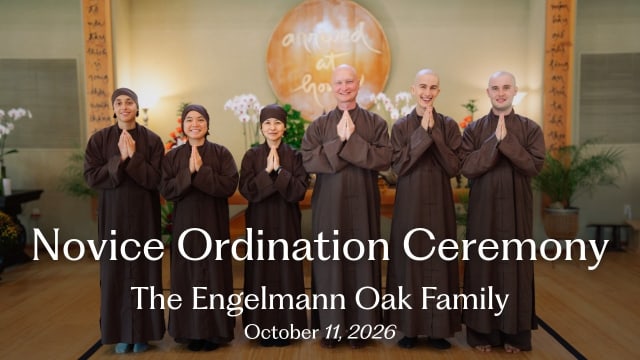
[1:06:02] it's the the like a uh magnolia, small
[1:06:05] magnolia flower family.
[1:06:07] So, this is a a wonderful announcement.
[1:06:11] I don't know if it's wonderful for them,
[1:06:12] because now they get to go to all the
[1:06:14] Dharma teacher meetings, so uh good
[1:06:16] luck.
[1:06:17] >> [laughter]
[1:06:18] >> Thank you, everyone.
[1:06:21] What up?
[1:06:24] The brothers uh
[1:06:26] upper hamlet were announced by the Phu
[1:06:28] Huu. But here we have uh all the sage
[1:06:31] brother. Oh yeah, we have uh
[1:06:33] Sorry.
[1:06:34] We have brother Man Luong. We didn't
[1:06:35] announce it yet? On the brother's side,
[1:06:38] we have the sweet sage brother, brother
[1:06:40] uh
[1:06:41] Doi Man Luong, Doi Man Nhan, and Doi
[1:06:46] Man An. I saw him somewhere around here.
[1:06:49] Doi Man An, the three brothers that are
[1:06:51] from Deer Park. And two of them are go
[1:06:54] over being borrowed in Magnolia, so
[1:06:58] So, that's uh our tradition to to uh to
[1:07:02] You don't become a Dharma teacher,
[1:07:04] you're always training to be a Dharma
[1:07:06] teacher. You never become a Dharma
[1:07:08] teacher. Please remember that.
[1:07:11] We always in training.
[1:07:14] So, that's good.
[1:07:15] So, let's listen three sounds of bell.
[1:07:18] And breathe.
[1:07:20] And ask yourself,
[1:07:22] where is my mouse?
[1:07:24] Where is my frog?