What's Happening
RL

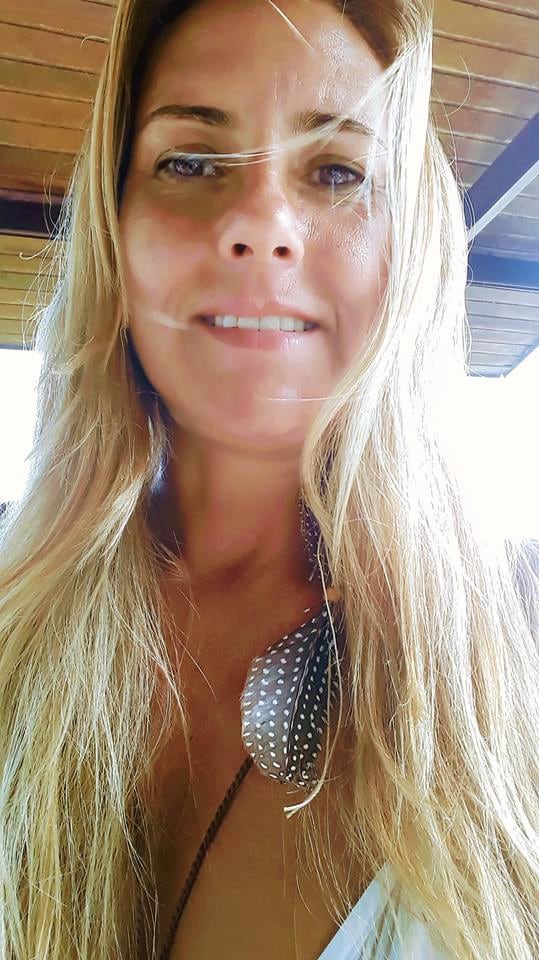
Renata Langner
Sound Artist
Renata Langner is a sound artist, spiritual teacher, and movement practitioner whose work synthesizes sound healing, breathwork, yoga, and contemporary dance into a single integrative practice. She grew up in a small town where family support for artistic expression and early exposure to nature and communal ritual shaped her understanding of creativity as a tool for connection and transformation.
Langner's approach draws from training in yoga, sound healing, and contemporary dance, fusing techniques from Eastern and Western contemplative lineages. Her teaching style centers on mindfulness, breathwork, and improvisation, inviting participants to access their own creative energy rather than follow prescribed forms. She has studied under teachers in these disciplines, absorbing methods she recombines into workshops and retreats that emphasize embodied presence and spontaneous expression.
Her discography spans meditative soundscapes and rhythmic compositions designed to support inner work and group practice. The recordings reflect the improvisational quality of her live sessions, which layer voice, resonant instruments, and silence into environments for listening and movement. Each album functions as both standalone listening and a score for personal or collective ritual.
Langner has built a teaching practice through workshops and multi-day retreats that attract participants interested in the intersection of art, spirituality, and somatic practice. Her sessions often blend movement exercises, guided breathwork, and sound improvisation, creating formats that differ from traditional yoga classes or sound baths. She teaches in settings ranging from studios to nature-based retreat centers, and her work circulates primarily within networks of practitioners exploring nondogmatic spiritual arts.
Her influence extends through the community of students and collaborators who carry forward her emphasis on improvisation as a spiritual discipline. While she does not maintain a large public profile in mainstream wellness media, her work is recognized within circles focused on contemporary approaches to healing arts that resist commodification. She continues to teach and record, developing new formats that respond to the needs of seekers navigating fragmentation and disconnection.
Langner's current work maintains her commitment to live, participatory formats and the belief that creativity is a communal and therapeutic act. She remains active in leading retreats and collaborating with other artists and teachers who share her interest in cross-disciplinary practice. For those encountering her work today, Langner offers a model of spiritual artistry grounded in improvisation, embodiment, and the conviction that sound and movement are languages of healing accessible to anyone willing to listen and move.
Lineage & Inspiration
Spiritual Influences
The teachers, lineages, and practices that shape Renata Langner's path.

Krishna Das
Kirtan Artist, Devotional Singer
One of her favorite teachers at Menla; influences her devotional practice

Sharon Salzberg
Buddhist Meditation Teacher
Favorite teacher at Menla; influences her mindfulness and loving-kindness practice

Jon Kabat-Zinn
Mindfulness Teacher, MBSR Founder
Studied with him at Omega Institute; shapes her mindfulness teaching approach

David Swenson
Ashtanga Yoga Master
Trained with him in Ashtanga; influences her vinyasa and alignment practice

Byron Katie
Spiritual Teacher, Author
Studied Art of Personal Transformation with her at Omega Institute
Ashtanga Yoga
Practice
Core practice; her classes are ashtanga-inspired vinyasa flows with breath awareness

Reiki
Practice
Completed Reiki I, II, III and Mastery training at Kripalu
Worth Knowing
Questions
Renata Langner is a multidisciplinary artist and spiritual teacher whose practice sits at the intersection of sound art, movement, and visual expression—a rare combination that refuses easy categorization. What draws people to her work is the specificity of her method: she doesn't teach sound healing in isolation, or yoga separately from improvisation, but rather weaves these disciplines into a coherent practice that treats the body, voice, and creative impulse as inseparable. Her background in both Eastern traditions (yoga, sound healing) and Western contemporary dance gives her work an unusual credibility across communities that don't always overlap. Students and listeners describe her work as offering a pathway to what she emphasizes: the interconnectedness of all beings, not as abstraction but as a felt, embodied experience. What distinguishes her in a crowded field of spiritual teachers is her unwillingness to package spirituality as comfort—her work invites genuine creative risk and improvisation, which means it demands something from practitioners, not just soothing them.
Langner's lineage is deliberately hybrid, drawing from both Eastern and Western wisdom traditions without privileging one over the other. She has studied extensively with renowned masters in yoga, sound healing, and contemporary dance, which means her teaching carries the rigor of lineage transmission while resisting the orthodoxy that can calcify traditional practice. Her work belongs to what might be called the contemporary spiritual arts movement—practitioners who respect ancient wisdom but refuse to treat it as museum artifact, instead asking how these practices can speak to modern fragmentation and disconnection. The Eastern foundation (yoga, sound healing traditions) provides her with frameworks for understanding the body as an instrument of consciousness, while the Western contemporary dance lineage offers permission to experiment, to fail, to improvise. This tension—between honoring inherited traditions and breaking new ground—is the defining characteristic of her approach and what gives her teaching its particular texture.
Most sound healing practitioners focus primarily on the acoustic properties of instruments or voice; most yoga teachers emphasize asana and philosophy; most contemporary dance artists center movement technique and aesthetic innovation. Langner's distinctive move is to treat all three as simultaneously equal and inseparable, refusing the hierarchies that normally govern these fields. Where other teachers might use sound to support a yoga practice, or movement to illustrate a spiritual concept, Langner investigates the live moment where sound, breath, and movement are discovering each other—the improvisation itself becomes the teaching. Her extensive travel and cross-cultural study have given her a genuinely eclectic toolkit that doesn't read as appropriation because she's integrated these influences into something recognizably her own. The other thing that sets her apart: she's willing to teach from questions rather than answers, encouraging students into their own creative agency rather than replicating her forms. In a field crowded with teachers who offer certainty and transformation, Langner offers something more honest—the invitation to explore your own creative and spiritual capacity through disciplined, sustained practice.
Her work is not suitable for people seeking passive relaxation or a quick fix for stress—the improvisation-forward approach and emphasis on personal creative agency means sessions require active participation and genuine attention. If you're looking for a teacher who will tell you exactly what to do, or a structured system with clear progression and measurable milestones, Langner's practice will feel frustratingly open-ended. Her teaching asks students to tolerate not-knowing, to sit with ambiguity, to trust their own impulses—that's not everyone's path, and that's honest. People with strong preferences for one modality (music-only, yoga-only, or dance-only) may find her integrated approach scattered or diluted rather than enriching. Her work also isn't designed for passive listeners or observers; it requires showing up in your body, which rules out anyone seeking intellectual spirituality divorced from embodied practice. The foundation she creates—in a family that valued artistic expression, in communities that emphasize interconnection—won't resonate with people who view spirituality and creativity as separate from daily life or community responsibility.
The primary point of contact is her website at revolutionyogaspace.com, where current workshops, retreats, and offerings are listed. She teaches through this platform, which appears to be her home base, so checking there regularly will give you the most accurate information about upcoming sessions, whether they're offered locally or as part of any broader teaching tour. Given her background in extensive travel and cross-cultural study, she likely teaches in multiple locations, but specific tour dates and cities aren't currently listed in public directories—contacting her directly through the website or reaching out to Revolution Yoga Space would be the most reliable way to learn about any future travel or larger retreats. Langner's work emphasizes the importance of community and in-person transmission, so her primary focus appears to be on direct teaching relationships rather than high-volume digital content or streaming releases. For those interested in deeper engagement, inquire about any ongoing mentorship or intensive programs she might offer beyond single sessions or workshops.
Interconnectedness is perhaps the central theme—not as abstract philosophy but as something to be discovered and felt through the integration of sound, breath, movement, and creative expression. Another steady thread is the invitation to trust your own creative and spiritual authority rather than blindly following prescribed forms, which means her teaching consistently returns to improvisation as a practice of self-knowledge. The body as a primary source of wisdom appears throughout her work; she teaches mindfulness and breathwork not as stress-reduction techniques but as gateways to understanding how consciousness moves through physical form. Her emphasis on community and cultural exchange—grounded in her own travels and study with masters across traditions—means there's a consistent thread about learning from difference rather than seeking homogeneity. Finally, there's an underlying theme about art and spirituality as inseparable tools for healing and transformation, not as luxury pursuits but as essential to what it means to be fully human. Her teaching repeatedly suggests that in a fragmented world, creative practice and spiritual inquiry are acts of resistance and wholeness-making.
Her teaching style is improvisational, relational, and rooted in direct transmission rather than information delivery—she's more interested in what emerges between teacher and student in real time than in executing a predetermined curriculum. A session with Langner typically begins with attention and listening: to the room, to the group's energy, to what's actually needed in that moment, which means no two classes are identical. She integrates breathwork, sound, and movement fluidly, often using these as entry points into deeper states of awareness and creative flow rather than as separate techniques to master. What students report is a quality of aliveness and presence in the room—the sense that something genuine and unscripted is happening, which can feel both exhilarating and slightly unsettling if you're accustomed to more structured teaching. Her retreats appear to be immersive experiences designed to deepen this exploration over multiple days, allowing participants to move beyond the surface-level familiarity of a single workshop into more sustained creative and spiritual inquiry. The overall feel is rigorous but not punitive, playful but deeply purposeful—she demands authenticity from her students while creating a container safe enough for genuine vulnerability.
Based on publicly available information, specific recordings of Langner's talks or published written work aren't currently prominent in major directories or platforms. This likely reflects her philosophy: her teaching is primarily designed as live transmission, which in many spiritual traditions is understood as more powerful and complete than recorded or written versions. For practitioners seeking to deepen their understanding of her work outside of in-person sessions, direct inquiry through her website at revolutionyogaspace.com would be the best approach—she may offer recorded materials, written reflections, or correspondence opportunities that aren't widely distributed through mainstream channels. Her work emphasizes embodied practice and relational learning, so any independent study materials would likely function as supplements to direct teaching rather than replacements for it. If you're interested in her thought and approach but can't attend sessions in person, reaching out to inquire about mentorship, correspondence, or any available recorded or written resources would be the most authentic way forward.
Breathwork and mindfulness are foundational to Langner's integrated approach—they're not add-ons to sound or movement work but rather the connective tissue that allows genuine integration across disciplines. In her teaching, breathwork functions as a bridge between unconscious and conscious states, a tool for regulating the nervous system while simultaneously opening pathways to creative flow and spiritual insight. Mindfulness practice in her sessions typically operates in real time, embedded within the work itself rather than as a separate meditation component—students are invited to bring full awareness to the sounds they're making, the movements they're exploring, the sensations arising in their bodies. Her background in both yoga (where pranayama, or breath regulation, is central) and sound healing (where breath and vocalization are inseparable) means she understands these practices as sophisticated technologies for consciousness rather than wellness trends. What distinguishes her approach from generic mindfulness instruction is the creative dimension—breath and awareness are deployed not just for calm or clarity but as tools for accessing imagination, spontaneity, and the unknown. She teaches these modalities as forms of inquiry: what does mindfulness reveal when you're moving? What becomes possible when breath and sound unify?
While her primary disciplines are sound art, movement, and teaching, Langner's background in visual art means her practice has a distinctly aesthetic dimension that extends beyond the auditory or kinesthetic. Her work demonstrates an understanding that transformation and spiritual inquiry engage all the senses—the spaces where she teaches, the visual elements present, the overall aesthetic environment are part of the teaching, not decoration. The integration of visual art into her practice likely appears in her retreat offerings, where environment and ambiance support the deeper work of sound and movement exploration, and possibly in her live sessions where visual attention and awareness play a role in the overall practice. What's notable is that she doesn't compartmentalize these disciplines—sound, movement, and visual awareness operate together as a unified field of exploration rather than separate modalities that happen to coexist. Her extensive cultural travels have surely exposed her to various artistic traditions that inform her aesthetic choices, though the specific visual projects or collaborations aren't detailed in readily available sources. For more concrete information about how visual art manifests in her current offerings, her website or direct contact would provide clearer details.
Discover More
Kindred Spirits


Continue your journey
There's more where this came from.
BrightStar is the global directory of artists, teachers, and healers in the wellness and spiritual movement. Find your next experience — or add yourself.
Discover More Artists
Browse 14,000+ curated profiles across kirtan, yoga, meditation, and beyond.
Explore directory →Find an Event Near You
Kirtan, retreats, sound baths, breathwork, ceremonies — happening this week.
Browse events →Add Your Profile
Are you an artist, teacher, or healer? Get listed — free, AI-assisted, live in minutes.
Get started →