Listening Journey
Sound Journey
Discography

Psychotherapist
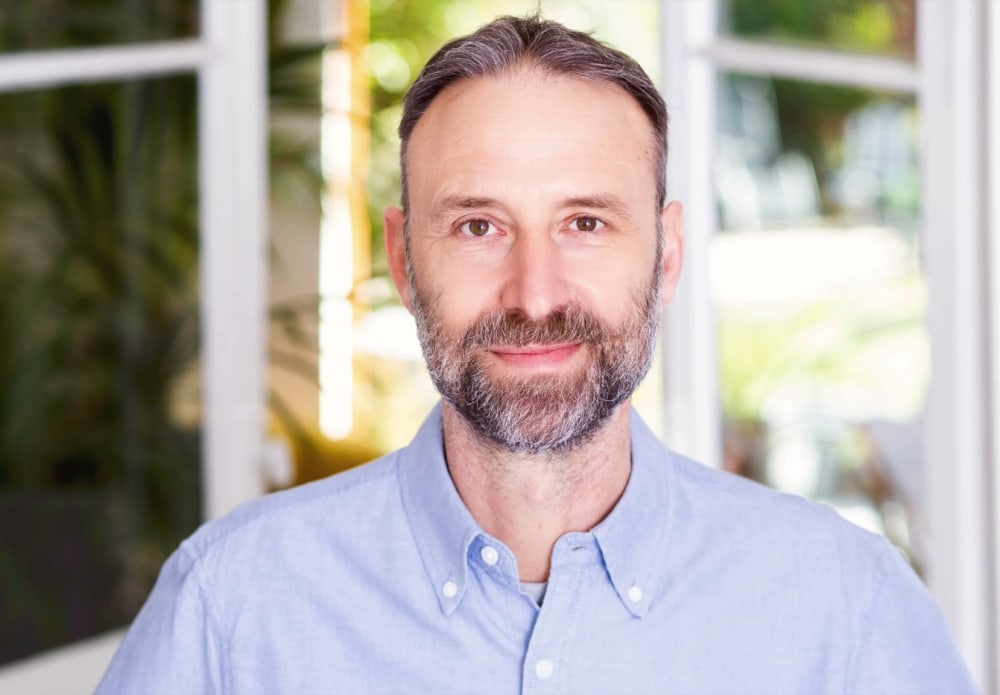
Dan Roberts is a psychotherapist, writer and teacher who specialises in helping people heal from childhood trauma. He is an Internal Family Systems therapist and an Advanced Accredited Schema Therapist, Trainer and Supervisor, and he brings schema therapy, internal family systems, compassion-focused therapy and somatic therapies together in an integrative approach that he tailors to each client. A long-term meditator and student of Buddhism, he also weaves in ideas from Buddhist psychology, which he describes as a 2,500-year-old tradition with rich insight into what causes suffering and how to relieve it.
He is the author of Heal Your Trauma: How to Overcome a Painful Childhood to Become Happy and Whole Again. The book draws on internal family systems, schema therapy and mindful self-compassion, and offers practical exercises alongside the theory.
Dan is a meditation teacher on Insight Timer, where his offerings include courses, breathing techniques, guided imagery, mindfulness and self-compassion practices, mostly free or donation-based. He sees these practices as an important part of healing, whether or not someone is also in therapy. He also teaches webinars and workshops for people struggling with their mental health, and writes a blog on his own site and a monthly blog for Psychology Today.
He trained first as a counsellor at the Psychosynthesis Trust, then in cognitive-behavioural approaches, and practised schema therapy from 2015, achieving accreditation in 2017. Today he runs an online practice, working with clients and supervisees worldwide over Zoom. He also provides supervision and training for counsellors, psychotherapists and psychologists who want to bring parts-based, trauma-informed methods into their work.
Listening Journey
Discography
Worth Knowing
Dan Roberts is a psychotherapist, writer, and meditation teacher whose career is focused on a specific, urgent problem: helping adults heal from the effects of childhood trauma. What distinguishes him in a crowded therapy landscape is his refusal to work from a single modality—instead, he integrates Internal Family Systems, schema therapy, compassion-focused approaches, and somatic techniques, all grounded in Buddhist psychology. His book "Heal Your Trauma: How to Overcome a Painful Childhood to Become Happy and Whole Again" and his extensive free teaching on Insight Timer have built an audience of people seeking practical, empirically-supported methods for healing rather than abstract spiritual promises. He carries Advanced Accreditation in Schema Therapy and trains other clinicians, which means his work has institutional rigor—he's not a self-appointed guru but a licensed practitioner meeting professional standards. People return to his work because it treats trauma seriously: not as something to transcend through positive thinking, but as something requiring sustained, structured, compassionate effort to understand and gradually transform.
Dan Roberts's approach sits at the intersection of Western clinical psychology and Buddhist contemplative tradition, two lineages that share far more common ground than popular culture suggests. His formal training began at the Psychosynthesis Trust, then moved through cognitive-behavioral approaches before settling into schema therapy, which he has practiced since 2015 and formally accredited in 2017—this progression reflects his integration of different Western schools. The Buddhist dimension is not ornamental; he explicitly describes Buddhist psychology as a 2,500-year-old tradition with sophisticated understanding of suffering and how to relieve it, and he weaves Buddhist concepts like impermanence and non-self throughout his trauma work. Internal Family Systems, another pillar of his method, treats the psyche as populated by protective "parts" that adapted to help you survive—a framework that aligns philosophically with Buddhist ideas about the multiplicity and constructed nature of mind. What makes his lineage unique is the refusal to subordinate one tradition to the other; genuine healing, in his view, requires both the empirical precision of modern psychotherapy and the depth of contemplative wisdom accumulated across millennia.
If you're new to Dan Roberts and unsure whether his approach fits your needs, start with his free offerings on Insight Timer—the platform hosts his courses, guided meditations, breathing techniques, and mindfulness practices without requiring upfront payment. These Insight Timer offerings give you direct access to his teaching voice and let you understand concretely what he means by integrating meditation into trauma recovery work. If those practices resonate and you want the theoretical framework, his book "Heal Your Trauma: How to Overcome a Painful Childhood to Become Happy and Whole Again" combines clear explanation of his methods (IFS, schema therapy, mindfulness, self-compassion) with practical exercises and case examples drawn from his clinical experience. His Psychology Today blog and personal website (danroberts.com) offer shorter essay-length pieces that explore specific topics in more depth—useful if you want to test whether his particular perspective on trauma aligns with your own experience before committing to longer study. This multi-platform entry allows you to match the learning style and time investment to your situation rather than committing to any single format.
In a field crowded with practitioners offering trauma-focused work, Dan Roberts stands out through credential depth and deliberate integration rather than eclecticism for its own sake. He isn't a single-modality therapist who dabbles in adjacent approaches; he's trained across at least four distinct frameworks (psychosynthesis, CBT, schema therapy, somatic methods) and holds advanced accreditation in schema therapy and IFS, meaning his integrative stance emerges from genuine expertise rather than shallow familiarity with each tradition. Many trauma therapists bifurcate their practice, either anchoring in neuroscience-first approaches or leaning toward spiritual-wellness language; Dan Roberts refuses that false binary and explicitly roots his work in Buddhist psychology alongside rigorous evidence-based practice, offering students and clients access to both ancient wisdom and modern empirical research. His decision to teach free and donation-based courses on Insight Timer is notable—most credentialed therapists gate their basic teaching behind professional fees, but he's made foundational meditation and self-compassion practices freely accessible to anyone, suggesting he sees healing as a public good rather than a luxury service. His role as a Trainer and Supervisor of other clinicians extends his influence beyond direct clients to the practitioners he shapes, and his regular contribution to Psychology Today demonstrates engagement in the professional conversation, not isolation in a private practice bubble.
Dan Roberts's approach is not suitable for people seeking a quick fix or a guru figure who will solve your problems for you. His method requires sustained, structured practice—reading, consistent meditation, mindfulness work, and often engagement in formal therapy—and no modality he teaches claims to resolve deep trauma overnight. If you're drawn to spiritual bypass (using meditation or uplifting language to avoid difficult emotional work), his framework will frustrate you; he explicitly rejects transcendence-through-positive-thinking and insists on direct engagement with what's actually there, which is harder and slower. His work is also not designed for acute crisis intervention; if you're in immediate psychological distress, you need a clinician in your timezone available for emergency contact, not an online course. Finally, people with extreme financial constraints may find limited access, since while Insight Timer is free, deeper engagement typically involves purchasing his book or—for those seeking direct clinical support—paying standard therapy rates for his online practice.
Dan Roberts maintains a website at danroberts.com where he posts updates on his teaching, webinars, and workshops, making it the primary hub for current information. He publishes new courses, guided meditations, and practices regularly on Insight Timer, and you can follow his account there to be notified as fresh offerings appear. He also publishes a monthly blog for Psychology Today and maintains a blog on his own website, both of which reflect his current thinking on trauma, therapy, and healing—subscribing to either keeps you connected to his ongoing teaching and insights. His YouTube channel hosts some teaching content, and his social media presence can be found through his main website. For those interested in his psychotherapy practice or training and supervision services, inquiries can be directed through danroberts.com.
Dan Roberts's teaching style emphasizes structure, clear concepts, and practical technique over mysticism or ethereal language—his guided meditations and mindfulness practices carry the steadiness of someone trained in both contemplative tradition and clinical psychology. When he teaches, he typically explains the mechanism at work (what a defense is, why your nervous system uses it, what function it serves) before introducing a specific practice or exercise to work with it, moving methodically from understanding to application. He avoids the vocabulary of cosmic revelation or transcendence; instead, he speaks to pragmatic results: you'll notice your patterns more clearly, react with less automaticity, and relate to yourself with more kindness—outcomes that have both clinical and contemplative significance. His tone combines patience with authority, the confidence of someone who has spent years in clinical practice and with trauma and knows the territory thoroughly, without false casualness or marketing energy. A session, whether via an Insight Timer practice or in his online therapy work, would likely feel like encountering someone who takes your experience seriously without dramatizing it, who offers concrete tools rather than philosophical consolation, and who trusts that you're capable of the work.
Self-compassion appears throughout his work as both a goal and a method—the recognition that you cannot heal trauma through self-criticism, only through a gradual, patient reorientation toward kindness toward yourself. The concept of "parts" from Internal Family Systems is foundational: he teaches that different aspects of your psyche adapted to protect you from overwhelming pain, and healing means understanding and working with those protector parts rather than fighting or suppressing them. Childhood roots are consistently emphasized; he frames adult suffering as arising from unmet childhood needs, frozen survival responses, and early patterns that made sense in their original context but no longer serve you—the work involves becoming conscious of those roots. Buddhist concepts naturally thread through his teaching: impermanence, interdependence, the constructed nature of self, and the possibility of fundamental shifts in how you relate to experience. He emphasizes that healing is not a destination but an ongoing practice—meditation, mindfulness, self-compassion, and therapy are not one-time interventions but sustained engagement with how you relate to yourself and your history. Another consistent theme is integration: he's skeptical of spiritual practices that ignore psychological reality or psychological work that ignores contemplative wisdom, operating from the premise that genuine healing requires both.
Yes, extensively. His book "Heal Your Trauma: How to Overcome a Painful Childhood to Become Happy and Whole Again" combines theoretical explanation with practical exercises, designed for independent reading and structured self-work—readers can move between chapters and exercises at their own pace. On Insight Timer, he has published numerous courses, guided meditations, breathing techniques, and mindfulness practices accessible anytime, covering topics including trauma recovery, self-compassion, mindfulness, and meditation fundamentals; most are free or donation-based, making them available to people with varying financial resources. His monthly blog for Psychology Today and his personal website blog offer essay-length teaching pieces that explore specific aspects of his work—these are publicly available and can be followed independently without any membership. His YouTube channel hosts video teachings as well, providing another format for independent study. While recorded teaching doesn't replace direct therapy or live interaction, his body of independent material is substantial enough for someone to build a meaningful self-directed practice and understanding of his approach.
No formal background is necessary. His Insight Timer practices are explicitly designed for beginners—if you're new to meditation or mindfulness, his introductory courses and guided practices welcome you without assuming prior knowledge. His book "Heal Your Trauma" explains concepts like "parts," "schemas," and trauma's effects without assuming you've studied psychology; it's written for a general audience, not clinicians, and uses accessible language to convey sometimes complex ideas. However, the work does assume you're willing to examine your own experience honestly and to sustain regular practice—passive consumption of information won't produce change, but active engagement will. Some familiarity with the concept of trauma is helpful (understanding that difficult early experiences shape adult patterns), but this isn't specialized knowledge anymore; it's increasingly common cultural understanding. The main prerequisites are psychological readiness and intellectual curiosity: you need genuine interest in examining your own patterns and willingness to practice regularly, not just in absorbing theory.
Discover More
Continue your journey
BrightStar is the global directory of artists, teachers, and healers in the wellness and spiritual movement. Find your next experience — or add yourself.
Browse 14,000+ curated profiles across kirtan, yoga, meditation, and beyond.
Explore directory →Kirtan, retreats, sound baths, breathwork, ceremonies — happening this week.
Browse events →Are you an artist, teacher, or healer? Get listed — free, AI-assisted, live in minutes.
Get started →