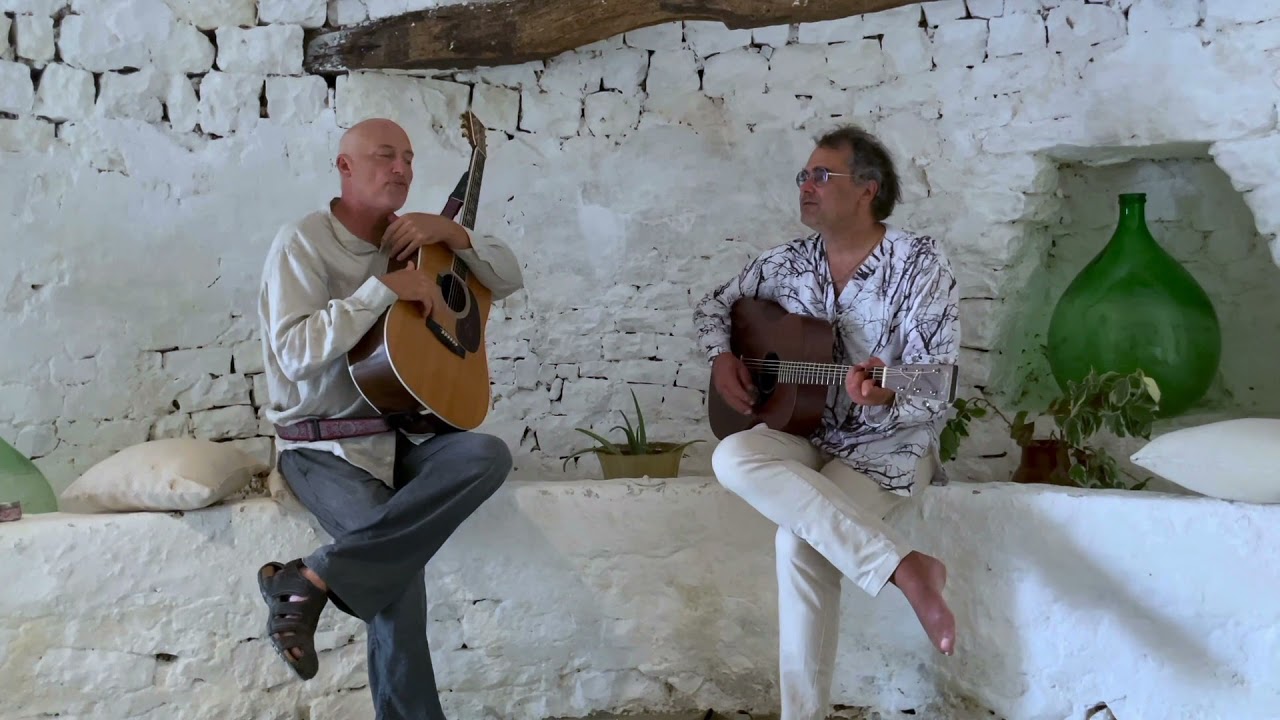
When a musician chooses to name a work after Saraswati—the Hindu goddess of music, knowledge, wisdom, and the arts—the intention is already set. There is reverence in the title itself. For Jim Beckwith, the choice to create a piece devoted to this particular deity signals a work conceived not merely as entertainment, but as an invocation; a meeting point between human musicianship and something transcendent.
Saraswati occupies a singular place in the Hindu pantheon. Unlike deities associated with power or protection, Saraswati embodies the more subtle, interior dimensions of human experience: the power of speech, the clarity of thought, the grace of artistic expression. She is typically depicted holding a stringed instrument called the veena, which positions music itself as a sacred practice—not performance for its own sake, but as a pathway toward wisdom and enlightenment.
The invocation of Saraswati in a musical work, then, carries particular weight. It suggests the artist understands their instrument as more than a tool for making pleasant sounds. It suggests an alignment between craft and consciousness, between the technical mastery of music and its deeper spiritual potential.
Beckwith's "Saraswati," released in 2017 on the album Be Love (a collaboration with Hans Christian), is an eight-minute piece. Without a spoken narrative or lyrical content to decode from a transcript, the work itself becomes the primary text—eight minutes of sound and intention, offered in the name of a goddess whose domain includes both music and silence.
The album title, Be Love, frames this piece within a larger artistic vision. That frame suggests Beckwith's work is oriented toward a particular spiritual aspiration: not love as sentiment, but love as a fundamental state of consciousness. In that context, a devotional work to Saraswati becomes an act of alignment—a musician using the very medium she presides over to invoke her presence.
Across spiritual traditions, the act of naming is generative. When a Christian prays the name of Christ, when a Muslim recites the names of Allah, when a devotee calls upon Saraswati, the act of speaking or singing the name becomes itself a form of practice. It attunes the nervous system, focuses intention, and creates a container for transformation.
A musical piece titled "Saraswati" operates similarly. It asks the listener to receive the work not as abstract sound, but as an offering—a conscious gesture toward a principle larger than the artist or audience alone. The specificity of the title matters. It is not "Meditation" or "Spiritual Music." It is Saraswati—a particular goddess, with particular associations, with a particular lineage stretching back centuries.
For listeners drawn to kirtan, devotional music, or contemplative sound practices, Beckwith's work invites exploration of how naming—whether of deities, principles, or intentions—shapes the experience of music itself. Consider: How does a piece shift when you know the intention behind it? How does the name "Saraswati" prepare your listening? What happens if you approach eight minutes of sound not as entertainment to passively receive, but as an invitation to attune yourself to wisdom, clarity, and the beauty of artistic expression?
The album Be Love offers additional context for understanding Beckwith's larger body of work. Exploring related devotional and kirtan artists—those working in the tradition of invoking deities through music—can deepen appreciation for both the historical lineage and the contemporary practice of this form.