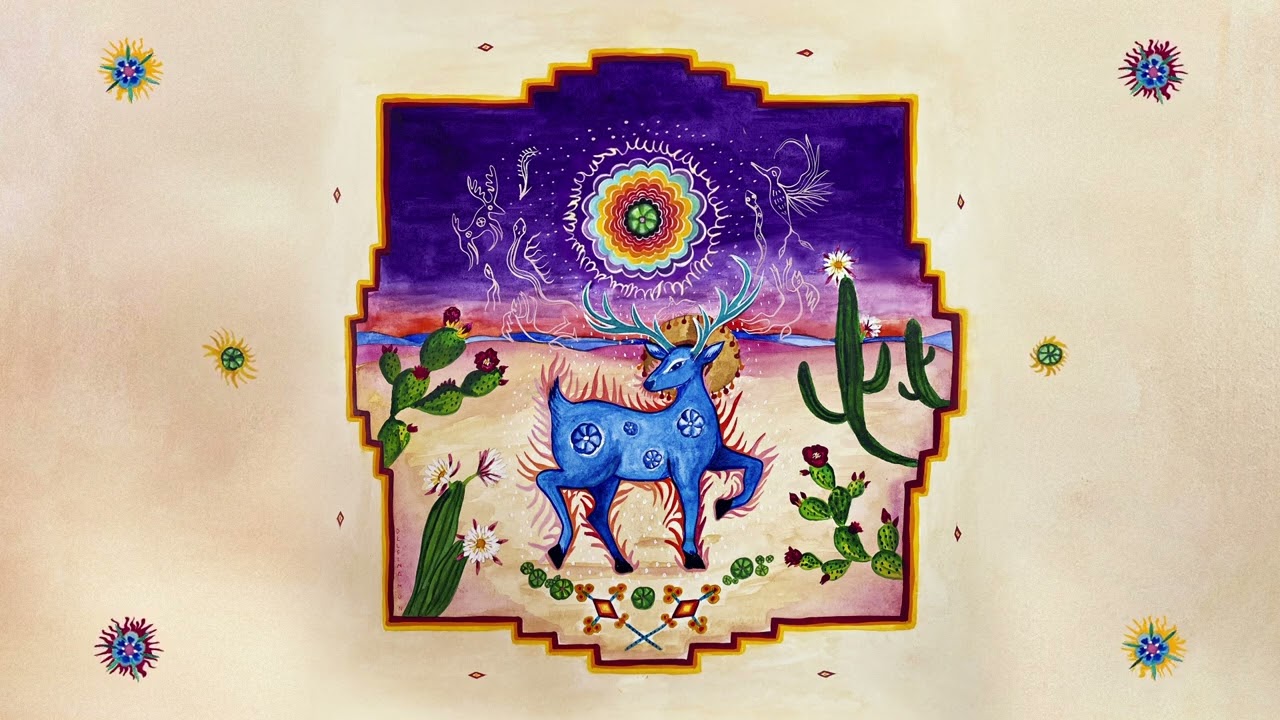
On 27 December 2020, a band called Curawaka went live over Zoom and Facebook Live from a concert hosted by Canta Com Amor, and it did not open with a song. It opened with a voice. For roughly ten minutes, before a single chord of He Yama Yo was struck, a speaker thanked "creator" for the year that had just passed, named the people who were frightened and confused, and asked for clean rivers, free land, and a new dawn. The recording runs just under twenty-three and a half minutes in total, split almost evenly between that prayer (00:00 to 10:50) and the song itself (10:51 to 23:17). It is a small, unusual document of a particular winter, and the prayer is the key to understanding it.
Whathappensinthefirsttenminutesofthisperformance?
The prayer begins with gratitude and gathering. The speaker thanks the creator for "this moment a possibility to gather all these Hearts to feel each other in this way," and then, in one of the more striking turns of the opening, addresses the room as a kinship: "Children of the Earth, Children of the fire, to recognize each other in this time to feel connected in this time to fill our tribe ignited in this time." It is an address that calls the listeners by family names rather than by audience roles, which sets the tone for everything after.
From there the prayer moves through a clear sequence. It thanks the creator for "all the blessings all the teachings all the challenges," then turns to the people who are struggling. The speaker asks that listeners go to "everyone out there creators who's still afraid and Confused," to "share the Overflow of love that we feel in our hearts," and to pray for those in "the dark nights" to feel "the sun's return." The imagery is agrarian and patient: seeds lying under snow, waiting. "The sun always come back after winter always comes another spring," the speaker says, and the line works like a refrain for the whole intro.
Then the prayer widens. It moves from individuals to "all brothers and sisters all people of all Nations star Nations underground Nations mountain people the invisible ones the visible ones the ones in the ocean." From the family it goes to the children growing up on the planet, to the land they will inherit, and to the rivers, mountains and oceans. Near the end it asks for a "year of clarity, a year of health, year of creativity," and finally closes on the line that hands the song its frame: "pray that this new dawn is upon us."
Howdoestheprayerworkasitsownpieceofmusic?
It is worth treating the spoken intro as a performance in its own right, because the recording clearly does. The speech is punctuated by long stretches of musical texture, and the rhythm of the words is built to be carried. Phrases stack and return: "hold space" appears again and again, the word "Dawn" is repeated, and the structure of the speech is cumulative, each petition opening into a wider one. A listener who came only for the song would still hear the prayer as a set of rising terraces, moving from the self, to the community, to the planet, and back again.
The most concrete image comes in the middle, where the speaker imagines an alternative to how land is treated. The prayer asks for "a nature that is allowed to roam to grow to Blossom freely, the nature that we'd never try to restrain into boxes and fences," and then makes a specific, almost agricultural demand: "that we simply rip up our fences and let nature loose and we give back the land to the spirit so that Spirit can roam free roam through us all." That is not vague mysticism. It is a clear picture of a relationship, and it is delivered with the plainness of someone who has thought about fences.
The prayer also has a theology of responsibility. Its petitions are about what people do, not only what they receive. "We take it upon us as humans to hold space for that Dawn," the speaker says, and then describes the practice in concrete terms: "we bring kindness everywhere we go," "we try as much as we can bring healing bring growth bring blossoming," and "we have ever understanding for those who are walking a different path." In this framing, the dawn is not something that arrives on its own. It is held open by the people who are awake to it.
Whydoesaprayerlikethislandintheyear2020?
The date gives the intro its weight. The speaker explicitly thanks the creator "for this year 2020," and reflects on the hardships that came with it: "we have faced all sorts of restrictions and hardship and storms and every time we have come out in stronger ways." The speaker's argument is not that the hardship was good, but that the community has a track record of surviving it. "Every time we have found our way to not only survive but to Blossom," the prayer says.
That framing matters for a livestream in particular. This was a concert that had to exist on a screen, reached through Zoom and Facebook Live, at a time when shared physical space was exactly what was unavailable. The prayer's central gesture, gathering "all these Hearts to feel each other," is in some ways a direct response to that condition. The speaker is naming what the medium cannot provide, and asking that it be felt anyway.
"Thank you so much for this moment a possibility to gather all these Hearts to feel each other in this way."
Curawaka, opening prayer of the 27 December 2020 livestream (0:43, as transcribed)
Whoisplaying,andwhatdoeseachinstrumenthold?
The published credits list six performers. Anna Bariyani sings and plays guitar. Tavo Vazquez plays charango and flutes, and his instruments carry much of the Andean color that a listener will hear in the arrangement. Solveig Knudsen plays piano and adds backing vocals. Alberto Arroyo is on bass, and two percussionists, Txai Fernando and Juan Carlos, provide the rhythmic floor. Sound for the recording was handled by Kai Stokkeland.
The ensemble mix matters for how the prayer sits against the song. A band with a charango and flutes on one side and piano and bass on the other can make the intro feel like a ceremony, with the speech as a kind of drone beneath it, and then shift into a more groove-driven song without leaving the ceremony behind. The percussion, in particular, gives the transition its pulse. Because the credits name the percussionists separately, it is clear that the rhythmic layer was deliberate rather than incidental.
Whatdothesong'sfragmentsrevealaboutHeYamaYo?
The honest answer is: not very much from the transcript alone. The song runs from 10:51 to 23:17, and the available transcript captures only scattered fragments of it. What comes through are repeated chants and calls: "hey hey hey," "why," "here I am God," "what is," and "am I always foreign." Much of the rest is marked only as music, applause and laughter, which is typical of an auto-generated transcript of a live recording and means the lyrics cannot be reconstructed here with confidence. The published description also does not translate the title, and this piece will not guess at it.
What the fragments do suggest is a shift in register. The prayer is measured and expansive. The song's surviving lines are shorter, more interrogative and more personal. "Here I am God" is a line that answers a summons, and "am I always foreign" turns the question of belonging inward. Read alongside the prayer, which asks that people feel "that family we are that tribe we all," the contrast is suggestive: the intro speaks of a collective that already belongs together, while the song's fragments ask the individual voice where it stands inside that collective.
For a listener, the most useful move is to let the two halves inform each other. The prayer makes the ask, and the song puts the question to the singer and the room. The recording rewards that kind of attention more than it rewards a search for a definitive lyric.
Wheretogofromhere
If you want to hear this performance the way it was built, watch it straight through rather than skipping to the song. The ten minutes of prayer are the frame, and the twelve and a half minutes of He Yama Yo are the answer to it. Listen for the moments when the speech and the instruments seem to breathe together, especially around the lines about the oceans, the "big blue shift," and the dawn.
Then listen for what the prayer asks of you. Its central request is not that someone else fix the world. It is that each listener "hold space" for a new dawn, and bring "kindness everywhere we go." That is a practical instruction, and it is the thread that connects a livestream in late December 2020 to the music that followed it. For more context on the band, the official site is curawaka.com, and the event was hosted by Canta Com Amor at cantacomamor.com.
The recording is a reminder that a concert can be an act of attention before it is an act of entertainment. A prayer is a kind of music, a song is a kind of prayer, and this one, made for a screen in a hard year, asks its listeners to hear both at once.
International sacred world music band blending indigenous traditions, ceremonial rhythms and powerful vocals, led by Norwegian vocalist Anna Bariyani, who sings in seven languages.
The video is a livestream from 27 December 2020, hosted by Canta Com Amor and broadcast over Zoom and Facebook Live. It opens with a roughly ten-minute spoken prayer that thanks the creator for 2020, asks for healing and a new dawn, and then transitions into the song He Yama Yo from about 10:51 to the end.
The published credits list Anna Bariyani on vocals and guitar, Tavo Vazquez on charango and flutes, Solveig Knudsen on piano and backing vocals, Alberto Arroyo on bass, and percussionists Txai Fernando and Juan Carlos. Sound was handled by Kai Stokkeland.
The prayer thanks the creator for blessings and challenges, asks that frightened people feel the sun's return, and prays for clean rivers, free-roaming nature, the children of the planet, and the oceans. It repeatedly calls for a new dawn, and it closes with the request that 'this new dawn is upon us.'
The material available does not include a translation or full lyric sheet. The auto-generated transcript captures only fragments such as 'hey hey hey,' 'why,' 'here I am God,' and 'am I always foreign,' so the song's full meaning cannot be confirmed from this source.
The prayer frames the concert around gathering and gratitude, reflecting on the restrictions and storms of 2020 and asking listeners to hold space for hope. Since the event was online, the spoken intro also names the connection people were missing, asking that they feel one another through the screen.
According to the video description, the prayer runs from 00:00 to 10:50, and He Yama Yo runs from 10:51 to 23:17. The total video is about 23 minutes and 18 seconds.