BrightStar
BlogI miei biglietti
Saved events
Aiuto e contattiRegistratiAccedi
Eventi
  • Sfoglia tutti i Eventi
  • Yoga
  • Meditazione
  • Breathwork
  • Qigong
  • Musica sacra
  • World music
  • Musica medicina
  • Sound healing
  • Danza estatica
  • Cerimonia
  • Medicina delle piante
  • Guarigione energetica
  • Satsang e saggezza
  • Tantra
  • Ritiri
  • Tutte le categorie →
Destinazioni
  • Bali
  • Sedona
  • Los Angeles
  • Costa Rica
  • Tulum
  • Byron Bay
  • San Francisco
  • Austin
  • New York
  • San Diego
  • Denver
  • Seattle
  • Portland
  • Miami
  • London
  • Maui
  • Boulder
  • Tutte le città →
Piattaforma
  • Per organizzatori
  • Unisciti al movimento
  • Sell Globally
  • Per i creatori
  • Per team
  • Per gli scrittori
  • Per gli insegnanti
  • Per gli artisti kirtan
  • Per gli studi
  • Per i festival
  • Per i centri ritiro
  • Per le no-profit
  • Ambasciatore del brand
  • Biglietteria gratuita
  • Pro
  • Amplify
  • L’ecosistema
Funzionalità

Biglietteria e acquisto

  • Ticket categories
  • Assigned seating
  • Custom questions
  • Coupon codes
  • Smart pricing
  • Ticket sharing
  • Waitlist
  • Flexible refunds
  • Digital waivers
  • Tip jar
  • Donations and sliding scale
  • Embed widget
  • Mindful checkout
  • Recurring events
  • Private sessions
  • Online courses
  • Summits
  • Rooms and stays
  • Ticket scanner

Marketing e crescita

  • Abandoned cart recovery
  • Visitor recovery
  • Upsells and add-ons
  • Affiliate engine
  • Upsell affiliate network
  • Brand ambassador
  • Meta retargeting
  • Verified buyer network
  • Outbound email marketing
  • Email sequences
  • SMS and WhatsApp
  • Event upsell network
  • Direct mail campaigns
  • SEO engine
  • Syndication
  • Event sharing
  • Custom event pages
  • Artist profiles
  • Link in bio
  • Event blog
  • Blog newsletter

Pagamenti

  • Payments, powered by Stripe
  • Buy now, pay later
  • Apple Wallet
  • Multi currency

Dati e operazioni

  • Team access
  • Message center
  • Reports
  • Analytics reporting
  • Performance reporting
  • Customer data
  • Integrations
  • Switch from another platform

IA

  • Assistant
  • AI FAQ assistant
  • Tutte le funzionalità →
Azienda
  • Chi siamo
  • Domande frequenti
  • Contatti
  • Blog
  • Glossario
  • Guides
  • Ispirazione
  • Centro assistenza
  • Documentazione API
  • Risorse del brand
  • Stampa
  • Termini di servizio
  • Informativa sulla privacy

Eventi

  • Sfoglia tutti i Eventi
  • Yoga
  • Meditazione
  • Breathwork
  • Qigong
  • Musica sacra
  • World music
  • Musica medicina

Destinazioni

  • Bali
  • Sedona
  • Los Angeles
  • Costa Rica
  • Tulum
  • Byron Bay
  • San Francisco
  • Austin

Piattaforma

  • Per organizzatori
  • Unisciti al movimento
  • Sell Globally
  • Per i creatori
  • Per team
  • Per gli scrittori
  • Per gli insegnanti
  • Per gli artisti kirtan

Funzionalità

  • Rete della comunità
  • Recupero carrelli abbandonati
  • Categorie di biglietti
  • Eventi ricorrenti
  • Posti assegnati
  • Sistema affiliati
  • Lista d'attesa / Notifica
  • Tutte le funzionalità →

Azienda

  • Chi siamo
  • Domande frequenti
  • Contatti
  • Blog
  • Glossario
  • Guides
  • Termini di servizio
  • Informativa sulla privacy
Leggi di più

Eventi

  • Sound healing
  • Danza estatica
  • Cerimonia
  • Medicina delle piante
  • Guarigione energetica
  • Satsang e saggezza
  • Tantra
  • Ritiri
  • Tutte le categorie →

Destinazioni

  • New York
  • San Diego
  • Denver
  • Seattle
  • Portland
  • Miami
  • London
  • Maui
  • Boulder
  • Tutte le città →

Piattaforma

  • Per gli studi
  • Per i festival
  • Per i centri ritiro
  • Per le no-profit
  • Ambasciatore del brand
  • Biglietteria gratuita
  • Pro
  • Amplify
  • L’ecosistema

Azienda

  • Ispirazione
  • Centro assistenza
  • Documentazione API
  • Risorse del brand
  • Stampa

Biglietteria e acquisto

  • Ticket categories
  • Assigned seating
  • Custom questions
  • Coupon codes
  • Smart pricing
  • Ticket sharing
  • Waitlist
  • Flexible refunds
  • Digital waivers
  • Tip jar
  • Donations and sliding scale
  • Embed widget
  • Mindful checkout
  • Recurring events
  • Private sessions
  • Online courses
  • Summits
  • Rooms and stays
  • Ticket scanner

Marketing e crescita

  • Abandoned cart recovery
  • Visitor recovery
  • Upsells and add-ons
  • Affiliate engine
  • Upsell affiliate network
  • Brand ambassador
  • Meta retargeting
  • Verified buyer network
  • Outbound email marketing
  • Email sequences
  • SMS and WhatsApp
  • Event upsell network
  • Direct mail campaigns
  • SEO engine
  • Syndication
  • Event sharing
  • Custom event pages
  • Artist profiles
  • Link in bio
  • Event blog
  • Blog newsletter

Pagamenti

  • Payments, powered by Stripe
  • Buy now, pay later
  • Apple Wallet
  • Multi currency

Dati e operazioni

  • Team access
  • Message center
  • Reports
  • Analytics reporting
  • Performance reporting
  • Customer data
  • Integrations
  • Switch from another platform

IA

  • Assistant
  • AI FAQ assistant
Scarica l'app
Scarica suApp StoreDisponibile suGoogle Play
© 2026 BrightStar. Tutti i diritti riservati. BrightStar Selection · Crediti fotografici · Registro delle modifiche ·
Inspiration

Preparing for Death Every Day: The 11 Thoughts

SA
Sravasti Abbey
Nov 20, 2026
8 min di lettura

Da Sravasti Abbey

Guarda · 8

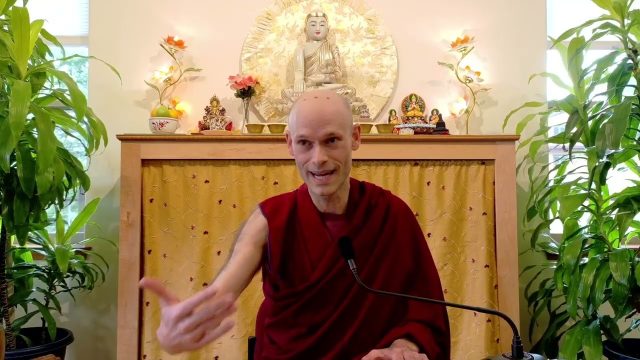
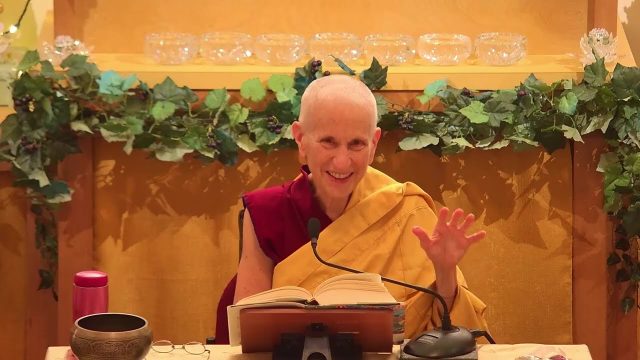
The Buddha taught a discourse just before his parinirvana—his final passing—on a deceptively simple subject: eleven thoughts the mind should turn toward at the time of death. It's an urgent teaching, one that might seem to belong only to the dying. But Venerable Thubten Jigme, a Buddhist nun and practitioner at Sravasti Abbey, has spent months working with these thoughts in a radically different way: not waiting for death to arrive, but practicing them now, every day, so that when the final moment comes, the mind will already know the territory.

The logic is elegant. If we want our mind to turn toward something helpful at death—clarity, compassion, freedom from regret—we have to practice turning it there now, when the stakes feel lower and the work is still possible. "To be able to think about what is helpful at the time of death we have to have it pretty strongly planted in the mind," Thubten Jigme explains. "So we have to practice now, this very day." The 11 thoughts come from a teaching she received from Song Rinpoche in Long Beach in September, and they have become her daily touchstones for training the mind.

Lettura · 8 sezioni

What Are the 11 Thoughts?

The traditional list reads like a bridge between the small self and the infinite: bring to mind non-attachment to this life; love for all beings; the giving up of all resentments; acknowledgment of faulty moral discipline; undertaking the entirety of moral discipline; the insignificance of great harms caused to oneself by others; the significance of small acts of virtue; lack of fright with respect to the next world; the impermanence of all conditioned things; the absence of a self in all phenomena; and finally, that Nirvana is peace—the state of freedom from suffering.

They are not meant as abstract philosophy. Thubten Jigme's practice reveals why: each thought addresses a specific way the mind can get stuck. Each one is an antidote. And the antidote works only if you've practiced using it.

How Do You Actually Work With These Thoughts Daily?

Thubten Jigme's method is born from hard-won experience. She begins each day by noticing what mind she wakes up with. "I wake up with a different mind every day," she says, and paying attention to that quality—whether it arrives colored by discouragement, agitation, or openness—becomes the entry point for the work. Rather than impose a practice, she meets the mind where it is and chooses from the 11 thoughts whichever one is most needed.

She practices off the cushion, during transitions and breaks throughout the day. This matters. The thoughts are not a retreat-only luxury; they are tools for the merchant's day, the parent's afternoon, the moment before bed. "If we don't apply it, then when we have content that we hear it just becomes a list. It's just intellectual and it doesn't come in anywhere," she reflects. The gap between knowing and embodying is precisely where this practice lives.

Non-Attachment to This Life: Working With Sensation

The first thought became her practice the morning she was struggling with how her body was feeling. "I'm thinking about not letting my body feelings guide my thoughts," she explains, "because if I do that then the mind follows that and what can follow is discouragement, irritation, not accepting what is."

Instead of becoming fused with the sensation, she leans on the impermanence teaching. Whatever she is experiencing in this moment will change. The tightness will ease. The dull ache will pass. "I'm just not going to let my mind get stuck in something that changes all the time. That's kind of silly." And with that recognition comes a kind of lightness—the ability to observe discomfort without letting it orchestrate the day's emotional score.

Love for All Beings: Opening the Heart

The second thought asks the mind to open toward love for all beings. For Thubten Jigme, this begins with something that might seem trivial: puppies and baby kittens. "I bring to mind something that brings me joy," she says. "And so I visit the images in my mind about baby kitties and puppies and see how I just smile." The practice is not sentimental; it is mechanical and deliberate. She generates the smile, feels the opening of the heart, and then practices keeping that openness even as the day brings irritation, confusion, or difficulty.

She also uses gratitude for the people who maintain the community. During times when her own capacity is diminished and she cannot contribute as she wishes, the mind can turn self-critical. By consciously directing attention to the work others are doing, she circumvents that trap. "It helps to direct my thought in the right place," she says. The practice is not about denying limitation; it is about where the mind goes when limitation is present.

Releasing Resentments: The Work of Letting Go

The third thought—giving up all resentments—carries urgency because Thubten Jigme has observed what happens at the deathbed. "At the time of death, resentments come up immediately in all the people that I have been around that have died," she says. "I don't want to go into that place. That is a very painful place." If resentment is left unchecked in life, it will bloom in full at death, possibly coloring the entire transition.

When she notices resentment arising, she works with it directly. First, she checks the story she is telling: is she viewing the other person as an enemy, as someone who did something to her? If so, the resentment will grow. Instead, she shifts the lens. "I just like me wants happiness and doesn't want suffering. I have irritated them many times and they have irritated me and we are still can be okay and this is just what the afflicted mind does. Not a big deal."

This is not forgiveness as a lofty virtue. It is pragmatism. "If I don't, then I make myself miserable. Why would I want to do that?" She has lived enough to know the answer: she has done that many times, and she is finished with it. The practice offers not a moral commandment but a simple bargain: release the resentment and be at peace, or hold it and suffer.

The Practice of Continuity

What distinguishes Thubten Jigme's approach is her insistence on continuity. These thoughts cannot be practiced once during a meditation retreat and left to gather dust. They must be alive in the ordinary moments—on the stairs, in the garden, waiting for the kettle to boil. "Especially during retreat I do that a lot but at any time to make it usable for this mind that's so helpful," she says.

She is also remarkably open to surprise. "I'm very open to whatever comes up because sometimes it's shocking to me," she admits. The mind is vast and sometimes strange. The work is not to force a particular outcome but to show up and work with whatever arises. "I'm an ordinary being," she says simply. "So I just work with it and try to accept it."

Why This Matters Now

In a culture that largely avoids the subject of death, the 11 thoughts offer something radical: permission to contemplate mortality not from a place of fear, but from a place of practice and preparation. They assume that the mind can be trained, that patterns can be changed, and that the work of a lifetime is not wasted at the threshold.

Thubten Jigme's honesty about her own struggles—the body sensations, the moments of self-criticism, the resentments that arise—makes this teaching accessible. She is not describing a finished state; she is describing a living practice. And in doing so, she suggests that preparing for death is not morbid; it is the same as preparing for life: it requires attention, intention, and the willingness to show up each day and work with the mind as it actually is.

Where to go from here

To explore the 11 thoughts more deeply, visit Sravasti Abbey and Thubten Chodron's online teachings, where recordings of these practices are available. Consider beginning with a single thought—perhaps non-attachment or the releasing of resentments—and working with it for a week at regular intervals throughout your day. Notice which of the 11 speaks most urgently to your own mind, and let that be your entry point. The goal is not perfection; it is presence, and the willingness to tend to the mind as the most precious work of a human life.
Commenti

Caricamento della conversazione…

Transcript

[0:00] So I wanted to talk a little bit about

[0:03] um

[0:04] some of the teachings that

[0:07] [clears throat] excuse me we got from um

[0:09] Song Rinpoche

[0:11] in Long Beach when we were there this

[0:13] September.

[0:14] Um he uh

[0:18] gave a

[0:20] uh

[0:21] short a commentary or a short commentary

[0:25] on this very short sutra called uh

[0:28] teaching the 11 thoughts.

[0:30] And um this sutra takes place before the

[0:33] Buddha attains parinirvana where he

[0:35] taught a brief discourse on 11 thoughts

[0:38] towards which the mind should be

[0:40] directed at the time of death.

[0:44] And these are so helpful to me I tell

[0:47] you. Um

[0:50] and I just wanted to talk a little bit

[0:52] about how I've been using them.

[0:54] Um

[0:56] so of course to be able to think about

[0:59] uh what is helpful at the time of death

[1:01] we have to have it uh pretty

[1:04] strongly planted in the mind and um so

[1:08] that it will rise uh that we can you

[1:10] know utilize it.

[1:12] Um so we have to practice now

[1:16] um this very day

[1:18] this very day.

[1:20] Um

[1:23] so what I usually do is take one of

[1:26] these 11 and

[1:28] when I'm

[1:30] up and around doing things when I'm

[1:32] having a break a transition whatever

[1:34] then I think about them.

[1:36] So I think about one of these uh when

[1:39] I'm off the cushion and um

[1:43] so since my mind is different every day

[1:46] um I wake up with a different mind every

[1:48] day um I don't think I'm alone in that

[1:52] but it's really really really important

[1:55] I think that we pay attention to what

[1:58] that is and acknowledge it and then

[2:04] we can use this or many different

[2:05] things, Lamrim, whatever to start

[2:08] working with the mind to get it in a

[2:11] place that is um

[2:14] joyful

[2:16] uh

[2:17] virtuous

[2:19] and is moving us in the direction we

[2:22] want to move in for that day.

[2:25] Um so I thought that I would and if we

[2:28] don't do that when we have content that

[2:31] we hear

[2:32] then it just becomes a list. It's just

[2:34] intellectual and it doesn't come in

[2:36] anywhere. So we have to apply it.

[2:39] Um that's probably been the most helpful

[2:41] thing I've ever done in my practice and

[2:45] especially during retreat I do that a

[2:47] lot um but at any time to

[2:51] make it usable for this mind um

[2:56] that's so helpful.

[2:58] Um

[3:00] so first I'll just read them all and

[3:02] then I'll come back and just talk about

[3:05] three and how I work with them uh for

[3:08] example.

[3:10] So the first one is bring to mind the

[3:12] thought of non-attachment to this life.

[3:17] Bring to mind the thought of love for

[3:20] all beings.

[3:23] Bring to mind the thought of giving up

[3:26] all resentments.

[3:30] Bring to mind the thought of

[3:32] acknowledging all faulty moral

[3:35] discipline.

[3:39] Bring to mind the thought of undertaking

[3:42] the entirety of moral discipline.

[3:48] Bring to mind that even great harms that

[3:51] have been caused are insignificant.

[3:54] What this means is that it's referring

[3:57] to previous harms uh

[4:00] to oneself that have been caused by

[4:02] others.

[4:05] Bring to mind the thought that small

[4:08] acts of virtue are significant.

[4:13] Bring to mind the thought of a lack of

[4:15] fright with respect to the next world.

[4:20] I like that one a lot.

[4:22] Bring to mind the thought that

[4:24] everything conditioned is impermanent.

[4:29] Bring to mind the thought that all

[4:31] phenomena lacked a self.

[4:35] Bring to mind the thought that Nirvana

[4:37] is peace,

[4:40] which would then be of course the state

[4:42] of freedom from the suffering of

[4:43] Samsara.

[4:46] So these of course you could impact for

[4:49] years, but um

[4:51] I'll just talk about how I uh

[4:54] kind of use those um

[4:56] so uh

[4:59] and I'll apply them to how my mind is

[5:00] today.

[5:02] So uh bring to mind the thought of

[5:04] non-attachment to this life.

[5:07] So today I'm thinking about not letting

[5:10] my body feelings guide my thoughts

[5:15] um

[5:17] because uh if I do that then

[5:21] the mind follows that and what can

[5:23] follow is uh discouragement,

[5:27] irritation, uh

[5:29] not accepting what is, you know all of

[5:31] these things. So I use acceptance and I

[5:35] remember the impermanence of uh

[5:38] sensations

[5:40] that they change all the time and um

[5:44] that [clears throat]

[5:45] I kind of rest in the

[5:48] knowledge that whatever it is I'm

[5:51] experiencing in this moment is going to

[5:53] change.

[5:54] And so I

[5:57] look forward to that sometimes, but you

[6:00] know um but yeah that's been my

[6:03] experience and so and I'm just not going

[6:06] to let my mind get stuck in something

[6:09] that changes all the time. That's kind

[6:12] of silly, you know?

[6:15] Uh the second one is bring to mind the

[6:17] thought of love for all beings.

[6:21] So with this one, I uh work on opening

[6:25] my heart.

[6:27] And the way I do that is after I do the

[6:30] body thing cuz that's the first thing

[6:32] that comes up for me often. Then I do

[6:35] the one of open the heart.

[6:38] And I rejoice that I'm alive

[6:42] and that my mind is functioning well.

[6:45] Um

[6:46] and then I

[6:48] bring to mind something that brings me

[6:51] joy.

[6:52] And so I visit the images in my mind

[6:56] about baby kitties and puppies

[6:59] and see how I just smile. Here it is. So

[7:02] that I just feel it open now. So now

[7:05] it's open. So then the practice is to

[7:08] try to keep that open no matter what

[7:11] changes come cuz changes come

[7:13] continually.

[7:15] And when I do it this way and have that

[7:17] intention,

[7:19] then if something comes that, you know,

[7:23] I have a reaction to,

[7:25] I just say, you know, sometimes I say,

[7:29] well, where's the puppies? Or sometimes

[7:30] I'll say,

[7:32] you know, open the door, you know, to

[7:34] the heart. So whatever it takes to get

[7:37] that feeling back cuz I really know that

[7:40] feeling very well now because I've

[7:42] practiced it a lot. If you don't

[7:44] practice it, then I don't When I first

[7:47] started, it's like, what? You know, it

[7:49] didn't

[7:50] You know, I was And I was mostly

[7:53] focusing on others to do something so

[7:56] this would open. I mean, I'm still doing

[7:58] that with the puppies, but it's all in

[8:00] here. It's not outside so much, you

[8:03] know?

[8:03] So like that.

[8:06] Um

[8:07] I also use

[8:09] I think about all of the people that are

[8:13] um,

[8:15] here that are keeping this place

[8:17] running.

[8:19] Um, especially now when my capacity in

[8:22] this

[8:23] particular time is not so great to help.

[8:27] And so if I don't do this, then the mind

[8:30] can get

[8:31] critical of myself or you know, not you

[8:35] know, I'm not worth much or you know,

[8:38] all that baloney, which is not helpful

[8:40] at course, you know.

[8:42] So it helps to direct my thought in the

[8:45] right place.

[8:48] And then the next one, the third one is

[8:50] bring to mind the thought of giving up

[8:52] all resentments.

[8:55] And so I just checked to see, you know,

[8:57] do I have any resentments? And um,

[9:01] I'm pretty good with this because um, I

[9:05] know that uh, at the time of death,

[9:08] resentments come up immediately

[9:10] in all the people that I have been

[9:14] around that have died. That's the kind

[9:16] of content that comes up if they're

[9:18] still, you know, cognizant of what's

[9:20] going on.

[9:21] So [clears throat] I don't I don't want

[9:23] to go into that place. That is a very

[9:27] painful place. So if I do have

[9:30] resentment, I work really hard to uh,

[9:33] turn the mind from that. I use many

[9:36] different things. I check to see if I am

[9:40] looking at the person with this mind of

[9:43] there's the enemy.

[9:45] There's the one that did something. If I

[9:47] do that, uh, then of course resentment

[9:50] is going to get big and grow.

[9:52] And so I turn that to

[9:56] just like me wants happiness and doesn't

[9:58] want suffering.

[10:00] I have irritated them many times and

[10:02] they have irritated me and we are still

[10:06] uh, can be okay and this is just what

[10:09] the you know, afflicted mind does. Not a

[10:12] big deal. And so then that can loosen

[10:15] the

[10:16] tightness of all of that and let it go.

[10:18] And if I don't, then I make myself

[10:21] miserable.

[10:23] Why would I want to do that? I don't

[10:25] want to make myself miserable.

[10:28] I've done that many times in my life.

[10:30] I'm kind of done with that now. I don't

[10:32] want to do that anymore. And you know,

[10:35] that's the beauty of this

[10:37] path.

[10:39] I can learn how not to do that, to make

[10:41] myself miserable.

[10:43] What could be better? Honestly.

[10:47] Um and so yeah, those those are kind of

[10:50] the things I use for resentments.

[10:53] Um sometimes I use uh you know, being so

[10:58] grateful of everything that I have and

[11:01] you know, why would I be resentful about

[11:03] things, you know? These are little itty

[11:05] bitty tiny blips that can hardly be

[11:07] seen.

[11:09] You know, so I let them go.

[11:11] Anyhow, so these are some of the things

[11:14] that I work with to turn the mind um no

[11:17] matter what comes up. And I'm very open

[11:20] to whatever comes up because sometimes

[11:22] it's shocking to me, you know? But I'm

[11:25] ordinary being.

[11:26] So um I just work with it and try to

[11:29] accept it.

Sravasti Abbey

Artista

Watch more from Sravasti Abbey on YouTube.

Esplora i temi
Death preparationBuddhist practiceMind trainingDharma teachingMeditation
Domande frequenti

Domande frequenti

The 11 thoughts are teachings from the Buddha on what the mind should focus on at the time of death: non-attachment to life, love for all beings, releasing resentments, acknowledging moral failings, undertaking discipline, recognizing that great harms are insignificant, honoring small virtues, freedom from fear of the next world, impermanence of all conditioned things, absence of self in phenomena, and Nirvana as peace. They serve as mental antidotes to suffering and confusion.

Practicing these thoughts now trains the mind so that at the actual time of death, it will already know how to turn toward what is helpful. If we wait until death arrives, it's too late to learn. The mind needs to be familiar with these perspectives through daily repetition so they arise naturally when needed most.

When you notice resentment, check whether you are viewing the other person as an enemy. If so, shift perspective: recognize that like you, they want happiness and don't want suffering. Remember that you have both irritated each other many times and that afflicted mind causing such reactions is ordinary. This softens the grip of resentment and allows you to let it go, freeing yourself from the suffering of holding it.

Yes—in fact, practicing them during ordinary moments like transitions and breaks throughout the day is essential. If you only practice during formal meditation, the thoughts remain intellectual and don't become truly usable. Daily integration makes them real in your mind.

That's normal and expected. The practice begins by noticing what mind you woke up with—discouragement, agitation, heaviness—and then choosing whichever of the 11 thoughts is most needed that day. Meet the mind where it is rather than trying to impose a fixed practice.

It depends on how consistently you practice. Thubten Jigme mentions that when she first started, the practices didn't seem to work—especially opening the heart. But through sustained repetition, particularly during retreat, the practices became visceral and usable. The key is continuity and genuine application.

While these teachings come from Buddhism, the underlying work—training the mind to release resentment, cultivate compassion, and accept impermanence—is relevant to anyone seeking peace and clarity. You don't need to adopt any belief system to practice recognizing how your thoughts shape your experience.

Potrebbe piacerti anche

Vedi Tutto
The Precept Crisis: Why Monastic Training Holds Buddhism's Future
Inspire

The Precept Crisis: Why Monastic Training Holds Buddhism's Future

A newly ordained monk reflects on declining monastic enrollments and why maintaining vinaya—the ethical framework of Buddhism—is now more cr…

8 min read
Mindfulness of Six Sources: Breaking the Cycle of Affliction
Inspire

Mindfulness of Six Sources: Breaking the Cycle of Affliction

Learn how Buddhist mindfulness practice reveals the chain of perception, feeling, and craving that binds us to suffering—and how awareness i…

6 min read
Monthly Satsang Meditation: A Return Home After Three Months Around the World
Inspire

Monthly Satsang Meditation: A Return Home After Three Months Around the World

Deva Premal & Miten welcome their global community back to Costa Rica with mantra chanting, shared music, and the teaching that all hearts—b…

7 min read
The Lotus Principle: Growing Through Life's Mud
Inspire

The Lotus Principle: Growing Through Life's Mud

The lotus flower teaches us that beauty and transcendence grow not despite hardship, but through it. Snatam Kaur explores an ancient spiritu…

4 min read
Vedi tuttiPotrebbe piacerti anche→

Continua il tuo viaggio

Altra saggezza e altri incontri da tutta la directory BrightStar.

Altri articoli

Sfoglia l’intera raccolta di insegnamenti, interviste e guide.

Torna a tutti gli articoli →

Insegnanti e artisti

Esplora i lignaggi, i musicisti e le guide del mondo consapevole.

Esplora gli artisti →

Trova un evento

Kirtan, ritiri, sound bath, breathwork, festival: in arrivo presto.

Sfoglia gli eventi →