BrightStar
BlogI miei biglietti
Saved events
Aiuto e contattiRegistratiAccedi
Eventi
  • Sfoglia tutti i Eventi
  • Yoga
  • Meditazione
  • Breathwork
  • Qigong
  • Musica sacra
  • World music
  • Musica medicina
  • Sound healing
  • Danza estatica
  • Cerimonia
  • Medicina delle piante
  • Guarigione energetica
  • Satsang e saggezza
  • Tantra
  • Ritiri
  • Tutte le categorie →
Destinazioni
  • Bali
  • Sedona
  • Los Angeles
  • Costa Rica
  • Tulum
  • Byron Bay
  • San Francisco
  • Austin
  • New York
  • San Diego
  • Denver
  • Seattle
  • Portland
  • Miami
  • London
  • Maui
  • Boulder
  • Tutte le città →
Piattaforma
  • Per organizzatori
  • Unisciti al movimento
  • Sell Globally
  • Per i creatori
  • Per team
  • Per gli scrittori
  • Per gli insegnanti
  • Per gli artisti kirtan
  • Per gli studi
  • Per i festival
  • Per i centri ritiro
  • Per le no-profit
  • Ambasciatore del brand
  • Biglietteria gratuita
  • Pro
  • Amplify
  • L’ecosistema
Funzionalità

Biglietteria e acquisto

  • Ticket categories
  • Assigned seating
  • Custom questions
  • Coupon codes
  • Smart pricing
  • Ticket sharing
  • Waitlist
  • Flexible refunds
  • Digital waivers
  • Tip jar
  • Donations and sliding scale
  • Embed widget
  • Mindful checkout
  • Recurring events
  • Private sessions
  • Online courses
  • Summits
  • Rooms and stays
  • Ticket scanner

Marketing e crescita

  • Abandoned cart recovery
  • Visitor recovery
  • Upsells and add-ons
  • Affiliate engine
  • Upsell affiliate network
  • Brand ambassador
  • Meta retargeting
  • Verified buyer network
  • Outbound email marketing
  • Email sequences
  • SMS and WhatsApp
  • Event upsell network
  • Direct mail campaigns
  • SEO engine
  • Syndication
  • Event sharing
  • Custom event pages
  • Artist profiles
  • Link in bio
  • Event blog
  • Blog newsletter

Pagamenti

  • Payments, powered by Stripe
  • Buy now, pay later
  • Apple Wallet
  • Multi currency

Dati e operazioni

  • Team access
  • Message center
  • Reports
  • Analytics reporting
  • Performance reporting
  • Customer data
  • Integrations
  • Switch from another platform

IA

  • Assistant
  • AI FAQ assistant
  • Tutte le funzionalità →
Azienda
  • Chi siamo
  • Domande frequenti
  • Contatti
  • Blog
  • Glossario
  • Guides
  • Ispirazione
  • Centro assistenza
  • Documentazione API
  • Risorse del brand
  • Stampa
  • Termini di servizio
  • Informativa sulla privacy

Eventi

  • Sfoglia tutti i Eventi
  • Yoga
  • Meditazione
  • Breathwork
  • Qigong
  • Musica sacra
  • World music
  • Musica medicina

Destinazioni

  • Bali
  • Sedona
  • Los Angeles
  • Costa Rica
  • Tulum
  • Byron Bay
  • San Francisco
  • Austin

Piattaforma

  • Per organizzatori
  • Unisciti al movimento
  • Sell Globally
  • Per i creatori
  • Per team
  • Per gli scrittori
  • Per gli insegnanti
  • Per gli artisti kirtan

Funzionalità

  • Rete della comunità
  • Recupero carrelli abbandonati
  • Categorie di biglietti
  • Eventi ricorrenti
  • Posti assegnati
  • Sistema affiliati
  • Lista d'attesa / Notifica
  • Tutte le funzionalità →

Azienda

  • Chi siamo
  • Domande frequenti
  • Contatti
  • Blog
  • Glossario
  • Guides
  • Termini di servizio
  • Informativa sulla privacy
Leggi di più

Eventi

  • Sound healing
  • Danza estatica
  • Cerimonia
  • Medicina delle piante
  • Guarigione energetica
  • Satsang e saggezza
  • Tantra
  • Ritiri
  • Tutte le categorie →

Destinazioni

  • New York
  • San Diego
  • Denver
  • Seattle
  • Portland
  • Miami
  • London
  • Maui
  • Boulder
  • Tutte le città →

Piattaforma

  • Per gli studi
  • Per i festival
  • Per i centri ritiro
  • Per le no-profit
  • Ambasciatore del brand
  • Biglietteria gratuita
  • Pro
  • Amplify
  • L’ecosistema

Azienda

  • Ispirazione
  • Centro assistenza
  • Documentazione API
  • Risorse del brand
  • Stampa

Biglietteria e acquisto

  • Ticket categories
  • Assigned seating
  • Custom questions
  • Coupon codes
  • Smart pricing
  • Ticket sharing
  • Waitlist
  • Flexible refunds
  • Digital waivers
  • Tip jar
  • Donations and sliding scale
  • Embed widget
  • Mindful checkout
  • Recurring events
  • Private sessions
  • Online courses
  • Summits
  • Rooms and stays
  • Ticket scanner

Marketing e crescita

  • Abandoned cart recovery
  • Visitor recovery
  • Upsells and add-ons
  • Affiliate engine
  • Upsell affiliate network
  • Brand ambassador
  • Meta retargeting
  • Verified buyer network
  • Outbound email marketing
  • Email sequences
  • SMS and WhatsApp
  • Event upsell network
  • Direct mail campaigns
  • SEO engine
  • Syndication
  • Event sharing
  • Custom event pages
  • Artist profiles
  • Link in bio
  • Event blog
  • Blog newsletter

Pagamenti

  • Payments, powered by Stripe
  • Buy now, pay later
  • Apple Wallet
  • Multi currency

Dati e operazioni

  • Team access
  • Message center
  • Reports
  • Analytics reporting
  • Performance reporting
  • Customer data
  • Integrations
  • Switch from another platform

IA

  • Assistant
  • AI FAQ assistant
Scarica l'app
Scarica suApp StoreDisponibile suGoogle Play
© 2026 BrightStar. Tutti i diritti riservati. BrightStar Selection · Crediti fotografici · Registro delle modifiche ·
Inspiration

Can Meditation Actually Heal Your Body?

Dina Proctor
Dina Proctor
Sep 7, 2017
7 min di lettura

Da Dina Proctor

The question sits at the intersection of science and spirit, clinical observation and personal testimony: can meditation actually heal the body? Not manage pain, not reduce stress markers in a lab, but genuinely reverse illness, restore tissue, mend what medicine says is broken? For thousands of people, the answer is yes—and they have the scars, the medical records, and the before-and-after narratives to prove it. What unites these accounts is not wishful thinking or placebo mythology, but a consistent thread: the body responds when consciousness changes.

Lettura · 6 sezioni

The Mind-Body Bridge in Contemplative Practice

Meditation sits at a strange frontier in Western wellness. We have clinical trials showing it lowers cortisol and blood pressure. Brain imaging reveals that contemplative practice reshapes neural architecture. Yet these measurable shifts barely touch the deeper claim: that meditation can reach into the body's healing machinery and activate repair at a level beyond what pharmaceutical intervention accesses.

This isn't fringe territory anymore. The fields of psychoneuroimmunology and somatic therapy have begun mapping how consciousness literally alters cellular behavior. When you meditate, you shift from parasympathetic to sympathetic dominance—or more accurately, you create conditions where the body's rest-and-repair systems can activate without the constant vigilance of threat detection. In that state, something profound becomes possible: the body stops defending and starts mending.

What makes this worth taking seriously is the growing body of lived evidence. People report spontaneous remissions of autoimmune conditions after years of focused practice. Practitioners describe watching tumors shrink, chronic pain dissolve, and energy return—not through denial or spiritual bypassing, but through a methodical rewiring of how they inhabit their own flesh.

What Does a Personal Healing Practice Look Like?

The common thread across healing stories is consistency and depth. This isn't casual meditation—sitting for five minutes while checking email. The people who report genuine physical transformation have typically committed to sustained, often intensive practice: daily sitting, sometimes for years; attendance at retreats; working with teachers; bringing contemplative awareness into every moment of embodied life.

What's notable is the specificity of these practices. Some practitioners work with breath—using pranayama to directly address nervous system dysregulation. Others sit silently, watching thoughts and sensations arise without engagement. Still others combine meditation with visualization, specifically directing attention and intention toward areas of the body that need repair. The vehicle varies, but the mechanism appears consistent: by meeting the body with stable, non-judgmental awareness, the nervous system receives a signal that it's safe to shift from survival mode into growth and restoration.

This reframes what we mean by "healing." It's not the mind overriding biology through sheer force of will. It's the mind coming home to the body, dropping the layers of protective tension and trauma that keep the body locked in a defensive posture. Once that grip releases, the body's inherent capacity to repair—which never actually went away—can reassert itself.

How Do Personal Stories Illuminate What Science Is Still Learning?

Science moves slowly, in part because individual healing stories, while profound, are difficult to control and replicate. A person's recovery from a chronic condition involves too many variables: genetics, prior trauma, belief systems, the quality of their meditation practice, the support they receive. Yet these very complexities are precisely what make personal testimony valuable in ways that laboratory research cannot be. A story captures the whole person, the whole context, the whole arc of transformation—the parts that matter most when you're the one living it.

What emerges from multiple accounts is a recognizable pattern. People typically report that healing begins not in the body itself, but in the relationship to the body—a shift from resistance and fear to curiosity and acceptance. Many describe a moment when they stopped fighting their illness and instead opened to understanding what the body was trying to communicate. In that opening, the energy that had been consumed by resistance becomes available for actual healing. The body, meeting no obstacle, can do what it was always designed to do.

The inspiring accounts of transformation that circulate through meditation communities often highlight people who faced diagnoses that medicine had declared terminal or untreatable. Some recovered completely. Others found that while the illness remained, their relationship to it transformed so radically that the quality of their lives was entirely restored—which, in a real sense, is healing too. What unites these stories is an active turning toward consciousness, away from passive victimhood and toward engaged participation in one's own recovery.

Can Everyone Heal This Way?

This is the question that responsible practitioners always hold. The honest answer is: not in the same way, not in the same timeframe, not with the same outcomes. Some bodies respond more quickly than others. Some conditions yield more readily to contemplative work. Genetics, age, the duration of illness, prior trauma—these all matter. What meditation seems to offer is not a guarantee, but a pathway: a way to shift the conditions under which healing becomes possible, to awaken resources that may have gone dormant, to change the relationship between consciousness and biology such that the body's inherent repair mechanisms can activate.

The trap many fall into is turning meditation into another form of self-blame: "If I'm not healing, it's because my practice isn't pure enough, my faith isn't strong enough, my intention isn't clear enough." This inverts the gift. Meditation is not about perfection or force. It's about presence. The body doesn't need you to be perfect; it needs you to come home, to listen, to meet it with the kind of attention that says: "You matter. Your signals matter. I'm here, and I'm paying attention."

The Evidence of Transformation

What gives these stories credibility is their humility. The people who experience genuine healing rarely claim miracle status. They describe surprise, gratitude, and often a kind of practical matter-of-factness: "I sat. I paid attention. Things changed." Some underwent parallel medical care. Others didn't. The variable that appears most consistent is the shift in consciousness—a turn away from despair or denial toward active, engaged presence.

The body is not separate from mind; it's the mind made visible. Every thought, every emotion, every habitual pattern of fear or grief registers in tissue, in posture, in the nervous system's baseline of activation. Meditation reverses this process, not by thinking better thoughts, but by creating space where holding patterns can finally release. In that space, the body remembers what it already knows about healing.

Where to go from here

If you're drawn to explore this terrain, begin where you are. A sustainable meditation practice doesn't require retreats or perfect conditions; it requires consistency and honesty. Sit for ten minutes a day and simply observe what happens—not what you think should happen, but what actually arises. Notice the texture of your breathing. Notice where tension lives in your body. Notice what emotions come up when you stop distracting yourself.

If you carry a condition you'd like to heal, consider working with a teacher who understands both meditation and somatic awareness. This isn't about replacing medical care; it's about activating the deeper dimensions of healing that medical care, valuable as it is, doesn't directly address. And hold space for the possibility that healing may not look like you imagined. Sometimes the profound shift isn't in the body's pathology, but in your freedom relative to it—which, in the end, may be the more important healing of all.
Commenti

Caricamento della conversazione…

Dina Proctor

Dina Proctor

Artista

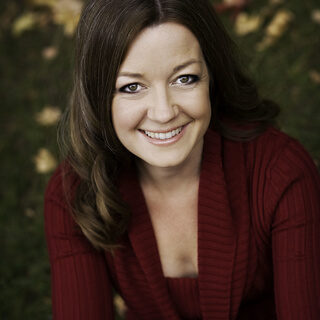
Dina Proctor is a life and business coach, and best-selling author of the book "Madly Chasing Peace: How I Went from Hell to Happy in Nine Minutes a Day." Supported by Jack Canfield, Dina's 3x3 Medita

Vedi il profilo
Esplora i temi
Meditation healingMind body connectionConsciousnessSomatic awarenessContemplative practice
Domande frequenti

Domande frequenti

While meditation is not a replacement for medical care, growing evidence in psychoneuroimmunology shows that sustained contemplative practice can measurably activate the body's rest-and-repair systems by shifting the nervous system out of threat detection. Numerous individuals report spontaneous remissions and genuine recovery, often after years of consistent practice—suggesting mechanisms beyond simple placebo.

There's no fixed timeline. Most documented healing stories involve consistent, often intensive practice over months or years—not casual sitting. The speed of transformation varies based on individual factors like genetics, the nature of the condition, prior trauma, and the depth of practice, but the common thread is sustained commitment rather than quick fixes.

Different approaches work for different people. Some practitioners use breathwork (pranayama), others practice silent meditation, and still others combine contemplation with visualization directed at specific areas needing repair. What matters most is consistency and a genuine shift in relationship to the body—moving from resistance and fear toward curious, non-judgmental awareness.

Healing encompasses more than symptom elimination. Many practitioners describe profound transformation not in the illness itself, but in their relationship to it—moving from despair or denial into engaged presence and freedom. This shift in consciousness and quality of life is itself a genuine form of healing, even if the medical condition persists.

Meditation works best as part of an integrated approach. While some individuals report recovery through contemplative practice alone, most benefit from working with both medical professionals and meditation teachers who understand somatic awareness. Meditation addresses dimensions of healing—nervous system reset, releasing held trauma, activating inner resources—that medical care doesn't directly target.

When you meditate, you shift from a defensive, threat-detection mode to the parasympathetic nervous system's rest-and-repair state. In this condition, energy stops being consumed by protective tension and becomes available for actual healing. Additionally, stable awareness interrupts habitual trauma patterns held in tissue, allowing the body's inherent repair mechanisms to activate.

Potrebbe piacerti anche

Vedi Tutto
Eyes-Open Meditation: Seeing the World Without Labels
Inspire

Eyes-Open Meditation: Seeing the World Without Labels

Dina Proctor's short video makes a case for meditating with your eyes open, on a walk or even in traffic. Drop the running commentary, and t…

8 min read
How Do You Know You're Meditating Correctly? A Simple Test
Inspire

How Do You Know You're Meditating Correctly? A Simple Test

Dina Proctor says the sign you're meditating correctly shows up after you open your eyes. Her test, drawn from sports, performance, and flow…

8 min read
Medicine Buddha Practice: Feeling Beneath the Thinking
Inspire

Medicine Buddha Practice: Feeling Beneath the Thinking

Lama Rod Owens opens a Monday-night Medicine Buddha session six years into the practice, teaching how to feel an experience instead of think…

10 min read
Improvising Mantra: How Friday Night Songs Keep Changing
Inspire

Improvising Mantra: How Friday Night Songs Keep Changing

A violinist's daughter who never plays a song the same way twice explains why her Friday night chants keep changing. Here's what improvisati…

9 min read
Vedi tuttiPotrebbe piacerti anche→

Continua il tuo viaggio

Altra saggezza e altri incontri da tutta la directory BrightStar.

Altri articoli

Sfoglia l’intera raccolta di insegnamenti, interviste e guide.

Torna a tutti gli articoli →

Insegnanti e artisti

Esplora i lignaggi, i musicisti e le guide del mondo consapevole.

Esplora gli artisti →

Trova un evento

Kirtan, ritiri, sound bath, breathwork, festival: in arrivo presto.

Sfoglia gli eventi →