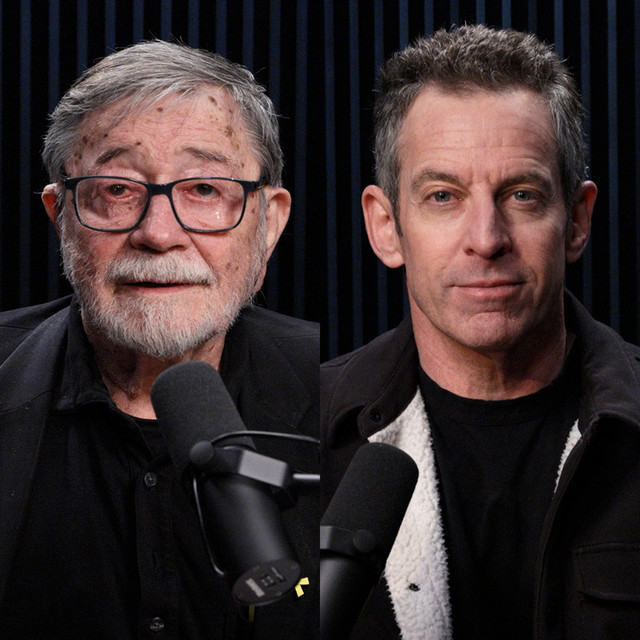
In the words of Sam Harris, "There is no need to merely believe. The point is to look and see." This statement invites us to transcend the confines of belief systems and engage with the world through direct experience. In a culture often saturated with dogma and unexamined assumptions, Harris's call to action emphasizes the importance of observation and awareness. It is a reminder that true understanding arises not from passive acceptance but from an active engagement with reality.
This perspective is particularly significant in our contemporary landscape, where misinformation and polarized beliefs can cloud our judgment. Harris encourages us to cultivate a practice of seeing—an invitation to explore the nature of our thoughts, emotions, and the world around us. By shifting our focus from belief to direct perception, we open ourselves to a deeper understanding of existence, one that is rooted in experience rather than ideology.
The image / the metaphor
The imagery in Harris's quote evokes a sense of awakening, as if he is urging us to lift the veil of illusion that often shrouds our perception. The verbs "look" and "see" suggest an active engagement with our surroundings, a movement from passive observation to a more profound awareness. This distinction is crucial; belief can often be a static state, while seeing implies a dynamic interaction with the world. It is an invitation to step into the immediacy of experience, to witness life as it unfolds.
In the speaker's tradition
Sam Harris's teachings are rooted in a secular interpretation of Buddhist principles, particularly the emphasis on mindfulness and direct experience. Concepts such as "prajna," or wisdom, resonate deeply within this framework, highlighting the importance of insight gained through personal experience rather than through inherited beliefs. In this context, Harris's call to "look and see" aligns with the Buddhist practice of vipassana, or insight meditation, which encourages practitioners to observe their thoughts and sensations without attachment or judgment.
Moreover, Harris's approach can be compared to the notion of "sunyata," or emptiness, which suggests that our perceptions are often clouded by preconceived notions and biases. By encouraging us to look beyond these constructs, Harris invites us to experience the world in its raw form, free from the distortions of belief. This aligns with the teachings found in texts such as the "Dhammapada," where the importance of direct experience and personal insight is emphasized as a path to liberation.
Living the teaching
Consider a modern scenario where this teaching can be applied: a heated discussion about political beliefs. In such moments, individuals often cling to their positions, fortified by beliefs that may not withstand scrutiny. By embracing Harris's invitation to "look and see," one might pause to observe their emotional reactions, the underlying motivations for their beliefs, and the perspectives of others. This shift from belief to observation can foster empathy and understanding, transforming conflict into a space for dialogue and connection.
Another application of this teaching can be found in personal relationships. Imagine a situation where misunderstandings arise between partners. Instead of relying on assumptions or beliefs about each other's intentions, one could practice the art of seeing—actively listening, observing body language, and being present in the moment. This approach not only deepens intimacy but also cultivates a shared reality grounded in direct experience rather than preconceived notions. In both scenarios, the practice of looking and seeing opens pathways to greater clarity and connection.
A reflection
As we contemplate Harris's profound statement, we are invited to reflect on our own lives: What beliefs are we holding onto that may be clouding our perception of reality? In what areas can we shift our focus from belief to direct observation? This contemplation encourages us to engage with the world more fully, to embrace the richness of experience, and to cultivate a deeper understanding of ourselves and others. In this journey of seeing, we may find that the truth is not something to be believed but something to be experienced.