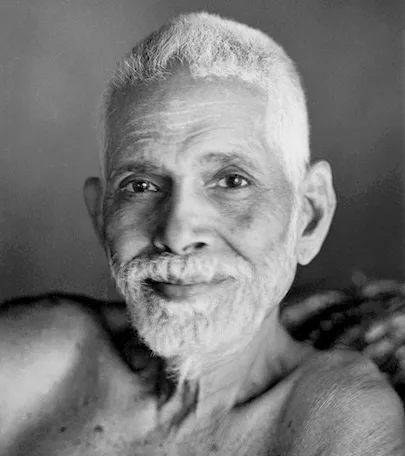
Ramana Maharshi's assertion that "Devotion is the mother of jnana" invites us to explore the profound relationship between love and knowledge in the spiritual journey. In this statement, Maharshi emphasizes that true wisdom, or jnana, does not arise in isolation but is nurtured by the fertile ground of devotion. This insight is crucial for anyone seeking a deeper understanding of their spiritual path, as it suggests that the heart's yearning for the divine is as essential as the intellect's pursuit of truth.
In a world often dominated by rationality and empirical evidence, Maharshi's words remind us of the importance of emotional and spiritual engagement. Devotion, or bhakti, serves as a bridge that connects the seeker to the divine, fostering an environment where wisdom can flourish. This relationship between devotion and knowledge is not merely theoretical; it is a lived experience that can transform our understanding of ourselves and our place in the universe.
The image / the metaphor
The imagery in Maharshi's quote evokes a nurturing relationship, where devotion is likened to a mother, lovingly tending to her child. This metaphor suggests that just as a mother provides care, support, and sustenance, devotion nurtures the seeds of wisdom within us. The choice of the word "mother" is particularly poignant, as it conveys warmth, safety, and the unconditional love that is essential for growth. In this light, jnana is not merely an intellectual achievement but a blossoming that occurs in a space filled with love and reverence.
Diving deeper into this metaphor, we can see that devotion is not a passive state but an active engagement with the divine. It requires intention, surrender, and a willingness to open oneself to the mysteries of existence. This dynamic interplay between devotion and wisdom suggests that the journey toward enlightenment is not solely about acquiring knowledge but about cultivating a heartfelt connection with the divine source of all wisdom. In this sense, devotion becomes the soil in which the flowers of jnana can bloom, each petal representing a facet of understanding that arises from love.
In the speaker's tradition
Ramana Maharshi's teachings are deeply rooted in the Hindu tradition, where the concepts of bhakti (devotion) and jnana (knowledge) are often intertwined. In this context, devotion is seen as a vital aspect of one's dharma, or righteous duty, which guides the seeker toward self-realization. The notion of kenosis, or self-emptying, resonates here, as true devotion requires the relinquishing of the ego and the surrendering of the self to a higher power. This surrender is not a loss but a transformation, allowing the seeker to experience the fullness of existence and the wisdom that comes from unity with the divine.
In the Bhagavad Gita, a foundational text in Hindu philosophy, Lord Krishna emphasizes the importance of devotion as a means to attain knowledge and liberation. He states that those who surrender to Him with unwavering faith will be granted wisdom and understanding. This aligns beautifully with Maharshi's assertion, as both teachings highlight the necessity of devotion as a precursor to true knowledge. The intertwining of bhakti and jnana in these texts underscores the idea that wisdom is not merely an intellectual pursuit but a holistic experience that encompasses the heart, mind, and spirit.
Living the teaching
Consider a modern scenario where an individual grapples with a significant life decision, such as choosing a career path. In this moment of uncertainty, the practice of devotion can serve as a guiding light. By engaging in contemplative practices such as prayer, meditation, or simply reflecting on one's values and passions, the seeker can cultivate a sense of connection to something greater than themselves. This devotion can lead to insights and clarity that transcend mere logical reasoning, allowing the individual to make choices that resonate with their true self and purpose.
In relationships, the principle of devotion can manifest in the way we approach our connections with others. When we engage with loved ones from a place of genuine care and commitment, we create an environment where understanding and wisdom can flourish. For instance, during a conflict, approaching the situation with a heart full of devotion—seeking to understand rather than to be understood—can transform the interaction. This shift in perspective not only deepens the relationship but also fosters personal growth, as the wisdom gained through such experiences enriches our understanding of love, compassion, and the human experience.
A reflection
As we contemplate Maharshi's profound statement, we are invited to reflect on our own relationship with devotion and wisdom. How can we cultivate a deeper sense of devotion in our lives, and in what ways might this devotion open us to greater understanding? This question encourages us to explore the interplay between our hearts and minds, reminding us that the journey toward wisdom is as much about love and connection as it is about knowledge and intellect.