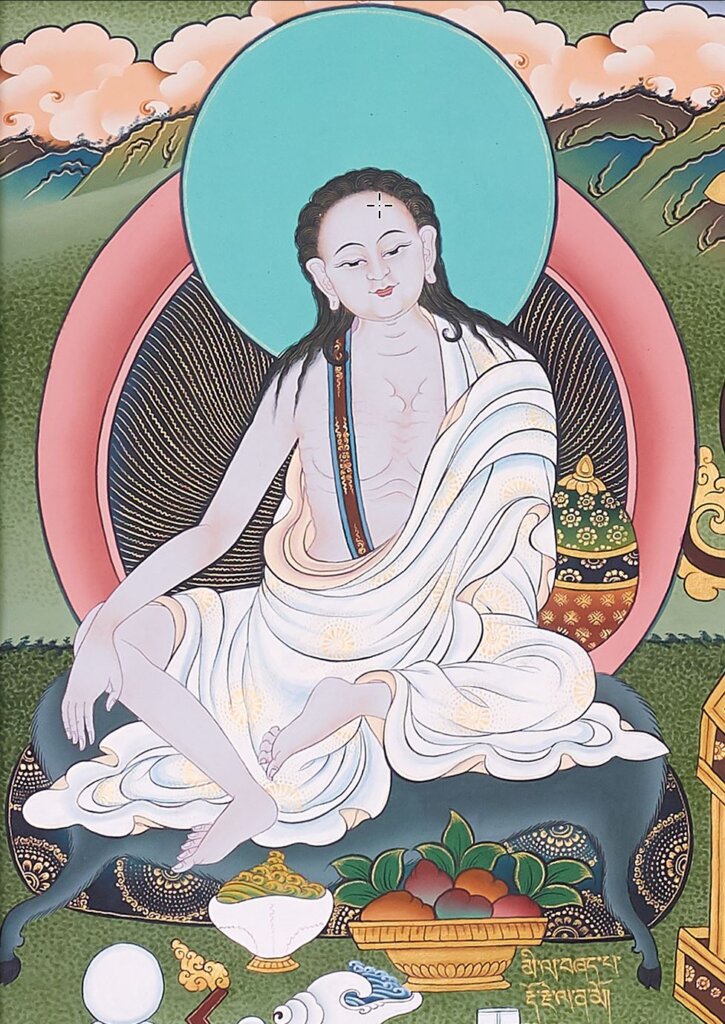
Milarepa's poignant assertion, "He who would taste the mountain water must climb the mountain," serves as a profound reminder of the intrinsic relationship between effort and reward. To truly experience the richness of life, one must engage in the arduous journey of self-discovery and spiritual practice. This quote encapsulates the essence of striving toward enlightenment, emphasizing that the rewards of spiritual insight are not handed down but must be earned through dedication and perseverance.
In a world often enamored with instant gratification, Milarepa’s words challenge us to reconsider our approach to spiritual fulfillment. The mountain, a symbol of both challenge and elevation, represents the obstacles we must navigate to reach deeper truths. By climbing this metaphorical mountain, we not only seek the refreshing waters of wisdom but also cultivate resilience and strength along the way. This journey is not merely about the destination; it is about the transformation that occurs within us as we ascend.
The image / the metaphor
At first glance, the imagery of climbing a mountain evokes a sense of physical exertion and determination. The verbs "taste" and "climb" are laden with action and intention, suggesting that one cannot simply wait for enlightenment to arrive. Instead, one must actively engage in the process, confronting the steep inclines and rocky paths that characterize the spiritual journey. The mountain water symbolizes clarity, purity, and the essence of truth, which can only be accessed through the labor of climbing.
Diving deeper into the metaphor, the mountain represents not only external challenges but also the internal struggles we face on our path to self-realization. Each step taken on this ascent mirrors the incremental growth we experience through meditation, mindfulness, and ethical living. The mountain, therefore, becomes a sacred space where we confront our fears, doubts, and limitations, ultimately leading us to the refreshing waters of insight and understanding. This journey is a testament to the transformative power of effort in the pursuit of spiritual awakening.
In the speaker's tradition
Milarepa, a revered figure in Tibetan Buddhism, embodies the principles of dharma and the relentless pursuit of enlightenment. His life story is a testament to the transformative power of practice, illustrating the concept of kenosis, or self-emptying, as one sheds the burdens of ego and attachment. In this context, the mountain symbolizes the obstacles of ignorance and suffering that must be overcome to realize sunyata, or emptiness, which is the ultimate nature of reality. The journey up the mountain is not merely a physical endeavor but a profound spiritual undertaking that aligns with the core teachings of Buddhism.
In the context of Milarepa's teachings, we can draw parallels to the concept of prajna, or wisdom, which is cultivated through direct experience and insight. His songs, rich with poetic imagery and profound truths, echo the sentiment found in the Heart Sutra, where the realization of emptiness leads to liberation from suffering. Just as one must climb the mountain to taste the water, one must engage deeply with the teachings and practices of Buddhism to awaken to the wisdom that lies within. This interplay of effort and insight is central to the path of awakening.
Living the teaching
Consider a modern scenario where this teaching resonates: an individual striving to cultivate mindfulness in their daily life. The journey may begin with the simple act of committing to a daily meditation practice. Initially, the individual may encounter distractions, discomfort, and resistance, akin to the steep slopes of a mountain. However, as they persist, they begin to experience moments of clarity and peace, akin to tasting the mountain water. This process illustrates that the rewards of mindfulness are not immediate but emerge through sustained effort and dedication.
In a different context, this teaching can be applied to interpersonal relationships. Imagine someone navigating a challenging conversation with a loved one. The emotional labor involved in addressing difficult topics may feel daunting, much like the ascent of a mountain. Yet, by engaging openly and honestly, the individual can foster deeper understanding and connection, ultimately leading to a more profound relationship. The mountain water, in this case, symbolizes the richness of authentic communication and the rewards that come from facing challenges together.
A reflection
As we reflect on Milarepa's wisdom, we are invited to consider our own mountains. What challenges are we currently facing in our spiritual journey, and how might we approach them with the intention to climb? In what ways can we commit to the effort required to taste the waters of insight and clarity? This contemplation encourages us to embrace the journey, recognizing that the path to spiritual fulfillment is as significant as the destination itself.
