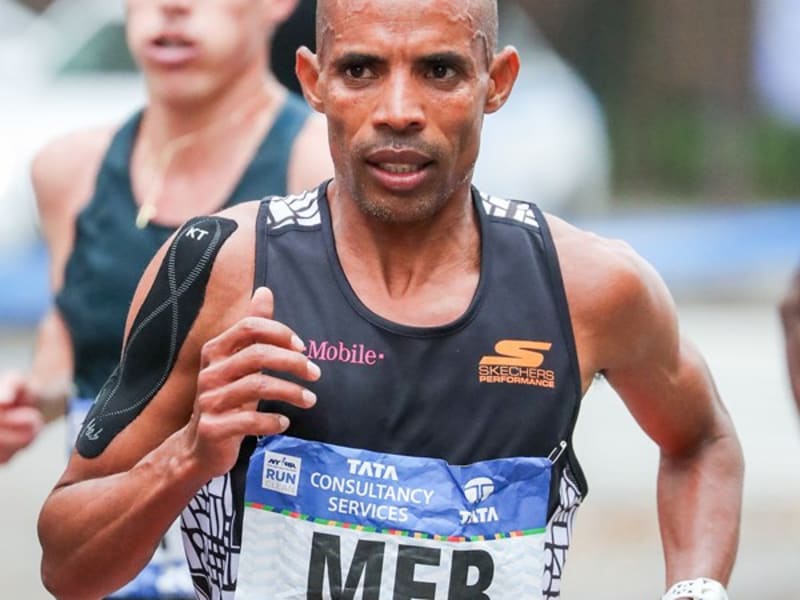
"Boston Strong. We never gave in, we never gave up." These words, spoken by Meb Keflezighi after his triumphant victory at the 2014 Boston Marathon, resonate deeply within the context of resilience and determination. They encapsulate not only his personal journey as a marathon runner but also the collective spirit of a city that faced tragedy and emerged with renewed strength. In a world often marked by challenges and setbacks, this declaration serves as a powerful reminder of the human capacity to endure and rise above adversity.
In the aftermath of the 2013 Boston Marathon bombing, the phrase "Boston Strong" became a rallying cry, symbolizing solidarity and hope. Meb's victory was not just a personal achievement; it was a testament to the resilience of a community that refused to be defined by fear. His words reflect a profound understanding of the marathon as a metaphor for life itself, where perseverance and grit are essential to crossing the finish line. This quote invites us to explore the deeper implications of strength, both personal and communal, in the face of life's inevitable challenges.
The image / the metaphor
The imagery in Meb's quote is striking, evoking a sense of unwavering resolve. The verbs "gave in" and "gave up" suggest a struggle against external forces, a battle that requires not only physical endurance but also mental fortitude. The phrase "we never gave in" speaks to the idea of standing firm against adversity, while "we never gave up" emphasizes the importance of persistence. Together, these elements create a vivid picture of a journey marked by trials, yet illuminated by an unyielding spirit.
In the speaker's tradition
Meb Keflezighi's journey as a marathon runner is deeply rooted in the tradition of endurance sports, which often parallels spiritual concepts such as dharma and perseverance. In many spiritual traditions, the idea of dharma emphasizes the importance of fulfilling one's purpose and responsibilities, even in the face of adversity. Meb's commitment to his craft and his community exemplifies this principle, as he embodies the spirit of resilience that is essential to both athletic and spiritual pursuits.
Furthermore, the notion of kenosis, or self-emptying, resonates with Meb's experience. In the context of marathon running, this concept can be understood as the willingness to push beyond one's limits, to let go of the ego, and to embrace the collective strength of a community. Meb's victory was not solely a personal achievement; it was a manifestation of the support and solidarity that characterized the Boston community in the wake of tragedy. This interconnectedness reflects a profound understanding of the shared human experience, where individual triumphs are inextricably linked to the collective journey.
Living the teaching
Consider a modern scenario where Meb's teaching of resilience can be applied: a young athlete facing setbacks in their training. Perhaps they have encountered injuries or performance plateaus that threaten their confidence and commitment. In such moments, the mantra "we never gave in, we never gave up" can serve as a guiding principle, encouraging them to embrace the challenges as opportunities for growth. By fostering a mindset of perseverance, they can learn to navigate the ups and downs of their journey, ultimately emerging stronger and more resilient.
This teaching can also find resonance in personal relationships. Imagine a couple facing difficulties in their partnership, where misunderstandings and conflicts seem insurmountable. By embodying the spirit of "Boston Strong," they can choose to confront their challenges together, refusing to give in to despair or give up on each other. This commitment to resilience and mutual support can transform their relationship, allowing them to emerge from their struggles with a deeper understanding and connection.
A reflection
As we contemplate Meb Keflezighi's powerful words, we are invited to reflect on our own lives and the challenges we face. In what areas do we find ourselves tempted to give in or give up? How can we cultivate a spirit of resilience that echoes the strength of a community united in purpose? These questions encourage us to explore our own capacity for endurance and to recognize the interconnectedness of our journeys with those around us.