BrightStar

Ver Todos los Events

Descubre encuentros conscientes

events

Yoga
Meditation
Breathwork
Qigong
Tai Chi
Sacred Music
World Music
Medicine Music
Sound Healing
Ecstatic Dance
Destinos Populares
BaliSedonaLos AngelesCosta RicaNew YorkSan FranciscoAustinMiamiJoshua TreeTulum
Ver Todas las CategoríasVer Todos los Destinos

Explorar Todas las Características

Herramientas poderosas para hacer crecer tus eventos

Características de la Plataforma

Precios Dinámicos Inteligentes
Categorías de Entradas
Asientos Asignados
Recuperación de Carritos
Recuperación de Visitantes
Donaciones y Escala Móvil
Motor de Afiliados
Escáner de Entradas
Códigos de Cupón
Preguntas Personalizadas
Compartir Entradas
Ventas Adicionales
Análisis e Informes
Secuencias de Email
Lista de Espera / Notificar / Recordar
Personas y Lugares
Artists & TeachersEvent OrganizersVenues & StudiosKnowledge BaseGlossaryInspiration
Ver Todas las CaracterísticasSobre Nosotros
PreciosBlog
Language
Saved events
Ver Todos los Eventos

events

YogaMeditationBreathworkQigongTai ChiSacred MusicWorld MusicMedicine Music

Destinos Populares

BaliSedonaLos AngelesCosta RicaNew YorkSan Francisco

Personas y Lugares

Artists & TeachersEvent OrganizersVenues & StudiosKnowledge BaseGlossaryInspiration

Características de la Plataforma

Precios Dinámicos InteligentesCategorías de EntradasAsientos AsignadosRecuperación de CarritosRecuperación de VisitantesDonaciones y Escala MóvilMotor de AfiliadosEscáner de EntradasCódigos de CupónPreguntas PersonalizadasCompartir EntradasVentas AdicionalesAnálisis e InformesSecuencias de EmailLista de Espera / Notificar / Recordar
Ver Todas las CaracterísticasSobre Nosotros
PreciosBlog
Iniciar sesiónBuscadoresCreadores
  • Ver Todos los Eventos
  • Para Buscadores
  • Yoga
  • Meditación
  • Respiración consciente
  • Qigong
  • Tai chi
  • Música sagrada
  • Música del mundo
  • Música medicina
  • Sanación con sonido
  • Danza extática
  • Retiros
  • Talleres
  • Todas las Categorías →
  • Bali
  • Sedona
  • Los Angeles
  • Costa Rica
  • Tulum
  • Byron Bay
  • San Francisco
  • Austin
  • New York
  • San Diego
  • Denver
  • Seattle
  • Portland
  • Miami
  • Todas las Ciudades →
  • Join the Movement
  • Why we list
  • Sell Globally
  • Para Creadores
  • Para equipos
  • Para Escritores
  • Para Maestros
  • Para Artistas de Kirtan
  • Para Estudios
  • Para Festivales
  • Para Centros de Retiros
  • Para Organizaciones Sin Fines de Lucro
  • Embajador de Marca
  • Entradas sin costo
  • Elevate
  • Amplify
  • Red de +500K Compradores
  • Recuperación de Carritos
  • Precios Dinámicos Inteligentes
  • Categorías de Entradas
  • Eventos Recurrentes
  • Asientos Asignados
  • Motor de Afiliados
  • Lista de Espera / Notificar
  • Escáner de Entradas
  • Widget Embebido
  • Sindicación de eventos
  • Centro de mensajes
  • Integraciones
  • Reportes
  • Todas las Características →
  • Acerca de
  • El ecosistema
  • Blog
  • Glosario
  • Inspiración
  • Centro de Ayuda
  • Contacto
  • Documentación API
  • Recursos de Marca
  • Carreras
  • Prensa
  • Términos de Servicio
  • Política de Privacidad

Eventos

  • Ver Todos los Eventos
  • Para Buscadores
  • Yoga
  • Meditación
  • Respiración consciente
  • Qigong
  • Tai chi
  • Música sagrada
  • Música del mundo
  • Música medicina
  • Sanación con sonido
  • Danza extática
  • Retiros
  • Talleres
  • Todas las Categorías →

Destinos

  • Bali
  • Sedona
  • Los Angeles
  • Costa Rica
  • Tulum
  • Byron Bay
  • San Francisco
  • Austin
  • New York
  • San Diego
  • Denver
  • Seattle
  • Portland
  • Miami
  • Todas las Ciudades →

Para Creadores

  • Join the Movement
  • Why we list
  • Sell Globally
  • Para Creadores
  • Para equipos
  • Para Escritores
  • Para Maestros
  • Para Artistas de Kirtan
  • Para Estudios
  • Para Festivales
  • Para Centros de Retiros
  • Para Organizaciones Sin Fines de Lucro
  • Embajador de Marca
  • Entradas sin costo
  • Elevate
  • Amplify

Características

  • Red de +500K Compradores
  • Recuperación de Carritos
  • Precios Dinámicos Inteligentes
  • Categorías de Entradas
  • Eventos Recurrentes
  • Asientos Asignados
  • Motor de Afiliados
  • Lista de Espera / Notificar
  • Escáner de Entradas
  • Widget Embebido
  • Sindicación de eventos
  • Centro de mensajes
  • Integraciones
  • Reportes
  • Todas las Características →

Empresa

  • Acerca de
  • El ecosistema
  • Blog
  • Glosario
  • Inspiración
  • Centro de Ayuda
  • Contacto
  • Documentación API
  • Recursos de Marca
  • Carreras
  • Prensa
  • Términos de Servicio
  • Política de Privacidad
BrightStar
Descarga la app
Descárgalo en elApp StoreDisponible enGoogle Play
© 2026 BrightStar. Todos los derechos reservados.
Watch

A Child on a Mother's Shoulder: Lessons in Kindness

Dalai Lama
Dalai Lama
Oct 16, 2026
8 min de lectura
Ver · 7

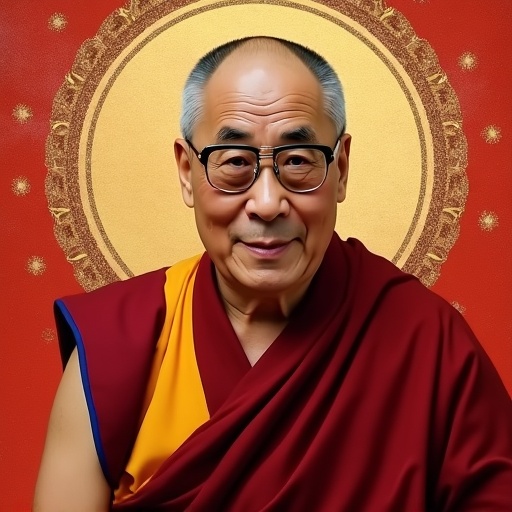
Picture a farm field in a poor village. A woman bends over her work, hoeing or tending animals, and riding on her shoulders is a small boy with no toys to play with. He has found a better game. He grabs one of her ears and steers, pulling left when he wants to go left, pulling right when he wants to go right. When she does not do what he wants, he shouts from his perch and, by his own account, gives his mother a bit of punishment. She keeps working, keeps smiling, and keeps carrying him. That scene sits at the center of a short recollection from the Dalai Lama, recorded on February 6, 2017, and posted to his YouTube channel. It runs barely a minute and a half, but it holds a complete lesson about how a loving presence can absorb a child's willfulness without ever turning hard.

Leer · 6 secciones

What is the Dalai Lama actually describing in this memory?

The recollection is simple on purpose. The speaker is a young boy from a family that had almost nothing. As the video's own description puts it, he recalls how, as a small boy in a poor village, his mother showed endless kindness and care for others, never getting angry even when he tugged her ears and shouted while she carried him on her shoulders as she worked in the fields. The transcript fills in the texture. There were no toys in the house. His mother carried him wherever she went, whether she was farming the fields or looking after the animals.

What makes the passage land is that it is told as a confession. The speaker frames it with a remark that he had once told this as a joke. In the recording, he says he used to tell the story as a joke, but insists, "It's actually true." That small turn tells you something about how he holds the memory. It is not a polished parable. It is a half-amused, half-tender admission that he was a difficult, testing child, and that the person absorbing his tests was the one who never seemed to mind.

Why does the absence of toys matter to this story?

It would be easy to skip past the detail about toys, but it is structural to the memory. In a household with nothing to play with, the child's world narrows to the people around him. His mother's body becomes the first playground, his first vehicle, and his first lesson in how the world responds to him. He says it plainly: "So eventually I feel very comfortable on my mother's shoulder."

Comfort is the key word. The shoulder is where he learns that he is safe, carried, and held. Only from that secure base does the next stage happen. The speaker reports that he "become more bold," and the boldness is not random mischief. It is what a child does when he trusts that the ground under him will not give way. You cannot test a parent you fear. You can only test one you believe will stay.

"So eventually I feel very comfortable on my mother's shoulder. Sit like that. So then I become more bold way, bold."

— the Dalai Lama, in a video recorded February 6, 2017

How does a child learn to test the limits of a loving parent?

The mechanics of the boyhood game are almost physical. He takes hold of his mother's ear to steer her. He changes direction by pulling. When she does not follow his wish, he shouts from his place above her. Anyone who has spent time around small children will recognize the pattern: the testing, the escalation, the search for where the boundary is. What is unusual here is the setting. The child has power over a grown woman's body and, for a moment, over the direction of her day. He uses it.

The speaker's phrasing carries a quiet honesty about his own behavior. He does not say the child was misunderstood. He says he gave "some punishment" to his mother. That word choice places responsibility where it belongs. The memory is not a story about a saintly mother and an innocent child. It is a story about a child who pushed, and a mother who let the pushing pass through her without becoming something else.

There is a useful distinction here. A parent who gives in to every demand teaches a different lesson than a parent who holds firm. But a parent who answers force with force teaches yet another. The mother in this account does none of those things. She does not appear to yield her direction to the child, since she is still doing her work and still carrying him. Nor does she retaliate. She holds the line by staying exactly who she is.

What does it mean that she never showed an angry face?

The emotional center of the clip arrives in its final lines, and they are worth hearing in full. The speaker says:

"I think I never saw my mother's sort of angry face. Always smiling. Very very kind."

— the Dalai Lama, in a video recorded February 6, 2017

Notice the repetition. "Very very kind" is said twice, the way a person returns to a truth they still feel in their chest decades later. The speaker is not describing a mother who was pleasant when convenient. He is describing a constancy, a face that did not change even when her son was pulling at her and shouting. For a child, a face that stays kind under pressure is one of the most stabilizing things in the world. It tells him that his outbursts do not destroy the relationship, and that the love he is testing is not conditional on good behavior.

This is where the story stops being only a family memory and becomes a teaching. In contemplative traditions, patience is often described as something cultivated rather than simply possessed, and the mother here embodies it without any sign of strain on the surface. The speaker never mentions her saying a lesson or explaining her patience. He remembers her by what she did and the face she kept. That is how many of the most durable teachings are passed on: through the example of someone who keeps acting well when there is every reason not to.

How can a reader carry this memory into everyday life?

The practical takeaway is not complicated, though it is demanding. Kindness that survives a child's tugging, shouting, and testing is kindness that does not depend on being thanked. The mother in this recollection receives no reward in the moment. Her son is not calm, grateful, or cooperative. She keeps smiling anyway, and the memory survives long enough to be told decades later as something close to a fond, faintly embarrassed truth.

For a parent, teacher, or anyone who cares for someone difficult, the clip offers a clear question to sit with: when someone pushes against you, do you change your face, or do you keep the warmth steady while the boundaries do their work? The mother in the story did not stop the child's behavior by force. She simply did not let it turn her cold. That distinction matters. Firmness can coexist with a kind face, and in this memory it did.

It is also worth noticing what the speaker chose to remember. Among all the memories a person might keep from a childhood of poverty and hard work, he kept this one, and he kept it as proof of his mother's goodness rather than as a record of his own rebellion. That choice is itself a form of gratitude. Remembering someone's kindness, out loud and with humor, is one way to keep it alive.

Where to go from here

This clip is short, so the best next step is to watch it again with attention to the details: the toys that were not there, the shoulder that became a home, the ear that became a steering wheel, and the face that never turned angry. Then consider the larger teaching it points toward. Kindness that is steady, unhurried, and willing to absorb a child's testing can shape a person long after the fields and the shoulders are gone. The Dalai Lama's own video, posted on his YouTube channel under the title "My Mother's Kindness," is the primary source for this recollection, and the full recording is the most faithful way to hear his voice and his pauses, which carry much of the meaning.

If you want to go deeper into the ideas of patience, compassion, and maternal care in the Dalai Lama's teaching, watch his other recorded reflections on family and ordinary kindness, and return to this one when you need a reminder of what steady warmth looks like in practice.

Comments

Loading the conversation…

Transcript

[0:01] I used to say to you telling how joke.

[0:04] It's actually true.

[0:07] And I was

[0:08] young.

[0:09] Uh

[0:10] We are poor family, a village family.

[0:15] So

[0:17] no sort of toys or these things.

[0:20] So therefore

[0:21] you see my mother always is carrying me

[0:25] on her shoulder.

[0:27] When she

[0:28] went to farming in farm field or

[0:33] look after animal.

[0:36] She always carry me.

[0:38] So eventually I feel very comfortable on

[0:41] my mother's shoulder.

[0:43] Sit like that.

[0:44] So then I become more

[0:46] bold way, bold.

[0:49] And hold my mother's ear.

[0:52] When I want to go this side

[0:55] I do this.

[0:56] Uh, go this side, go that. If mother not

[0:59] follow my sort of wish, then I shout

[1:03] on on mother's shoulder.

[1:07] Give some punishment my mother.

[1:12] So my mother really very very kind

[1:16] villager woman.

[1:19] I think uh

[1:23] I never saw

[1:24] my mother's sort of angry face.

[1:28] Always smiling.

[1:30] Very very kind.

Dalai Lama
ArtistDalai Lama

Spiritual leader of Tibetan Buddhism and Nobel Peace Prize laureate (1989). Born Lhamo Thondup in 1935, recognized at age two as the reincarnation of the 13th Dalai Lama, he fled i…

Ver perfilSitio web
Explorar temas
Dalai-lamaMaternal-kindnessPatienceCompassionChildhood-memories

¿Tienes Preguntas?

Preguntas Frecuentes

In a short recollection recorded February 6, 2017, the Dalai Lama describes being a small boy in a poor village family with no toys. His mother carried him on her shoulders while she worked in the fields or tended animals, and he tugged her ears and shouted when she did not follow his wishes. He says she never showed an angry face and was always smiling and very kind.
The Dalai Lama says he used to tell the story as a joke, but he insists that it is actually true. The humor is a way of admitting his childhood testing while keeping the memory tender. The emotional point is his mother's steady kindness.
He does not explain her reasons in the clip. He simply says, "I think I never saw my mother's sort of angry face. Always smiling. Very very kind." The memory is valued for its constancy: her face stayed kind even when he pulled at her ears and shouted.
The story suggests keeping warmth steady when someone pushes against you, rather than letting their behavior change your face or your care. Firm boundaries and a kind demeanor can exist together, which is what the mother shows as she keeps working and carrying her son. Practicing this means noticing whether you respond to testing with coldness or with steady presence.
The clip is titled "My Mother's Kindness" and is posted on the Dalai Lama's YouTube channel. It runs about one minute and thirty-two seconds, and the video description notes it was originally recorded on February 6, 2017.
It shows that a child feels free to test limits when he feels secure, and that a parent's unchanging kindness can absorb that testing without becoming cold. The speaker remembers the kindness rather than his own rebellion, which reflects a grateful way of holding a childhood memory.

Seguir leyendo

More from Dalai

Ver Todo
A Child on His Mother's Shoulder: Kindness Without Anger
Inspire

A Child on His Mother's Shoulder: Kindness Without Anger

A 90-second childhood memory shows a mother who carried her son through the fields and never once turned angry. Here is what the clip teache…

1 min read
Analytical Meditation: How Investigation Transforms the Mind
Inspire

Analytical Meditation: How Investigation Transforms the Mind

The Dalai Lama says decades of analytical meditation, not prayer, loosened his attachment and anger. Here is the investigative method behind…

1 min read
Speak Up or Stay Silent? A Guru Nanak Guide to Impact
Inspire

Speak Up or Stay Silent? A Guru Nanak Guide to Impact

Should you speak up or stay silent? SathPaal Singh's Guru Nanak-rooted test asks where impact lies, not who is right, from workplace clashes…

1 min read
Hate Cannot Drive Out Hate: Tara Brach on Courageous Presence
Inspire

Hate Cannot Drive Out Hate: Tara Brach on Courageous Presence

Tara Brach shows how to meet anger and fear without hardening, using the "strong back and soft front" practice to turn reactivity into compa…

1 min read

Sigue explorando

Continúa tu camino

Más sabiduría y encuentros de todo el directorio de BrightStar.

Más artículos

Recorre la biblioteca completa de enseñanzas, entrevistas y guías.

Ver todos los artículos →

Maestros y artistas

Explora los linajes, músicos y guías del mundo consciente.

Explorar artistas →

Encuentra un evento

Kirtan, retiros, baños de sonido, breathwork, festivales — muy pronto.

Ver eventos →