BrightStar

Ver Todos los Events

Descubre encuentros conscientes

events

Yoga
Meditation
Breathwork
Qigong
Tai Chi
Sacred Music
World Music
Medicine Music
Sound Healing
Ecstatic Dance
Destinos Populares
BaliSedonaLos AngelesCosta RicaNew YorkSan FranciscoAustinMiamiJoshua TreeTulum
Ver Todas las CategoríasVer Todos los Destinos

Explorar Todas las Características

Herramientas poderosas para hacer crecer tus eventos

Características de la Plataforma

Precios Dinámicos Inteligentes
Categorías de Entradas
Asientos Asignados
Recuperación de Carritos
Recuperación de Visitantes
Donaciones y Escala Móvil
Motor de Afiliados
Escáner de Entradas
Códigos de Cupón
Preguntas Personalizadas
Compartir Entradas
Ventas Adicionales
Análisis e Informes
Secuencias de Email
Lista de Espera / Notificar / Recordar
Personas y Lugares
Artists & TeachersEvent OrganizersVenues & StudiosKnowledge BaseGlossaryInspiration
Ver Todas las CaracterísticasSobre Nosotros
PreciosBlog
Language
Saved events
Ver Todos los Eventos

events

YogaMeditationBreathworkQigongTai ChiSacred MusicWorld MusicMedicine Music

Destinos Populares

BaliSedonaLos AngelesCosta RicaNew YorkSan Francisco

Personas y Lugares

Artists & TeachersEvent OrganizersVenues & StudiosKnowledge BaseGlossaryInspiration

Características de la Plataforma

Precios Dinámicos InteligentesCategorías de EntradasAsientos AsignadosRecuperación de CarritosRecuperación de VisitantesDonaciones y Escala MóvilMotor de AfiliadosEscáner de EntradasCódigos de CupónPreguntas PersonalizadasCompartir EntradasVentas AdicionalesAnálisis e InformesSecuencias de EmailLista de Espera / Notificar / Recordar
Ver Todas las CaracterísticasSobre Nosotros
PreciosBlog
Iniciar sesiónBuscadoresCreadores
  • Ver Todos los Eventos
  • Para Buscadores
  • Yoga
  • Meditación
  • Respiración consciente
  • Qigong
  • Tai chi
  • Música sagrada
  • Música del mundo
  • Música medicina
  • Sanación con sonido
  • Danza extática
  • Retiros
  • Talleres
  • Todas las Categorías →
  • Bali
  • Sedona
  • Los Angeles
  • Costa Rica
  • Tulum
  • Byron Bay
  • San Francisco
  • Austin
  • New York
  • San Diego
  • Denver
  • Seattle
  • Portland
  • Miami
  • Todas las Ciudades →
  • Join the Movement
  • Why we list
  • Sell Globally
  • Para Creadores
  • Para equipos
  • Para Escritores
  • Para Maestros
  • Para Artistas de Kirtan
  • Para Estudios
  • Para Festivales
  • Para Centros de Retiros
  • Para Organizaciones Sin Fines de Lucro
  • Embajador de Marca
  • Entradas sin costo
  • Elevate
  • Amplify
  • Red de +500K Compradores
  • Recuperación de Carritos
  • Precios Dinámicos Inteligentes
  • Categorías de Entradas
  • Eventos Recurrentes
  • Asientos Asignados
  • Motor de Afiliados
  • Lista de Espera / Notificar
  • Escáner de Entradas
  • Widget Embebido
  • Sindicación de eventos
  • Centro de mensajes
  • Integraciones
  • Reportes
  • Todas las Características →
  • Acerca de
  • El ecosistema
  • Blog
  • Glosario
  • Inspiración
  • Centro de Ayuda
  • Contacto
  • Documentación API
  • Recursos de Marca
  • Carreras
  • Prensa
  • Términos de Servicio
  • Política de Privacidad

Eventos

  • Ver Todos los Eventos
  • Para Buscadores
  • Yoga
  • Meditación
  • Respiración consciente
  • Qigong
  • Tai chi
  • Música sagrada
  • Música del mundo
  • Música medicina
  • Sanación con sonido
  • Danza extática
  • Retiros
  • Talleres
  • Todas las Categorías →

Destinos

  • Bali
  • Sedona
  • Los Angeles
  • Costa Rica
  • Tulum
  • Byron Bay
  • San Francisco
  • Austin
  • New York
  • San Diego
  • Denver
  • Seattle
  • Portland
  • Miami
  • Todas las Ciudades →

Para Creadores

  • Join the Movement
  • Why we list
  • Sell Globally
  • Para Creadores
  • Para equipos
  • Para Escritores
  • Para Maestros
  • Para Artistas de Kirtan
  • Para Estudios
  • Para Festivales
  • Para Centros de Retiros
  • Para Organizaciones Sin Fines de Lucro
  • Embajador de Marca
  • Entradas sin costo
  • Elevate
  • Amplify

Características

  • Red de +500K Compradores
  • Recuperación de Carritos
  • Precios Dinámicos Inteligentes
  • Categorías de Entradas
  • Eventos Recurrentes
  • Asientos Asignados
  • Motor de Afiliados
  • Lista de Espera / Notificar
  • Escáner de Entradas
  • Widget Embebido
  • Sindicación de eventos
  • Centro de mensajes
  • Integraciones
  • Reportes
  • Todas las Características →

Empresa

  • Acerca de
  • El ecosistema
  • Blog
  • Glosario
  • Inspiración
  • Centro de Ayuda
  • Contacto
  • Documentación API
  • Recursos de Marca
  • Carreras
  • Prensa
  • Términos de Servicio
  • Política de Privacidad
BrightStar
Descarga la app
Descárgalo en elApp StoreDisponible enGoogle Play
© 2026 BrightStar. Todos los derechos reservados.
Inspire

What You Know for Sure: Consciousness Aware of Itself

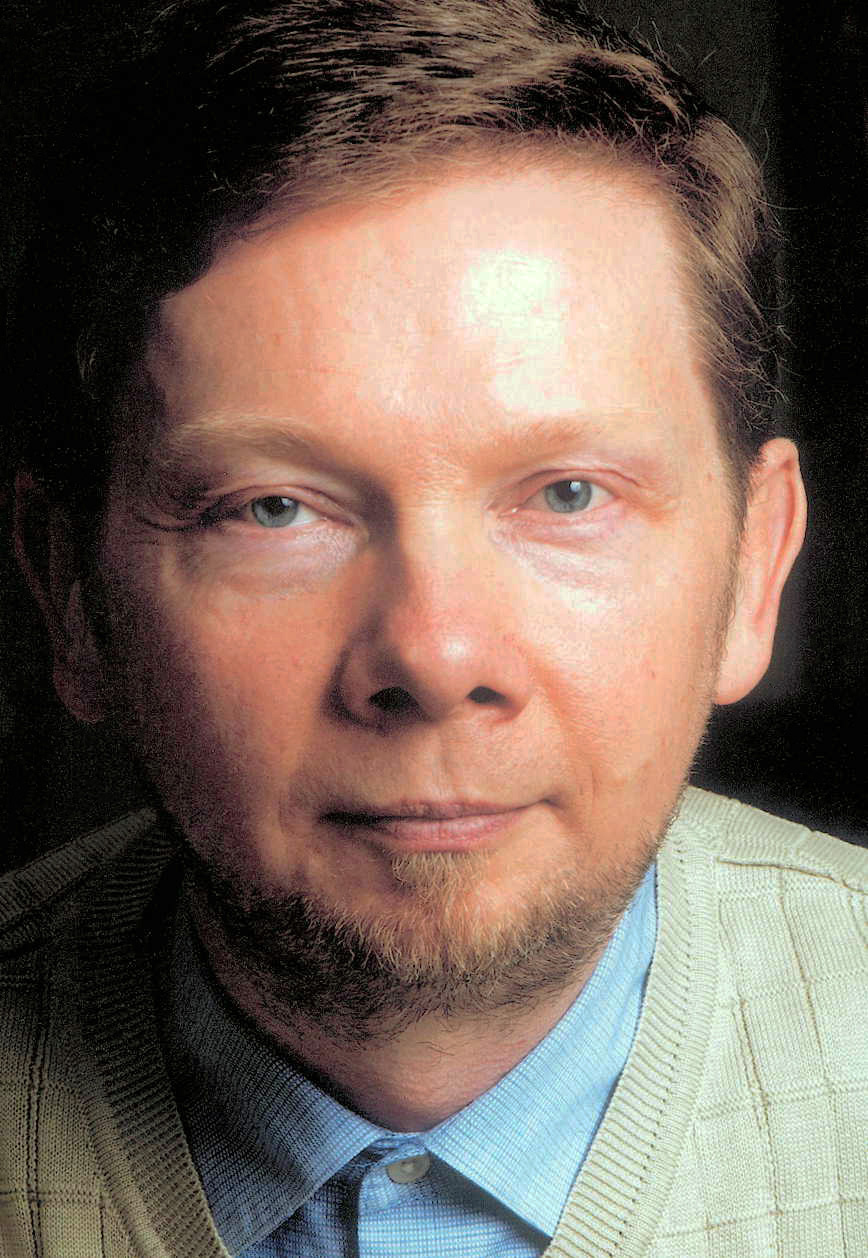
Eckhart Tolle
Eckhart Tolle
Oct 14, 2026
9 min de lectura
Ver · 8

Oprah Winfrey has a habit of ending her interviews with a question that sounds simple and is hard to dodge: what do you know for sure? In a short clip from his YouTube channel, published in October 2026, Eckhart Tolle returns to that question and offers an answer that is not a belief, a memory, or a conclusion drawn from evidence. The one thing he says you can know for sure is that you are conscious, right now. From there he makes a claim about the act of noticing that certainty: becoming conscious that you are conscious stops the thinking mind, because the mind cannot be busy with a thought and also be aware of awareness itself. The clip is only three and a half minutes, but it lays out a complete arc, from a question about knowledge to a suggestion to test it in the present moment, and it ends on a note that is less about insight than about affection for stillness.

Leer · 8 secciones

Picture the question landing in the middle of a busy mind

Imagine someone asked you, without warning, what you know for sure. The mind reaches for something solid. Your name. The date. The fact that the kettle is on. Then, almost immediately, the doubts arrive: those facts rest on memory, on trust in other people, on inference from what you have seen so far. Each candidate turns out to be a little less certain than it first seemed. This reflex, the search for firm ground in the stream of thought, is exactly the territory Tolle is pointing at. His point is that the search itself is happening inside awareness, and that the one thing the search cannot dislodge is the awareness.

What do you know for sure, really?

Tolle is direct about the answer. "What you know for sure ultimately is there's only one thing that you know for sure and that is that you are conscious right now," he says in the clip. He does not present this as a clever formula. He presents it as the only item that survives every test of doubt. Everything else you know arrives through belief, memory, or inference. Consciousness does not arrive through any of those channels. You are not conscious because you concluded it; the conclusion, if there is one, is itself a movement within consciousness.

This is worth slowing down on, because it changes what "knowing" means. Most of what we call knowledge is information we hold about the world: facts we have been told, things we remember, patterns we have inferred. Tolle's answer points to a different kind of knowing, one that is closer to direct acquaintance. You do not need to remember that you are aware in order to be aware. The awareness is present before any description of it, and it is present in the mind that is trying to doubt it.

Why does noticing your awareness stop the mind?

This is the strongest claim in the clip, and Tolle makes it with a small logical argument. "It's amazing to become conscious that you are conscious," he says. "It stops the mind. It has to, otherwise you can't be conscious that you're conscious, because when you're thinking, you're conscious of something." The structure of the argument is worth laying out plainly.

  • When the mind is thinking, attention is pointed at an object: a thought, a thing, a story about yesterday or tomorrow.
  • Consciousness, in that moment, is conscious of that object.
  • To notice that you are conscious, attention has to turn back and rest on the awareness itself rather than on what it is aware of.
  • That turn is not compatible with the mind's usual absorption in content, so the thinking pauses.

He puts the same idea in terms of ordinary experience: when you are thinking, you are not conscious of consciousness. You are conscious of the thought. Only when the spotlight swings around to the light itself does the thinking fall quiet. The implication is that the stillness is not something you have to manufacture. It is what happens, almost by definition, when awareness recognizes itself. The mind does not have to be silenced by force; it simply cannot hold its usual grip while attention is resting on the source of attention.

Is there really a subject and an object?

Here Tolle makes a move that many readers will find disorienting. He calls the subject-object split a linguistic trick. "It's just a linguistic construct," he says. "It doesn't mean that there's a subject and an object. It's only when you talk about it there's a subject and an object." In everyday grammar, to be conscious of something requires two things: someone who is conscious, and something they are conscious of. The sentence "I am conscious of consciousness" seems to demand a knower and a known.

Tolle's point is that this grammar is a description imposed after the fact. In the living moment of awareness, he suggests, there is not really a separate observer looking at a separate thing called awareness. There is just awareness. Language divides it into a pronoun and a noun because that is how sentences work. The division is useful for talking, but it is not the experience itself. If you try to locate the "I" that is observing your awareness, you find more awareness, not a second entity standing behind it.

What does it mean for consciousness to be conscious of itself?

His summary line is the one that gives the clip its title-like weight. "All it means is consciousness has become self-conscious," he says, and then, quickly correcting a possible misreading: "Not self-conscious in the conventional sense. Consciousness has become conscious of itself." The distinction matters. Ordinary self-consciousness is a contracted state, a sense of being watched by an imagined audience, of measuring yourself against a mental image. The self-consciousness Tolle describes has none of that tightness. It is the simple fact of awareness turning and recognizing its own presence, with no story attached.

He names this recognition as awakening. The term is used often in contemplative writing and can sound grand, but in this clip it is described in the most modest possible terms: a moment in which consciousness notices itself and the noise of thought drops away. There is no ceremony required. The awakening is the recognition, and the recognition is available now, in the same room, in the same breath, to anyone willing to look.

How do you test this in your own experience?

Tolle's suggestion is deliberately small. "Just find out if you can be right in here now in thoughtless awareness," he says. "Just being aware of your own presence." He adds that this is what it means to be aware of presence, and to be aware of awareness. The instruction is not to achieve a state, reach a level, or think a more profound thought. It is to check, directly, whether you can be aware of your own presence without a thought in the way.

A practical way to hold this is as an experiment rather than a technique. Pause wherever you are. Notice the sounds, the sensations in the body, the thoughts drifting past. Then turn your attention from what is being noticed to the one who is noticing, and see what is there. Many people find that the attempt itself keeps producing new thoughts ("is this it?", "am I doing it right?"). Tolle's framing suggests that these are simply more objects appearing in awareness, and that the test is not whether the mind goes quiet on command but whether you can rest in the awareness underneath the commentary. The question is an invitation to look, not an exam to pass.

Why does the stillness become something you love?

The final lines of the clip shift from insight to feeling. Once the mind is quiet in this way, Tolle says, the next step is to "become comfortable with that stillness." Then comes the line that gives the piece its emotional arc: "And you not only become comfortable, you begin to love it."

This progression matters. Many people approach stillness as a deprivation, a blank space where the usual activity of the mind has been taken away and something uncomfortable rushes in to fill it. Tolle's sequence reverses that expectation. Comfort comes first, then affection. The stillness is not an absence of something; it is the felt texture of awareness being itself. What first feels strange, once recognized as home rather than void, becomes something a person looks forward to returning to. The love he describes is not sentimental. It is the ease of resting in what has been there all along.

It is also worth noting the scope of what the clip is. Tolle says the full session goes much further into this territory, and the video directs viewers toward it. This excerpt offers a foundation: one certainty, one logical argument about why noticing it stops thought, one correction of the subject-object grammar, and one small test to try. Read it as a compass heading rather than a destination, and treat the claims as questions to be checked against your own attention, not as conclusions to accept on authority.

Where to go from here

The most useful response to this clip is not to agree or disagree with it, but to run the experiment it describes. Take the question seriously for a minute. Ask what you know for sure, and notice which answers come from memory, belief, or inference, and which one does not depend on any of them. Then look at what happens when you turn attention toward the awareness doing the noticing. Tolle's claim is that the thinking pauses at that point, and that what remains is consciousness recognizing itself. Whether that matches your experience is the only evidence that counts, and it is available to check at any time, in any place, with no tools required.

If the clip raises more questions than it answers, that is a reasonable outcome. Tolle himself points past the excerpt toward the full teaching. For readers who want to keep going, the best next step is a few quiet minutes each day of simply being aware of your own presence, and paying attention to what changes when the commentary in your head softens. The rest of the teaching is, in the end, an elaboration of that single, checkable fact: you are conscious, right now.

Comments

Loading the conversation…

Transcript

[0:00] But you know for sure ultimately is

[0:04] there's only only

[0:07] only one thing that you can know for

[0:10] sure and that is that

[0:12] that you are conscious right now.

[0:25] So just find out if you can be right in

[0:28] here now

[0:32] in

[0:35] thoughtless awareness.

[0:45] Just being aware of your own presence.

[0:49] Being aware of presence, being aware of

[0:51] awareness really is what it means.

[0:54] You

[0:56] You There's one thing

[0:58] I don't know if you can

[1:01] Oprah

[1:03] has this famous question at the end of

[1:05] when she interviews people.

[1:08] The last question that she often asks is

[1:12] what do you know for sure?

[1:19] And of course well she also asked me

[1:22] that I don't know what I said in that

[1:24] moment. But

[1:27] what you know for sure ultimately is

[1:30] there's only only

[1:34] only one thing that you know for sure

[1:37] and that is that

[1:38] that you are conscious right now.

[1:47] And it's amazing to

[1:51] to

[1:52] to become conscious that you are

[1:53] conscious.

[1:56] It stops the mind.

[2:00] It has to, otherwise you can't be

[2:02] conscious that you're conscious because

[2:04] when you're thinking, you're conscious

[2:05] of something.

[2:08] But you're not conscious conscious of

[2:11] consciousness. It's just a

[2:13] linguistic

[2:15] construct construct. It It doesn't mean

[2:18] that there's a subject and an object.

[2:19] It's only when you talk about it there's

[2:21] a subject and an object. I'm conscious

[2:23] of conscious.

[2:25] But

[2:26] all it means is

[2:30] consciousness

[2:31] has become self-conscious.

[2:35] Not self-conscious in the conventional

[2:37] sense.

[2:38] Consciousness has become conscious of

[2:40] itself.

[2:43] And that's the awakening and that's the

[2:45] so the mind is still

[2:48] in that.

[2:58] Become comfortable with the

[3:01] with that stillness.

[3:04] And

[3:11] you not only become comfortable, you

[3:13] begin to love it.

Eckhart Tolle
ArtistEckhart Tolle

German-born spiritual teacher whose 1997 book The Power of Now became one of the most widely read spiritual works of the 21st century. After a profound transformation at 29 — movin…

Ver perfilSitio web
Explorar temas
AwarenessConsciousnessPresenceSelf-awarenessThoughtless-awareness

¿Tienes Preguntas?

Preguntas Frecuentes

In the clip, Tolle says the only thing you can know for sure is that you are conscious right now. He contrasts this with everything else people claim to know, which he describes as belief, memory, or inference. Consciousness is presented as the one certainty that survives every doubt.
Tolle argues that when you are thinking, your awareness is directed at an object such as a thought or a story. To notice that you are conscious, attention has to rest on the awareness itself rather than its content, and he says that shift stops the mind. He puts it simply: when you are thinking, you are conscious of something, not of consciousness.
He says it means consciousness has become conscious of itself, and he explicitly distinguishes this from self-consciousness in the conventional sense, which involves tension and self-judgment. In his framing, this recognition is what he calls awakening. It is a simple noticing of awareness with no added story.
No, according to the clip. He describes the subject-object split as a linguistic construct that appears only when we talk about experience. In the living moment, he suggests, there is just awareness, and the division into knower and known comes from how language works.
His suggestion is small: find out whether you can be present in thoughtless awareness, simply aware of your own presence. A practical way to test this is to notice what is around you and within you, then turn attention toward the one who is noticing. The aim is to check directly whether awareness can rest without thought, not to force the mind quiet.
In the clip he says first you become comfortable with the stillness that follows the pause in thinking, and then you begin to love it. The progression reframes stillness from an empty void into the felt experience of awareness being itself. Affection grows from the ease of resting in what is already present.
Tolle says Oprah Winfrey often asks it as the last question in her interviews, and he notes she asked him the same question. He uses it as the starting point for his reflection on consciousness as the only certainty. The question works as a doorway from ordinary knowledge into direct awareness.

Seguir leyendo

More from Eckhart

Ver Todo
The Longing Behind the Glass: Why We Reach for Relief
Inspire

The Longing Behind the Glass: Why We Reach for Relief

Alcohol and other substances offer a fleeting escape—but what people are really seeking is freedom from themselves, a spiritual longing misp…

1 min read
Beyond Thought: The Fourth State of Consciousness
Inspire

Beyond Thought: The Fourth State of Consciousness

Eckhart Tolle examines how identification with the conceptual mind creates suffering and explores the shift toward presence—a state of aware…

1 min read
Menopause Facts, Shame and the Science Behind the Silence
Inspire

Menopause Facts, Shame and the Science Behind the Silence

Oprah and Pilar Guzmán ask why menopause still breeds shame and myth. Dr. Mary Claire Haver and Dr. Lisa Mosconi bring the science.…

1 min read
Embrace Change: The Power of 12 New Things in One Year
Inspire

Embrace Change: The Power of 12 New Things in One Year

Deep disappointment sparked entrepreneur Shonda Scott's audacious year-long experiment: one new thing monthly to transform life from the ins…

1 min read

Sigue explorando

Continúa tu camino

Más sabiduría y encuentros de todo el directorio de BrightStar.

Más artículos

Recorre la biblioteca completa de enseñanzas, entrevistas y guías.

Ver todos los artículos →

Maestros y artistas

Explora los linajes, músicos y guías del mundo consciente.

Explorar artistas →

Encuentra un evento

Kirtan, retiros, baños de sonido, breathwork, festivales — muy pronto.

Ver eventos →