BrightStar

Ver Todos los Events

Discover conscious gatherings

events

Yoga
Meditation
Breathwork
Qigong
Tai Chi
Sacred Music
World Music
Medicine Music
Sound Healing
Ecstatic Dance
Destinos Populares
BaliSedonaLos AngelesCosta RicaNew YorkSan FranciscoAustinMiamiJoshua TreeTulum
Ver Todas las CategoríasVer Todos los Destinos

Explorar Todas las Características

Herramientas poderosas para hacer crecer tus eventos

Características de la Plataforma

Precios Dinámicos Inteligentes
Categorías de Entradas
Asientos Asignados
Recuperación de Carritos
Recuperación de Visitantes
Donaciones y Escala Móvil
Motor de Afiliados
Escáner de Entradas
Códigos de Cupón
Preguntas Personalizadas
Compartir Entradas
Ventas Adicionales
Análisis e Informes
Secuencias de Email
Lista de Espera / Notificar / Recordar
Personas y Lugares
Artists & TeachersEvent OrganizersVenues & StudiosKnowledge BaseGlossaryInspiration
Ver Todas las CaracterísticasSobre Nosotros
PreciosBlog
Ver Todos los Eventos

events

YogaMeditationBreathworkQigongTai ChiSacred MusicWorld MusicMedicine Music

Destinos Populares

BaliSedonaLos AngelesCosta RicaNew YorkSan Francisco

Personas y Lugares

Artists & TeachersEvent OrganizersVenues & StudiosKnowledge BaseGlossaryInspiration

Características de la Plataforma

Precios Dinámicos InteligentesCategorías de EntradasAsientos AsignadosRecuperación de CarritosRecuperación de VisitantesDonaciones y Escala MóvilMotor de AfiliadosEscáner de EntradasCódigos de CupónPreguntas PersonalizadasCompartir EntradasVentas AdicionalesAnálisis e InformesSecuencias de EmailLista de Espera / Notificar / Recordar
Ver Todas las CaracterísticasSobre Nosotros
PreciosBlog
Iniciar sesiónBuscadoresCreadores
Tibetan BuddhistOm Mani Padme Hum · Om Mani Padme Hum · Om Mani Padme Hum · Om Mani Padme Hum · Om Mani Padme Hum ·
  • Ver Todos los Events
  • Para Buscadores
  • Yoga
  • Meditation
  • Breathwork
  • Qigong
  • Tai Chi
  • Sacred Music
  • Retiros
  • Talleres
  • Todas las Categorías →
  • Bali
  • Sedona
  • Los Angeles
  • Costa Rica
  • Tulum
  • Byron Bay
  • San Francisco
  • Austin
  • Todas las Ciudades →
  • Para Creadores
  • For Teams
  • Para Escritores
  • Para Maestros
  • Para Artistas de Kirtan
  • Para Estudios
  • Para Festivales
  • Para Centros de Retiros
  • Para Organizaciones Sin Fines de Lucro
  • Embajador de Marca
  • Casos de Estudio
  • Seva
  • Elevate
  • Amplify
  • Red de +350K Compradores
  • Recuperación de Carritos
  • Precios Dinámicos Inteligentes
  • Categorías de Entradas
  • Eventos Recurrentes
  • Asientos Asignados
  • Motor de Afiliados
  • Lista de Espera / Notificar
  • Escáner de Entradas
  • Widget Embebido
  • Event Syndication
  • Message Center
  • Integrations
  • Reports
  • Todas las Características →
  • Acerca de
  • The Ecosystem
  • Blog
  • Glosario
  • Inspiration
  • Centro de Ayuda
  • Contacto
  • Documentación API
  • Recursos de Marca
  • Carreras
  • Prensa
  • Términos de Servicio
  • Política de Privacidad

Events

  • Ver Todos los Events
  • Para Buscadores
  • Yoga
  • Meditation
  • Breathwork
  • Qigong
  • Tai Chi
  • Sacred Music
  • Retiros
  • Talleres
  • Todas las Categorías →

Destinos

  • Bali
  • Sedona
  • Los Angeles
  • Costa Rica
  • Tulum
  • Byron Bay
  • San Francisco
  • Austin
  • Todas las Ciudades →

Para Creadores

  • Para Creadores
  • For Teams
  • Para Escritores
  • Para Maestros
  • Para Artistas de Kirtan
  • Para Estudios
  • Para Festivales
  • Para Centros de Retiros
  • Para Organizaciones Sin Fines de Lucro
  • Embajador de Marca
  • Casos de Estudio
  • Seva
  • Elevate
  • Amplify

Características

  • Red de +350K Compradores
  • Recuperación de Carritos
  • Precios Dinámicos Inteligentes
  • Categorías de Entradas
  • Eventos Recurrentes
  • Asientos Asignados
  • Motor de Afiliados
  • Lista de Espera / Notificar
  • Escáner de Entradas
  • Widget Embebido
  • Event Syndication
  • Message Center
  • Integrations
  • Reports
  • Todas las Características →

Empresa

  • Acerca de
  • The Ecosystem
  • Blog
  • Glosario
  • Inspiration
  • Centro de Ayuda
  • Contacto
  • Documentación API
  • Recursos de Marca
  • Carreras
  • Prensa
  • Términos de Servicio
  • Política de Privacidad
BrightStar
© 2026 BrightStar. Todos los derechos reservados.
Inspire

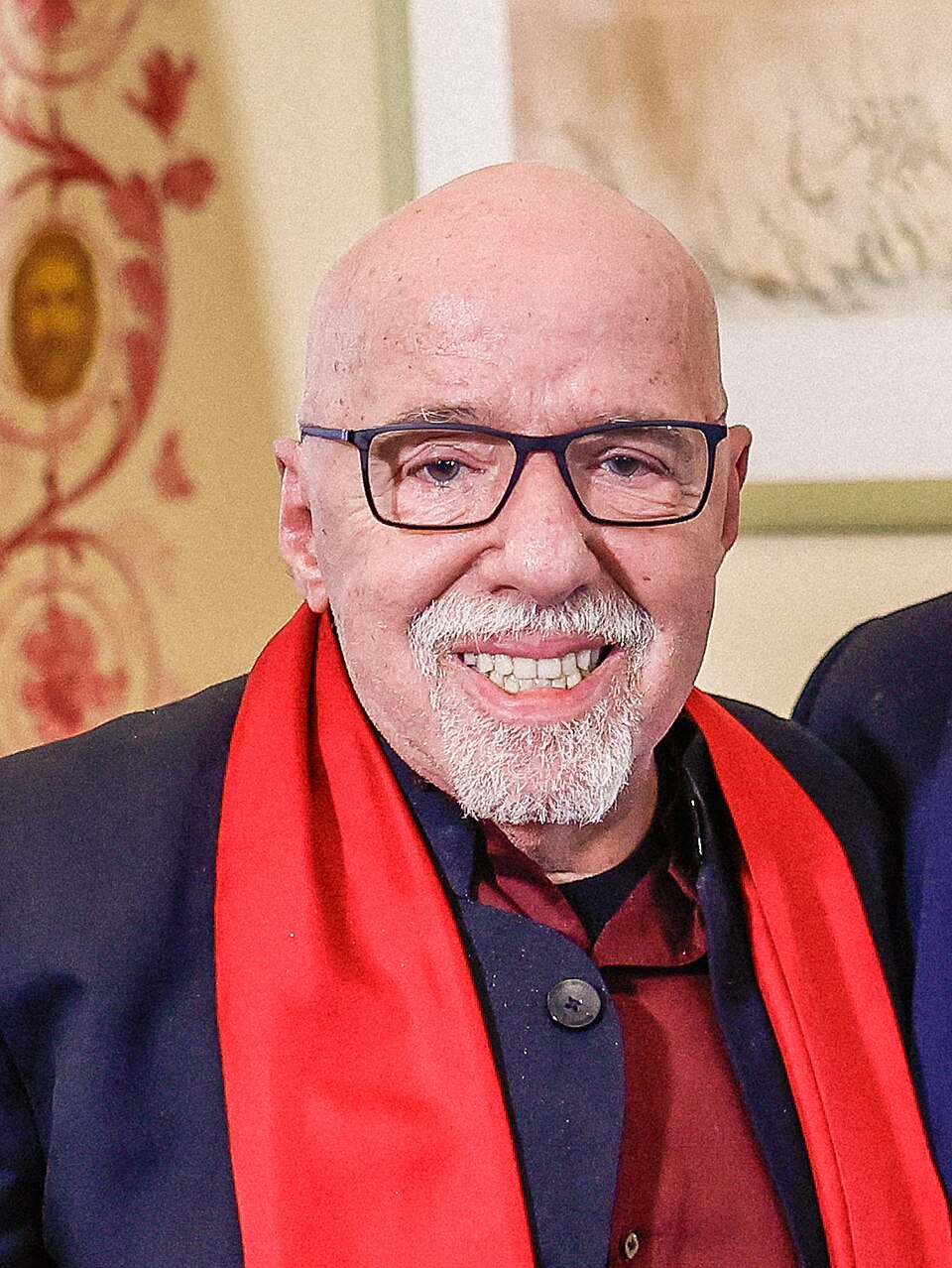
Paulo Coelho Quotes on Love,Relationships, and Finding Your Path

Paulo Coelho
Paulo Coelho
Jan 11, 2022
11 min read

TLDR: This collection of Paulo Coelho's quotes addresses the core themes of his teaching: the necessity of expressing love openly, the balance between faith and reality, the courage to take risks and make mistakes, and the recognition that each person must discover their own path. Coelho emphasizes that life's greatest wisdom comes not from words alone but from lived experience, and that true power lies in accepting both the mystery and the agency we possess in shaping our own existence.

Read · 17 sections

Why Should You Tell Someone You Love Them?

Coelho opens with one of his most direct imperatives: "If you love someone, tell them. Many hearts are broken by words that go unheard." This is not a romantic platitude but a practical statement about consequence. Unexpressed love leaves a gap between intention and reality that can never be closed. The person who might have received that love will never know it existed. Coelho suggests that silence is not protection but loss—the loss of connection, clarity, and the possibility of reciprocal understanding. In intimate relationships, this transparency becomes unavoidable anyway: "During intimate relationships, it is very difficult to deceive another person because that is when people show who they truly are." The effort to hide or obscure emotion in intimacy is ultimately futile, so the choice to speak truthfully becomes both more honest and more practical.

What Does It Mean to Balance Humility With Mystery?

Coelho insists on stopping and pausing to acknowledge that "there is something called mystery." This is not an invitation to mysticism for its own sake, but a guard against the arrogance of certainty. He is equally clear in distinguishing authentic humility from false performance: "Let's be absolutely clear about one thing: we must not confuse humility with false modesty or servility." Humility, as Coelho frames it, is the acceptance that you do not and cannot know everything, paired with the dignity of standing firm in what you do understand. It is not self-abasement. The balance allows a person to remain open to being wrong while still having the courage to act and make decisions. This stance acknowledges the ocean of life—which, like the ocean itself, cannot be completely calm—while maintaining enough ground to move forward.

How Do You Handle Failure and Setbacks?

Coelho's philosophy on failure is direct and often-cited: "The secret of life, however, is to fall seven times and get up eight." This is not optimism but arithmetic—one more rise than fall. The emphasis falls on the *action* of getting up, not on the fall itself. "Everything tells me I'm about to make the wrong decision, but making mistakes is part of life." By normalizing error as a structural feature of living, Coelho removes the shame that often paralyzes people after failure. He notes, too, that "Yesterday's pain is today's strength," suggesting that the difficulty itself becomes the resource for future resilience. The point is not to seek pain but to refuse the interpretive framework in which pain is purely negative or wasted.

Why Does Following Your Heart Require Risk?

Coelho does not soften the real stakes of following desire or love: "I'm not saying love will always take you to heaven, your life can turn into a nightmare, but having said that, it's worth taking the risk." This is not naiveté—it is clear-eyed acceptance that love and meaningful pursuits are inherently uncertain. The guarantee is not happiness but the possibility of genuine living. He reiterates the principle: "I have to take risks. I don't have to be afraid of defeat." The alternative—a life without risk—is a kind of death-in-life. Coelho suggests that "When I had nothing to lose, I was free," implying that the paralysis of self-protection is itself a loss. The person who chooses safety over meaning has already sacrificed the very thing they were trying to preserve: authentic existence.

Can Everyone Express Creative Potential?

"Everyone has creative potential, and from the moment you can express that creative potential, you can begin to change the world." This is a radical democratization of the capacity for impact. Coelho does not reserve transformation for artists or philosophers. Any person who finds a way to express what is alive in them—their unique way of seeing, their specific voice—participates in changing the world. It is not grandiose; it is inevitable. The creative act is the act of being fully yourself, and that presence alters the field. This connects to his equally bold assertion: "You are what you believe you are." The self is not fixed at birth but is the ongoing product of your beliefs about yourself. To change what you believe is to change what you become.

How Should You Relate to Other People's Paths?

Coelho is emphatic about the limits of judgment: "We cannot judge the lives of others since each person knows their own pain and sacrifices." This is not relativism—the claim is not that all choices are equally wise—but rather that you lack the epistemic access to judge another person's journey. "It is one thing to feel that you are on the right path, but another to think that yours is the only one." He extends this to the communication of wisdom: "People never learn anything when they are told; they have to figure it out for themselves." This means that your role is not to correct or convince but to allow others their own discovery process. The parent, teacher, or guide who tries to shortcut this by imposing lessons will find them bounce off like rain on glass.

What Is the Relationship Between Faith and Reality?

Coelho rejects the idea that faith is a retreat from the material world: "Faith doesn't disconnect you from reality; it connects you to it." This is a crucial clarification. Faith, in his usage, is not wishful thinking or denial of difficulty. Rather, it is the confidence that reality is intelligible and responsive to your engagement with it. "The more in harmony you are with yourself, the more you enjoy life and the more faith you have." Harmony with yourself generates faith; faith does not precede alignment. This also implies that faith is not faith in an outcome but faith in your capacity to move through outcomes. "You can never escape your heart, so you better listen to what it means." The heart, in this context, is not sentiment but your core orientation—the place where your values and intuitions meet.

How Should You Approach Communication and Expectation?

Coelho is sardonic about the futility of certain forms of communication: "Do n't waste time with explanations; people only hear what they want to hear." Explanation assumes a neutrality of reception that rarely exists. People filter what they hear through what they already believe they need or want. Similarly, "Don't explain yourself; your friends don't need it, and your enemies won't believe it." This is not an argument for silence but for clarity about what communication can and cannot do. Expectations, too, can be misleading: "It's not expectations that guide us forward; it's our desire to move forward." Desire is active and generative; expectation is passive and often a setup for disappointment. The difference is subtle but consequential.

What Is the Real Work of Happiness?

Coelho offers a reductive but honest view: "Happiness is simply another trick our genetic system uses for the survival of the species." He is not saying happiness is false, but that it serves a biological function rather than being the ultimate goal of life. "Happiness is a blessing, but it's usually also a conquest." This distinguishes happiness as something that comes from without (blessing) from happiness as something you build through effort and choice (conquest). He counsels a kind of presence without attachment: "Empty your mind; stop thinking about anything. You just have to be." This is not escape but a suspension of the anxious calculation that often crowds consciousness. "No matter how you feel today, get up and get dressed. Show yourself." This is a basic instruction in dignity—the decision to participate in life regardless of internal state.

How Does the Ocean Metaphor Apply to Life?

"Absolute calm is not the law of the ocean; the same is true in the ocean of life." Coelho uses the ocean to anchor the expectation that life will have movement, turbulence, and rhythm. "The ship is safest anchored in the harbor, but that's not the purpose of ships." To remain in the harbor is to misunderstand the nature of what you are. A ship that never sails is not a safe ship; it is a failed ship. The safety of the harbor is incompatible with the purpose of sailing. This applies to human life: the person who never ventures out has chosen a kind of death in service of avoiding risk.

What Is the Significance of Choosing One Path?

"Choosing one path means having to lose others." This statement names the cost of decision. Every yes is a no to something else. Coelho does not frame this as tragedy but as reality. The person who understands this can make choices without the futile wish that all paths be available simultaneously. "It depends" becomes his response to the cliché that "time heals all wounds." Time can heal, but it can also entrench. The outcome depends on what you do with the time, not on time itself.

Where Does Your Treasure Actually Lie?

"Remember, where your heart is, there you will find your treasure." This is a restatement of a core principle: what you value is where you will naturally invest energy. If your heart is in fear, your treasure will be the small securities you accumulate to protect yourself. If your heart is in growth, your treasure will be the challenges you overcome. The treasure is not external waiting to be found; it is correlative with what you are attending to and pursuing. "I was always a rich person because money isn't related to happiness." Coelho is not rejecting material well-being but clarifying that richness is a quality of orientation, not a quantity of possession.

What Role Does Curiosity Play?

"What interests me in life is curiosity, challenges, good fights with their wins and losses." This is the intellectual stance Coelho advocates: not the pursuit of victory but the engagement with difficulty and the unknown. Curiosity keeps you alive and learning. "I can choose between being a victim of the world or a Adventurer in search of treasure, it's all a matter of how I see my life." This is the ultimate framing device—not your circumstances but your narrative about your circumstances determines whether you are victim or explorer.

How Should You Learn What You Need Versus What You Want?

"It is necessary to learn what we need and not just what we want." Coelho distinguishes between desire and necessity. What you want may be a distraction or a trap. What you need is often what your genuine development requires, and it may not feel pleasant. Learning this distinction is itself a kind of wisdom. "When I write a book, I do it for myself. The reaction depends on the reader; it is not my business whether people like it or not." This is the stance of a creator who has separated what he can control (his own work, his intention) from what he cannot (reception, interpretation, judgment by others).

What Is the Language Beyond Words?

"There is a language that goes beyond words; it's the possibility of having a dream come true. That's what makes life interesting." Coelho points to the language of action and manifestation. Words describe reality; the actualization of dreams speaks a deeper truth—that you are capable of bringing the invisible into visibility. "People are capable at any moment in their lives of doing what they dream of." This is not a guarantee of success but a statement about human potential. The capacity is present; the question is whether you will activate it.

How Does Suffering Relate to Waiting and Forgetting?

"Waiting is painful. Forgetting is painful, but not knowing what to do is the worst kind of suffering." Coelho ranks forms of suffering. Waiting and forgetting are difficult but they are states you can move through. Not knowing what to do—the paralysis of uncertainty—is the deepest suffering because it locks you in place. This explains why taking risks, even when the outcome is uncertain, can feel like relief. You have chosen a direction, even if you don't know what lies ahead.

Where to Go From Here

Coelho's wisdom, scattered across these quotes, points toward a philosophy of engaged living. The core move is always the same: distinguish what you can control from what you cannot, acknowledge the mystery in what you cannot control, and act with full commitment in the domains where you do have agency. This is neither passivity masquerading as acceptance nor the delusion that willpower alone determines outcomes. It is the narrow path between fatalism and magical thinking. The person who takes these principles seriously will find that they are not instructions for a comfortable life but for a meaningful one—and that the difference matters more than comfort.

Transcript

[0:01] If you love someone, tell them. Many

[0:04] hearts are broken by words that go unheard. We

[0:09] have to stop and be

[0:11] humble enough to pause and

[0:13] understand that there is something called mystery.

[0:18] During intimate relationships, it is very

[0:21] difficult to deceive another person because that is

[0:23] when people show who they truly are.

[0:29] Nothing in the world is completely

[0:32] wrong; even a stopped clock is right

[0:35] twice a day.

[0:39] Absolute calm is not the law of the

[0:42] ocean; the same is true in the ocean of

[0:45] life.

[0:48] Let's be absolutely clear about

[0:50] one thing: we must not confuse

[0:53] humility with false modesty or servility.

[0:59] The secret of life, however, is to

[1:02] fall seven times and get up eight.

[1:07] Everyone has

[1:09] creative potential, and from the moment

[1:11] you can express that creative potential,

[1:13] you can begin to change the world.

[1:15] [Music]

[1:18] It is necessary to learn what we need

[1:21] and not just what we want.

[1:26] When I write a book, I do it for

[1:28] myself. The reaction depends on the reader; it

[1:32] is not my business whether people like it or not. We

[1:37] cannot judge the lives of others

[1:40] since each person knows their own pain

[1:42] and sacrifices. It is one thing to feel that you are

[1:46] on the right path, but another to

[1:48] think that yours is the only one.

[1:50] [Music] I'm

[1:54] not saying love will always take you to

[1:56] heaven, your life can turn into a

[1:59] nightmare, but having said that, it's worth

[2:02] taking the risk.

[2:06] Remember, where your heart is, there

[2:08] you will find your treasure. The

[2:12] good old days when every day

[2:15] had an owner are gone

[2:17] forever.

[2:21] People never learn anything

[2:24] when they are told; they have to

[2:25] figure it out for themselves.

[2:29] The more in harmony you are with

[2:32] yourself, the more you enjoy life and the more faith you have.

[2:35] Faith doesn't disconnect you from reality; it

[2:38] connects you to it.

[2:41] You can never escape your heart, so you

[2:44] better listen to what it

[2:46] means.

[2:50] Things don't always happen the way

[2:53] I'd like, and I'd better get used to

[2:55] it. Do

[2:58] n't waste time with explanations;

[3:01] people only hear what they want to

[3:03] hear.

[3:06] Happiness is simply another trick

[3:09] our genetic system uses for the

[3:11] survival of the species.

[3:16] Tears are words that need to

[3:19] be written. I was

[3:22] always a rich person because

[3:25] money isn't related to

[3:27] happiness.

[3:30] You are what you believe you are. What

[3:34] interests me in life is

[3:37] curiosity, challenges, good

[3:39] fights with their wins and losses.

[3:41] [Music]

[3:45] I can choose between being a victim of the

[3:47] world or a Adventurer in search of

[3:49] treasure, it's all a matter of how I see

[3:53] my life.

[3:56] Everything tells me I'm about to

[3:58] make the wrong decision, but

[4:00] making mistakes is part of life.

[4:05] There's a chance of unexpected things happening

[4:07] every second of our

[4:09] fragile existence.

[4:14] Choosing one path means having to

[4:16] lose others.

[4:17] [Music]

[4:20] When I had nothing to lose, I was

[4:22] free.

[4:26] Everything is permitted - interrupting a

[4:28] manifestation of love.

[4:32] Happiness is a blessing, but it's

[4:35] usually also a conquest. Do

[4:40] n't explain yourself; your friends don't

[4:42] need it, and your enemies won't believe it.

[4:49] All men are different and should

[4:53] do their best to remain so.

[4:56] [Music] It

[5:00] 's not expectations that guide us

[5:02] forward; it's our desire to move

[5:05] forward.

[5:06] [Music]

[5:10] Not everything in life is one color or

[5:13] another;

[5:13] look at the rainbow.

[5:21] Life moves fast; it

[5:24] plunges us from heaven to hell in a

[5:26] matter of seconds.

[5:32] Empty your mind; stop thinking about

[5:35] anything. You just have to be.

[5:42] Sometimes you don't get a second

[5:44] chance, and it's best to accept the

[5:46] gifts the world offers.

[5:52] Yesterday's pain is today's strength.

[5:55] [Music]

[6:00] The ship is safest anchored in the

[6:02] harbor, but That's not the purpose of

[6:05] ships.

[6:10] No matter what each person on

[6:13] Earth does, they play a central role in the

[6:15] history of the world, and they usually don't know

[6:18] which

[6:23] is better. Live as if it were the first

[6:26] and last day of my life.

[6:33] There is a language that goes beyond

[6:35] words;

[6:41] it's the possibility of having a dream come

[6:43] true. That's what makes

[6:45] life interesting.

[6:51] People are capable at any moment

[6:54] in their lives of doing what they dream of.

[7:01] No matter how you feel today, get up

[7:04] and get dressed. Show yourself.

[7:11] If a woman doesn't have sex for a long

[7:14] time, she becomes neurotic.

[7:16] [Music]

[7:21] Love is also a mysterious thing.

[7:23] The more we share, the more it multiplies.

[7:31] When someone leaves, it's because someone

[7:33] else is about to arrive.

[7:36] [Music]

[7:40] Evil is not what goes into a man's mouth,

[7:42] but what comes out of it.

[7:50] Time heals all wounds. Don't you think so? It

[7:53] depends. Time can often make

[7:55] things worse.

[7:57] [Music]

[8:02] I have to take risks. I don't have to

[8:04] be afraid of defeat.

[8:10] Simple things are also the

[8:13] most extraordinary things, and only the wise

[8:15] can see them.

[8:21] He who loves expecting a reward is

[8:24] wasting his time.

[8:30] Waiting is painful. Forgetting is painful,

[8:34] but not knowing what to do is the worst kind

[8:36] of suffering.

[8:38] [Music]

Paulo Coelho
AuthorPaulo Coelho

Brazilian novelist and lyricist, author of The Alchemist (1988) — one of the most-translated and most-read books of all time, with over 150 million copies sold across 81 languages.…

View profileWebsite
Explore Topics
Paulo-coelhoLove-relationshipsFaith-realityLife-wisdomPersonal-growth

Got Questions?

Frequently Asked Questions

Coelho emphasizes that if you love someone, you must tell them, as unexpressed love breaks hearts through silence. In intimate relationships, deception is nearly impossible because people reveal their true selves, making honesty both practical and inevitable.
Coelho distinguishes authentic humility from false modesty or servility. True humility is the acknowledgment that you don't know everything while remaining confident in what you do understand—a balance between openness and ground.
Coelho teaches that "the secret of life is to fall seven times and get up eight." Making mistakes is a structural part of living, not a sign of weakness, and yesterday's pain becomes today's strength through how you respond to it.
Yes. Coelho acknowledges that love and meaningful pursuits can lead to happiness or pain, but he argues that taking the risk is worth it. A life without risk is a kind of failure of the purpose of living.
Coelho emphasizes that you cannot judge another's life since each person knows their own pain and sacrifices. People also cannot learn from being told; they must figure things out for themselves through direct experience.
Coelho states that faith doesn't disconnect you from reality; it connects you to it. Faith in his sense is confidence that reality is intelligible and responsive, not a retreat from the material world or wishful thinking.
This means your treasure correlates with what you value and attend to. If your heart is in fear, your treasure is security; if your heart is in growth, your treasure is overcoming challenges. Richness is about orientation, not possession.
Coelho teaches that it is necessary to learn what you genuinely need (which may be difficult) rather than simply pursuing what you want (which may distract). This distinction is part of genuine wisdom and development.
Coelho argues that people hear what they want to hear, so explanations often fail. Friends don't need you to explain yourself, and enemies won't believe it anyway—making clarity about what communication can accomplish important.
Not knowing what to do is worse than waiting or forgetting, because it locks you in paralysis. Taking action, even without certainty, can provide relief from this deepest suffering.

Continue Reading

More from Paulo

View All
Love, Risk, and the Freedom to Choose
Inspire

Love, Risk, and the Freedom to Choose

Paulo Coelho explores love as a wild force requiring risk, freedom from control, and the acceptance that life's meaning lies in daring to li…

1 min read
Polish Rap Production: Quebonafide's "Paulo Coelho" Single Analysis
Inspire

Polish Rap Production: Quebonafide's "Paulo Coelho" Single Analysis

Quebonafide's "Paulo Coelho" showcases technical rap mastery within the "Ezoteryka" album, blending wordplay and production innovation in Po…

1 min read
The Pencil Metaphor: Lessons on Life's Purpose
Inspire

The Pencil Metaphor: Lessons on Life's Purpose

Paulo Coelho explores life's meaning through the simple metaphor of a pencil, revealing lessons about purpose, sacrifice, and the traces we …

1 min read
Gabriel Drives the Waves: Modern Metal and Natural Mysticism
Inspire

Gabriel Drives the Waves: Modern Metal and Natural Mysticism

A 24-second metal track blending alternative and modern metal aesthetics with nature imagery and voodoo mysticism. Experience raw sonic ener…

1 min read

Keep exploring

Continue your journey

More wisdom and gatherings from across the BrightStar directory.

More Articles

Browse the full library of teachings, interviews, and guides.

Back to all articles →

Teachers & Artists

Explore the lineages, musicians, and guides of the conscious world.

Explore artists →

Find an Event

Kirtan, retreats, sound baths, breathwork, festivals — happening soon.

Browse events →
Stories from the movement