BrightStar

Ver Todos los Events

Descubre encuentros conscientes

events

Yoga
Meditation
Breathwork
Qigong
Tai Chi
Sacred Music
World Music
Medicine Music
Sound Healing
Ecstatic Dance
Destinos Populares
BaliSedonaLos AngelesCosta RicaNew YorkSan FranciscoAustinMiamiJoshua TreeTulum
Ver Todas las CategoríasVer Todos los Destinos

Explorar Todas las Características

Herramientas poderosas para hacer crecer tus eventos

Características de la Plataforma

Precios Dinámicos Inteligentes
Categorías de Entradas
Asientos Asignados
Recuperación de Carritos
Recuperación de Visitantes
Donaciones y Escala Móvil
Motor de Afiliados
Escáner de Entradas
Códigos de Cupón
Preguntas Personalizadas
Compartir Entradas
Ventas Adicionales
Análisis e Informes
Secuencias de Email
Lista de Espera / Notificar / Recordar
Personas y Lugares
Artists & TeachersEvent OrganizersVenues & StudiosKnowledge BaseGlossaryInspiration
Ver Todas las CaracterísticasSobre Nosotros
PreciosBlog
Language
Saved events
Ver Todos los Eventos

events

YogaMeditationBreathworkQigongTai ChiSacred MusicWorld MusicMedicine Music

Destinos Populares

BaliSedonaLos AngelesCosta RicaNew YorkSan Francisco

Personas y Lugares

Artists & TeachersEvent OrganizersVenues & StudiosKnowledge BaseGlossaryInspiration

Características de la Plataforma

Precios Dinámicos InteligentesCategorías de EntradasAsientos AsignadosRecuperación de CarritosRecuperación de VisitantesDonaciones y Escala MóvilMotor de AfiliadosEscáner de EntradasCódigos de CupónPreguntas PersonalizadasCompartir EntradasVentas AdicionalesAnálisis e InformesSecuencias de EmailLista de Espera / Notificar / Recordar
Ver Todas las CaracterísticasSobre Nosotros
PreciosBlog
Iniciar sesiónBuscadoresCreadores
  • Ver Todos los Eventos
  • Para Buscadores
  • Yoga
  • Meditación
  • Respiración consciente
  • Qigong
  • Tai chi
  • Música sagrada
  • Música del mundo
  • Música medicina
  • Sanación con sonido
  • Danza extática
  • Retiros
  • Talleres
  • Todas las Categorías →
  • Bali
  • Sedona
  • Los Angeles
  • Costa Rica
  • Tulum
  • Byron Bay
  • San Francisco
  • Austin
  • New York
  • San Diego
  • Denver
  • Seattle
  • Portland
  • Miami
  • Todas las Ciudades →
  • Join the Movement
  • Why we list
  • Sell Globally
  • Para Creadores
  • Para equipos
  • Para Escritores
  • Para Maestros
  • Para Artistas de Kirtan
  • Para Estudios
  • Para Festivales
  • Para Centros de Retiros
  • Para Organizaciones Sin Fines de Lucro
  • Embajador de Marca
  • Casos de Estudio
  • Entradas sin costo
  • Elevate
  • Amplify
  • Red de +500K Compradores
  • Recuperación de Carritos
  • Precios Dinámicos Inteligentes
  • Categorías de Entradas
  • Eventos Recurrentes
  • Asientos Asignados
  • Motor de Afiliados
  • Lista de Espera / Notificar
  • Escáner de Entradas
  • Widget Embebido
  • Sindicación de eventos
  • Centro de mensajes
  • Integraciones
  • Reportes
  • Todas las Características →
  • Acerca de
  • El ecosistema
  • Blog
  • Glosario
  • Inspiración
  • Centro de Ayuda
  • Contacto
  • Documentación API
  • Recursos de Marca
  • Carreras
  • Prensa
  • Términos de Servicio
  • Política de Privacidad

Eventos

  • Ver Todos los Eventos
  • Para Buscadores
  • Yoga
  • Meditación
  • Respiración consciente
  • Qigong
  • Tai chi
  • Música sagrada
  • Música del mundo
  • Música medicina
  • Sanación con sonido
  • Danza extática
  • Retiros
  • Talleres
  • Todas las Categorías →

Destinos

  • Bali
  • Sedona
  • Los Angeles
  • Costa Rica
  • Tulum
  • Byron Bay
  • San Francisco
  • Austin
  • New York
  • San Diego
  • Denver
  • Seattle
  • Portland
  • Miami
  • Todas las Ciudades →

Para Creadores

  • Join the Movement
  • Why we list
  • Sell Globally
  • Para Creadores
  • Para equipos
  • Para Escritores
  • Para Maestros
  • Para Artistas de Kirtan
  • Para Estudios
  • Para Festivales
  • Para Centros de Retiros
  • Para Organizaciones Sin Fines de Lucro
  • Embajador de Marca
  • Casos de Estudio
  • Entradas sin costo
  • Elevate
  • Amplify

Características

  • Red de +500K Compradores
  • Recuperación de Carritos
  • Precios Dinámicos Inteligentes
  • Categorías de Entradas
  • Eventos Recurrentes
  • Asientos Asignados
  • Motor de Afiliados
  • Lista de Espera / Notificar
  • Escáner de Entradas
  • Widget Embebido
  • Sindicación de eventos
  • Centro de mensajes
  • Integraciones
  • Reportes
  • Todas las Características →

Empresa

  • Acerca de
  • El ecosistema
  • Blog
  • Glosario
  • Inspiración
  • Centro de Ayuda
  • Contacto
  • Documentación API
  • Recursos de Marca
  • Carreras
  • Prensa
  • Términos de Servicio
  • Política de Privacidad
BrightStar
© 2026 BrightStar. Todos los derechos reservados.
Inspire

Om Namo Bhagavate Kirtan: Heart-Centered Chanting Practice

Owen & Ezra Landis
Owen & Ezra Landis
Jun 16, 2021
7 min de lectura

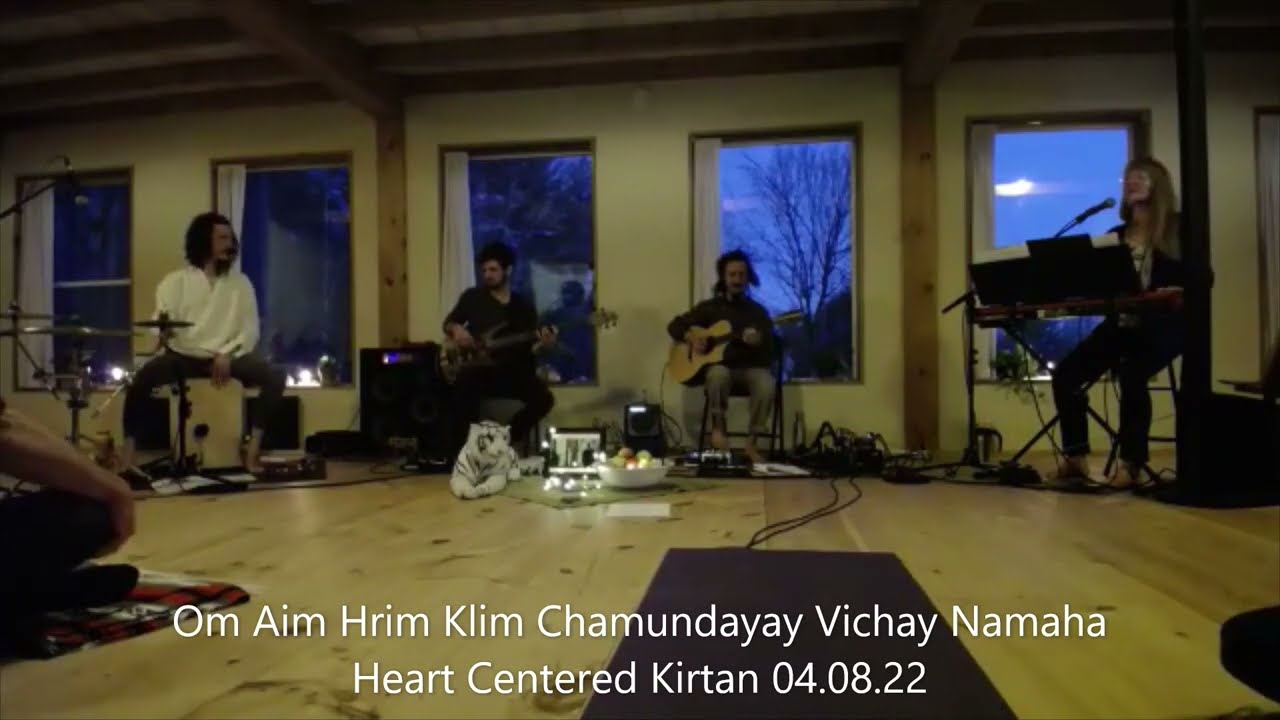
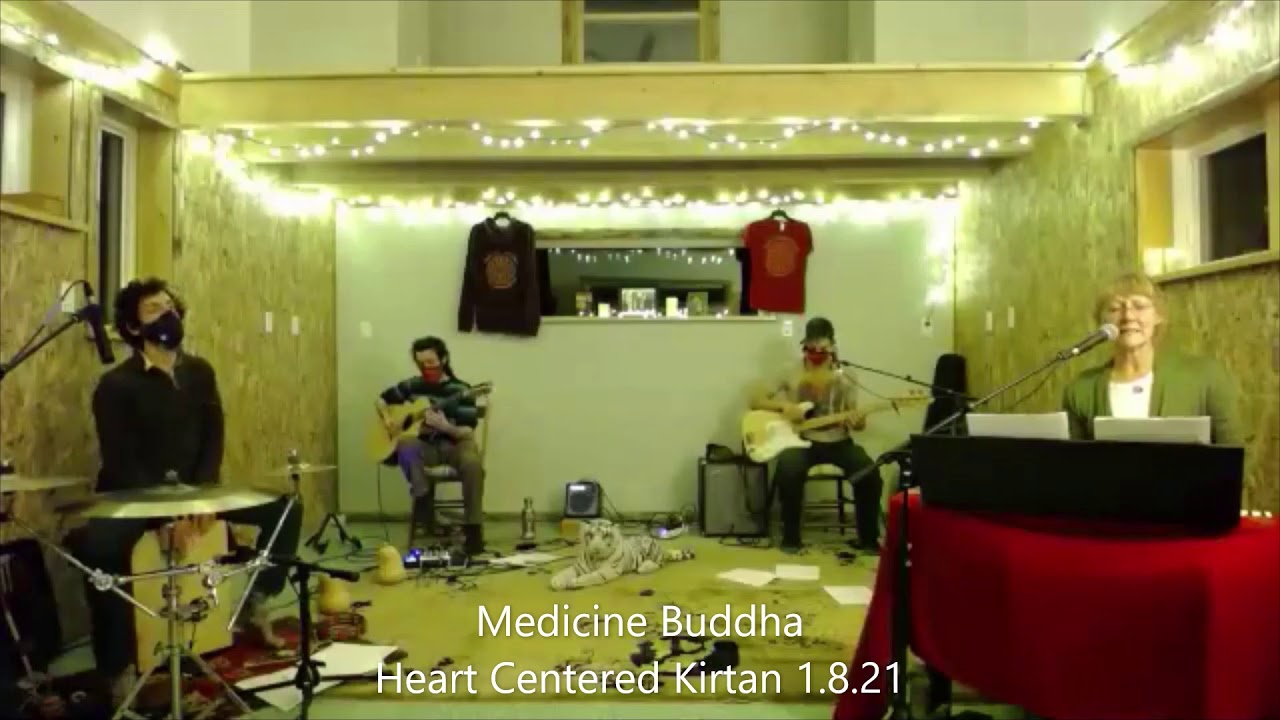
This is a live kirtan performance centered on the chant "Om Namo Bhagavate," a Sanskrit invocation meaning "I bow to the Supreme Lord." Led by Libby Volckening (keys and vocals), Ezra Landis (guitar), Thomas Matherly (bass and vocals), and Owen Landis (percussion), the session represents heart-centered kirtan—a devotional practice rooted in call-and-response chanting that creates a meditative, communal experience. Recorded in June 2021 at Chez North Studio, this live performance demonstrates how modern kirtan ensembles use layered instrumentation to deepen the meditative and devotional dimensions of traditional Sanskrit chanting.

Leer · 7 secciones

What Is Om Namo Bhagavate and Why Does It Matter?

The chant "Om Namo Bhagavate" carries deep roots in Hindu and yogic traditions. "Om" is the primordial sound of creation in Vedantic philosophy, representing ultimate reality or Brahman. "Namo" means "I bow" or "I honor," while "Bhagavate" refers to the Supreme Lord or Divine Reality. Together, the phrase expresses reverence and surrender to a transcendent consciousness. This particular mantra appears in various Hindu scriptures and is often used in devotional practice to cultivate a state of inner listening and heart opening.

Heart-centered kirtan differs from other mantra practices in that it emphasizes emotional resonance and felt experience alongside the sonic and spiritual dimensions of the chant. Rather than treating the words as abstract philosophy, practitioners in this tradition work to embody the devotional sentiment—the actual felt sense of surrender, humility, and connection that the words suggest. The repetition creates a feedback loop: the voice carries intention, the body responds, and the group's collective energy amplifies the effect.

How Does Live Kirtan Create a Meditative Experience?

The instrumentation used in this performance—keys, guitar, bass, and percussion—serves specific functions in the kirtan container. The keys and guitar often establish harmonic foundations and provide melodic frameworks that guide singers through call-and-response sections. The bass anchors the sonic space with grounding low frequencies, while percussion marks rhythm and helps synchronize the group. This ensemble approach transforms what could be a simple group chant into a rich, multi-textured soundscape.

Live kirtan also differs fundamentally from recorded music consumption. In a live session, musicians respond to the group's energy, adjust tempo based on collective breath, and sometimes extend chants or add instrumental passages that arise organically. This responsiveness creates what participants often describe as "flow"—a state where individual singers and musicians transcend their separate identities and contribute to a unified field of sound and intention. The recording of this session captures that aliveness in a way that demonstrates how presence and attunement shape the experience.

What Role Does Devotion Play in Sanskrit Chanting?

Devotion (bhakti in Sanskrit) is the animating principle of kirtan practice. Unlike meditation practices that emphasize witnessing or observing mental states, kirtan actively cultivates emotional connection to the divine. By repeating a sacred phrase with intention and feeling, practitioners engage their hearts—not in a sentimental way, but in the sense of accessing deeper layers of vulnerability, trust, and openness. The mantra becomes a vehicle for this emotional and spiritual movement.

The call-and-response structure of kirtan also serves a devotional function. When one voice or vocalist calls out a phrase and others respond, there's an implied relationship—a dialogue with the divine. The soloist invokes or questions, and the group's response affirms, echoes, and deepens that invocation. This mirroring effect strengthens the sense of being part of something larger than oneself, which is central to how bhakti practice functions.

How Is Heart-Centered Kirtan Different from Other Mantra Practices?

Heart-centered kirtan places particular emphasis on feeling and intuition over precise technical execution. While some mantra traditions focus on correct pronunciation, specific breath patterns, or numerical counts, heart-centered kirtan invites practitioners to follow their direct bodily sense of what the chant needs. This might mean slowing down to match the depth of feeling that arises, speeding up to meet rising energy, or adding a vocal quality—a crack, a whisper, a shout—that expresses authentic emotion rather than maintaining a "perfect" tone.

The live ensemble format amplifies this permission to be authentic. In a group setting, singers hear diverse vocal qualities, tempos, and intensities. This acceptance of natural human variation in the chant—rather than requiring uniformity—can paradoxically create greater cohesion. The group is unified not by sounding identical but by sharing a common intention and rhythm. The resulting sound is organic, breathing, and alive in ways that highly polished or standardized kirtan can sometimes miss.

What Instruments Are Used in Modern Kirtan, and Why?

Traditional kirtan in India often features harmonium, tabla, and sometimes a stringed instrument like the sarangi or sarod. Modern Western kirtan ensembles like the one featured in this recording adapt that foundation to include guitars, keyboards, bass, and various percussion instruments. This adaptation reflects several practical and artistic choices.

Electric keyboards and synthesizers offer harmonic flexibility and can recreate some of the warm, drone-like qualities of the traditional harmonium. Acoustic or electric guitars provide both melody and harmonic support. Bass instruments—whether acoustic or electric—ground the sound and help large groups feel more cohesive by providing a steady low-frequency anchor. Percussion beyond tabla might include djembes, frame drums, shakers, or brushes on cymbals—instruments that offer varied timbral colors and cultural accessibility.

The choice of instrumentation also shapes the emotional tenor of the experience. A sparse arrangement with just voice and one instrument creates intimacy and space for silence. A fuller ensemble like the one in this performance generates momentum, richness, and a more immersive sonic environment. Neither approach is inherently "better"—they serve different purposes and invite different depths of experience.

How Do Group Dynamics Influence the Kirtan Experience?

Kirtan is fundamentally a collective practice. Even though this particular session was recorded in a studio rather than in front of a large audience, the presence of multiple musicians creates the essential dynamic of shared intention and mutual responsiveness. When singers practice together over time, they develop an intuitive sense of how to listen, breathe, and move together. This attunement allows spontaneous variations and extensions to emerge without disrupting the coherence of the whole.

The size and composition of a kirtan group affects the experience. A small ensemble can explore subtlety and nuance; a large group generates powerful collective energy. The mix of experienced and newer practitioners, different vocal ranges, and various backgrounds all contribute to the texture. In some cases, professional musicians lead and support newer participants; in other cases, everyone shares equal responsibility for holding the space.

Studio recording adds another layer: the performers are aware they're creating a document that others will listen to. This can inspire both care and authenticity—musicians may rehearse to ensure quality while also aiming to maintain the spontaneity and presence that makes live kirtan meaningful. The resulting recording serves practitioners who couldn't attend the original session, extending the reach of the practice beyond the room where it occurred.

Where to Go From Here

If you're interested in exploring kirtan practice directly, seek out local kirtan circles, yoga studios, or spiritual communities that host regular sessions. Many are hybrid—combining in-person and online options. Listen to recordings from various kirtan musicians to experience different styles and instrumentations; the variations in approach reveal the breadth of the tradition. If you sing or play an instrument, consider participating actively rather than only listening; the embodied experience of generating the sound, feeling the vibration in your own body, and sensing the group's collective resonance is distinct from passive consumption.

For those drawn to the spiritual dimension, explore the meaning and context of the specific mantras you're chanting. Understanding "Om Namo Bhagavate" as an expression of reverence and surrender can deepen your relationship to the words and enhance the devotional quality of your practice. Many kirtan teachers offer educational sessions or writings that explain the Sanskrit, the philosophy, and the practical benefits of consistent practice.

Consider also how kirtan might complement your existing spiritual or meditation practice. Some practitioners use kirtan to cultivate emotional opening before entering into silent meditation; others see kirtan as a complete practice in itself. Experimentation and personal reflection will reveal what resonates most authentically for you.
Comments

Loading the conversation…

Owen & Ezra Landis
ArtistOwen & Ezra Landis

Owen and Ezra Landis are twin-brother musicians and workshop facilitators known for blending folk, ambient, and world music with storytelling and spiritual development. They lead w…

Ver perfilSitio web
Explorar temas
KirtanHeart-centered-chantingOm-namo-bhagavateDevotional-practiceSanskrit-mantra

¿Tienes Preguntas?

Preguntas Frecuentes

Om Namo Bhagavate translates to "I bow to the Supreme Lord." Om is the primordial sound of creation, Namo means "I bow," and Bhagavate refers to divine reality. The phrase expresses reverence and surrender to transcendent consciousness and is used in Hindu and yogic traditions to cultivate inner listening and spiritual connection.
Kirtan is an active devotional practice involving chanting, call-and-response, and often music, designed to cultivate emotional connection and open the heart. Meditation typically emphasizes witnessing or observing the mind. While they serve different functions, many practitioners use both—sometimes kirtan to open the heart before entering silent meditation.
Group kirtan creates collective energy, mutual responsiveness, and a shared field of intention that amplifies the experience beyond what individual practice typically generates. The synchronization of breath and voice, combined with diverse vocal qualities and instrumental support, produces a richness and sense of connection that solo practice, while valuable, cannot replicate.
Modern kirtan often uses keyboards or electric harmoniums, acoustic or electric guitars, bass, and various percussion instruments like djembes or frame drums. These adapt the traditional Indian setup of harmonium and tabla to Western contexts while maintaining the harmonic, rhythmic, and grounding functions of the original ensemble.
Heart-centered kirtan is devotional but not exclusively religious in the doctrinal sense. It emphasizes feeling, intuition, and emotional opening rather than belief in specific dogmas. People from various faith backgrounds and secular practitioners participate in kirtan, finding value in the sonic, meditative, and community dimensions of the practice.
Yes. Kirtan is designed for group participation and welcomes all vocal abilities. There's no requirement for perfect pitch, training, or experience; the practice emphasizes authenticity and heart-centered presence over technical skill. Most kirtan teachers explicitly welcome beginners and newcomers.

Seguir leyendo

More from Owen

Ver Todo
Chamunda Mantra: Destructive Power of the Divine Feminine
Inspire

Chamunda Mantra: Destructive Power of the Divine Feminine

The Chamunda mantra invokes a fierce aspect of the Divine Feminine that destroys negative forces. This practice builds confidence, inner str…

1 min read
Medicine Buddha Mantra for Healing and Spiritual Freedom
Inspire

Medicine Buddha Mantra for Healing and Spiritual Freedom

Heart-centered kirtan performance of the Medicine Buddha mantra, designed to support healing from physical, emotional, and spiritual pain th…

1 min read
Bhaja Mana Radha Govinda Kirtan: Meaning and Practice
Inspire

Bhaja Mana Radha Govinda Kirtan: Meaning and Practice

A seven-minute London kirtan of the maha-mantra Bhaja Mana Radha Govinda, unpacked: its meaning, its call-and-response form, and the New Yor…

1 min read
Deva Premal & Miten Return to Sydney for 35-Year Milestone
Inspire

Deva Premal & Miten Return to Sydney for 35-Year Milestone

Deva Premal and Miten announce a rare Sydney performance at the Enmore Theatre, celebrating 35 years of mantra, music, and meditation.…

1 min read

Sigue explorando

Continúa tu camino

Más sabiduría y encuentros de todo el directorio de BrightStar.

Más artículos

Recorre la biblioteca completa de enseñanzas, entrevistas y guías.

Ver todos los artículos →

Maestros y artistas

Explora los linajes, músicos y guías del mundo consciente.

Explorar artistas →

Encuentra un evento

Kirtan, retiros, baños de sonido, breathwork, festivales — muy pronto.

Ver eventos →