BrightStar

Ver Todos los Events

Descubre encuentros conscientes

events

Yoga
Meditation
Breathwork
Qigong
Tai Chi
Sacred Music
World Music
Medicine Music
Sound Healing
Ecstatic Dance
Destinos Populares
BaliSedonaLos AngelesCosta RicaNew YorkSan FranciscoAustinMiamiJoshua TreeTulum
Ver Todas las CategoríasVer Todos los Destinos

Explorar Todas las Características

Herramientas poderosas para hacer crecer tus eventos

Características de la Plataforma

Precios Dinámicos Inteligentes
Categorías de Entradas
Asientos Asignados
Recuperación de Carritos
Recuperación de Visitantes
Donaciones y Escala Móvil
Motor de Afiliados
Escáner de Entradas
Códigos de Cupón
Preguntas Personalizadas
Compartir Entradas
Ventas Adicionales
Análisis e Informes
Secuencias de Email
Lista de Espera / Notificar / Recordar
Personas y Lugares
Artists & TeachersEvent OrganizersVenues & StudiosKnowledge BaseGlossaryInspiration
Ver Todas las CaracterísticasSobre Nosotros
PreciosBlog
Language
Saved events
Ver Todos los Eventos

events

YogaMeditationBreathworkQigongTai ChiSacred MusicWorld MusicMedicine Music

Destinos Populares

BaliSedonaLos AngelesCosta RicaNew YorkSan Francisco

Personas y Lugares

Artists & TeachersEvent OrganizersVenues & StudiosKnowledge BaseGlossaryInspiration

Características de la Plataforma

Precios Dinámicos InteligentesCategorías de EntradasAsientos AsignadosRecuperación de CarritosRecuperación de VisitantesDonaciones y Escala MóvilMotor de AfiliadosEscáner de EntradasCódigos de CupónPreguntas PersonalizadasCompartir EntradasVentas AdicionalesAnálisis e InformesSecuencias de EmailLista de Espera / Notificar / Recordar
Ver Todas las CaracterísticasSobre Nosotros
PreciosBlog
Iniciar sesiónBuscadoresCreadores
  • Ver Todos los Eventos
  • Para Buscadores
  • Yoga
  • Meditación
  • Respiración consciente
  • Qigong
  • Tai chi
  • Música sagrada
  • Música del mundo
  • Música medicina
  • Sanación con sonido
  • Danza extática
  • Retiros
  • Talleres
  • Todas las Categorías →
  • Bali
  • Sedona
  • Los Angeles
  • Costa Rica
  • Tulum
  • Byron Bay
  • San Francisco
  • Austin
  • New York
  • San Diego
  • Denver
  • Seattle
  • Portland
  • Miami
  • Todas las Ciudades →
  • Join the Movement
  • Why we list
  • Sell Globally
  • Para Creadores
  • Para equipos
  • Para Escritores
  • Para Maestros
  • Para Artistas de Kirtan
  • Para Estudios
  • Para Festivales
  • Para Centros de Retiros
  • Para Organizaciones Sin Fines de Lucro
  • Embajador de Marca
  • Entradas sin costo
  • Elevate
  • Amplify
  • Red de +500K Compradores
  • Recuperación de Carritos
  • Precios Dinámicos Inteligentes
  • Categorías de Entradas
  • Eventos Recurrentes
  • Asientos Asignados
  • Motor de Afiliados
  • Lista de Espera / Notificar
  • Escáner de Entradas
  • Widget Embebido
  • Sindicación de eventos
  • Centro de mensajes
  • Integraciones
  • Reportes
  • Todas las Características →
  • Acerca de
  • El ecosistema
  • Blog
  • Glosario
  • Inspiración
  • Centro de Ayuda
  • Contacto
  • Documentación API
  • Recursos de Marca
  • Carreras
  • Prensa
  • Términos de Servicio
  • Política de Privacidad

Eventos

  • Ver Todos los Eventos
  • Para Buscadores
  • Yoga
  • Meditación
  • Respiración consciente
  • Qigong
  • Tai chi
  • Música sagrada
  • Música del mundo
  • Música medicina
  • Sanación con sonido
  • Danza extática
  • Retiros
  • Talleres
  • Todas las Categorías →

Destinos

  • Bali
  • Sedona
  • Los Angeles
  • Costa Rica
  • Tulum
  • Byron Bay
  • San Francisco
  • Austin
  • New York
  • San Diego
  • Denver
  • Seattle
  • Portland
  • Miami
  • Todas las Ciudades →

Para Creadores

  • Join the Movement
  • Why we list
  • Sell Globally
  • Para Creadores
  • Para equipos
  • Para Escritores
  • Para Maestros
  • Para Artistas de Kirtan
  • Para Estudios
  • Para Festivales
  • Para Centros de Retiros
  • Para Organizaciones Sin Fines de Lucro
  • Embajador de Marca
  • Entradas sin costo
  • Elevate
  • Amplify

Características

  • Red de +500K Compradores
  • Recuperación de Carritos
  • Precios Dinámicos Inteligentes
  • Categorías de Entradas
  • Eventos Recurrentes
  • Asientos Asignados
  • Motor de Afiliados
  • Lista de Espera / Notificar
  • Escáner de Entradas
  • Widget Embebido
  • Sindicación de eventos
  • Centro de mensajes
  • Integraciones
  • Reportes
  • Todas las Características →

Empresa

  • Acerca de
  • El ecosistema
  • Blog
  • Glosario
  • Inspiración
  • Centro de Ayuda
  • Contacto
  • Documentación API
  • Recursos de Marca
  • Carreras
  • Prensa
  • Términos de Servicio
  • Política de Privacidad
BrightStar
Descarga la app
Descárgalo en elApp StoreDisponible enGoogle Play
© 2026 BrightStar. Todos los derechos reservados.
Inspiration

You Are the Buddha: Mindfulness as Living Continuation

PV
Plum Village App
Nov 11, 2026
8 min de lectura

De Plum Village App

Ver · 7

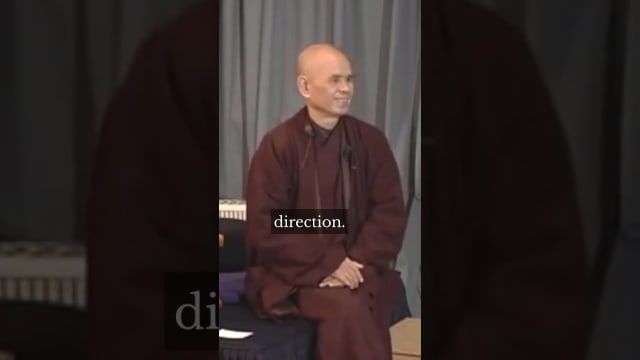
Thich Nhat Hanh, the teacher behind the Plum Village community, makes a claim in a short excerpt from a talk he gave on December 24, 2012 that sounds devotional on first hearing and turns out to be quite practical on the second. The claim is that each of us, the moment we generate mindfulness and concentration, is the Buddha, or more precisely, a continuation of him. The Buddha is not locked in a statue or a sutra. He is present wherever mindfulness, concentration, and insight are alive, whether that is in a person walking across a field, someone scrolling a phone with attention, or a river, or the sun that makes life on earth possible. The four-and-a-half-minute film built from this teaching, released by the Plum Village App, is brief, but it contains a complete argument about where the sacred actually lives.

Leer · 6 secciones

What does it mean to be a "continuation" of the Buddha?

The word that carries the teaching is "continuation." Thich Nhat Hanh does not say that we are the Buddha in the sense of replacing him. He says that when we practice, we extend something that already exists. The method he describes is simple in its language and demanding in its execution: "We can generate energy of mindfulness and concentration and joy and peace every moment with every breath with every step" (0:05).

Notice the list. Mindfulness, concentration, joy, peace. These are not abstractions to be believed in. They are energies that can be produced, the way a musician produces tone by how they touch the instrument. A guitarist does not get a warm tone from a theory of warmth; the tone comes from the hand, the attack, the amp set just so. Thich Nhat Hanh treats the Buddha's qualities the same way. They arrive through the body and the breath, and they are available in ordinary time.

Later in the excerpt the list widens to "mindfulness, concentration and insight" and, in the same breath, "anyone who has a sense of peace, compassion" (2:03 and onward). The move is democratic on purpose. The qualities are not reserved for monks or for those who have memorized the right texts. Anyone who is "inhabited by the energy" of these qualities participates in the Buddha's continuing life. The teaching is less about who you are than about what is alive in you right now.

Why does walking meditation matter so much in this teaching?

The excerpt returns again and again to walking. "Because the way we walk shows that the Buddha is here" (0:36), he says, and then he gives the mechanism: "when you are walking, you touch the earth. You generate the energy of mindfulness and concentration. You feel calm. You feel peaceful. You feel a sense of fulfillment" (1:08 to 1:31).

Walking is the chosen ground for a reason. It is repetitive, bodily, and never fully urgent. You cannot hurry a step without losing the feeling of it, and the attention that stays with the foot on the ground is the same attention that makes a breath feel like a breath rather than a task. Thich Nhat Hanh's phrase "you touch the earth" carries real weight here. The practice is not walking toward a destination; it is a way of arriving in the place you already stand.

The fruit he names is a particular kind of settledness: "You feel at home. You don't feel that you need anything else. You don't need to go around and around anymore" (1:44 to 1:57). That last line is worth sitting with. Much of restless life is a circling, a rehearsing of past arguments and future worries. The teaching offers a way out that does not require solving those circles first. You step, you breathe, and the circling loses its grip for a while. He calls this being "home," and he insists it is available in the present moment: "It is possible to be a Buddha in the here and the now" (1:37).

How do you recognize the Buddha in modern life?

One of the most striking lines in the excerpt is also the most casual. "He can wear jeans. He might be using a telephone with mindfulness" (0:52 to 1:01). The Buddha, in this framing, is not a figure from a painting, dressed in robes, fixed in a single era. He is the quality of attention, and that quality can appear in a denim-clad person checking a message.

The instruction that follows is the real work: "You have to recognize him in his many new forms" (1:01). Recognition is a practice in itself. It asks you to look for the sacred where you would not expect it, including in the most ordinary objects of your day. For someone who grew up with the image of the Buddha as remote, this is a reorientation. The phone is not the enemy of mindfulness by default. The question is whether attention is present while the hand moves.

This is also where the teaching becomes uncomfortable in a useful way. If the Buddha can be found in jeans and a telephone, then the spiritual life is not a separate zone you enter on weekends. It is the same ground you walk on at the grocery store.

Why shouldn't we be attached to one form of the Buddha?

Thich Nhat Hanh draws a clear conclusion from this: "So if we have that insight we will not be attached to a particular form of the Buddha" (2:39 to 2:47). This is the heart of the teaching, and it is a warning as much as an invitation. When we fix the Buddha in one image, one country, one posture, or one lineage's way of looking, we risk missing him everywhere else.

He follows with a series of images that stretch the idea almost playfully: "The Buddha can be a river. The Buddha can house many living creatures" (2:47 to 2:57). A river is never the same water twice, and yet it is recognizably itself. A place that houses many living creatures is a kind of home, full of different lives. Neither image asks you to give up your own form. They ask you to see that the form is a vehicle, not the thing itself.

Thich Nhat Hanh states the point plainly elsewhere in the excerpt: "There's no doubt that after dying the Buddha continues inside of us and that is enlightenment, that is mindfulness that is inside" (2:19 to 2:31). The continuation does not require a single body or a single lifetime. It requires only that mindfulness is inside someone.

What does the sun have to do with the Buddha?

The teaching then widens to the sky. "It is possible to look at the star and conceive the star as a Buddha. To look at our star, the sun" (3:09). He calls it "real Buddha, a source of infinite light, a source of infinite lives" (3:14 to 3:17). The reasoning is grounded in plain biology: "without the sun there's no life on earth and all of us are children of the sun" (3:17 to 3:30).

This is a striking move, and it is worth noticing how it works. Thich Nhat Hanh is not making a claim about astronomy. He is using the sun as a teacher of the same thing the practice cultivates: a source that gives life without asking for credit, that keeps giving, and that every living thing depends on. Seeing the sun as Buddha is a way of seeing generosity and sustenance as sacred, and of seeing ourselves as born of that same source.

The excerpt closes with a line the transcript renders as "father son": "Without father son there's no you. You are a continuation of father son" (3:43 to 3:56). In context the phrase points to the sun, the "Father Sun" that the earlier lines build toward. The point is continuity. You are not separate from the source that made you. "Father son is not up there only," he says. "The son is inside of us."

"We are the Buddha. We are the continuation of the Buddha." (Thich Nhat Hanh, talk recorded December 24, 2012)

Where to go from here

The teaching asks for very little to begin and a great deal to sustain. A few practical steps follow directly from the excerpt:

  • Take one walk this week as a meditation rather than a commute. Feel the foot meet the ground, as the teaching describes, and notice whether calm or fulfillment begins to arrive.
  • Pick one ordinary object you use daily, such as a phone or a cup, and practice recognizing the Buddha in that form, the way he invites us to in "his many new forms."
  • Notice when you are attached to a single image of what spiritual life must look like, and ask what else might carry the same qualities of mindfulness and peace.
  • Step outside and look at the sun for a moment, and consider the line "all of us are children of the sun" as an honest description of your dependence on the world.

The film itself is one of many short pieces in the free collection on the Plum Village App, and the description notes an open invitation to help caption and translate it. For readers who want the full context of the teaching, the complete talk from December 24, 2012 is the place to hear Thich Nhat Hanh's voice in its original length. The excerpt is short, but the idea it carries is large: the Buddha is not behind us in history. He is in the step we are taking now.
Comments

Loading the conversation…

Transcript

[0:05] We can generate energy of mindfulness

[0:09] and concentration and joy and peace

[0:14] every moment

[0:17] with every breath

[0:20] with every step.

[0:24] And uh if uh each of us can generate

[0:28] mindfulness and concentration,

[0:30] we are the Buddha.

[0:32] We are the continuation of the Buddha.

[0:36] Because the way we walk

[0:40] shows that the Buddha is here.

[0:44] The Buddha in the present moment, you

[0:46] have to recognize him in many forms.

[0:52] He can wear jeans.

[0:56] He might be using a telephone with

[0:58] mindfulness.

[1:01] You have to recognize him in his many

[1:03] new forms.

[1:08] He is you because you are a continuation

[1:11] of the Buddha.

[1:14] Because when you are walking,

[1:16] you touch the earth.

[1:19] You generate the energy of mindfulness

[1:20] and concentration.

[1:23] You feel calm. You feel peaceful.

[1:27] You feel a sense of fulfillment.

[1:31] And you are the continuation of the

[1:33] Buddha.

[1:37] It is possible to be a Buddha in the

[1:41] here and the now.

[1:44] You feel at home. You don't feel that

[1:46] you need anything else.

[1:50] You don't need to go around and around

[1:53] anymore.

[1:56] You have a drive.

[1:59] You feel you are home.

[2:03] Anyone who is inhabited by the energy of

[2:06] mindfulness, concentration and insight,

[2:11] anyone who has a sense of peace,

[2:13] compassion

[2:15] is a continuation of the Buddha,

[2:19] the Buddha is available. There's no

[2:21] doubt that uh after dying the Buddha

[2:25] continue

[2:27] inside of us

[2:31] and that is enlightenment

[2:34] that is mindfulness that is inside.

[2:39] So if we have that insight we will not

[2:41] be attached to a particular form of the

[2:45] Buddha.

[2:47] The Buddha can be

[2:50] a river.

[2:54] The Buddha can house many living

[2:57] creature

[2:59] and it is possible to look at the star

[3:05] and conceive the star as a Buddha

[3:09] to look at our star, the sun.

[3:14] That is real Buddha,

[3:17] a source of infinite light.

[3:19] a source of infinite lives

[3:23] because without the sun there's no life

[3:26] on earth

[3:28] and all of us

[3:30] are children of the sun.

[3:34] When you practice walking meditation you

[3:38] may allow yourself to be embraced by

[3:40] father son.

[3:43] Father son is not up there only

[3:47] the son is inside of us.

[3:53] Without father son there's no you.

[3:56] You are a continuation

[3:59] of father son.

PV
Artist
Plum Village App

Watch more from Plum Village App on YouTube.

Sitio web
Explorar temas
MindfulnessThich-nhat-hanhWalking-meditationBuddha-naturePlum-village

¿Tienes Preguntas?

Preguntas Frecuentes

In this excerpt from a talk recorded December 24, 2012, Thich Nhat Hanh says that anyone who generates mindfulness and concentration is a continuation of the Buddha. He is describing a living presence that appears through practice, not a claim that a person replaces the historical Buddha.
In the excerpt, walking meditation is described as touching the earth with each step while generating mindfulness and concentration. He says this produces calm, peace, and a sense of fulfillment, and that it reveals the Buddha is present. The practice is about arriving in the place you already stand rather than hurrying toward a destination.
Thich Nhat Hanh says the Buddha can wear jeans or use a telephone with mindfulness, so you must recognize him in many new forms. The key is whether attention is present in the act, not whether the setting looks traditionally spiritual.
He argues that if we have the insight of mindfulness, we will not cling to a particular form of the Buddha. He illustrates this with the Buddha as a river, a house for many living creatures, and even a star, so that the sacred is recognized wherever it appears.
Thich Nhat Hanh calls the sun 'real Buddha, a source of infinite light, a source of infinite lives,' because without it there is no life on earth. He says all of us are children of the sun, linking its generosity and sustenance to the qualities the practice cultivates.
The transcript renders the phrase as 'father son,' but in context it refers to the sun. Thich Nhat Hanh says the sun is not only up in the sky, that we are a continuation of it, and that without it there is no 'you.'

Seguir leyendo

More from Plum Village App

Ver Todo
Why Bowing to a Buddha Statue Points Inside You
Inspire

Why Bowing to a Buddha Statue Points Inside You

Bowing to a Buddha statue does not place the Buddha in that direction, Thich Nhat Hanh teaches. The Buddha is the capacity to understand and…

2 min read
Embracing Anger Like a Baby: A Mindfulness Practice Guide
Inspire

Embracing Anger Like a Baby: A Mindfulness Practice Guide

A 33-minute mindfulness film built from a 2004 Thich Nhat Hanh talk on anger. It moves from breath to body to feeling, and its central image…

8 min read
Rains Retreat Teaching: Transforming the Discriminating Mind
Inspire

Rains Retreat Teaching: Transforming the Discriminating Mind

Sister Hoi Nghiem opens the 2026 Rains Retreat at Plum Village with a teaching on the five aggregates, right diligence, and the mind of disc…

9 min read
How Thay's Legacy Continues Through Us
Inspire

How Thay's Legacy Continues Through Us

On Continuation Day, Plum Village invites us to embody Thay's teachings by asking: what practice or way of seeing did you receive that now c…

4 min read

Sigue explorando

Continúa tu camino

Más sabiduría y encuentros de todo el directorio de BrightStar.

Más artículos

Recorre la biblioteca completa de enseñanzas, entrevistas y guías.

Ver todos los artículos →

Maestros y artistas

Explora los linajes, músicos y guías del mundo consciente.

Explorar artistas →

Encuentra un evento

Kirtan, retiros, baños de sonido, breathwork, festivales — muy pronto.

Ver eventos →