BrightStar

Ver Todos los Events

Descubre encuentros conscientes

events

Yoga
Meditation
Breathwork
Qigong
Tai Chi
Sacred Music
World Music
Medicine Music
Sound Healing
Ecstatic Dance
Destinos Populares
BaliSedonaLos AngelesCosta RicaNew YorkSan FranciscoAustinMiamiJoshua TreeTulum
Ver Todas las CategoríasVer Todos los Destinos

Explorar Todas las Características

Herramientas poderosas para hacer crecer tus eventos

Características de la Plataforma

Precios Dinámicos Inteligentes
Categorías de Entradas
Asientos Asignados
Recuperación de Carritos
Recuperación de Visitantes
Donaciones y Escala Móvil
Motor de Afiliados
Escáner de Entradas
Códigos de Cupón
Preguntas Personalizadas
Compartir Entradas
Ventas Adicionales
Análisis e Informes
Secuencias de Email
Lista de Espera / Notificar / Recordar
Personas y Lugares
Artists & TeachersEvent OrganizersVenues & StudiosKnowledge BaseGlossaryInspiration
Ver Todas las CaracterísticasSobre Nosotros
PreciosBlog
Language
Saved events
Ver Todos los Eventos

events

YogaMeditationBreathworkQigongTai ChiSacred MusicWorld MusicMedicine Music

Destinos Populares

BaliSedonaLos AngelesCosta RicaNew YorkSan Francisco

Personas y Lugares

Artists & TeachersEvent OrganizersVenues & StudiosKnowledge BaseGlossaryInspiration

Características de la Plataforma

Precios Dinámicos InteligentesCategorías de EntradasAsientos AsignadosRecuperación de CarritosRecuperación de VisitantesDonaciones y Escala MóvilMotor de AfiliadosEscáner de EntradasCódigos de CupónPreguntas PersonalizadasCompartir EntradasVentas AdicionalesAnálisis e InformesSecuencias de EmailLista de Espera / Notificar / Recordar
Ver Todas las CaracterísticasSobre Nosotros
PreciosBlog
Iniciar sesiónBuscadoresCreadores
  • Ver Todos los Eventos
  • Para Buscadores
  • Yoga
  • Meditación
  • Respiración consciente
  • Qigong
  • Tai chi
  • Música sagrada
  • Música del mundo
  • Música medicina
  • Sanación con sonido
  • Danza extática
  • Retiros
  • Talleres
  • Todas las Categorías →
  • Bali
  • Sedona
  • Los Angeles
  • Costa Rica
  • Tulum
  • Byron Bay
  • San Francisco
  • Austin
  • New York
  • San Diego
  • Denver
  • Seattle
  • Portland
  • Miami
  • Todas las Ciudades →
  • Join the Movement
  • Why we list
  • Sell Globally
  • Para Creadores
  • Para equipos
  • Para Escritores
  • Para Maestros
  • Para Artistas de Kirtan
  • Para Estudios
  • Para Festivales
  • Para Centros de Retiros
  • Para Organizaciones Sin Fines de Lucro
  • Embajador de Marca
  • Entradas sin costo
  • Elevate
  • Amplify
  • Red de +500K Compradores
  • Recuperación de Carritos
  • Precios Dinámicos Inteligentes
  • Categorías de Entradas
  • Eventos Recurrentes
  • Asientos Asignados
  • Motor de Afiliados
  • Lista de Espera / Notificar
  • Escáner de Entradas
  • Widget Embebido
  • Sindicación de eventos
  • Centro de mensajes
  • Integraciones
  • Reportes
  • Todas las Características →
  • Acerca de
  • El ecosistema
  • Blog
  • Glosario
  • Inspiración
  • Centro de Ayuda
  • Contacto
  • Documentación API
  • Recursos de Marca
  • Carreras
  • Prensa
  • Términos de Servicio
  • Política de Privacidad

Eventos

  • Ver Todos los Eventos
  • Para Buscadores
  • Yoga
  • Meditación
  • Respiración consciente
  • Qigong
  • Tai chi
  • Música sagrada
  • Música del mundo
  • Música medicina
  • Sanación con sonido
  • Danza extática
  • Retiros
  • Talleres
  • Todas las Categorías →

Destinos

  • Bali
  • Sedona
  • Los Angeles
  • Costa Rica
  • Tulum
  • Byron Bay
  • San Francisco
  • Austin
  • New York
  • San Diego
  • Denver
  • Seattle
  • Portland
  • Miami
  • Todas las Ciudades →

Para Creadores

  • Join the Movement
  • Why we list
  • Sell Globally
  • Para Creadores
  • Para equipos
  • Para Escritores
  • Para Maestros
  • Para Artistas de Kirtan
  • Para Estudios
  • Para Festivales
  • Para Centros de Retiros
  • Para Organizaciones Sin Fines de Lucro
  • Embajador de Marca
  • Entradas sin costo
  • Elevate
  • Amplify

Características

  • Red de +500K Compradores
  • Recuperación de Carritos
  • Precios Dinámicos Inteligentes
  • Categorías de Entradas
  • Eventos Recurrentes
  • Asientos Asignados
  • Motor de Afiliados
  • Lista de Espera / Notificar
  • Escáner de Entradas
  • Widget Embebido
  • Sindicación de eventos
  • Centro de mensajes
  • Integraciones
  • Reportes
  • Todas las Características →

Empresa

  • Acerca de
  • El ecosistema
  • Blog
  • Glosario
  • Inspiración
  • Centro de Ayuda
  • Contacto
  • Documentación API
  • Recursos de Marca
  • Carreras
  • Prensa
  • Términos de Servicio
  • Política de Privacidad
BrightStar
Descarga la app
Descárgalo en elApp StoreDisponible enGoogle Play
© 2026 BrightStar. Todos los derechos reservados.
Inspiration

Why Human Perception Was Built for Survival, Not Truth

Rupert Spira
Rupert Spira
Oct 24, 2026
10 min de lectura

De Rupert Spira

Ver · 6

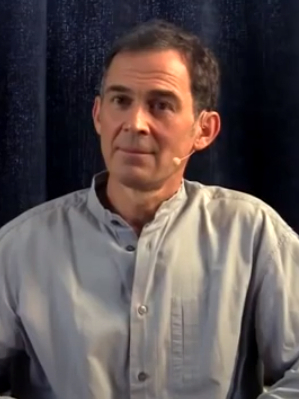
Somewhere in the middle of a 2026 retreat talk at San Damiano, a questioner pushes Rupert Spira to finish a thought he has half-dropped. The question is ambitious: some 50,000 to 70,000 years ago, modern humans seem to have made a cognitive leap, and with it came art, burial of the dead, and a new kind of culture. But the leap had a shadow. The questioner suggests that analytical and conceptual ability, the same faculty that let people hunt, organize, and migrate, also made it possible to dehumanize one another, to carve the world and its people into separate pieces. If that is true, humanity had to develop some way to remember what analysis dismembers. Spira agrees, and the answer he gives is one of the most compact statements of non-dual teaching you will hear: the faculties of thought and perception are the instruments that break up the unity of being, that made human civilization possible, and that have deepened the sense of separation with every refinement. The video, which runs just over seven minutes, is a short essay on what the evolved mind gained and what it cost.

Leer · 6 secciones

What did the cognitive leap cost us?

The questioner's framing is worth slowing down on, because Spira does not dispute it. The point is not that analysis is bad. It is that analysis came packaged with a danger. The interviewer describes becoming "analytical in a way that we weren't previous to that and conceptual in ways that we weren't previous to that," and then names the consequence directly: dehumanizing each other. The phrase he uses for the remedy is striking. Humanity, he suggests, had to "develop ways to remember what gets dismembered by that analytical ability." The wordplay on re-member and dis-member carries the whole argument. The mind is extraordinary at taking things apart. The question is what puts them back together.

Spira's answer takes the question a step further. He says the trajectory of thought and perception has been one of increasing refinement, "more and more refined over the centuries," and that this refinement "has allowed humanity to evolve with more and more complexity and to do all the incredible things that we do now." He does not describe this as a mistake. Modern culture, in his account, is an expression of the benefits of that evolution. But the bill arrives in the same breath. "The illusion of separation has become deeper and deeper as our faculties of perception have evolved."

It is worth noticing what Spira is not claiming here. He is not offering archaeological evidence for the timeline, and the questioner's account of the cognitive leap is presented as a shared premise rather than a finding Spira has verified. What Spira brings to the conversation is a philosophical reading of the same story, one in which the evolutionary narrative becomes a narrative about consciousness and what it forgets about itself.

How does thought split one reality into many?

The core claim is that the mind does not merely describe reality; it refracts it. Spira puts it plainly: "It is our faculties of thought and perception that refract and fragment the one and the unity of being and make it appear as many." The image of refraction is useful. A prism does not add colors to light. It separates light that was already present, and the spectrum it produces is real, but it is not the whole of the light. In the same way, Spira's teaching holds, thought and perception separate a single seamless being into the apparently separate objects, selves, and events that fill ordinary experience.

This is the logic beneath the phrase "illusion of separation," which recurs throughout non-dual teaching. The separation is not invented from nothing. It is produced by a particular mode of attention, one that cuts the field of experience into subjects and objects, inside and outside, self and other. The faculties that do the cutting are not defective. They are doing exactly what they evolved to do. The problem is that what they evolved to do is not the same as showing us what is.

Were the senses ever meant to tell us the truth?

This is the sharpest claim in the video, and Spira states it without hedging: "Sense perception was never evolved to give us an accurate view of reality. On the contrary, it evolved to hide the nature of reality to us so that we could survive as individuals on Earth." He is explicit about the logic. Reality as it essentially is, he says, "cannot be contained in a mind or a body." If it cannot be contained, then something has to step it down. "Perception steps reality down and makes it amenable to a finite body so that that finite body can exist."

In Spira's framing, the senses are a translation layer, and a practical one. A creature that tried to take in the totality of being directly would not last long. Perception reduces the infinite to a scale a body can manage, and that reduction is what makes survival possible. Then comes the distinction that organizes the whole talk. "Thought and perception are about survival, not about truth. So here we're about truth, not about survival."

"Sense perception was never evolved to give us an accurate view of reality. On the contrary, it evolved to hide the nature of reality to us so that we could survive as individuals on Earth."

— Rupert Spira, San Damiano retreat talk, March 2026 (3:57)

Spira also draws a consequence that shapes how a practitioner should relate to the senses. "It's only from the point of view of thought and perception that reality exists in time and space. There's no time or space out there." Time and space, in this view, are not the furniture of reality. They are the coordinates that perception uses to make reality navigable.

Is perception a window or a stained glass?

Spira reaches for poetry at the moment the argument needs an image. He quotes William Blake: "This life's dim windows of the soul / distort the heavens from pole to pole." Then he turns the metaphor on the common assumption that perception is clear. Most people, he says, naively believe their perceptions "give us a clear view of reality," like a clean windscreen. "No, they're a stained glass window. They stain the white radiance of eternity."

"No, they're a stained glass window. They stain the white radiance of eternity."

— Rupert Spira, San Damiano retreat talk, March 2026 (5:23), quoting William Blake's lines on the "dim windows of the soul"

The stained glass image does more than decorate the argument. A windscreen is transparent, and you forget it is there. Stained glass is different: it colors the light that passes through it, and the coloring is part of what you see. Spira's point is that we rarely notice the glass. We take the colored, divided world for the world itself. The practical implication is not that we should stop looking. It is that we should remember there is a pane.

Spira is careful to head off a misreading. The aim of this work, he says, is not to disrespect the senses. "We have great respect for the senses," he says, and thought and perception can themselves be used to express what the teaching points toward. What he wants is for the apparent evidence of the senses to be held lightly. "Normally thought and perception fragment distort reality," he says, which is why the practice is always "trying to penetrate through the evidence of sense perception" rather than accepting it at face value.

What does it mean to remember the unity of being?

If perception is a stained glass window, what does remembering look like? Spira answers in the same terms as the questioner's opening. "What we do here is as you say to remember, to put back together again the fragments that thought and perception have conferred on the unity of being." The retreat, in this description, is a practice of re-membering. It is not a search for a new fact about the world. It is a turning back toward something already present and already whole, which the fragmenting faculties have obscured.

"Humanity has benefited greatly from the evolution of the mind... But we've paid a terrible price, which we see all around us now. So what we are doing here is trying to remedy the price we paid for the evolution of mind."

— Rupert Spira, San Damiano retreat talk, March 2026 (6:39)

Notice the balance of the argument. Spira does not condemn intelligence, complexity, or culture. He credits them fully. The price is real, and he names it as a deepening sense of separation that shows up in the world, but the diagnosis is not that the mind is broken. It is that the mind has been asked to do a job it was never built for, the job of telling us what reality is, and it has been doing that job with a survival tool. The remedy is not to discard the tool. It is to stop mistaking it for the view.

For a reader who wants to test the idea, the useful question is the one the questioner's wording points toward. When you notice dehumanizing thought, or the feeling of being a small separate self standing against a world of other separate things, ask what kind of faculty is producing that picture. Is it the part of you that is good at survival and at dividing a complicated environment into manageable pieces? If so, Spira's view suggests the picture is not false in its own register, but it is not the whole of what you are.

Where to go from here

This talk is one short segment of a longer body of teaching. Spira's material on the illusion of separation, the nature of awareness, and the role of perception appears across his retreats, books, and recordings, and the video itself comes from an in-person retreat at San Damiano held 15 to 22 March 2026. Readers who want to go further have several options directly from Spira's own channels:

  • Upcoming in-person and online retreats, many of which can be attended by livestream, are listed at rupertspira.com/events.
  • The full video archive of teachings, guided meditations, and answers to questions is available at rupertspira.com/subscriptions.
  • Free daily meditations for pausing and rediscovering the stillness of being are offered in the Luminous Meditation app, on Apple and Android, at luminous.rupertspira.com.

The most useful starting point may be the simplest: return to the question the talk opens with. What did we gain as the mind learned to divide the world, and what did we set down along the way? Spira's answer is that we gained the ability to survive as individuals, and in doing so we came to mistake the survival picture for the truth. Holding that distinction, even briefly, is where the remedy he describes begins.

Comments

Loading the conversation…

Transcript

[0:00] You said something about human evolution

[0:03] and then you kind of dropped it almost

[0:05] seemingly on purpose. So I'm going to

[0:07] try to kick that nest again.

[0:10] I [snorts] cuz I'm fascinated with this

[0:12] question. Um we were talking this

[0:13] morning about how

[0:15] at some point 50 or 70,000 years ago it

[0:18] seems

[0:20] modern humans um took some great leap

[0:22] cognitively and were then able to

[0:25] migrate far and wide and outcompete the

[0:28] other hominids etc. And we had been

[0:31] anatomically modern for

[0:34] hundreds of thousands of years at that

[0:36] point or so.

[0:38] But something changed and around that

[0:40] same time

[0:42] we see an explosion of art and

[0:44] creativity and

[0:46] um

[0:47] the way we bury our dead and all these

[0:49] things we start to see um

[0:52] what we think of as as as our culture

[0:54] our modern culture and

[0:55] the idea that I'm interested in is that

[0:58] alongside the abilities that we gained

[1:02] that allowed us to

[1:04] to uh hunt and organize and all these

[1:07] ingenious ways there were also dangers

[1:09] that came with that.

[1:11] We

[1:12] became analytical in a way that we

[1:13] weren't previous to that and conceptual

[1:16] in ways that we weren't previous to

[1:17] that.

[1:19] And that introduces you know

[1:21] dehumanizing each other and all sorts of

[1:23] other things.

[1:24] And so we at the same time had to

[1:26] develop ways to

[1:29] um

[1:30] >> [clears throat]

[1:30] >> to remember

[1:31] what gets dismembered by that

[1:35] analytical ability. And I feel like you

[1:38] were hinting at something from a

[1:41] non-dual perspective about this

[1:44] this sort of

[1:47] I don't know what the word is this sort

[1:48] of like framework on things that we had

[1:50] to balance these capacities

[1:54] um at least in evolutionary terms. We're

[1:56] kind of here and we're in sort of

[1:58] dualistic terms here, but

[2:00] to balance certain capacities with other

[2:03] capacities to

[2:05] to remember ourselves. So, I'm curious

[2:08] what

[2:08] >> Well, I think you're right.

[2:09] It is a

[2:11] sometime over the last couple of days

[2:13] we were

[2:14] discussing this. I was suggesting that

[2:16] it it is our faculties of thought and

[2:19] perception that

[2:20] refract and fragment the one and and and

[2:26] the unity of being and make it appear

[2:29] as many um

[2:33] and that has

[2:35] as our faculties of thought and

[2:37] perception have become more and more

[2:38] refined over the centuries centuries it

[2:41] has allowed humanity to to evolve with

[2:44] more and more complexity and to to do

[2:46] all the incredible things that we do

[2:48] now, but but it's come

[2:50] at a price in some ways. The

[2:53] >> [clears throat]

[2:53] >> illusion of separation has

[2:55] has become deeper and deeper as our

[2:59] faculties of perception have evolved.

[3:01] So, humanity has benefited on the one

[3:03] hand from the evolution of the faculties

[3:07] [snorts] of thought and perception. Our

[3:08] modern culture is a is an expression of

[3:10] that of the benefits of that evolution,

[3:13] but the price we've paid is that the

[3:15] sense of separation sense of separation

[3:17] has correspondingly deepened as our

[3:20] faculties of thought and perception have

[3:22] [snorts]

[3:25] and and and so, the the dismembering

[3:28] has become more and more intense and and

[3:31] we're seeing everywhere in the world now

[3:33] the the the effect of this. So, what

[3:35] what we do here is as you say to to to

[3:38] remember to put back together again

[3:42] the fragments

[3:44] that thought and perception have

[3:47] conferred on the unity of being.

[3:50] That that's what we're doing here. We're

[3:52] we're

[3:53] we're really disregarding the apparent

[3:56] evidence of

[3:57] sense perception. Sense perception was

[4:00] never evolved to give us

[4:02] an accurate view of reality. On the

[4:05] contrary, it evolved to hide the nature

[4:07] of reality to us so that we could

[4:09] survive as individuals on Earth. It was

[4:11] never supposed to be an accurate model

[4:14] of reality. Um if if the if reality

[4:19] as it as it essentially is,

[4:22] >> [laughter]

[4:23] >> it cannot be contained in a mind or a

[4:25] body. So

[4:27] perception steps reality down and makes

[4:30] it

[4:31] um

[4:32] makes it amenable

[4:34] to a

[4:35] a finite

[4:37] body

[4:39] so that that finite body can can

[4:42] exist. And so

[4:46] thought and perception that that they um

[4:50] they're they're about survival, not

[4:51] about truth.

[4:54] So here we're about truth, not about

[4:56] survival. So that's why we continually

[4:59] override the evidence

[5:02] of sense perception. William Blake,

[5:04] "This life's dim windows of the soul."

[5:06] That's the eyes. "This life's dim

[5:07] windows of the soul distort the heavens

[5:10] from pole to pole." It's like our

[5:12] perceptions we think we we we tend

[5:14] naively in our culture most people

[5:16] believe that their perceptions give them

[5:18] a clear

[5:19] a like a clear windscreen

[5:22] >> [snorts]

[5:22] >> that give us a clear view of reality.

[5:23] No, they're a stained glass window. They

[5:25] stain the white radiance of eternity.

[5:28] Dumb reality down and just make it

[5:31] present it to us in a way that makes it

[5:33] possible for us to survive physically on

[5:35] Earth.

[5:37] But but here we're not interested in

[5:38] survival. We're interested in reality or

[5:40] truth. So that's why we're always

[5:43] um disregarding the evidence of sense

[5:47] doesn't mean that we disrespect it. We

[5:49] have great respect for the senses and

[5:50] and particularly we we use thought and

[5:52] perception

[5:53] as as as um

[5:56] to to to express

[5:59] thought and perception can be used to

[6:00] express what we what we do here.

[6:03] But um

[6:06] normally

[6:07] thought and perception fragment distort

[6:11] reality.

[6:12] So yes, what what we're doing here is is

[6:17] That that's why we we're always trying

[6:19] to penetrate through the evidence of

[6:21] sense perception.

[6:25] It's only from the point of view of

[6:27] thought and perception that reality

[6:30] exists in time and space. There's no

[6:32] time or space out there. So that's why

[6:33] we're always trying to

[6:35] go beyond the evidence of sense

[6:37] perception. So yeah, humanity has

[6:39] benefited greatly

[6:41] from the evolution of of the mind.

[6:44] But we've it's paid a terrible price.

[6:47] Which we see all around us now. So what

[6:49] we are doing to is trying to here is

[6:51] trying to

[6:52] to remedy the price we paid

[6:55] for the evolution of mind.

[6:59] >> Yeah.

[7:00] That squares with me. Thank you.

Rupert Spira
ArtistRupert Spira

British non-dual teacher and ceramic artist. His teaching, deeply influenced by Francis Lucille and the lineage of Atmananda Krishna Menon (Direct Path), is unusually clear and pre…

Ver perfilSitio web
Explorar temas
Non-dualityRupert-spiraIllusion-of-separationPerception-and-truthStained-glass-metaphor

¿Tienes Preguntas?

Preguntas Frecuentes

In Rupert Spira's account, the evolution of thought and perception brought enormous benefits, including complexity, culture, and survival, but it also deepened the sense of separation. He argues that these faculties refract and fragment the unity of being, so that reality appears as many separate things.
Spira states that sense perception was never evolved to give an accurate view of reality, but to hide its nature so that individuals could survive on Earth. He argues that reality as it essentially is cannot be contained in a mind or body, so perception reduces it to a scale a finite body can manage.
Spira quotes William Blake's line about the dim windows of the soul and says perception is not a clear windscreen but a stained glass window that colors the white radiance of eternity. The point is that we rarely notice the glass and mistake the colored, divided world for the world itself.
The illusion of separation is the sense that the one unity of being is divided into separate subjects and objects. Spira attributes it to thought and perception, which cut experience into self and other, a process that serves survival but distorts what is actually present.
No. Spira says the teaching has great respect for the senses and uses thought and perception to express what the teaching points toward. What it asks is that the apparent evidence of sense perception be held lightly rather than taken as the final picture of reality.
The interviewer in the talk uses the idea that analytical ability dismembers the world, and humanity had to develop ways to remember it. Spira agrees that the practice is to put back together the fragments that thought and perception have created out of the unity of being.

Seguir leyendo

More from Rupert Spira

Ver Todo
Does Suffering Mean Spiritual Seeking Hasn't Ended?
Inspire

Does Suffering Mean Spiritual Seeking Hasn't Ended?

Rupert Spira argues that suffering is itself a form of seeking, and that the honest response is to ask where to look. His answer is to inves…

3 min read
Why Emotional Suffering Means You Are Still Seeking
Inspire

Why Emotional Suffering Means You Are Still Seeking

Rupert Spira separates physical pain from emotional suffering, arguing suffering is itself seeking. Here is how investigating the self behin…

8 min read
Gaea's Ebb: Harp and Bansuri Riding "Cabbage" Changes
Inspire

Gaea's Ebb: Harp and Bansuri Riding "Cabbage" Changes

Harp, bansuri, voice and guitar reshape Elden Kelly's "Gaea's Ebb" over the changes of Gregg Hill's "Cabbage." A live KGNU duo preview of a …

7 min read
Cacao Prayer: The Chant That Travels From Circle to Circle
Inspire

Cacao Prayer: The Chant That Travels From Circle to Circle

A close listen to Cacao Prayer, the chant that has moved from circle to circle with Bruna Bortolato and Mose. Here is how its few lines repe…

5 min read

Sigue explorando

Continúa tu camino

Más sabiduría y encuentros de todo el directorio de BrightStar.

Más artículos

Recorre la biblioteca completa de enseñanzas, entrevistas y guías.

Ver todos los artículos →

Maestros y artistas

Explora los linajes, músicos y guías del mundo consciente.

Explorar artistas →

Encuentra un evento

Kirtan, retiros, baños de sonido, breathwork, festivales — muy pronto.

Ver eventos →