
BrightStar

Ver Todos los Events

Descubre encuentros conscientes

events

Yoga
Meditation
Breathwork
Qigong
Tai Chi
Sacred Music
World Music
Medicine Music
Sound Healing
Ecstatic Dance
Destinos Populares
BaliSedonaLos AngelesCosta RicaNew YorkSan FranciscoAustinMiamiJoshua TreeTulum
Ver Todas las CategoríasVer Todos los Destinos

Explorar Todas las Características

Herramientas poderosas para hacer crecer tus eventos

Características de la Plataforma

Precios Dinámicos Inteligentes
Categorías de Entradas
Asientos Asignados
Recuperación de Carritos
Recuperación de Visitantes
Donaciones y Escala Móvil
Motor de Afiliados
Escáner de Entradas
Códigos de Cupón
Preguntas Personalizadas
Compartir Entradas
Ventas Adicionales
Análisis e Informes
Secuencias de Email
Lista de Espera / Notificar / Recordar
Personas y Lugares
Artists & TeachersEvent OrganizersVenues & StudiosKnowledge BaseGlossaryInspiration
Ver Todas las CaracterísticasSobre Nosotros
PreciosBlog
Language
Saved events
Ver Todos los Eventos

events

YogaMeditationBreathworkQigongTai ChiSacred MusicWorld MusicMedicine Music

Destinos Populares

BaliSedonaLos AngelesCosta RicaNew YorkSan Francisco

Personas y Lugares

Artists & TeachersEvent OrganizersVenues & StudiosKnowledge BaseGlossaryInspiration

Características de la Plataforma

Precios Dinámicos InteligentesCategorías de EntradasAsientos AsignadosRecuperación de CarritosRecuperación de VisitantesDonaciones y Escala MóvilMotor de AfiliadosEscáner de EntradasCódigos de CupónPreguntas PersonalizadasCompartir EntradasVentas AdicionalesAnálisis e InformesSecuencias de EmailLista de Espera / Notificar / Recordar
Ver Todas las CaracterísticasSobre Nosotros
PreciosBlog
Iniciar sesiónBuscadoresCreadores
  • Ver Todos los Eventos
  • Para Buscadores
  • Yoga
  • Meditación
  • Respiración consciente
  • Qigong
  • Tai chi
  • Música sagrada
  • Música del mundo
  • Música medicina
  • Sanación con sonido
  • Danza extática
  • Retiros
  • Talleres
  • Todas las Categorías →
  • Bali
  • Sedona
  • Los Angeles
  • Costa Rica
  • Tulum
  • Byron Bay
  • San Francisco
  • Austin
  • New York
  • San Diego
  • Denver
  • Seattle
  • Portland
  • Miami
  • Todas las Ciudades →
  • Join the Movement
  • Why we list
  • Sell Globally
  • Para Creadores
  • Para equipos
  • Para Escritores
  • Para Maestros
  • Para Artistas de Kirtan
  • Para Estudios
  • Para Festivales
  • Para Centros de Retiros
  • Para Organizaciones Sin Fines de Lucro
  • Embajador de Marca
  • Entradas sin costo
  • Elevate
  • Amplify
  • Red de +500K Compradores
  • Recuperación de Carritos
  • Precios Dinámicos Inteligentes
  • Categorías de Entradas
  • Eventos Recurrentes
  • Asientos Asignados
  • Motor de Afiliados
  • Lista de Espera / Notificar
  • Escáner de Entradas
  • Widget Embebido
  • Sindicación de eventos
  • Centro de mensajes
  • Integraciones
  • Reportes
  • Todas las Características →
  • Acerca de
  • El ecosistema
  • Blog
  • Glosario
  • Inspiración
  • Centro de Ayuda
  • Contacto
  • Documentación API
  • Recursos de Marca
  • Carreras
  • Prensa
  • Términos de Servicio
  • Política de Privacidad

Eventos

  • Ver Todos los Eventos
  • Para Buscadores
  • Yoga
  • Meditación
  • Respiración consciente
  • Qigong
  • Tai chi
  • Música sagrada
  • Música del mundo
  • Música medicina
  • Sanación con sonido
  • Danza extática
  • Retiros
  • Talleres
  • Todas las Categorías →

Destinos

  • Bali
  • Sedona
  • Los Angeles
  • Costa Rica
  • Tulum
  • Byron Bay
  • San Francisco
  • Austin
  • New York
  • San Diego
  • Denver
  • Seattle
  • Portland
  • Miami
  • Todas las Ciudades →

Para Creadores

  • Join the Movement
  • Why we list
  • Sell Globally
  • Para Creadores
  • Para equipos
  • Para Escritores
  • Para Maestros
  • Para Artistas de Kirtan
  • Para Estudios
  • Para Festivales
  • Para Centros de Retiros
  • Para Organizaciones Sin Fines de Lucro
  • Embajador de Marca
  • Entradas sin costo
  • Elevate
  • Amplify

Características

  • Red de +500K Compradores
  • Recuperación de Carritos
  • Precios Dinámicos Inteligentes
  • Categorías de Entradas
  • Eventos Recurrentes
  • Asientos Asignados
  • Motor de Afiliados
  • Lista de Espera / Notificar
  • Escáner de Entradas
  • Widget Embebido
  • Sindicación de eventos
  • Centro de mensajes
  • Integraciones
  • Reportes
  • Todas las Características →

Empresa

  • Acerca de
  • El ecosistema
  • Blog
  • Glosario
  • Inspiración
  • Centro de Ayuda
  • Contacto
  • Documentación API
  • Recursos de Marca
  • Carreras
  • Prensa
  • Términos de Servicio
  • Política de Privacidad
BrightStar
Descarga la app
Descárgalo en elApp StoreDisponible enGoogle Play
© 2026 BrightStar. Todos los derechos reservados.
Inspiration

What Dying Patients Dream About, According to a Hospice Doctor

The Diary of a CEO
The Diary of a CEO
Oct 20, 2026
6 min de lectura

De The Diary Of A CEO

Ver · 8

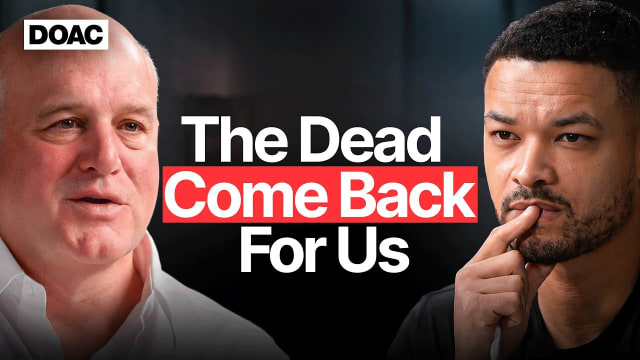
Dr Christopher Kerr has spent almost 30 years caring for people in their final days, and his research has focused on a question medicine has historically overlooked: what do people actually experience as they approach death? In a short conversation with The Diary of a CEO, he described a finding that cuts against most of what we assume about the end of life. Nearly 90 percent of the dying patients in his work report intense dreams or visions, and those experiences do not look like confusion. They feel real, and the people having them tend to describe them as comforting rather than frightening. Kerr also argues that the fear surrounding death is built largely on a vacuum of information, and that the myths filling that vacuum, especially about pain and regret, are mostly wrong.

Leer · 7 secciones

What Do Dying Patients Actually Dream About?

The clip opens with the figure that anchors his work. The published description puts it at 88 percent of patients dreaming of loved ones who have already died; in the conversation itself, Kerr says "nearly 90% of people start to have very intense dreams or visions as they get closer to death and it's unlike anything they've ever experienced." That detail matters for anyone who has sat at a bedside. These are not the drifting, half-coherent dreams we associate with fever or sedation.

Kerr's team also tested that difference directly. As he put it, "these events don't resemble delirium. When we ask them to scale it 0 to 10 on the degree of realism, it's always a 10. So it feels like this actually happened." A patient who rates an experience a 10 out of 10 for realism is describing something with the weight of an ordinary memory, not a hallucination they can dismiss. The clip cuts away before he details the content of those visions, but the realism rating is the piece of evidence that makes the claim hard to wave away.

"These events don't resemble delirium. When we ask them to scale it 0 to 10 on the degree of realism, it's always a 10. So it feels like this actually happened."

Christopher Kerr, in conversation with The Diary of a CEO

Why Is the Fear of Dying So Strong?

Kerr's diagnosis is blunt. "After doing this for 30 years, what I've come to understand is we've lost our way with dying. There's such a lack of information and that void is overwhelmingly felt with fear and mistruths compounded by the fact that doctors don't have these discussions." The problem he names is not only that people are frightened of death. It is that they are frightened without knowing what is typical, which leaves the imagination to fill the gap with the worst possibilities.

That is why the specifics he chooses to address are so pointed. Most of us carry a handful of stock assumptions about how a death will go, and two of them come up directly in the clip.

Is Pain at the End of Life Inevitable?

Kerr identifies pain as one of the "big myths," the belief that suffering is simply expected at the end. His answer is unambiguous: "It's less painful than people think." He puts the gap in strong terms, saying it is "by a mile" less painful than people assume. What he finds troubling is the silence around it. "It's damning how little conversations there are to address that issue," he said. When a fear goes unspoken, families carry it into the room without any evidence to test it against.

Do People Regret Their Lives When They Are Dying?

The second myth is regret. Kerr says he does not see patients dwelling on it: "First, I don't see people bringing up regret towards the end of their life." When the interviewer pressed whether they are thinking about what they regret, he answered without hesitation: "No. Yeah, hell no. No, it's gone."

His explanation is the most philosophically rich idea in the clip. "Death is this unbelievably truthful place. You're stripped to the bare bones of who you are. And if you think of the best version of yourself, it was never achieving something. It was being a son, it was being a brother, it was being a friend." The measure of a life, as the patients he has listened to seem to frame it, is relational rather than résumé-based. Titles and accomplishments fall away, and what remains is the quality of one's attachments.

"Death is this unbelievably truthful place. You're stripped to the bare bones of who you are."

Christopher Kerr, in conversation with The Diary of a CEO

What Is in the Six Handwritten Cards?

Kerr brought six handwritten cards listing lessons he has taken from caring for the dying, and the host said the full list would come later in the conversation. The clip ends before those lessons are read out, so this article cannot report what they say. Anyone looking for that list will need the full episode.

Is There Evidence of Life After Death?

The closing question asks Kerr whether, given everything he has witnessed, he thinks there is life after death. He answers, "This is probably the most remarkable thing of all, so I think" and the clip stops there. His reply is not in the material, so it would be wrong to guess at it. What the clip does establish is that he approaches the question from decades of bedside observation rather than from doctrine, and that he is candid about how much remains unknown.

Where to go from here

This is a 90-second excerpt, so treat it as an introduction. The strongest threads to pull are the realism rating, the gap between the myths and what patients report, and the idea that a life is measured by relationships rather than achievement. The full conversation covers children's experience of dying, what matters most to people in their final days, and his work with grieving families, which the video description says spans 750 families. If you are facing the loss of someone close, the most useful takeaway may be the simplest one Kerr offers: many of the fears we bring to death are inherited from silence, and speaking openly with a doctor or hospice team can replace some of that guesswork with actual information.
Comments

Loading the conversation…

Transcript

[0:00] Even to be 1,500 people as they're about

[0:02] to die.

[0:03] >> And what our research has shown is

[0:05] nearly 90% of people start to have very

[0:07] intense dreams or visions as they get

[0:09] closer to death and it's unlike anything

[0:11] they've ever experienced. And what's

[0:13] fascinating is these events don't

[0:15] resemble delirium. When we ask them to

[0:17] scale it 0 to 10 on the degree of

[0:20] realism, it's always a 10. So it feels

[0:22] like this actually happened.

[0:24] >> Tell me about those people.

[0:26] >> Um would it help to see it a video?

[0:28] So after doing this for 30 years, what

[0:31] I've come to understand is we've lost

[0:33] our way with dying. There's such a lack

[0:35] of information and that void is

[0:37] overwhelmingly felt with fear and

[0:39] mistruths compounded by the fact that

[0:41] doctors don't have these discussions.

[0:43] >> Can you list them for me?

[0:44] >> First, I don't see people bringing up

[0:46] regret towards the end of their life.

[0:48] >> They're not thinking about do they

[0:49] regret something? No.

[0:50] >> Yeah, hell no. No, it's gone.

[0:52] [clears throat] Death is this

[0:53] unbelievably truthful place. You're

[0:55] stripped to the bare bones of who you

[0:57] are. And if you think of the best

[0:59] version of yourself, it was never

[1:01] achieving something. It was being a son,

[1:03] it was being a brother, it was being a

[1:04] friend.

[1:05] >> And then the big myths are that pain is

[1:07] expected and that's actually not true.

[1:09] >> It's less painful than people think.

[1:11] >> Oh gosh, by a mile. But it's damning

[1:13] [music] how little conversations there

[1:15] are to address that issue. And then the

[1:17] next, this is what fascinates me.

[1:18] >> You're going to see why. And also, we

[1:20] have these six handwritten cards [music]

[1:22] of lessons you've learned from caring

[1:24] for the dying. We'll go into the full

[1:25] list, but from everything you've

[1:26] experienced, do you think there is life

[1:28] after death?

[1:29] >> This is probably the most remarkable

[1:30] thing of all, so I think

The Diary of a CEO
ArtistThe Diary of a CEO

Watch more from The Diary of a CEO on YouTube.

Ver perfilSitio web
Explorar temas
End-of-lifeDeathbed-visionsHospice-careDying-and-griefChristopher-kerr

¿Tienes Preguntas?

Preguntas Frecuentes

Dr Christopher Kerr, a hospice doctor, says his research found that nearly 90 percent of dying patients start having very intense dreams or visions as death approaches. The published description gives the figure as 88 percent and specifically mentions dreams of loved ones who have already died.
Kerr says they do not resemble delirium. When patients were asked to rate how real the experiences felt on a scale of 0 to 10, he says they always gave a 10, meaning the experience felt as though it actually happened.
Kerr calls the belief that pain is expected at the end a myth. He says dying is 'less painful than people think,' and he links the fear to how rarely doctors and families talk about it.
According to Kerr, regret rarely comes up in his conversations with dying patients. He says people instead measure their best selves by relationships, such as being a son, brother, or friend, rather than by achievements.
Kerr argues that our fear is driven by a lack of information, which he says is filled with mistruths. He adds that doctors often do not have these conversations, leaving people to imagine the worst.
The clip is cut off before Kerr gives his full answer. He begins by calling it 'probably the most remarkable thing of all,' but the excerpt does not include his conclusion, so the full episode is needed.

Seguir leyendo

More from The Diary of a CEO

Ver Todo
Deathbed Visions: What Hospice Research Reveals About Dying
Inspire

Deathbed Visions: What Hospice Research Reveals About Dying

Hospice physician Christopher Kerr's work with dying patients points to vivid visions of lost loved ones. Here is what those interviews sugg…

9 min read
Why You Can't Put Your Phone Down: The Design Behind Scrolling
Inspire

Why You Can't Put Your Phone Down: The Design Behind Scrolling

A two-and-a-half-minute clip from The Diary of a CEO argues that phones are engineered like a sugary buffet. Here is what it claims, what th…

9 min read
Arriving in Open Presence: A Guided Meditation Path Home
Inspire

Arriving in Open Presence: A Guided Meditation Path Home

Tara Brach's guided meditation walks listeners from an intention-setting question through a body scan, a widened field of sound and space, a…

8 min read
Cacao Prayer: The Chant That Travels From Circle to Circle
Inspire

Cacao Prayer: The Chant That Travels From Circle to Circle

A close listen to Cacao Prayer, the chant that has moved from circle to circle with Bruna Bortolato and Mose. Here is how its few lines repe…

5 min read

Sigue explorando

Continúa tu camino

Más sabiduría y encuentros de todo el directorio de BrightStar.

Más artículos

Recorre la biblioteca completa de enseñanzas, entrevistas y guías.

Ver todos los artículos →

Maestros y artistas

Explora los linajes, músicos y guías del mundo consciente.

Explorar artistas →

Encuentra un evento

Kirtan, retiros, baños de sonido, breathwork, festivales — muy pronto.

Ver eventos →