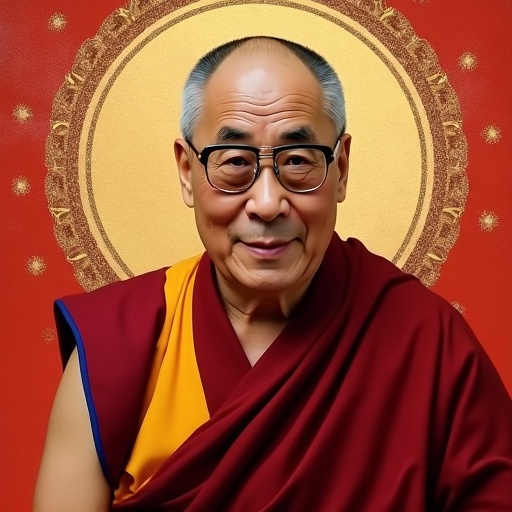
The image is almost comical when you think about it: a person enters a spare room lined with statues and sacred texts, sits quietly for an hour or two, and emerges feeling spiritually elevated. Then they step back into the world—their workplace, their relationships, their choices—and the spiritual person vanishes. This compartmentalization is not only ineffective; it misses the entire point of spiritual practice. The Dalai Lama has repeatedly challenged this illusion, arguing that authentic spirituality lives not in isolation but in how we show up in the world.
The foundation of this teaching rests on a simple recognition: the human brain is fundamentally a seat of compassion. This is not metaphorical or devotional language. It is neurological fact—our capacity for empathy, interconnection, and genuine care is wired into our nature. If that is true, then spiritual practice is not about acquiring something exotic or transcendent. It is about aligning our daily actions with what we already possess.
Why Ritual Rooms Create False Spirituality
Many traditions—and many practitioners—fall into the trap of equating spiritual progress with the quality of the ritual space. A beautiful altar, uninterrupted silence, the right incense or objects: these become the markers of a "serious" practice. But the Dalai Lama identifies this as a fundamental mistake. A person who enters such a room and leaves their compassion at the threshold is not practicing spirituality; they are practicing theater. The person who remains spiritual only within that room and "no longer spiritual minded person" outside of it has accepted a lie about what their practice is meant to accomplish.
This critique extends beyond individual practice. It applies to how entire spiritual communities sometimes construct identity around external markers rather than internal transformation. The danger is that practitioners become invested in looking spiritual rather than being spiritual—in maintaining the appearance of devotion rather than deepening genuine compassion in the choices that matter most: how they work, how they treat others, how they exercise power.
How Professional Work Becomes Spiritual Practice
The alternative is direct and unambiguous. Every profession—medicine, law, business, politics, skilled trades, service work—becomes a vehicle for spiritual practice the moment it is pursued with sincere motivation, truthfulness, and compassion. This is not a metaphorical upgrade of mundane work into something noble. It is the recognition that your actual labor, your real relationships, your concrete choices are the primary theater of spiritual development.
Notice the specificity here. The Dalai Lama names three qualities that transform work into practice: honesty, compassion, and realistic motivation. Not just good intentions. Not detachment. Not the fantasy of working without ego. But clear-eyed, grounded commitment to acting rightly within the constraints and complexities of real life. A doctor who treats patients with full attention and genuine care is practicing spirituality. A politician who serves the public interest with integrity—even when it is costly—is practicing spirituality. A construction worker who does their job well, fairly, and with respect for others is practicing spirituality.
The radical claim embedded in this teaching is that spiritual growth is not something that happens in meditation cushions or prayer closets and then spills over into life. It is something that is forged in the friction of actual work, actual relationships, actual stakes. The kitchen is as much a monastery as any temple. The conference room is as much a meditation hall as any zendo. The only difference is whether the practitioner brings genuine awareness and intention.
The Collapse of Sacred and Ordinary
This perspective collapses the boundary between sacred and ordinary that much of institutional religion has worked hard to maintain. If spiritual practice is simply the honest, compassionate execution of work—any work—then there is no need for a priesthood of specialists, no privileged access to the divine, no hierarchy of spiritual worthiness based on ordination or monastic status. The Dalai Lama makes this explicit: "Not necessarily be monk or none. You can practice." The gate is open to everyone, because everyone works, everyone makes choices, everyone has the capacity to bring sincere motivation and truthfulness to their days.
This is both democratizing and demanding. It democratizes spirituality by making it accessible and rooted in actual life rather than specialized settings or rare talent. It is demanding because it removes the comfort of performing spirituality in designated spaces while remaining unchanged elsewhere. If you claim to be spiritual, your work reveals it. If you claim to practice, your choices demonstrate it. There is nowhere to hide.
Where to go from here
The invitation is to audit your own days. Where do you carry sincere, compassionate, honest motivation? Where do you fall back on habit, ego, or mere competence without genuine care? What would change if you approached your work—not as separate from your spiritual life but as its primary expression—with the full attention and integrity you bring to formal practice? The answer is not to abandon meditation, ritual, or dedicated practice time. These remain valuable for building focus and intention. But they become hollow without the connective tissue of actual transformation in how you move through the world. Spiritual practice, in this view, is not something you do in a room. It is something you become, day after day, in the choices you make and the people you encounter.


