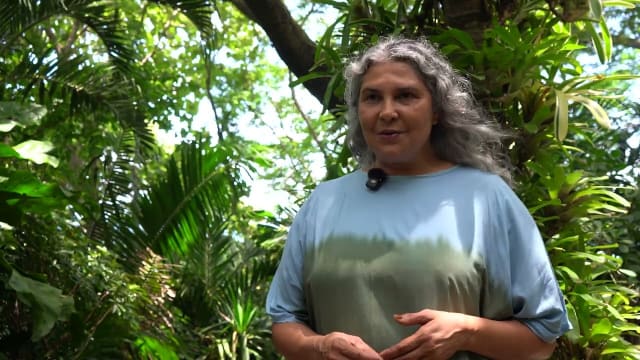
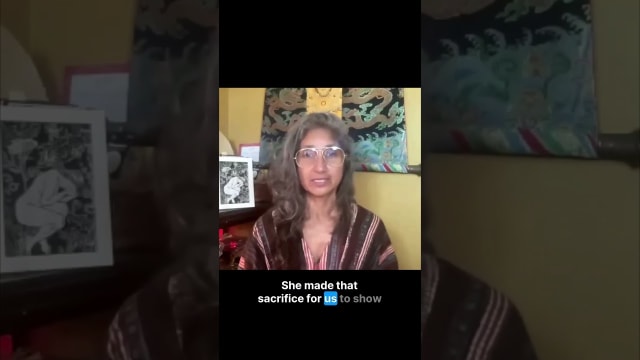
Panchakarma, the intensive cleansing arm of Ayurveda, is often sold as a weekend reset, a fast purge that leaves you lighter by Monday. A fourteen-minute conversation recorded at Vajra Ayurveda and Yoga Retreat in Malayattoor, Kerala, argues the opposite. Dr. Aishwarya, the retreat's chief physician, and Katia, a self-employed guest from Berlin who was in the middle of a three-week stay, describe a process that is slow by design, tailored to the body's shifting condition, and built around food, rest, and yoga as much as oil and massage. The video is a conversation produced by the retreat itself, so its claims belong to the speakers, but the account of how a returning guest experiences a long Panchakarma course is specific enough to be worth unpacking.
The setting comes first. Dr. Aishwarya introduces the retreat as a place "around the forest and around the rivers," and the wider framing in the video description calls it a nature-surrounded sanctuary in Malayattoor. That matters to the argument. For the doctors, the environment is part of the treatment, not a backdrop to it.
Katia is 48. She first tried Ayurveda at 23, and she has since visited several centers in Sri Lanka and India, along with Ayurvedic hospitals. Her reasons for this stay were practical. She runs her own business, has several children, and said she gets exhausted and sometimes feels her immune system is not as strong as it should be. She wanted Ayurveda to strengthen and balance her, but she also wanted a retreat with a yoga teacher she could book separately, with group classes and afternoon meditation.
Her reasoning for Panchakarma specifically is the most revealing part of the conversation. She said she chose it because she does not like dieting.
"I love eating and I love Indian food," Katia said in the video. "On the one hand, I like to eat because it keeps me also energized."
She also described loving the oil treatments, the massage, and the feeling of being cleansed, and said that afterward she feels more energized for the demands of her working days. That combination, nourishment alongside cleansing, runs against the common picture of a cleanse as deprivation. It is one of the threads the doctors keep returning to.
Katia has also done a single week of Panchakarma in the past. She called it "a bit more a lot on the system," though still good cleaning. The shorter stay is not the problem in her account. Her comparison is the basis for the doctor's larger point.
Dr. Aishwarya is blunt about the gap between what people ask for and what the treatment can do. Guests, she says, often want Panchakarma compressed into a very short period, and that is not practically possible. A rushed course, in her telling, disturbs the body instead of clearing it.
"We are going slowly into the deeper tissue level of the body and cleansing it," Dr. Aishwarya said in the video. "That's how it's not like Ayurveda is slow."
This is the central idea of the piece, and it is worth holding onto. In the doctor's framing, the speed people complain about is deliberate. Cleansing works from the surface inward, and reaching the deeper tissues takes time. The retreat asks for stays of two to three weeks for this reason, and the physician says the same advice is given in online consultations, where she tells people that a longer stay gives better results.
She also names a misconception outright: the belief that Panchakarma can be done in a few days. Anyone considering a short stay should weigh that claim against the kind of course the retreat is describing, rather than assume every package is equivalent.
Katia's own experience supports the timeline, at least as she describes it. She said that after two weeks she already noticed changes in her body and could go further in her asanas than before. Dr. Aishwarya responded that flexibility had improved and that joint lubrication had improved, and that the guest would feel a lightness in the body. These are the speakers' observations, not clinical measurements, and they should be read that way. What the conversation offers is a description of how the process is understood from inside the retreat.
Food is the part of the conversation that surprised the most. The retreat serves what the doctor calls a sattvic diet, meaning light, vegetarian, easily digestible food, with a different set of dishes each day. During the Panchakarma days, guests follow a special diet. Outside those days, the diet relaxes toward a more normal menu.
The reasoning is about the digestive system. Guests arrive from far away and are not used to these foods, and Dr. Aishwarya said the team cannot serve harsh foods that could disrupt digestion. Katia reported no stomach trouble, which she said surprised her given the reputation of travel in India. She credited the food with calming her mind, noting that it is colorful and vegetarian, and said the staff explain each dish and accommodate vegans and guests with other dietary needs.
She also made a point about taste that is easy to overlook. On the days when she was being cleansed, she found her taste buds became more alive, so that simple food still tasted good. She eats three times a day, she said, and never feels she has to force herself through a meal. For someone who came to Ayurveda after a demanding life, that difference, between eating as nourishment and eating as penance, seems to be the point.
Katia contrasted this with her experience of Western medicine, where she said patients are often told to stop eating. Her description is one person's view, and it should be read as a comparison she drew, not a verdict on any system. Still, it shows why the retreat treats diet as a therapeutic tool, not an afterthought.
The most useful idea in the video may be its insistence on individualization. Katia said she has always found that her Panchakarma treatment was specific to her imbalance and adjusted to her as an individual.
"You don't have one kind treatment for everyone," Katia said in the video, "but it's very individual."
Dr. Aishwarya pushed this further. Over roughly twenty years of returning to Ayurveda, she said, a person's body changes, their condition changes, and their dosha balance shifts. Therapy protocols and modalities cannot stay the same. Each time a guest comes back, the team assesses their current condition and selects treatment accordingly, Panchakarma included.
That logic has a practical consequence. A returning guest is not simply repeating a package. The question each visit is what the body needs now, and the answer can change. For readers who have only encountered Ayurveda as a fixed menu of treatments, this is a useful correction. In the doctor's account, the personalization is the method, not an extra service layered onto it.
The doctor also argued that Ayurveda and yoga work best together. Combining them, she said, treats both the physical and the emotional or psychological side, and once both are addressed, results tend to be better. Katia described the same pairing from her side: the treatments for her body, plus the yogic side that she said brings her emotionally and mentally forward. The conversation makes a case for the integration as the reason for choosing a retreat over a clinic.
The video description positions the retreat as safe and well suited to solo female travelers, and the conversation returns to safety more than once. Dr. Aishwarya said the retreat hosts guests from around the world, including women traveling alone, and she made the link between safety and healing explicit. A guest who does not feel secure, she implied, cannot fully relax into treatment, and relaxation of the nervous system is part of what the process is meant to achieve.
That is a reasonable thing to ask of any wellness retreat, and it is worth asking directly before booking. Find out how the staff communicate with guests, what the daily schedule looks like, and how the center handles arrival, transport, and privacy. The video gives a sense of the atmosphere and the attention Katia felt, but a prospective guest should confirm details with the retreat itself.
The clearest lesson in this conversation is that Panchakarma is not a shortcut. It asks for time, a diet that supports digestion and does not punish the guest, a schedule that combines treatment with rest and yoga, and an assessment that changes as the body does. Katia came for strength and balance and left, by her own description, with more energy for the demands of her life. Dr. Aishwarya's point is that those results come from depth, and depth takes weeks.
If you are curious, begin with the questions the video answers well. How long is the stay, and why? What is the diet, and how does it change during treatment? How does the team decide what a returning guest needs? Then ask the questions the video leaves open: what the costs are, what the daily routine involves, and whether a shorter course is right for your own condition. For guidance on those choices, speak directly with the retreat's medical team, the people who will assess you before any treatment begins. The conversation makes a convincing case for patience, and that case starts with a conversation of your own.