BrightStar

Ver Todos los Events

Descubre encuentros conscientes

events

Yoga
Meditation
Breathwork
Qigong
Tai Chi
Sacred Music
World Music
Medicine Music
Sound Healing
Ecstatic Dance
Destinos Populares
BaliSedonaLos AngelesCosta RicaNew YorkSan FranciscoAustinMiamiJoshua TreeTulum
Ver Todas las CategoríasVer Todos los Destinos

Explorar Todas las Características

Herramientas poderosas para hacer crecer tus eventos

Características de la Plataforma

Precios Dinámicos Inteligentes
Categorías de Entradas
Asientos Asignados
Recuperación de Carritos
Recuperación de Visitantes
Donaciones y Escala Móvil
Motor de Afiliados
Escáner de Entradas
Códigos de Cupón
Preguntas Personalizadas
Compartir Entradas
Ventas Adicionales
Análisis e Informes
Secuencias de Email
Lista de Espera / Notificar / Recordar
Personas y Lugares
Artists & TeachersEvent OrganizersVenues & StudiosKnowledge BaseGlossaryInspiration
Ver Todas las CaracterísticasSobre Nosotros
PreciosBlog
Saved events
Ver Todos los Eventos

events

YogaMeditationBreathworkQigongTai ChiSacred MusicWorld MusicMedicine Music

Destinos Populares

BaliSedonaLos AngelesCosta RicaNew YorkSan Francisco

Personas y Lugares

Artists & TeachersEvent OrganizersVenues & StudiosKnowledge BaseGlossaryInspiration

Características de la Plataforma

Precios Dinámicos InteligentesCategorías de EntradasAsientos AsignadosRecuperación de CarritosRecuperación de VisitantesDonaciones y Escala MóvilMotor de AfiliadosEscáner de EntradasCódigos de CupónPreguntas PersonalizadasCompartir EntradasVentas AdicionalesAnálisis e InformesSecuencias de EmailLista de Espera / Notificar / Recordar
Ver Todas las CaracterísticasSobre Nosotros
PreciosBlog
Iniciar sesiónBuscadoresCreadores
Tibetan BuddhistOm Mani Padme Hum · Om Mani Padme Hum · Om Mani Padme Hum · Om Mani Padme Hum ·
  • Ver Todos los Eventos
  • Para Buscadores
  • Yoga
  • Meditación
  • Respiración consciente
  • Qigong y tai chi
  • Tai chi
  • Música sagrada
  • Retiros
  • Talleres
  • Todas las Categorías →
  • Bali
  • Sedona
  • Los Angeles
  • Costa Rica
  • Tulum
  • Byron Bay
  • San Francisco
  • Austin
  • Todas las Ciudades →
  • Para Creadores
  • Para equipos
  • Para Escritores
  • Para Maestros
  • Para Artistas de Kirtan
  • Para Estudios
  • Para Festivales
  • Para Centros de Retiros
  • Para Organizaciones Sin Fines de Lucro
  • Embajador de Marca
  • Casos de Estudio
  • Entradas sin costo
  • Elevate
  • Amplify
  • Red de +350K Compradores
  • Recuperación de Carritos
  • Precios Dinámicos Inteligentes
  • Categorías de Entradas
  • Eventos Recurrentes
  • Asientos Asignados
  • Motor de Afiliados
  • Lista de Espera / Notificar
  • Escáner de Entradas
  • Widget Embebido
  • Sindicación de eventos
  • Centro de mensajes
  • Integraciones
  • Reportes
  • Todas las Características →
  • Acerca de
  • El ecosistema
  • Blog
  • Glosario
  • Inspiración
  • Centro de Ayuda
  • Contacto
  • Documentación API
  • Recursos de Marca
  • Carreras
  • Prensa
  • Términos de Servicio
  • Política de Privacidad

Eventos

  • Ver Todos los Eventos
  • Para Buscadores
  • Yoga
  • Meditación
  • Respiración consciente
  • Qigong y tai chi
  • Tai chi
  • Música sagrada
  • Retiros
  • Talleres
  • Todas las Categorías →

Destinos

  • Bali
  • Sedona
  • Los Angeles
  • Costa Rica
  • Tulum
  • Byron Bay
  • San Francisco
  • Austin
  • Todas las Ciudades →

Para Creadores

  • Para Creadores
  • Para equipos
  • Para Escritores
  • Para Maestros
  • Para Artistas de Kirtan
  • Para Estudios
  • Para Festivales
  • Para Centros de Retiros
  • Para Organizaciones Sin Fines de Lucro
  • Embajador de Marca
  • Casos de Estudio
  • Entradas sin costo
  • Elevate
  • Amplify

Características

  • Red de +350K Compradores
  • Recuperación de Carritos
  • Precios Dinámicos Inteligentes
  • Categorías de Entradas
  • Eventos Recurrentes
  • Asientos Asignados
  • Motor de Afiliados
  • Lista de Espera / Notificar
  • Escáner de Entradas
  • Widget Embebido
  • Sindicación de eventos
  • Centro de mensajes
  • Integraciones
  • Reportes
  • Todas las Características →

Empresa

  • Acerca de
  • El ecosistema
  • Blog
  • Glosario
  • Inspiración
  • Centro de Ayuda
  • Contacto
  • Documentación API
  • Recursos de Marca
  • Carreras
  • Prensa
  • Términos de Servicio
  • Política de Privacidad
BrightStar
© 2026 BrightStar. Todos los derechos reservados.
Inspiration

Covert Narcissism in Relationships: Howto Spot & Set Boundaries

Dr. Nicole LePera
Dr. Nicole LePera
Aug 30, 2026
5 min de lectura
Ver · 7

Covert narcissism doesn't announce itself with rage or grandiose speeches. It arrives quietly, through a missed validation, a mid-sentence interruption, an unexplained silence that stretches for days. Your body registers it first—that tightness in your chest, the vague discomfort you can't quite name—before your mind catches up. This is not the narcissism of boardrooms and social media; it's the narcissism of intimate relationships, where the damage compounds in private and the perpetrator's public image remains spotless.

Unlike overt narcissism, clinically recognized as Narcissistic Personality Disorder (NPD), covert narcissism operates in shadow. It stems from attachment wounding, a failure of early relational safety that has become, according to psychological observation, remarkably common in contemporary society. The distinction matters: where overt narcissists demand the spotlight and crumble without it, covert narcissists cultivate a meticulously controlled public persona while their private behavior tells a different story altogether.

Leer · 6 secciones

The Architecture of the False Self

At the heart of covert narcissism lies an identity crisis disguised as social savvy. The covert narcissist is obsessively concerned with their public image—but this goes far deeper than ordinary human desire to be liked. They require constant adoration and validation because, without external mirroring, they possess no stable sense of self. This is the core wound: they don't know who they are when no one is watching.

This void drives their relational choices. They partner strategically, selecting people from whom they can extract something tangible: status, money, respect, access, or social elevation. The relationship itself is not a genuine exchange of intimacy and reciprocal care. Instead, it's a transaction masquerading as love. They are absorbed entirely with their own needs, and your needs—if they register at all—are secondary, instrumental at best.

When Your Feelings Become Their Crisis

The moment you express a feeling or need, the covert narcissist experiences it as a personal attack. They are hypersensitive to any suggestion that they've caused harm or that someone else's experience matters equally to their own. Their emotional reactions are disproportionate—yelling, storming off, or deploying what may be the most insidious tool in their arsenal: the silent treatment, withdrawal that can last indefinitely.

Over time, this pattern creates a psychological state in which you begin to monitor your own speech and emotions constantly. You're walking on eggshells, not because your partner has explicitly threatened you, but because the cost of their reactions—the rage, the coldness, the disappearance—has become too high to risk triggering again. You self-censor. You shrink. You become responsible for managing their emotional state.

Chronic Interruption and the Silencing of Others

One of the most recognizable signatures of covert narcissism is chronic interruption. You begin to speak, and before you can finish a sentence, they cut in. Frustration mounts—not just because you're being interrupted, but because the pattern is relentless and seems almost reflexive. This behavior is rooted in impulse control issues. When the covert narcissist becomes uncomfortable—whether from hearing something they don't want to hear or simply from sitting with another person's experience—they cannot tolerate it. To manage their own discomfort, they attempt to steamroll the conversation, to make the unwanted reality disappear.

The message, whether conscious or not, is clear: your voice doesn't matter as much as my comfort. Your needs can be interrupted. Your story can be cut short. Over time, many people in relationships with covert narcissists simply stop trying to be heard.

The Double Life and Survival Strategy

Covert narcissists are often remarkably skilled at maintaining secret lives. They may carry on additional relationships, harbor hidden addictions, or engage in high-risk behaviors entirely unknown to their partner. This capacity for secrecy and compartmentalization isn't random; it's a direct adaptation to their own childhood trauma.

Most covert narcissists experienced deeply disturbing relational environments growing up—parents having affairs, intense marital conflict, custody battles, or other forms of significant trauma. As children, they often responded to this chaos with intense dissociation, a protective splitting of the psyche. This fragmentation allowed them to survive the unsurvivable: to witness unbearable things while maintaining enough psychological functioning to move through the day.

As adults, this survival strategy becomes their modus operandi. They become experts at hiding, compartmentalizing, and keeping others in the dark—because that's literally how they survived their childhood. The trauma isn't healed; it's replayed in the structure of their adult relationships.

The Body as a Barometer

One of the most valuable pieces of intelligence you possess in a relationship with a covert narcissist is your body's response. When you feel that tightness in your chest, that creeping unease, that sense of discomfort in their presence, your nervous system is registering something real. Your body is picking up on subtle cues—micro-expressions, tone shifts, the weight of their attention—and sending you a warning. Learning to trust this somatic signal, rather than overriding it with logic or second-guessing, can be the beginning of boundary-setting and self-protection.

Where to go from here

Recognizing covert narcissism requires attention to behavior patterns rather than surface presentation. Pay close attention to how someone treats you when they believe no one is watching, how they respond when your needs are centered, and whether your voice is consistently diminished or interrupted. Notice your own body's response. A therapist trained in trauma and attachment can help you understand your own vulnerability to these dynamics and support you in building sustainable boundaries. If you're in a relationship with someone exhibiting these patterns, professional guidance—both individual and couples therapy—can clarify whether healing is possible or whether boundary-setting and separation may be necessary for your own wellbeing.
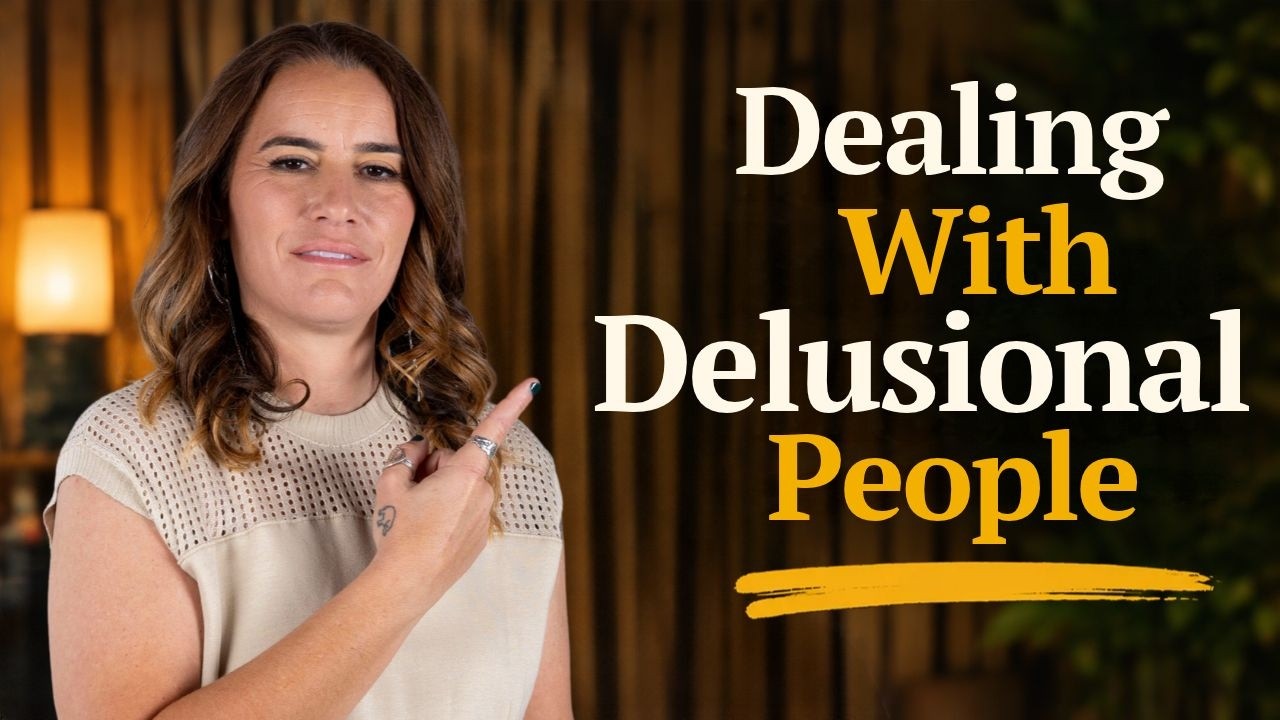
Transcript

[0:00] Today, I'm going to talk about covert

[0:02] narcissism in relationships. This is

[0:03] going to help you spot it in people and

[0:05] set boundaries. Covert narcissism stems

[0:07] from attachment wounding and it's very

[0:08] common in our society. Unlike overt

[0:11] narcissism, which is known as NPD,

[0:13] covert narcissism is less obvious but

[0:15] still very real. When you feel that

[0:17] tightness in your chest or that

[0:18] discomfort when you're around them,

[0:20] that's your body picking up on these

[0:21] cues and trying to warn you. The covert

[0:24] narcissist is incredibly focused on

[0:25] public persona. This goes deeper than

[0:27] the natural desire to be liked by other

[0:29] people. They need constant adoration and

[0:32] validation by other people because

[0:33] without it, they don't know who they

[0:34] are. They'll partner with people that

[0:36] they can gain something from. This could

[0:37] be status, money, respect, or anything

[0:39] that elevates them in society. They're

[0:41] not in a relationship to give and take.

[0:43] They're very absorbed with their own

[0:45] needs and have little concern for your

[0:46] needs. Their feelings consume the whole

[0:48] room. If you express how you feel,

[0:50] they're hyper-sensitive and immediately

[0:52] take it as a personal attack. They have

[0:54] these really big reactions that can look

[0:55] like yelling or storming off. And

[0:57] sometimes out of nowhere, they just give

[0:58] you the silent treatment. Over time, you

[1:00] feel like you're walking on eggshells

[1:01] because you fear their reaction. They're

[1:03] often chronic interrupters. You start

[1:05] talking and they interrupt you

[1:06] mid-sentence. You start to get really

[1:08] frustrated and it throws you off because

[1:10] you can't complete your thoughts or get

[1:11] them out. This has to do with impulse

[1:13] control. They struggle to sit and listen

[1:15] to other people when they're

[1:16] uncomfortable. So, to deal with their

[1:18] emotions, they try to steamroll you and

[1:19] make the situation go away. They can

[1:21] also lead double lives. Covert

[1:23] narcissists had a very difficult

[1:24] childhood. They often saw their parents

[1:26] having an affair, difficult fights,

[1:29] custody battles, or other traumatic

[1:30] experiences that led to intense

[1:32] dissociation. This is a common response

[1:35] to trauma that led to a splitting of the

[1:37] psyche. As adults, they become very good

[1:39] at hiding things or being very

[1:40] secretive. This can be carrying on

[1:42] another relationship, having a hidden

[1:44] addiction, or engaging in high-risk

[1:46] behaviors. They're very skilled at doing

[1:47] things behind your back and keeping you

[1:49] in the dark because that's actually how

[1:50] they survived their own childhood.

Dr. Nicole LePera
AutorDr. Nicole LePera

Watch more from Dr. Nicole LePera on YouTube.

Ver perfilSitio web
Explorar temas
Covert-narcissismNarcissistic-behaviorAttachment-woundingRelationship-dynamicsEmotional-manipulation

¿Tienes Preguntas?

Preguntas Frecuentes

Overt narcissism (NPD) is obvious and demanding—the person seeks attention openly and crumbles without it. Covert narcissism is quieter and operates through public persona management while concealing selfish behavior privately. Both stem from deep wounds, but covert narcissists are harder to identify because their damage happens in hidden ways.
Covert narcissists interrupt compulsively because they lack impulse control when uncomfortable. They can't sit with another person's experience or needs, so they steamroll the conversation to make their discomfort disappear. It's a bid to regain control when they feel threatened.
Silent treatment is a more subtle but equally effective control tactic. It punishes you without overt aggression, keeps you guessing about what you did wrong, and forces you to manage their emotional state to restore connection. It's a learned survival strategy from their traumatic childhoods.
Yes. Your body picks up on subtle cues—micro-expressions, tone, energy—before your conscious mind can articulate them. That tightness in your chest or persistent unease is your nervous system warning you. Learning to trust this signal is a crucial first step in protecting yourself.
Their childhood trauma taught them to compartmentalize and hide to survive. As adults, they've become skilled at secrecy—hidden relationships, addictions, high-risk behaviors—because this was their adaptation to chaos and danger in their family of origin.
They lack a stable sense of self and depend entirely on external validation. When you express a need or feeling, they hear it as criticism of them. They can't distinguish between 'I'm unhappy' and 'You're a bad person,' so they react with rage or withdrawal to protect their fragile identity.

Seguir leyendo

More from Dr.

Ver Todo
Why You're Identified With Your Problems
Inspire

Why You're Identified With Your Problems

Presence simplifies life, but the ego resists it because problems become its identity. Discover how psychological attachment to difficulty b…

1 min read
The Anxiety of "I Haven't Made It Yet"
Inspire

The Anxiety of "I Haven't Made It Yet"

The belief that success lies in the future creates persistent anxiety and prevents presence. This psychological pattern keeps consciousness …

1 min read
Ocean Goddess Rising: Two Voices Reimagine Yemaya
Inspire

Ocean Goddess Rising: Two Voices Reimagine Yemaya

Deva Premal and Ajeet unite in a devotional collaboration honoring Yemaya, the Yoruba ocean goddess, recorded in Costa Rica with arbutar acc…

1 min read
Chanting Together: The Sacred Practice of Kirtan
Inspire

Chanting Together: The Sacred Practice of Kirtan

A Thursday night satsang showcases the transformative power of collective chanting, weaving Sanskrit invocations with musical ensemble and d…

1 min read

Sigue explorando

Continúa tu camino

Más sabiduría y encuentros de todo el directorio de BrightStar.

Más artículos

Recorre la biblioteca completa de enseñanzas, entrevistas y guías.

Ver todos los artículos →

Maestros y artistas

Explora los linajes, músicos y guías del mundo consciente.

Explorar artistas →

Encuentra un evento

Kirtan, retiros, baños de sonido, breathwork, festivales — muy pronto.

Ver eventos →