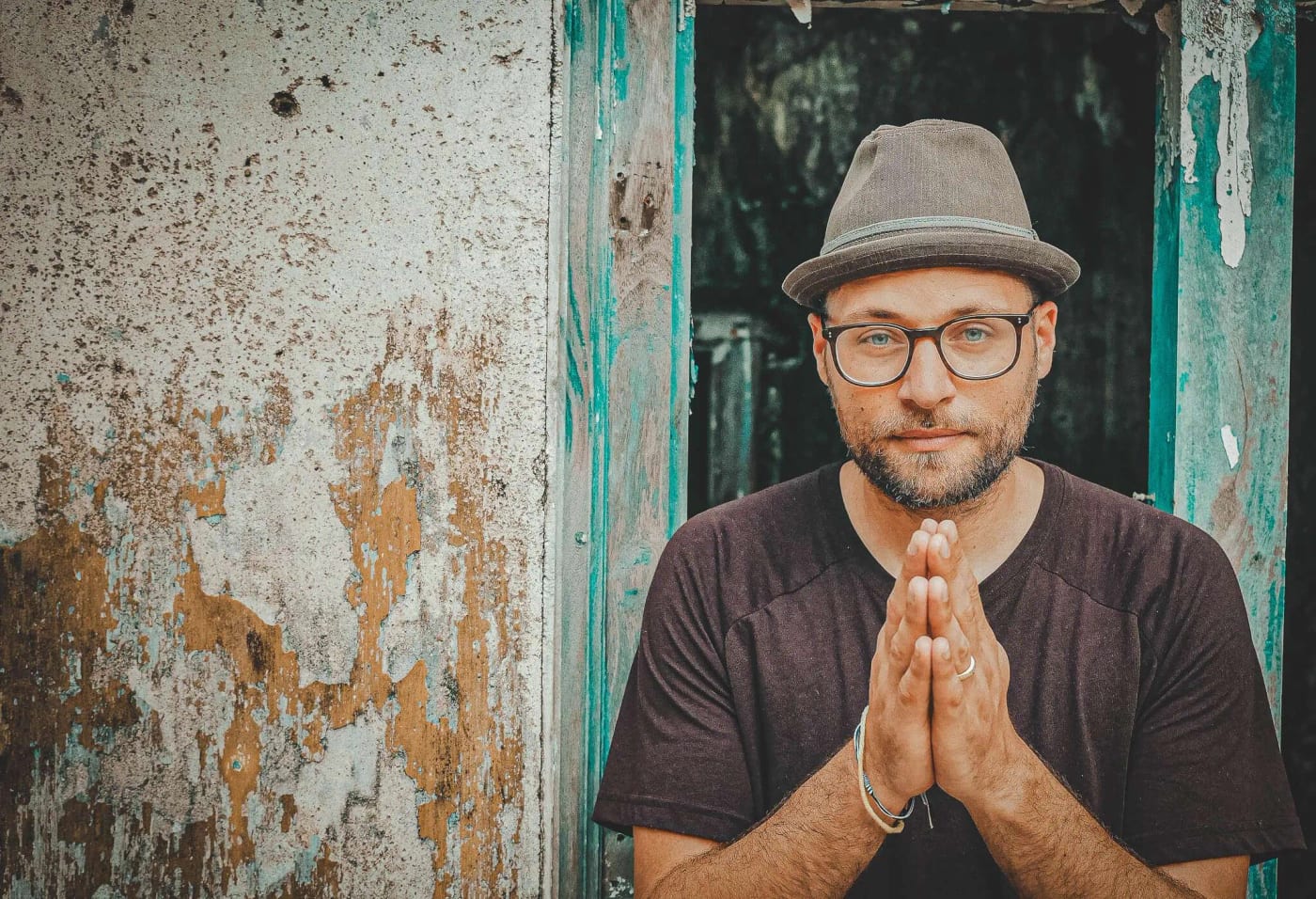

Where This Lands in MC YOGI's Journey
Buddha Mantra arrives in 2025 as a focused statement from an artist who has spent decades weaving together hip-hop authenticity and devotional practice. Released as a single rather than a full album, this track represents MC YOGI in distilled form—no longer proving the concept of spiritual hip-hop but inhabiting it with complete fluency. For an artist whose path led from San Francisco graffiti culture through the transformative gateway of teenage yoga practice to becoming a chart-topping voice in conscious music, Buddha Mantra feels like both arrival and offering. It's the sound of someone who has walked the talk long enough that the division between performance and prayer has dissolved entirely.
This isn't an introduction or an experiment. It's MC YOGI speaking his native language—the one he created by holding hip-hop's rhythmic intelligence and spiritual yearning in the same breath. By 2025, that synthesis is his signature, and Buddha Mantra delivers it without apology or explanation.
Sonic Character: Where Beat Meets Breath
The instrumentation on Buddha Mantra strikes a deliberate balance between the hypnotic and the grounded. The production builds around layers that recall both the loop-based aesthetics of hip-hop and the cyclical, trance-inducing patterns of traditional kirtan. There's warmth in the sonic palette—likely driven by acoustic elements, subtle percussion, and atmospheric textures that create space rather than fill it.
MC YOGI's voice carries its characteristic blend: the rhythmic precision of a practiced MC meets the devotional resonance of someone who has chanted mantras until they became second nature. The pacing refuses to rush. This isn't music designed to hype a crowd into frenzy but rather to guide listeners into a sustained state—meditative without becoming background music, intentional without feeling rigid.
The mood throughout feels like a centered celebration. There's joy here, but it's the deep kind—not ecstatic abandon but the steady happiness of alignment. The track invites repetition, mirroring the mantra tradition it references, where meaning deepens through return rather than novelty.
The Tradition It Inhabits
Buddha Mantra sits squarely within the contemporary evolution of bhakti and kirtan practice, filtered through Western sensibilities and hip-hop innovation. Kirtan—the call-and-response devotional music rooted in Hindu and Buddhist traditions—has found new expressions in yoga studios and conscious music festivals across the globe. MC YOGI's contribution to this lineage has always been his refusal to choose between cultural authenticity and personal truth.
Where traditional kirtan might center on harmonium, tabla, and ancient Sanskrit chants, MC YOGI brings breakbeats, lyrical wordplay, and the urban storyteller's gift. He's part of a broader movement that includes artists like Krishna Das, Jai Uttal, and East Forest—each finding their own doorway into devotional sound. But MC YOGI's hip-hop foundation gives him access to rhythms and rhetorical devices that make these ancient practices feel native to contemporary life.
The result is devotional music that doesn't ask listeners to adopt a foreign cultural framework but rather demonstrates how mantras can function within the language and rhythm patterns we already speak. It's world music in the truest sense—not exotic borrowing but genuine synthesis.
Who This Lands Hardest For
Buddha Mantra will resonate most deeply with listeners who live at intersections—those who practice yoga but also know every word of Illmatic, who seek spiritual depth but mistrust spiritual bypassing, who want music that honors both body and spirit without splitting them apart.
This is a track for the morning ritual creator, the person building their own practice from pieces that actually work rather than prescribed traditions that feel hollow. It's for moments of transition—preparing for meditation, cooling down after movement, creating mental space before a difficult conversation. It lands during those times when you need centering but recoil from anything too precious or performatively serene.
The listener who gets the most from Buddha Mantra likely values authenticity over aesthetic purity. They're drawn to artists who've done their own work rather than those who've simply studied someone else's. They want music that can function as both practice and pleasure, that doesn't demand they become someone else to appreciate it.
How to Listen
Buddha Mantra rewards intentional listening but doesn't require ceremonial conditions. The ideal approach sits somewhere between active meditation and conscious background—present enough to catch the lyrical nuances and rhythmic subtleties, relaxed enough to let it work on you rather than analyzing it to death.
Headphones amplify the textural details and create the intimate space this kind of music thrives in. Early morning or evening transitions work best—times when the day's demands soften and there's room for something deeper than distraction. If you're incorporating it into practice—yoga, sitting meditation, journaling—let it loop. Mantras function through repetition, and this track is built to sustain that.
Most importantly: don't treat this as background music for multitasking. Give it at least one full listen with nothing else competing for attention. Let it establish its rhythm in your body before deciding what it's for. The Buddha's path, after all, begins with attention.