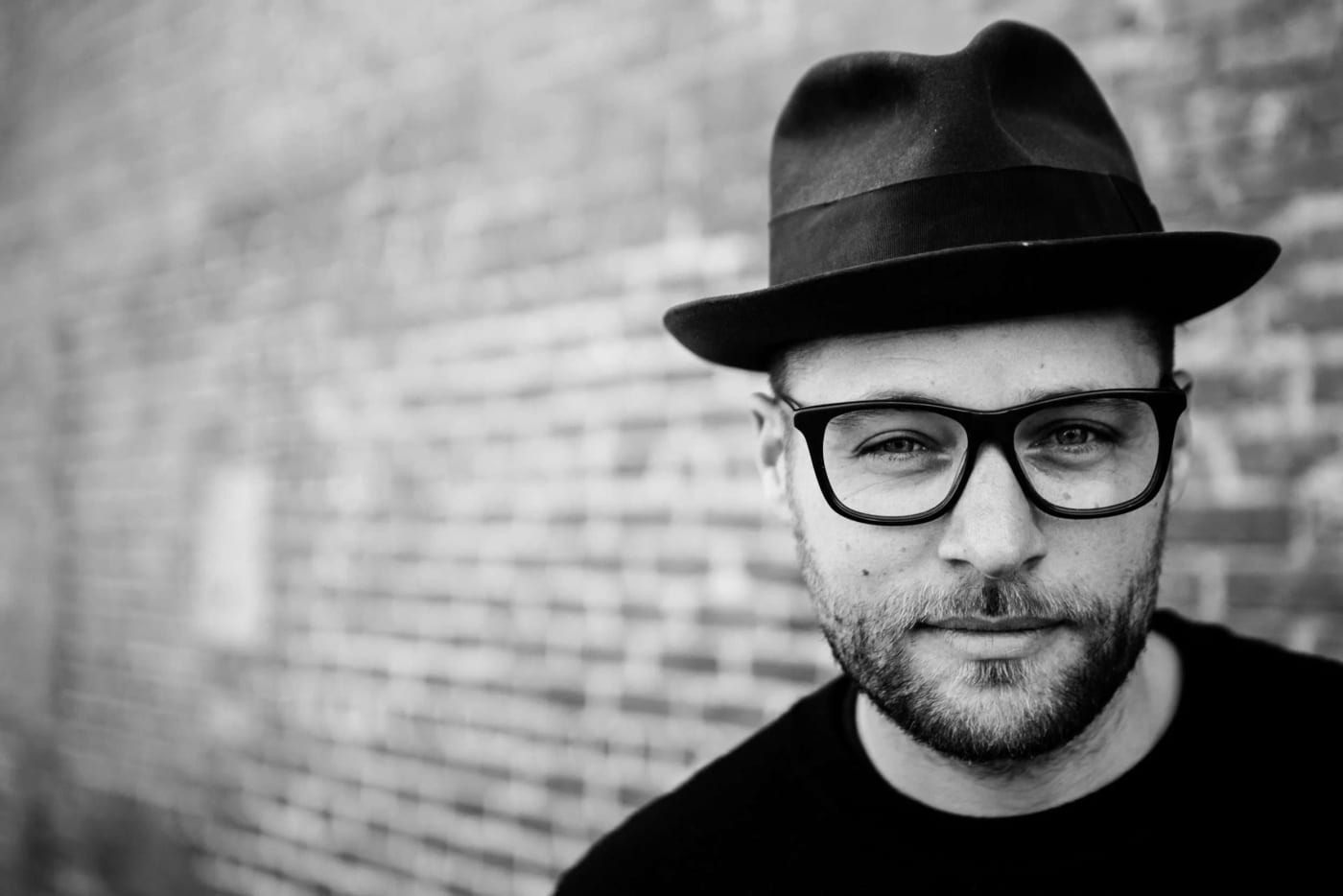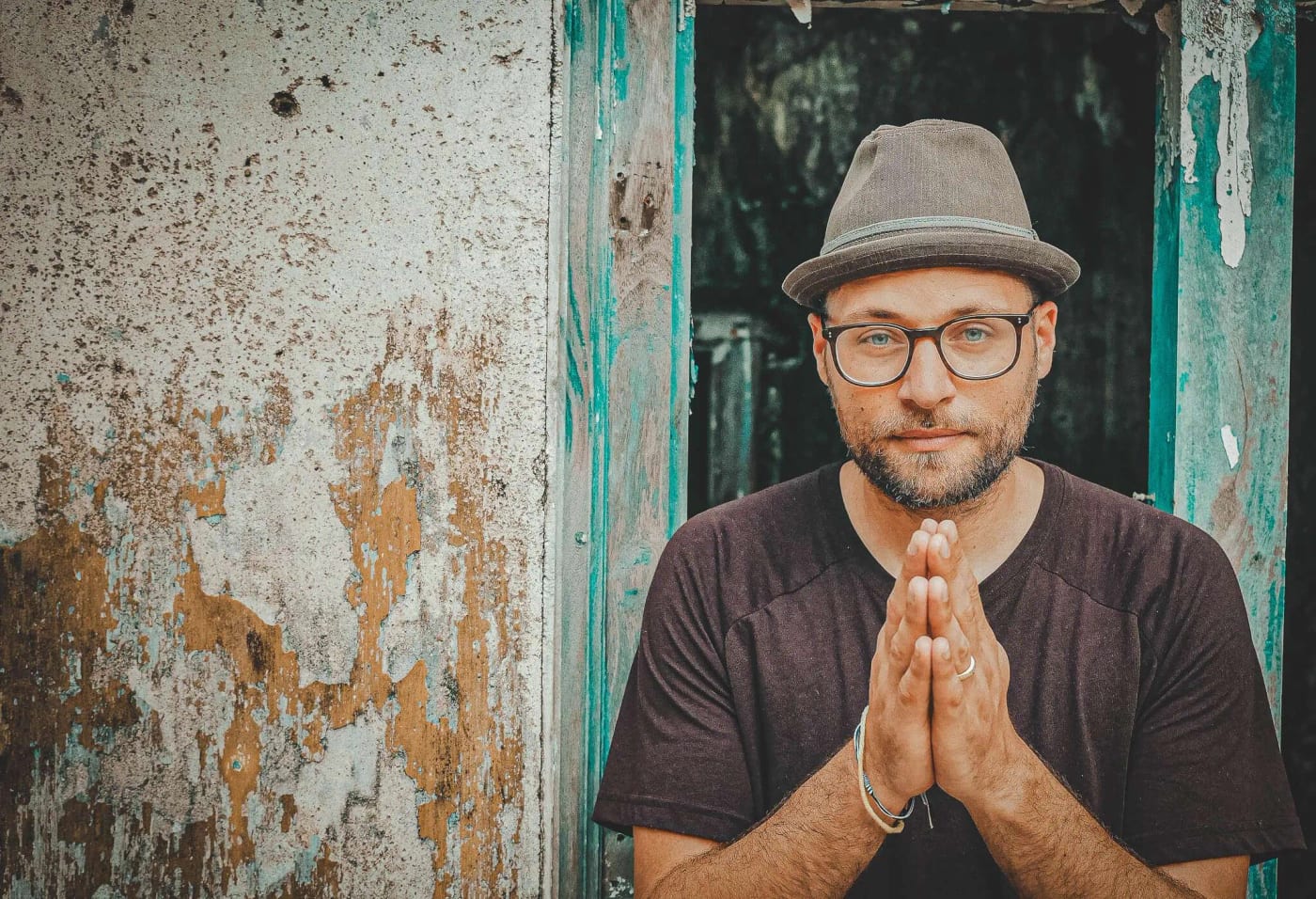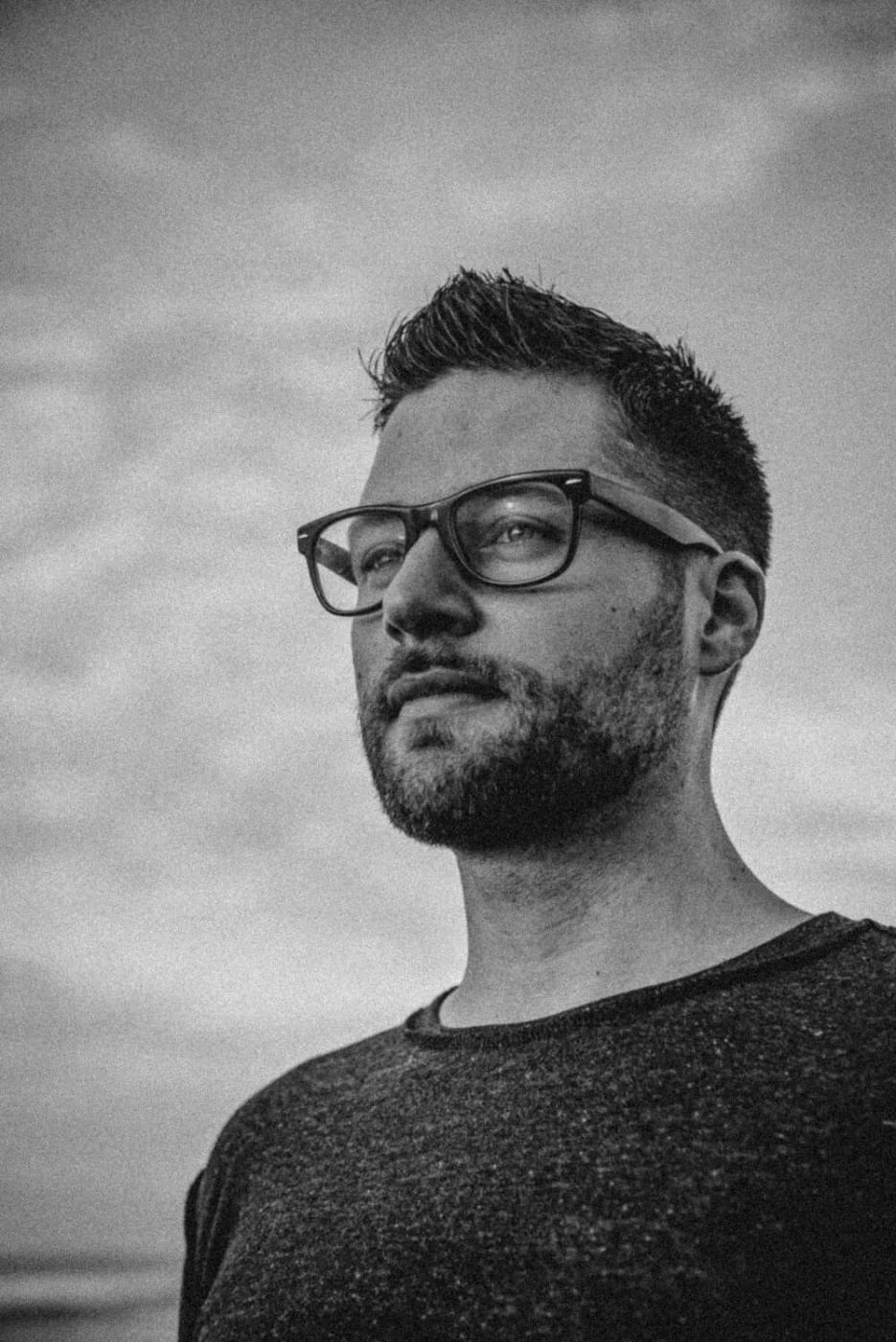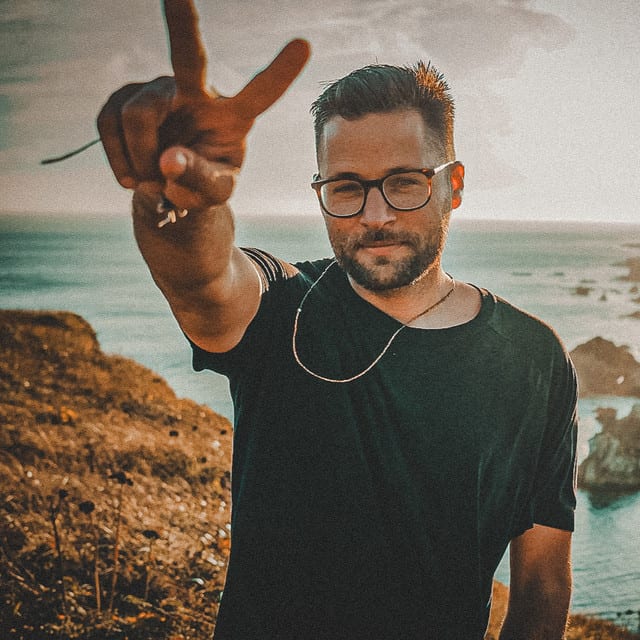

Nicholas Christian Giacomini, known to the world as MC YOGI, emerged from the cultural crossroads of San Francisco, California. Growing up in one of America's most diverse and spiritually curious cities, he moved between worlds that rarely intersect—the raw energy of hip-hop culture and the contemplative practices of Eastern spirituality. His early creative outlet was graffiti art, a form of expression that taught him about claiming space, making statements, and finding beauty in urban landscapes. Hip-hop became more than music; it shaped his identity and gave him a language for navigating the complexities of youth.
During his teenage years, something unexpected happened. Yoga entered his life and began to reshape his understanding of himself and the world around him. This wasn't a rejection of his hip-hop roots but rather an expansion—a discovery that the discipline and self-inquiry of yoga could coexist with the creativity and cultural commentary of rap.
What makes MC YOGI's work distinctive is his refusal to choose between seemingly opposite paths. Instead, he forged a synthesis that has attracted followers across multiple communities. By blending hip-hop with spiritual themes and yoga philosophy, he created something genuinely new—music that maintains the authentic cadence and cultural weight of rap while exploring consciousness, mindfulness, and ancient wisdom traditions.
His approach honors both traditions without diluting either. The beats are authentic, the flow is genuine hip-hop, but the content reaches toward something deeper than conventional rap subjects. His songs often draw from bhajans—devotional songs from the Hindu tradition—reimagined through the lens of contemporary production and Western musical sensibilities. This fusion has carved out a space for listeners who might feel equally at home in a yoga studio or at a concert, seeking both entertainment and something more nourishing.
MC YOGI's primary contribution to contemporary culture is his role as a bridge-builder. He has demonstrated that spirituality and street culture, Eastern philosophy and Western art forms, can not only coexist but can actually enhance one another. His work belongs to the broader category of world music and devotional genres, but it resists easy classification—which is precisely its strength.
As both a musician and a dedicated yoga teacher, he has created a holistic practice that reaches beyond any single medium. His songs serve as invitations to self-discovery, employing the accessibility and emotional immediacy of music to convey concepts that might otherwise feel distant or academic. His teachings, in turn, are informed by his artistic sensibility, recognizing that transformation often happens through creativity and joy rather than solely through discipline.
MC YOGI has released chart-topping albums that have resonated with audiences seeking music that acknowledges both the body and the spirit. His discography reflects his personal journey while leaving space for listeners to explore their own paths. The music incorporates elements of kirtan—a call-and-response style of devotional chanting—but filtered through hip-hop's rhythmic complexity and lyrical directness.
His work promotes Hindu philosophy without requiring listeners to identify as practitioners. The mantras and spiritual references in his music function both as devotional practice for those who approach them that way and as meditation on universal themes—compassion, mindfulness, the search for meaning—for those who connect with the ideas rather than the specific tradition.
Today, MC YOGI continues to share his knowledge and passion for practice with students around the world. With over 114,000 followers on Spotify alone, he has built a substantial audience that reflects the growing intersection of wellness culture, spiritual seeking, and contemporary music. His influence extends beyond traditional yoga communities to reach people who might never have considered exploring Eastern philosophy through conventional channels.
His unique positioning allows him to speak to multiple audiences simultaneously: hip-hop heads curious about consciousness, yoga practitioners seeking music that reflects their practice, and spiritual seekers looking for contemporary expressions of ancient wisdom. This multiplicity of reach is itself a form of cultural work, demonstrating that traditions can evolve and cross-pollinate without losing their essential character.
In an era of increasing fragmentation—where musical genres, spiritual practices, and cultural identities are often siloed—MC YOGI's work offers a counternarrative. He shows that synthesis is possible, that one need not choose between authenticity and evolution. For a generation raised on hip-hop who are now exploring mindfulness and spiritual practice, he provides both validation and vocabulary.
His legacy lies not just in the music itself but in the permission he gives others to integrate seemingly disparate parts of themselves. He matters because he demonstrates that spiritual seeking can be culturally relevant, that ancient wisdom can speak in contemporary language, and that transformation doesn't require abandoning where you came from.
The graffiti artist from San Francisco who discovered yoga as a teenager has become something more than a musician or a teacher—he's become a proof of concept for a more integrated way of being in the world.