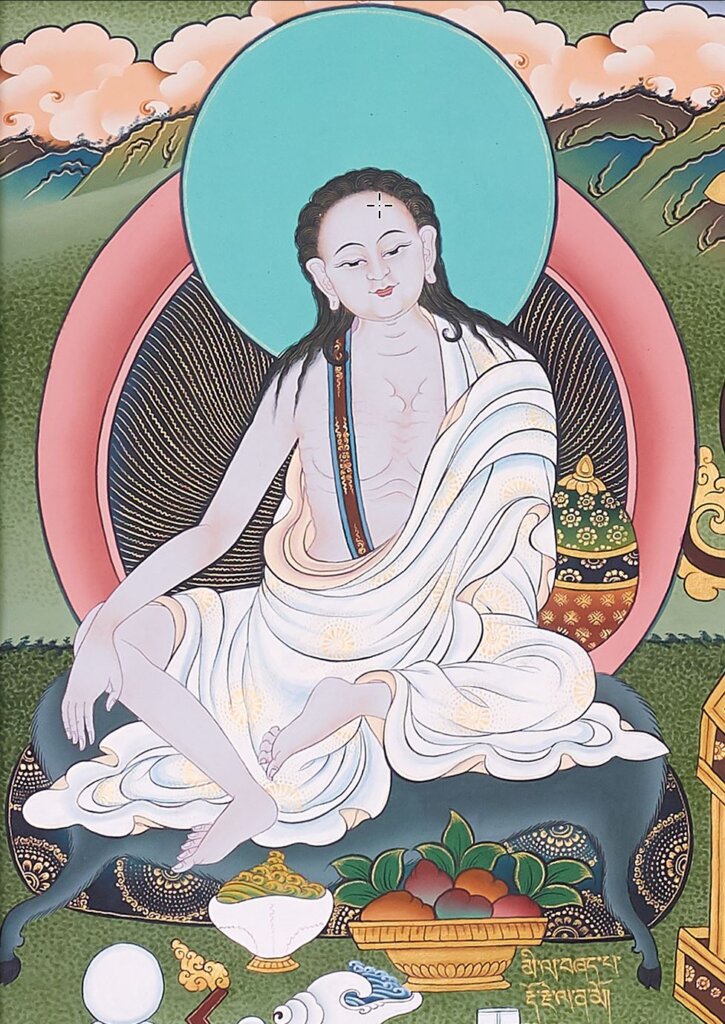
“Then the great freedom dawns.” In this succinct yet profound statement by Milarepa, we are invited to contemplate the nature of liberation and the transformative power of realization. This quote encapsulates a pivotal moment in the spiritual journey, where the seeker transcends the limitations of the self and experiences a profound awakening. The stakes are high; this freedom is not merely an abstract concept but a lived reality that can reshape our understanding of existence and our place within it.
Milarepa, a revered figure in Tibetan Buddhism, embodies the essence of this journey. His life story, marked by trials and tribulations, serves as a testament to the possibility of profound transformation through dedication and insight. The notion of freedom here is not simply the absence of constraints but rather a deep, inner liberation that arises from the realization of one’s true nature. This realization, akin to the dawn breaking over a dark horizon, illuminates the path ahead, revealing the interconnectedness of all beings and the inherent potential within each of us.
The image / the metaphor
The imagery of dawn in Milarepa's quote evokes a sense of awakening and renewal. Dawn signifies the transition from darkness to light, a powerful metaphor for the spiritual journey from ignorance to enlightenment. The verb "dawns" suggests an unfolding, a gradual emergence of clarity and understanding, rather than an instantaneous event. This nuanced portrayal of freedom implies that it is not a destination but a process, one that requires patience, perseverance, and a willingness to confront the shadows within ourselves.
In the speaker's tradition
Milarepa's teachings are deeply rooted in the Buddhist tradition, particularly the principles of dharma and the quest for enlightenment. The concept of freedom in Buddhism is intricately linked to the understanding of sunyata, or emptiness, which posits that all phenomena are interdependent and devoid of inherent existence. This realization allows the practitioner to let go of the ego's grasp, leading to a state of liberation that Milarepa so eloquently describes. The journey toward this freedom is often marked by practices such as meditation, ethical living, and the cultivation of compassion.
In the context of Milarepa's life, we can draw parallels to the teachings found in the "Heart Sutra," which emphasizes the notion that form is emptiness and emptiness is form. This profound insight encourages us to see beyond the surface of our experiences, recognizing that our attachments and aversions are rooted in a misunderstanding of reality. By embracing this emptiness, we can begin to experience the great freedom that Milarepa speaks of, a freedom that transcends the dualities of existence and invites us into a deeper relationship with ourselves and the world around us.
Living the teaching
Consider a modern scenario where this teaching resonates: a person grappling with the pressures of societal expectations, feeling trapped in a cycle of striving for success and validation. In this context, the realization of "great freedom" can emerge through a shift in perspective. By recognizing that true fulfillment does not lie in external achievements but in the acceptance of oneself, the individual can begin to experience a sense of liberation. This shift allows for a more authentic expression of one’s identity, free from the constraints of comparison and judgment.
Another application of this teaching can be found in relationships, particularly during moments of conflict. When faced with misunderstandings or disagreements, the practice of mindfulness can help individuals step back and observe their reactions without attachment. By doing so, they may discover that the root of their distress often lies in their own expectations and fears. Embracing the freedom that comes from letting go of these attachments can lead to deeper connections, fostering compassion and understanding rather than division.
A reflection
As we contemplate Milarepa's profound statement, we are invited to ask ourselves: What does it mean for me to experience great freedom in my life? This question encourages a deep exploration of our own attachments, fears, and the illusions that may cloud our perception. By reflecting on this inquiry, we can begin to uncover the layers of our own experience, paving the way for a more authentic and liberated existence.
