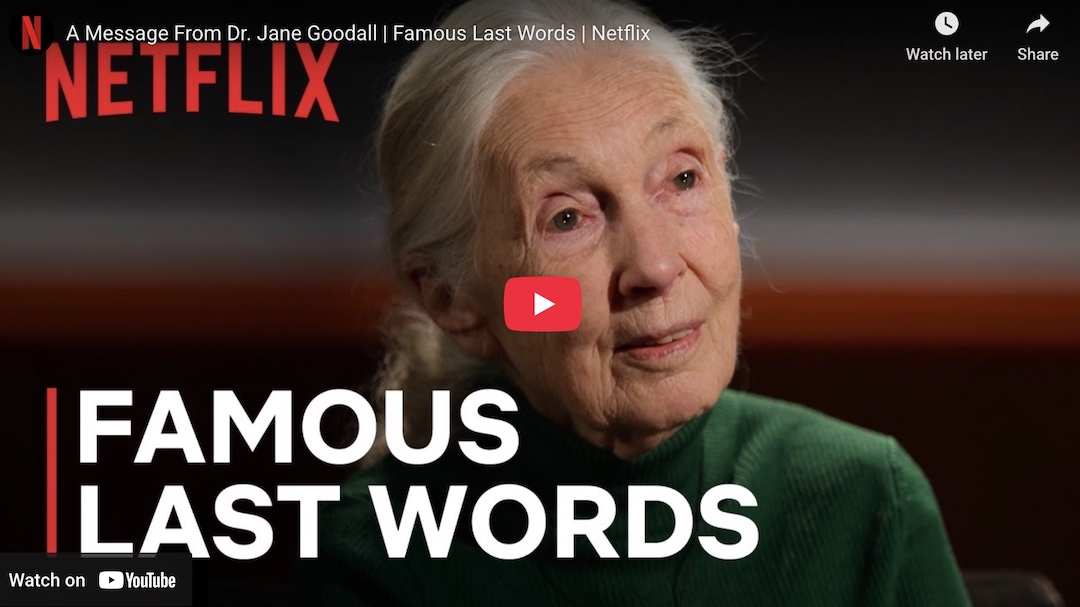
Jane Goodall's poignant directive, "Look at the world. Then act," serves as a profound invitation to engage with our surroundings before we leap into action. In a time marked by environmental crises and social injustices, this quote underscores the importance of observation as a precursor to meaningful engagement. It reminds us that awareness is not merely passive; it is the fertile ground from which informed and compassionate actions can grow. The stakes are high, as our planet and its inhabitants face unprecedented challenges that demand thoughtful responses.
Goodall's words resonate deeply within the context of contemplative ecology, a field that emphasizes the interconnectedness of all life. To truly "look at the world" is to cultivate a deep awareness of the intricate web of relationships that sustain us. This act of seeing is not superficial; it requires a commitment to understanding the complexities of our environment and the myriad forces at play. Only then can we act with intention and integrity, ensuring that our responses are not merely reactions but rather conscious choices that reflect our values and aspirations.
The image / the metaphor
The imagery embedded in Goodall's quote evokes a sense of mindfulness and presence. "Look" suggests a deliberate act of observation, urging us to engage our senses and truly perceive the world around us. This is not a cursory glance but a deep, contemplative gaze that invites us to notice the subtleties of nature, the struggles of fellow beings, and the beauty that often goes unnoticed. The subsequent call to "act" implies that this observation must lead to a response, a movement towards engagement that is informed by what we have seen.
Delving deeper into the metaphor, we can interpret "look" as a form of spiritual practice, akin to the Buddhist concept of "mindful awareness." This practice encourages us to be fully present, to observe without judgment, and to cultivate a sense of empathy for the world around us. The act of seeing becomes a transformative experience, one that shapes our understanding and compels us to respond with compassion and responsibility. In this light, Goodall's quote becomes a reminder that our actions must be rooted in a profound awareness of the interconnectedness of all life.
In the speaker's tradition
Jane Goodall's work is deeply embedded in the tradition of contemplative ecology, which emphasizes the spiritual dimensions of our relationship with the natural world. Concepts such as "interbeing," derived from Thich Nhat Hanh's teachings, resonate with Goodall's call to observe before acting. This interconnectedness reflects the idea that our actions have far-reaching consequences, and thus, we must approach the world with a sense of reverence and responsibility. In this tradition, the act of seeing is not merely observational but a spiritual awakening to the sacredness of life.
Goodall's insights can be paralleled with the teachings found in the Tao Te Ching, where Laozi emphasizes the importance of observing nature to understand the way of the universe. In Chapter 2, he writes about the interplay of opposites and the harmony that arises from understanding the natural order. This wisdom aligns with Goodall's perspective, suggesting that by looking deeply at the world, we can discern the patterns and rhythms of life that guide our actions. Both thinkers advocate for a contemplative approach that honors the complexity of existence and encourages us to act with humility and awareness.
Living the teaching
Consider a modern scenario where Goodall's teaching can be applied: a community grappling with environmental degradation. In this context, the call to "look at the world" invites community members to engage in a collective observation of their local ecosystem. By organizing nature walks, community forums, or educational workshops, individuals can deepen their understanding of the environmental challenges they face. This shared experience fosters a sense of connection and responsibility, empowering participants to act in ways that are informed by their newfound awareness.
Another application of this teaching can be found in personal relationships, particularly during moments of conflict. When tensions arise, taking a moment to "look" at the situation—reflecting on the perspectives and emotions of all parties involved—can lead to more compassionate and constructive responses. Instead of reacting impulsively, individuals can cultivate a practice of mindful listening and observation, allowing them to respond with empathy and understanding. This approach not only resolves conflicts but also strengthens the bonds of connection and trust.
A reflection
As we contemplate Goodall's profound invitation, we might ask ourselves: What do I truly see when I look at the world around me? This question encourages us to engage in a practice of reflection, inviting us to explore our perceptions and biases. By examining what we notice—or fail to notice—we can uncover the layers of our awareness and deepen our understanding of our place within the intricate tapestry of life. In this way, we honor Goodall's call to not only observe but to act with intention and compassion.