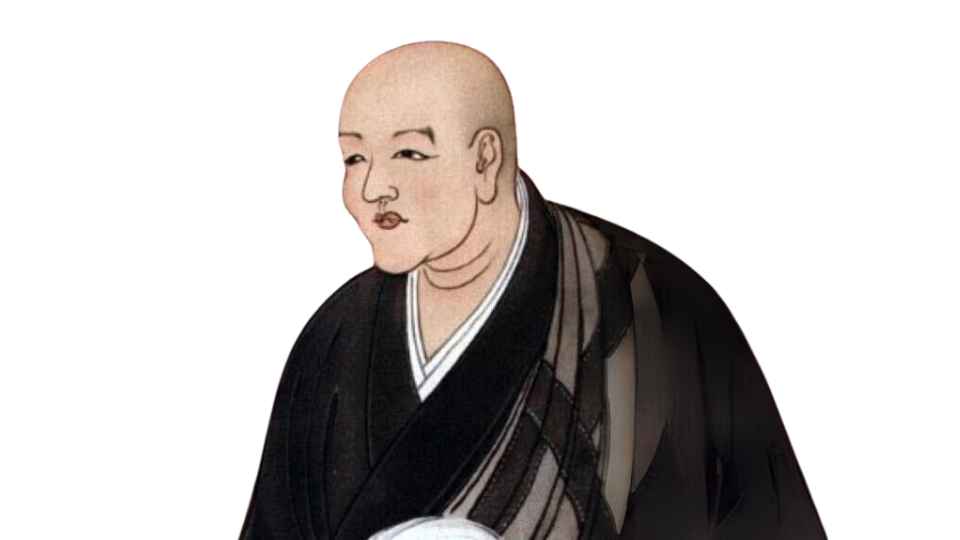
The Continuum of Existence: Dōgen's Insight into Time and Being
In the profound words of Dōgen, "Each thing in the entire world is a separate time in one continuum," we are invited to explore the intricate relationship between time and existence. This statement suggests that every entity, every moment, is not merely a fleeting instance but a unique manifestation within the vast tapestry of time. Understanding this perspective is crucial as it challenges our conventional notions of time as linear and fragmented, urging us to perceive the interconnectedness of all things in a more holistic manner.
Delving deeper, Dōgen's assertion compels us to reconsider our relationship with the present moment. In a world often dominated by the rush of daily life, we may overlook the significance of each moment as a distinct yet integral part of a larger continuum. This realization can transform our awareness, inviting us to engage more fully with our experiences, recognizing that each moment carries its own weight and significance within the unfolding narrative of existence.
The image / the metaphor
At first glance, Dōgen's quote evokes a vivid image of a vast continuum, where each thing—be it a leaf, a stone, or a fleeting thought—exists as a unique point in time. The choice of the word "separate" emphasizes individuality, suggesting that while each entity stands alone, it is also inextricably linked to the whole. The notion of "continuum" further enriches this imagery, presenting time not as a series of disjointed events but as a flowing river, where each moment contributes to the overall current of existence.
As we delve deeper into this metaphor, we begin to appreciate the implications of perceiving time as a continuum. Each moment, each thing, is imbued with its own essence and significance, yet they all coexist within the same temporal space. This perspective invites us to embrace the richness of our experiences, acknowledging that every moment is a unique expression of the universe, deserving of our attention and reverence. In this way, Dōgen's teaching encourages us to cultivate a deeper awareness of the present, recognizing the beauty and complexity inherent in each fleeting instant.
In the speaker's tradition
Dōgen, a pivotal figure in Zen Buddhism, offers profound insights into the nature of reality through his teachings. His concept of "uiji," or the interdependence of time and existence, resonates deeply with the principles of dharma and sunyata, or emptiness. In Zen, the understanding of time as a continuum aligns with the idea that all phenomena are interconnected, arising and passing away in a dynamic interplay. This perspective invites practitioners to cultivate a sense of presence and mindfulness, recognizing that each moment is a manifestation of the whole.
In his seminal work, "Uji," Dōgen elaborates on the relationship between time and being, emphasizing that time is not merely a backdrop against which events unfold but is integral to the very fabric of existence. He writes, "Time is not separate from the things that arise within it; rather, time and things are mutually dependent." This profound insight encourages us to engage with the present moment fully, understanding that our experiences are not isolated but part of a larger, interconnected continuum of life.
Living the teaching
Consider a modern scenario where this teaching might resonate: a busy professional caught in the whirlwind of deadlines and meetings. In such a context, the notion of time as a continuum can serve as a grounding reminder. Instead of viewing each task as a mere obligation, one might begin to see each moment as an opportunity for presence and engagement. By recognizing the uniqueness of each task and its place within the larger continuum of their life, the individual can cultivate a sense of purpose and fulfillment, transforming mundane activities into meaningful experiences.
In relationships, Dōgen's insight can also provide a profound lens through which to view our interactions. Imagine a moment of conflict with a loved one, where emotions run high and communication falters. By embracing the idea that each moment is a separate time in one continuum, we can approach the situation with greater compassion and understanding. Instead of viewing the disagreement as a rupture, we can recognize it as a part of the ongoing narrative of our relationship, allowing us to navigate the complexities of human connection with a sense of grace and awareness.
A reflection
As we contemplate Dōgen's profound teaching, we are invited to reflect on our own relationship with time and existence. How often do we rush through moments, failing to appreciate their unique significance? In what ways can we cultivate a deeper awareness of the present, recognizing each experience as a vital part of the continuum of our lives? Let this contemplation guide you as you navigate the intricate dance of time and being, inviting you to embrace the richness of each moment.


