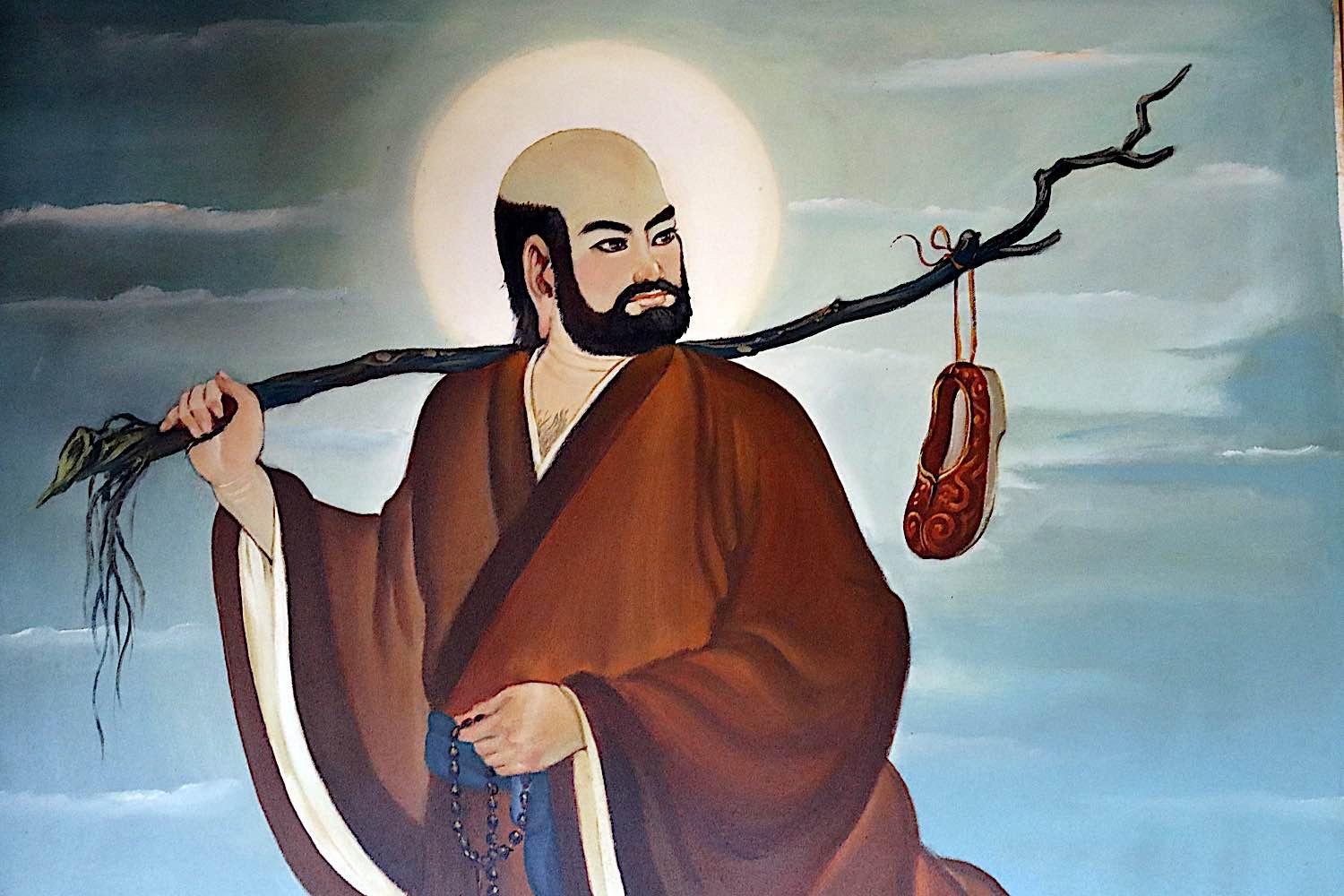
The Essence of Being: Zen in Every Moment
Bodhidharma's assertion that "not thinking about anything is Zen" invites us into a profound understanding of presence and awareness. He suggests that once we grasp this essence, every action—whether walking, standing, sitting, or lying down—becomes an expression of Zen. This perspective challenges our habitual distractions and invites us to engage fully with the present moment, revealing the sacredness inherent in our daily lives. The stakes are high: to awaken to this reality is to transform our mundane existence into a continuous practice of mindfulness.
In a world often dominated by the noise of thoughts and the clamor of distractions, Bodhidharma's teaching serves as a gentle reminder of the simplicity and depth of being. It encourages us to step away from the incessant chatter of the mind and to embrace the stillness that lies beneath. This stillness is not an absence but a fullness—a space where we can encounter our true selves. Understanding this teaching can lead to a profound shift in how we perceive our lives, allowing us to find peace and clarity in every moment.
The image / the metaphor
The imagery in Bodhidharma's quote evokes a sense of fluidity and ease, suggesting that Zen is not confined to formal meditation but permeates all aspects of life. The verbs "walking," "standing," "sitting," and "lying down" encompass the entirety of human experience, illustrating that Zen is accessible in every posture and action. This invitation to be present in each moment underscores the idea that our physical existence is intertwined with our spiritual journey. It is a call to recognize that the sacred can be found in the simplest of acts.
Diving deeper into the metaphor, we see that "not thinking about anything" does not imply a void or a lack of thought; rather, it suggests a state of pure awareness, free from the clutter of judgment and distraction. This state of being allows us to experience life as it is, unfiltered by our preconceived notions and biases. In this way, Bodhidharma's teaching becomes a pathway to liberation, encouraging us to shed the layers of mental noise that obscure our connection to the present moment. It is an invitation to engage with life directly, experiencing each moment with fresh eyes and an open heart.
In the speaker's tradition
Bodhidharma, as the founder of Zen Buddhism, emphasizes the importance of direct experience over intellectual understanding. His teachings align with the concept of *dharma*, which refers to the natural order of the universe and our place within it. In Zen, the practice of *kenosis*—the act of emptying oneself—mirrors the essence of Bodhidharma's message. By letting go of our incessant thoughts and attachments, we create space for the experience of *sunyata*, or emptiness, which is not a void but a profound fullness of being.
This teaching resonates with the *Heart Sutra*, a foundational text in Mahayana Buddhism, which articulates the idea that form is emptiness and emptiness is form. Just as Bodhidharma encourages us to embrace the present moment without distraction, the *Heart Sutra* invites us to see beyond the illusions of duality. Both teachings point to a deeper understanding of reality, urging us to transcend the limitations of our thoughts and to awaken to the interconnectedness of all things.
Living the teaching
Consider a modern scenario where this teaching can be applied: imagine standing in line at a grocery store, surrounded by the hum of conversation and the beeping of registers. In this moment, it is easy to become lost in thoughts about what to cook for dinner or the tasks that await us at home. However, by embracing Bodhidharma's teaching, we can shift our focus to the simple act of standing—feeling our feet on the ground, noticing the air around us, and observing the people in line without judgment. This practice transforms a mundane wait into an opportunity for mindfulness, allowing us to experience the richness of the present moment.
In relationships, this teaching can also find profound application. During a disagreement with a loved one, it is common to become entangled in a web of thoughts and emotions, often leading to escalation and misunderstanding. By practicing the art of "not thinking about anything," we can cultivate a space of presence, allowing us to listen deeply and respond with clarity rather than reaction. This approach fosters connection and understanding, transforming conflict into an opportunity for growth and deeper intimacy.
A reflection
As we contemplate Bodhidharma's profound insight, we are invited to reflect on our own lives: What would it mean to embrace each moment without the burden of thought? How might our experiences shift if we approached our daily activities with the awareness that every action can be an expression of Zen? In this inquiry, we find the seeds of transformation, encouraging us to explore the depths of presence and the beauty of simply being.
