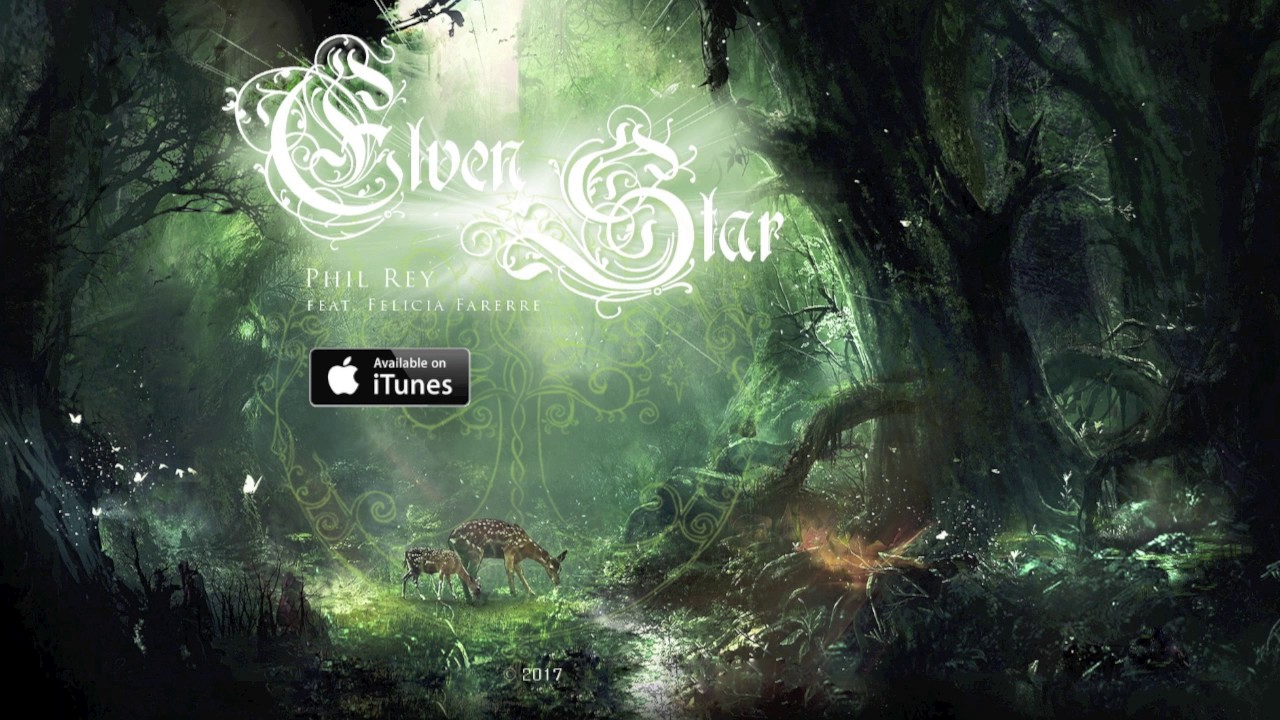
"Heart of Lore," a track by Felicia Farerre with Phil Rey, opens in the underworld and ends at the holy grail. In a little under five minutes, its lyrics gather the vessels, guardians and monsters of old story (cauldrons, oracles, sages, dragons) and turn them toward a single act of faith: following the call of inherited wisdom out of harbor and into open water. What follows is a reading of the song as written, based on the lyrics published in the video's description, with the honest caveat that the source gives us no spoken commentary from the artist.
The clearest way in is the chorus, which the lyrics set up as a call and an answer: "Heart of lore is calling / I will follow where it leads." Lore is a rich word. It means the accumulated body of traditional stories, knowledge and secret practices a people carries forward, and the song treats it as something alive that speaks. The listener is not asked to study lore from a distance. Lore is calling, and the singer answers.
That answer is framed as departure. "Courage be with me / Leaving harbor for the sea / Free." A harbor is the sheltered place a ship waits in; the sea is the unknown. The song asks for courage in the moment of leaving, which is a different thing from being certain of the destination. The word "free" lands on its own line, unhurried, which gives the departure its emotional weight.
The song begins below the surface: "Underworld / Now stirring / Another page is turning / The cauldrons / Of history / Bespeaking myth and mystery." Cauldrons are containers in which things are transformed, brewed, boiled down and made new. Setting them against "history" suggests that the past is not a closed archive but a pot still on the fire. The line "another page is turning" reinforces the idea that a new chapter is being written out of old material.
This is a useful thing for a listener to notice. The song does not begin with a verse about the singer's life. It begins with a mythic stage: the underworld, the cauldron, the turning page. Everything after is staged on that set.
The second verse populates that stage: "Oracles and Witches / Wizards, fairies and sages / The masters / Returning / Unlocking gates and cages." This is a crowd of figures who in story tend to hold knowledge that ordinary life cannot reach. Oracles speak what is hidden; sages keep what has been learned; witches and wizards work with forces outside the everyday. The lyric says they are returning, and that their return opens gates and cages.
The image of unlocking is a quiet argument. Cages are what a closed mind or a closed culture builds around what it fears or cannot name. The song imagines the old masters as liberators rather than curiosities. Whether a listener takes that literally or as metaphor, the structure is clear: the returning teachers are the agents of release.
The third verse introduces opposition: "Dark dragons, and demons / Breathe fire of grand illusions / Truth's armor / Is stronger / It rises through the ashes." Dragons and demons breathing fire of illusions is a vivid picture of deception as something that burns. Fire is the weapon, and the thing it burns is the surface of things.
The answer is not to fight the fire with more fire. The lyric says truth's armor "rises through the ashes." Ashes are what remains after the illusion has burned through; truth is what survives that burning. This is the song's most hopeful move: the destruction of false images is not an ending but the ground on which truth stands up. It is one of the more quietly sophisticated lines in the track.
The closing section gathers the song's symbols into a sequence of prayers. "Turning the page / A crown of fate / Eye of destiny / May I travel by your wings / All powers that be." The eye, the wings, the crown and the powers that be all name forces larger than the singer, and the request is humble: may I travel by your wings. The singer does not claim the power. The singer asks to ride it.
The song ends with the grail: "Holy grail of faith / Ever remain." The grail is among the most storied vessels in Western legend, and it is the second vessel the song has named, after the cauldron of its opening. A cauldron transforms; a grail holds what is sacred. Placing the two together is a deliberate arc from a boiling pot of history to a cup of faith that is asked to endure. The final plea, "ever remain," is less a command than a wish that the sacred thing not be lost again.
The published details are simple. "Heart of Lore" is credited to Felicia Farerre and Phil Rey, runs 4 minutes and 41 seconds, and was posted to YouTube on August 11, 2016, where it had 34,149 views at the time this material was gathered. The description points listeners to the album Land of Esperance on iTunes and Amazon and to Farerre's official site and social channels. No transcript or interview accompanies the video, so the reading above rests on the words themselves and on the widely shared meanings of the symbols they use, not on what the artist has said about her intentions.
That limit is worth keeping in view. The song's imagery is traditional, and a listener can bring their own associations to a cauldron or a grail. The lyrics, though, show a consistent design: they begin in the underworld, move through the figures who hold hidden knowledge, confront deception with the image of truth rising from ash, and close on a prayer to remain faithful to what is sacred.
Listen to "Heart of Lore" with the lyrics in view, and notice how the chorus returns the listener to the call of lore each time the story turns. Then listen to the rest of the album, Land of Esperance, which the video's description links on iTunes and Amazon, to hear how this mythic vocabulary carries across other songs. For the artist's own words on the work, the official site and social channels listed in the description are the places to look, since the video itself offers none.