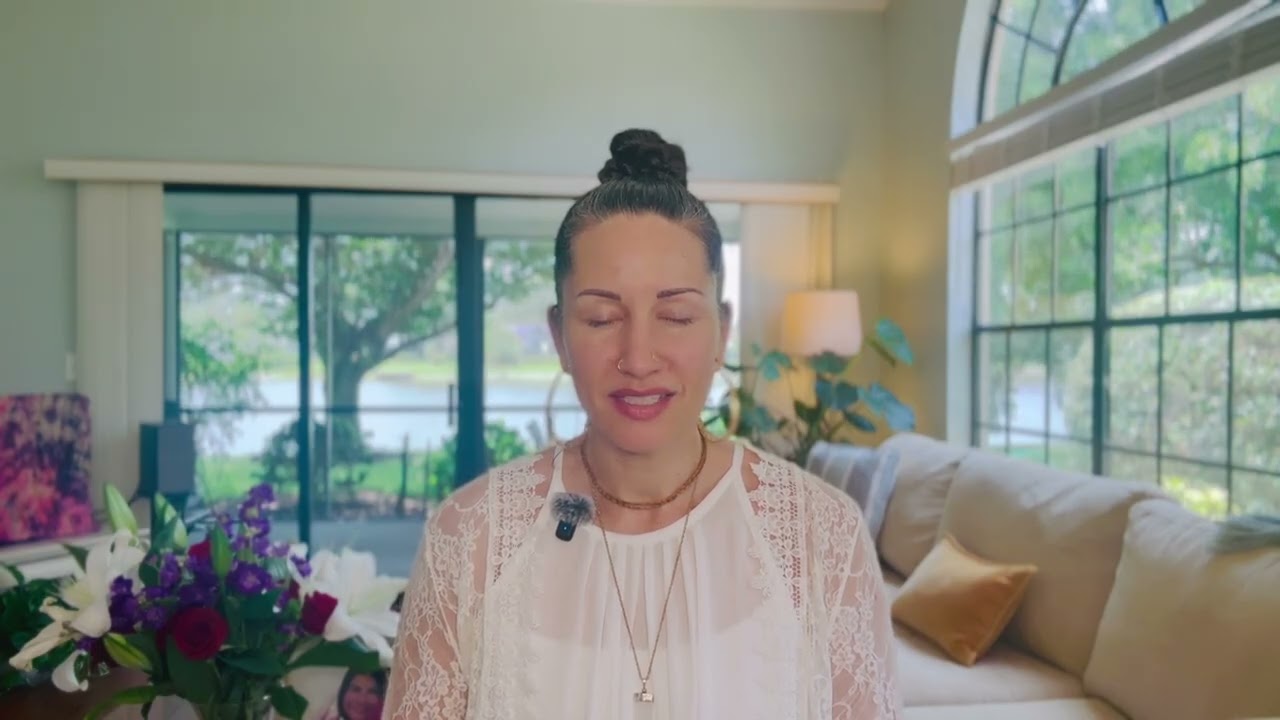
A guided meditation can sound like a soft-focus lullaby, but the fifteen-minute recording Bentinho Massaro posted in August 2015 works more like a set of instructions for a whole life. It opens with a breath, a hand laid over the heart, and an invitation to love yourself, which he describes as "surprisingly easy." From there it moves through one sustained argument: that your consciousness is unaffected by circumstance, that what you vibrate at is what you draw toward you, and that your feelings are a guidance system you can learn to trust. Delivered in a cadence that returns to its key lines the way a band returns to a vamp under a soloist, it asks listeners to stop living for other people's approval and start living, in his words, "as you want to live." What follows explains the ideas inside the recording, how the practice is built, and why its repetition is part of the point, for readers who have not pressed play.
Start with the physical instructions, because the recording does. Massaro asks you to take a deep breath, close your eyes if that feels right, and settle. He is explicit that you should not try to hold on to anything he says: "Don't try to remember anything that I said. Just come back into the space of ever-present intuitive clarity." That line sets the frame. The session is not a lesson to be memorized. It is a state to be entered.
The first move is a gesture. Place your left hand on your heart, he says, "with a sense of self-love, with a sense of appreciation for the very fact that you're here." Around the two-minute mark he gives the sequence in a single breath: feel "some degree of love for yourself," let it increase, let it radiate into the heart center, spread it through the body, and then extend it into "your mental body." Think of it as a slow crescendo built from a single held note. The practice does not begin with a problem to solve. It begins with warmth and widens outward from there.
The most distinctive move in the middle of the recording is the instruction to appreciate everything, including the parts you would rather not have. Massaro asks you to "appreciate all the struggle that you've created and attracted to yourself and the fact that you're still here showing up." He names the texture of it directly: "The bitter sweetness of it all."
Then he widens the frame to what he calls simultaneity. At about 3:27 he says: "The simultaneity of all that you've ever experienced, past, future, present, alternate selves, this cell." The idea is that you are not a single timeline moving in one direction. You are a soul expressing itself in many ways at once, and the meditation asks you to hold all of those expressions in view together rather than sorting them into good and bad. In musical terms, it is a little like hearing every instrument in the arrangement at the same moment instead of following only the lead line. The recording's phrase for this is "the simultaneity of different kinds of songs and realities interweaving."
The practical implication is that appreciation is not a reward you earn after the difficult parts are gone. It is the stance from which you engage them. That is a demanding idea, and the recording does not pretend otherwise. It describes the challenge and the invitation of each moment in the same breath.
This is the philosophical center of the piece. Around 4:23 Massaro describes awareness as "absolutely free and unaffected, undisturbed," and gives the reason: "because it knows it has the power to define this moment in the best possible way." He then uses a spatial image. You are "like the space that holds all these parallel realities," and every appearance "is just beaming through you."
The image of space is doing precise work. A room does not become angry because a voice is raised in it. A stage does not change because the lighting does. By placing the listener in the position of the space rather than the events, the recording suggests that circumstance can be experienced without being taken on as identity. He draws the conclusion explicitly: "You will be free from circumstance. You will be guided by resonance." Whether or not a listener accepts the metaphysics, the instruction is concrete. Notice the difference between the event and your response to it, and remember that the response is the part you can shape.
The recording makes a careful distinction that is easy to skim past. Massaro states it plainly: "What you vibrate as is what you will attract. But you don't care that much about what you attract. You care about what you send out because that is who you are."
That shifts the emphasis from outcomes to expression. The "control panel," as he calls it, is not a list of things you want to receive. It is your current state of being, the frequency you are broadcasting moment to moment. This is where the popular language of attraction gets reoriented. The goal is not to manipulate events but to become the kind of person whose state is coherent with what you value. The meditation keeps returning to words like "resonance," "frequency," and "state of being" for this reason. Resonance is what happens when something is tuned to what is already vibrating nearby, and the recording's argument is that you can tune yourself deliberately.
Here the recording becomes most practical. Feelings, in this framing, are information. The clearest passage comes around 9:57: "Do not waste your consciousness on things that do not feel good. That is your emotional guidance system kicking in, letting you know you're focusing down the wrong line of sight."
The implication is that discomfort is not a moral failing. It is a signal that your attention has drifted into a line of thought that is not expanding your life or your soul. Massaro lists the reasons directly: it is not helping anything, not helping anyone, not expanding your theme, not extracting the most benefit from your life. The alternative he proposes is simple and demanding. "What you desire is to feel good. It's to feel epic... to feel amazing all the time and you can do this more and more."
He pairs this with an instruction to clear house. Around 8:18 he says: "Let go of everybody else that ever taught you anything that did not feel good and not feel amazing. Replace your whole canvas. Replace your mind with only that which you wish to perceive right now." This is a strong claim, and listeners should hold it with the same discernment they bring to any teacher, including this one. The recording itself invites that scrutiny, since it presents itself as an exercise in choosing what you let in. Read as a practice rather than a verdict, the instruction asks you to examine which inherited ideas actually feel like yours.
Anyone who has sat with a good groove knows that repetition is not the same as stasis. Around 9:03 Massaro delivers the central refrain three times in a row: "If I can do it, any one of you can do this. If I can do this, any one of you can do this. If I can do this, any one of you can do this." Each pass is a little more insistent, the way a vocalist re-enters a hook until the room has taken it up.
The content of the refrain is an argument from sameness. "We live by the same mechanisms. We live according to the same laws. We live according to the same nature." If the laws are shared, the claim goes, then nothing about this practice requires special status. That is the heart of the recording's democratic tone, and it is worth noticing how it sits alongside Massaro's self-description on his platform as offering a "non-dogmatic style." The refrain is an invitation to test the principle, not to take it on authority.
The recording also builds toward a kind of lift. By about 8:52 he is describing the endpoint: "the bitter will disappear and the sweet will turn into ecstasy. And you will become Mr. and Mrs. Ecstasy." It is a playful phrase, and it is meant to be. The meditation wants you to finish it smiling.
The recording is clear about sequence. Its instruction is to lift for yourself first, with the hope of service later. Massaro puts it this way: "Lift for yourself so that you may actually maybe one day be of service to other people." Around 9:30 he returns to the idea of lifting "for your resonance" and following your excitement, language that keeps the attention on inner coherence rather than external obligation.
The video description frames the wider teaching in the same three-part way: Self-Realization, Self-Actualization, and Service to Others. This meditation sits mostly in the first two. Its claim is that service is not a duty that drains you but an overflow of a state you have already cultivated. That is a reasonable reading, and it is also the view you can test against your own experience over time.
The recording rewards being approached as a form, not just a listen. You might begin with the left hand on the heart and the breath, then do what Massaro describes: let a degree of self-love grow and move outward. Next, bring to mind one difficulty you have been carrying and try the recording's move of appreciating it as part of the whole, rather than as an enemy to defeat. Finally, notice what your feelings are telling you about where your attention has gone. The recording is not asking you to force positivity. It is asking you to listen to the guidance you already have, and to choose, as deliberately as you can, the line of sight you want to live from.
As with any piece of music, the effect depends on how you play it. Some listeners will find the refrain uplifting and others will find it insistent. Both responses are information.
If this recording opened a door, the video description points to a wider body of work. Bentinho Massaro's teachings on Self-Realization, Self-Actualization, and Service to Others are offered through Massaro University, an online community with a free tier of daily content and a bi-weekly live session where members can ask questions directly. The school's own page, at https://www.bentinhomassaro.com/massarouniversity, describes the membership options and the free app. Start with the recording again, slowly, and notice which lines return to you during the day.