Every moment we face an invisible choice—not once, but continuously, throughout our waking lives. We're feeding one of two distinct voices that compete for our attention, our energy, our moral allegiance. One voice is rooted in love, humility, compassion, and a genuine will to serve. The other growls with greed, envy, anger, and the relentless demand to be superior to others. The question isn't whether both exist within us. The question is which one we're strengthening today.
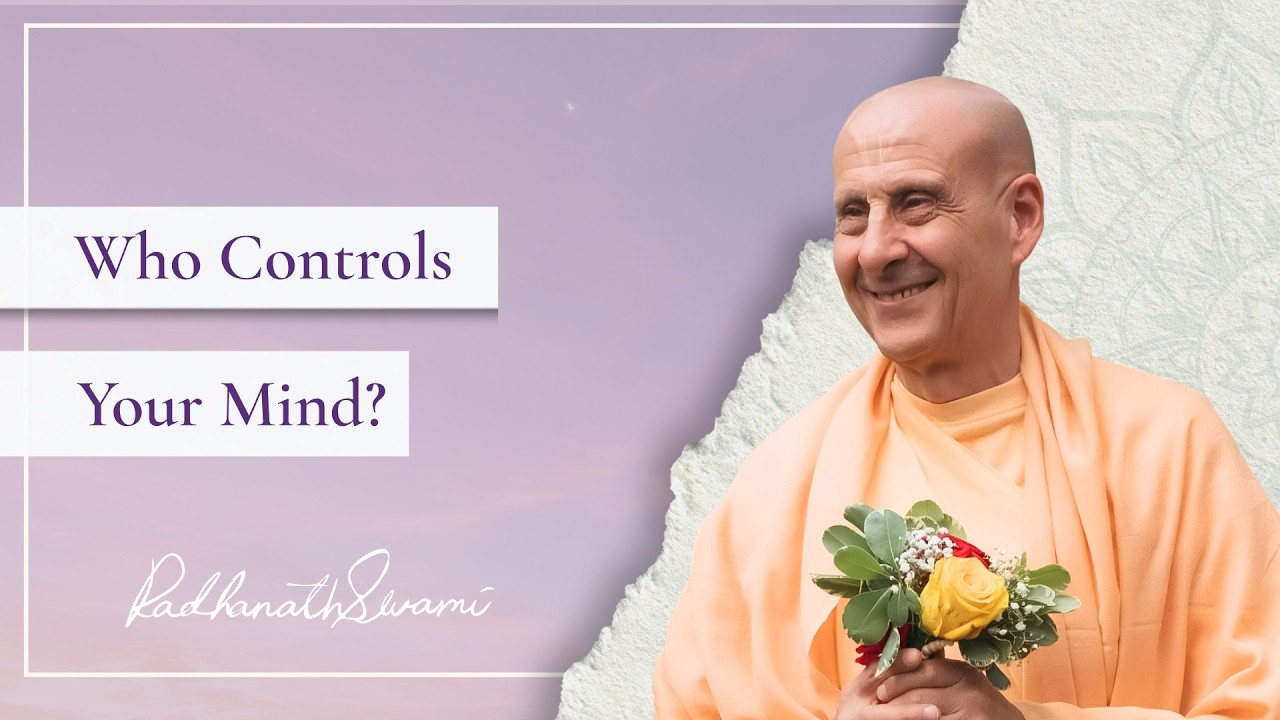
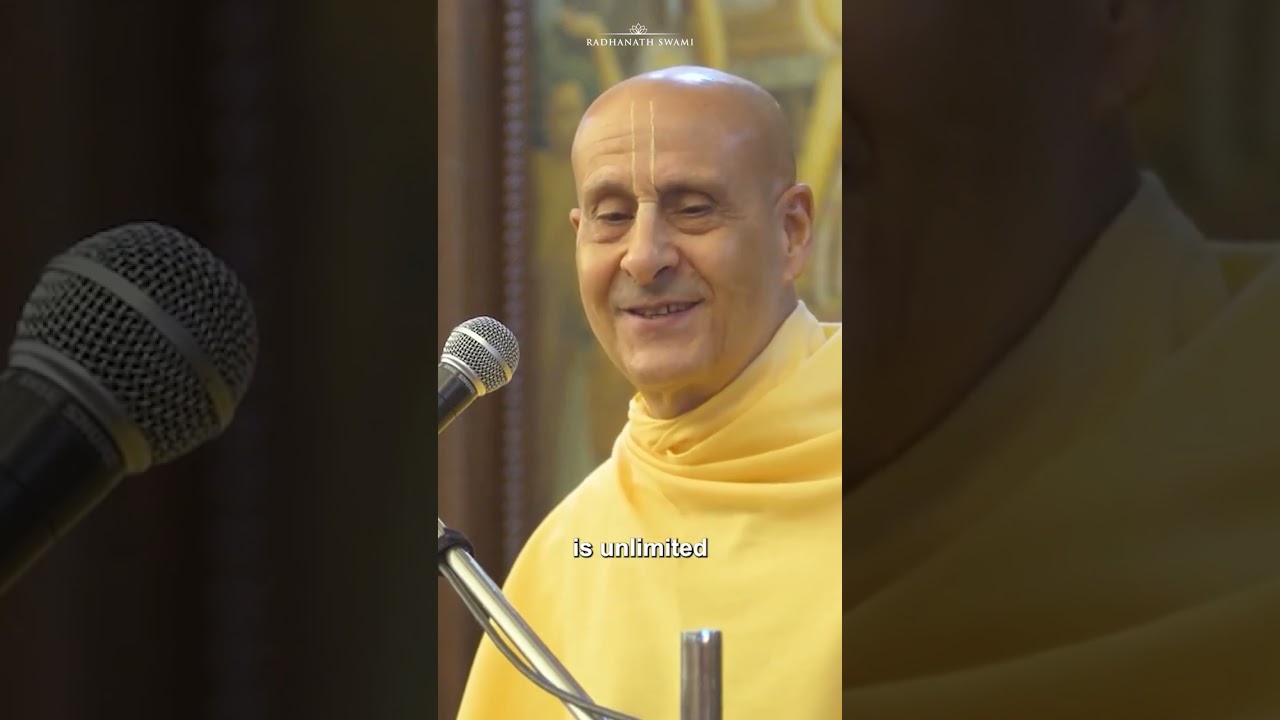
This tension between our higher and lower natures is ancient—appearing in religious texts, philosophy, and psychology across cultures. But Radhanath Swami, a monk in the Bhakti tradition for over five decades, frames it in a way that cuts through intellectual abstraction: the parable of two dogs, one good and one bad, both living in the same mind.
The Architecture of Identity and Suffering
Before introducing the dogs, Swami establishes something crucial: most of our inner conflict stems from misidentifying who we really are. We attach ourselves to labels—male, female, race, nationality, religion, ideology. "When we start thinking I'm male or I'm female or I'm white or I'm black or I'm red or I'm yellow or I'm brown, or I'm Jewish or Christian or Muslim or Hindu," Swami explains, "we identify ourselves with all of these dresses, internal and external dresses we may assume." And when we do, the world becomes full of threats. Those with different labels become competitors, outsiders, potential enemies.
This misidentification creates what Swami calls an "obsessive need to feel ourselves superior to others." When inner fulfillment is absent—when we don't know or trust who we fundamentally are—we must constantly prove ourselves through comparison and dominance. It's exhausting, and it breeds isolation even amid crowds.
But there's a door out. When we genuinely understand who we are beneath all labels, "other people's happiness becomes my happiness. Other people's suffering becomes my suffering." This isn't sentimentality. It's the natural result of recognizing your fundamental nature—which, Swami suggests, is connected to everyone else's.
Which Dog Are You Feeding?
The good dog represents our divine nature: "Humility, compassion, love, generosity, a will to selflessly serve." The bad dog embodies our greed, selfish lusts, envy, anger, and arrogance. Both exist. Both bark for attention. Both want to be fed. And here's the mechanism that changes everything: "Whichever one we choose to feed is the one that's going to become stronger."
This isn't mysticism. It's behavioral, neurological, spiritual fact. Every time you act in service to someone else, you're strengthening neural pathways and heart patterns associated with compassion. Every time you prioritize yourself over others' wellbeing, you're strengthening the patterns of the bad dog. You can detect which one you've been feeding most by observing your own mind. If greed is howling loudly, if the need to be superior is nearly drowning you out, then you've been feeding that dog a long time through "your choices moment to moment." Sometimes, Swami notes, the good dog is "just begging for attention, but we can hardly hear it in the presence of the reverberating howls of the bad dog."
The Story of Three Dogs and a Mother's Love
To illustrate the power of this teaching, Swami shares a story told to him by Sharon and David, two American animal rights activists visiting Varanasi, India. They encountered a three-legged female dog on the streets—thin, hungry, moving with difficulty. Moved by her condition, they bought rotis (bread) and began distributing them.
What happened next revealed the bad dog in action. Other hungry dogs arrived, and as soon as the rotis appeared, conflict erupted. "Hunger can bring out the worst in people sometimes," Swami observes. The dogs didn't cooperate. They didn't wait. They fought, barked, and snatched. Roughly a dozen dogs scrambled for each piece of bread, aggression rising with each distribution.
Then something shifted. One dog caught their attention—not through dominance, but through humility. This dog was patient. He wasn't fighting with the others. He waited while all the other dogs ate their fill, then approached with gentleness. Sharon and David placed a roti in his mouth. His eyes glistened, appearing "glossed over with affection and gratitude." He bowed his head humbly and walked away without eating.
They followed him. Two blocks later, they discovered why. Beneath an abandoned cart lay the three-legged mother and her newborn puppy. The male dog—perhaps her mate—gently laid the bread in front of the tiny puppy. The puppy ate enthusiastically. The mother ate nothing. The father ate nothing.
"They were literally with tears in their eyes," Swami says. "They were watching that little puppy eat the bread, and they were just so happy, far happier looking and more satisfied than all those other dogs who ate the bread themselves."
What Made One Dog Different?
The answer is deceptively simple: love. Specifically, compassion for another being. "When he was feeling love and compassion for that little baby, it brought out such good qualities in him," Swami explains. The moment that male dog extended care beyond himself, his entire consciousness transformed. Humility, patience, selflessness, and even joy emerged—not because he received something, but because he gave.
The dogs that fought, by contrast, were "selfishly oriented. Maybe it was all justified. They were hungry. But it brought about so much conflict and so much anger and so much fear." Their hunger was real, but it was untempered by any higher purpose, any connection to something beyond their own bellies.
This is the mechanism Swami wants us to see in our own lives. The good dog and bad dog aren't metaphors for compartmentalized aspects of the self; they're descriptions of the entire organism's orientation. When we're fed by love and compassion, when we're connected to something larger than ourselves, entire qualities blossom. When we're driven by greed and fear, entire structures collapse into conflict.
The Spiritual Platform and Real-World Solutions
Swami's teaching extends beyond personal psychology. He argues that the problems facing the world today—political conflict, technological disruption, educational fragmentation, broken relationships—often persist because we're trying to solve them without the "larger perspective of who we really are, who other people really are, and what is the actual nature of the environment we're living in, and what is our relationships with each other and God."
When solutions are built on the foundation of ego—"in the name of politics, in the name of science and technology, in the name of education, in the name of social development"—they tend to generate new problems larger than the ones they addressed. This happens because the perspective is too narrow. "Unless we see through the lens of an inner connection with the environment and with each other with ourselves," Swami warns, "even good intentions, our solutions will probably create bigger problems than the original problem in due course."
The good dog and bad dog analogy applies at every scale: personal, relational, institutional, global. The question is always the same: Are we making decisions from love and compassion, or from fear and self-interest?
The Root Practice: Mantra and Inner Fulfillment
Toward the end of his talk, Swami introduces a Sanskrit teaching: "The word 'man' is the root of mantra." A mantra, he explains, is "a sound vibration that actually brings peace, that brings inner fulfillment to the mind. That actually connects our awareness, our consciousness to its original source."
This isn't incidental. The practice of chanting, of engaging with sacred sound, is one of the primary methods in the Bhakti tradition for feeding the good dog. It shifts consciousness from the ego's narrow needs toward the expansive reality of interconnection and divine love. Through this practice, the good dog gets louder. The bad dog's howls recede.
Where to go from here
The invitation in Swami's teaching is immediate and personal: notice today which dog you're feeding. In moments of decision—when you could serve someone or serve yourself, when you could practice patience or demand superiority, when you could extend compassion or protect your ego—which voice do you follow? That choice, made moment by moment, hour by hour, day by day, is literally building your character, your relationships, and your consciousness. The good dog is always there, patient and humble, waiting for attention. The question is whether we'll learn to hear it above the noise.
Monk in the bhakti tradition who has spent over 50 years guiding individuals toward deeper purpose and directing transformative social initiatives across India, Europe, and North A…
The good dog represents our divine nature—humility, compassion, love, and selfless service. The bad dog represents ego, greed, envy, anger, and arrogance. Both exist within us, and whichever one we feed through our daily choices becomes stronger. The analogy teaches that our character is shaped by what we give attention and energy to moment by moment.
When we attach our identity to external labels—race, religion, nationality, gender, ideology—we perceive those with different labels as threats. This generates an obsessive need to feel superior to others. True inner peace comes from understanding who we are beyond these dresses, which naturally leads to recognizing our fundamental connection with all people.
The story shows how love and compassion transform consciousness. The male dog that was humble and patient, who gave food to a mother and puppy instead of eating himself, experienced profound fulfillment and peace—far more than the dogs who fought over food. His good qualities emerged precisely because he was connected to something beyond his own hunger.
Without inner fulfillment, we obsessively try to feel superior to others to prove our worth. When we experience genuine inner connection and love, the desperate need for external validation dissolves. We naturally shift from self-oriented choices to choices rooted in compassion, which paradoxically brings true happiness.
When we approach problems from a narrow, ego-based perspective—without understanding our fundamental connection to others and the larger context—our solutions tend to generate unintended consequences. Real, lasting solutions require seeing through the lens of love and recognizing our interdependence.
A mantra is a sacred sound vibration that brings peace and inner fulfillment. It connects our consciousness to its source and, in the Bhakti tradition, is a primary practice for feeding the good dog—shifting awareness from ego's narrow needs toward the expansive reality of divine love and interconnection.