BrightStar

Alle Events durchsuchen

Bewusste Zusammenkünfte entdecken

events

Yoga
Meditation
Breathwork
Qigong
Tai Chi
Sacred Music
World Music
Medicine Music
Sound Healing
Ecstatic Dance
Beliebte Reiseziele
BaliSedonaLos AngelesCosta RicaNew YorkSan FranciscoAustinMiamiJoshua TreeTulum
Alle Kategorien anzeigenAlle Reiseziele anzeigen

Alle Funktionen entdecken

Leistungsstarke Tools für Ihre Veranstaltungen

Plattform-Funktionen

Intelligente dynamische Preisgestaltung
Ticket-Kategorien
Sitzplatzreservierung
Warenkorbabbruch-Wiederherstellung
Besucher-Wiedergewinnung
Spenden & Staffelpreise
Affiliate-System
Ticket-Scanner
Rabattcodes
Individuelle Fragen
Ticket-Teilen
Upsells & Extras
Analysen & Berichte
E-Mail-Sequenzen
Warteliste / Benachrichtigen / Erinnern
Menschen & Orte
Artists & TeachersEvent OrganizersVenues & StudiosKnowledge BaseGlossaryInspiration
Alle Funktionen anzeigenÜber uns
PreiseBlog
Language
Saved events
Alle Veranstaltungen durchsuchen

events

YogaMeditationBreathworkQigongTai ChiSacred MusicWorld MusicMedicine Music

Beliebte Reiseziele

BaliSedonaLos AngelesCosta RicaNew YorkSan Francisco

Menschen & Orte

Artists & TeachersEvent OrganizersVenues & StudiosKnowledge BaseGlossaryInspiration

Plattform-Funktionen

Intelligente dynamische PreisgestaltungTicket-KategorienSitzplatzreservierungWarenkorbabbruch-WiederherstellungBesucher-WiedergewinnungSpenden & StaffelpreiseAffiliate-SystemTicket-ScannerRabattcodesIndividuelle FragenTicket-TeilenUpsells & ExtrasAnalysen & BerichteE-Mail-SequenzenWarteliste / Benachrichtigen / Erinnern
Alle Funktionen anzeigenÜber uns
PreiseBlog
AnmeldenSuchendeKreative
  • Alle Events durchsuchen
  • Für Suchende
  • Yoga
  • Meditation
  • Breathwork
  • Qigong
  • Tai Chi
  • Heilige Musik
  • Weltmusik
  • Medicine Music
  • Klangheilung
  • Ecstatic Dance
  • Retreats
  • Workshops
  • Alle Kategorien →
  • Bali
  • Sedona
  • Los Angeles
  • Costa Rica
  • Tulum
  • Byron Bay
  • San Francisco
  • Austin
  • New York
  • San Diego
  • Denver
  • Seattle
  • Portland
  • Miami
  • Alle Städte →
  • Be Found
  • Sell Globally
  • Für Kreative
  • Für Teams
  • Für Autoren
  • Für Lehrer
  • Für Kirtan-Künstler
  • Für Studios
  • Für Festivals
  • Für Retreat-Zentren
  • Für gemeinnützige Organisationen
  • Markenbotschafter
  • Fallstudien
  • Kostenloses Ticketing
  • Elevate
  • Amplify
  • 350.000+ Käufernetzwerk
  • Warenkorbabbruch-Wiederherstellung
  • Intelligente dynamische Preisgestaltung
  • Ticket-Kategorien
  • Wiederkehrende Veranstaltungen
  • Sitzplatzreservierung
  • Affiliate-System
  • Warteliste / Benachrichtigen
  • Ticket-Scanner
  • Einbettungs-Widget
  • Event-Syndication
  • Nachrichten
  • Integrationen
  • Berichte
  • Alle Funktionen →
  • Über uns
  • Das Ökosystem
  • Blog
  • Glossar
  • Inspiration
  • Hilfe-Center
  • Kontakt
  • API-Dokumentation
  • Marken-Assets
  • Karriere
  • Presse
  • Nutzungsbedingungen
  • Datenschutzrichtlinie

Events

  • Alle Events durchsuchen
  • Für Suchende
  • Yoga
  • Meditation
  • Breathwork
  • Qigong
  • Tai Chi
  • Heilige Musik
  • Weltmusik
  • Medicine Music
  • Klangheilung
  • Ecstatic Dance
  • Retreats
  • Workshops
  • Alle Kategorien →

Reiseziele

  • Bali
  • Sedona
  • Los Angeles
  • Costa Rica
  • Tulum
  • Byron Bay
  • San Francisco
  • Austin
  • New York
  • San Diego
  • Denver
  • Seattle
  • Portland
  • Miami
  • Alle Städte →

Für Kreative

  • Be Found
  • Sell Globally
  • Für Kreative
  • Für Teams
  • Für Autoren
  • Für Lehrer
  • Für Kirtan-Künstler
  • Für Studios
  • Für Festivals
  • Für Retreat-Zentren
  • Für gemeinnützige Organisationen
  • Markenbotschafter
  • Fallstudien
  • Kostenloses Ticketing
  • Elevate
  • Amplify

Funktionen

  • 350.000+ Käufernetzwerk
  • Warenkorbabbruch-Wiederherstellung
  • Intelligente dynamische Preisgestaltung
  • Ticket-Kategorien
  • Wiederkehrende Veranstaltungen
  • Sitzplatzreservierung
  • Affiliate-System
  • Warteliste / Benachrichtigen
  • Ticket-Scanner
  • Einbettungs-Widget
  • Event-Syndication
  • Nachrichten
  • Integrationen
  • Berichte
  • Alle Funktionen →

Unternehmen

  • Über uns
  • Das Ökosystem
  • Blog
  • Glossar
  • Inspiration
  • Hilfe-Center
  • Kontakt
  • API-Dokumentation
  • Marken-Assets
  • Karriere
  • Presse
  • Nutzungsbedingungen
  • Datenschutzrichtlinie
BrightStar
© 2026 BrightStar. Alle Rechte vorbehalten.
Inspire

Mind As Mirror: How PerceptionShapes Your Inner World

Radhanath Swami
Radhanath Swami
Sep 16, 2026
8 Min. Lesezeit
Ansehen · 8

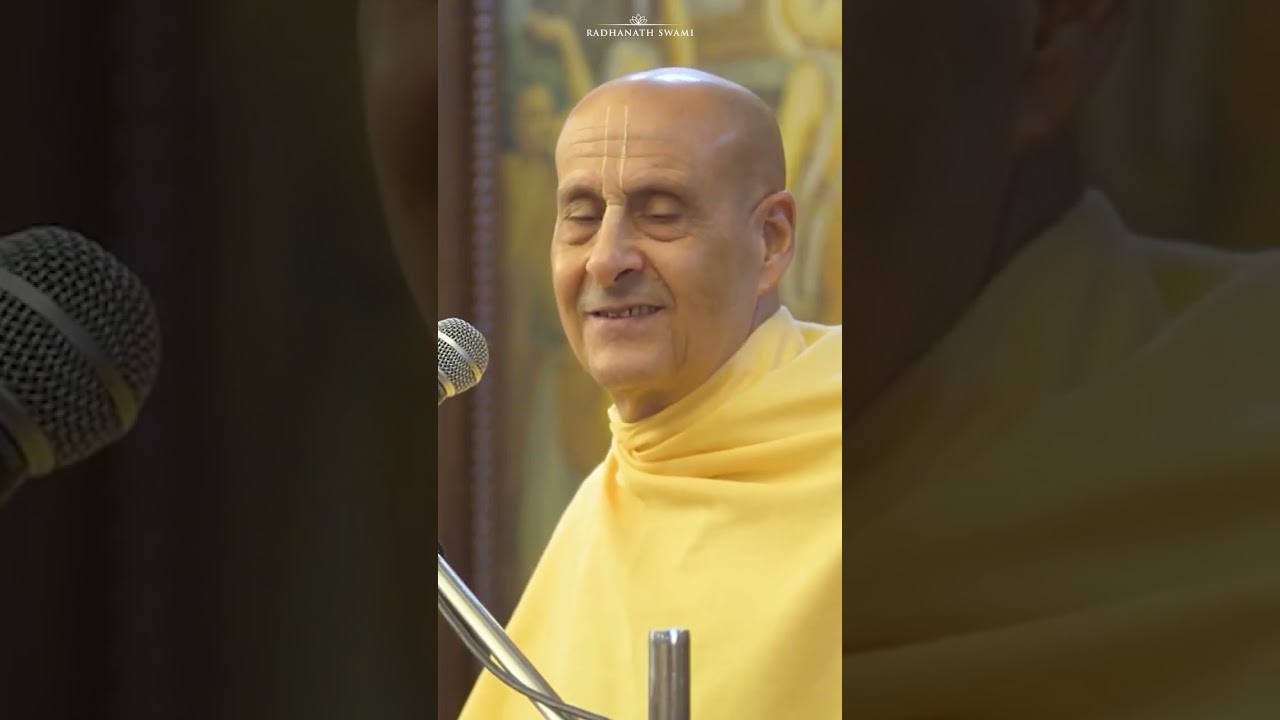
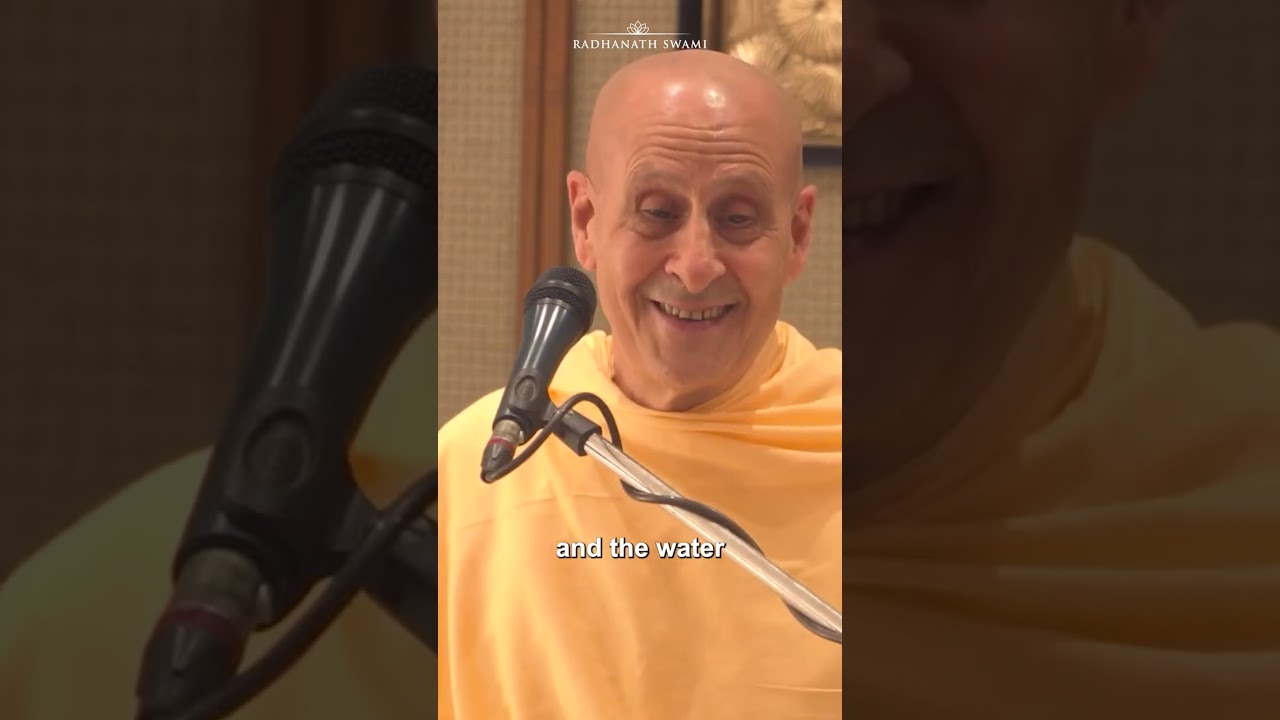
The same rose appears differently to everyone who looks at it. A botanist sees Latin nomenclature and the history of a seed. Someone in love sees a gift for their beloved. An artist observes texture and color. A person with allergies sees a threat. To a devotee, it is God's handiwork in the world. The flower does not change. The mind does.

This is the opening insight in a talk by Radhanath Swami, a spiritual teacher in the Bhakti tradition for over five decades, who draws on the ancient Bhagavad Gita to explore one of the most consequential questions in human experience: how do we master perception itself? The Sanskrit word for mind is man—and the Gita offers a paradox that cuts to the heart of spiritual practice. The mind, the text says, becomes one's best friend when controlled, and one's worst enemy when left to its own devices. Not through any external force, but through the lens we choose to look through.

Lesen · 6 Abschnitte

The Colored Glasses Analogy: Why Everyone Sees Differently

Radhanath Swami recalls a teaching from his own guru, Shriapa, that reframes the act of perception. Imagine looking at the world through colored glasses. Green glasses turn everything green. Blue glasses make the world blue. Clear glasses reveal actual color. Yet most of us move through life looking at the same situations, the same people, the same events—seeing them entirely differently because we are not looking through our eyes alone. We are looking through the mind.

In sixty-five years, Radhanath Swami observes, he has never met two people who see anything the same way. Even people with identical eyesight perceive the world differently. The difference lies not in the external world but in the texture of each mind—shaped by experience, education, identity, and the associations we carry. A botanist and a lover and an artist and an allergic person can stand in the same room and occupy entirely different realities, all of them genuine, all of them real to the person experiencing them.

This is not philosophy. It is the basic architecture of consciousness.

Opportunity or Impediment: The Choice That Changes Everything

The implications ripple outward. Because if the mind is the lens, then every situation in life can be seen in two ways: as an opportunity or as an impediment. And this is where the choice becomes crucial. Spiritually successful people—and often successful people in other domains—share a common trait: they see opportunities even in apparent setbacks. They do not deny the difficulty. They reframe the meaning.

Radhanath Swami illustrates this with the story of his own guru's arrival in the West. In 1965, at sixty-nine years old, Shriapa left Vrindavan, a sacred place in India where he had been living, to bring the message of dharma and love of God to the world. He boarded a cargo ship with essentially nothing—only forty rupees that could not be exchanged, a few books, and a heart of compassion. He arrived in America unknown, living in the Bowery, a marginalized neighborhood in New York City. Few people were interested. But within years, he had established a hundred temples, published and distributed hundreds of millions of books and chants, and attracted tens of thousands of disciples and followers.

When asked how he achieved this, Shriapa offered an analogy: a person with nothing wants to start a business. Walking down the road, he sees a dried-up pumpkin—something most people would ignore. He picks it up. Later, he finds a branch. Then a wire. He connects them, creates a musical instrument, and begins a business. "That's the way I started this spiritual society," Shriapa said. "Just whatever I found, I just saw the beauty and the value of it."

This is the alchemy of reframing. The same obstacles that stop others become resources in the hands of someone whose mind is trained to see value rather than only lack.

Unity in Difference: The Body as Teacher

Radhanath Swami shifts to another metaphor, one drawn from the body itself. The human body contains organs of vastly different shapes and functions. The eyes see; the heart does not, yet the heart needs the eyes' information. The pancreas cannot do what the lungs do. Each part is specialized and unique. Yet all these different parts appreciate and recognize the function of every other part. They do not compete. They do not judge. They collaborate.

"When we learn to do that," Radhanath Swami says, "we actually have a healthy mind. We actually can create a healthy society. When instead of being arrogant or fearful of our differences, we learn to value and appreciate our differences—that's a higher level of consciousness that requires a state of mind."

This teaching addresses a specific pathology of modern consciousness: the tendency to flatten difference into threat. In a world saturated with fear and envy and the ceaseless pursuit of desire, differences become sources of anxiety rather than sources of richness. The body knows better. Each organ does not demand to be a kidney. Each organ celebrates what it is and receives the functioning of others.

Beyond Fear: The Child on the Stormy Sea

The deepest teaching in Radhanath Swami's talk centers on the nature of fear itself and how it dissolves in the presence of secure relationship. He recounts a story told to him by a ninety-six-year-old spiritual leader in India—a man who, decades earlier, was a young man traveling on a boat crossing the Arabian Sea.

A massive storm arose. This was the 1930s, long before modern navigation systems. The waves were gigantic. The winds were forceful. The rains pounded down relentlessly. The boat was a small vessel being thrown in every direction, and it seemed certain that everyone aboard would die. Passengers screamed. People held their children. They wept. They were bewildered, unable to do anything.

In the midst of this chaos, my friend saw a small child, about five years old, sitting peacefully. The boy was being pushed around like everyone else, but he remained composed and serene. My friend asked him, "Aren't you afraid?"

The child replied: "I have nothing to fear because my mother is near."

The storm passed. Nobody died. The boat reached its destination. But the story changed the young man's life. He had witnessed something profound: the dissolution of fear not through denial of danger but through a deeper confidence—the presence of someone you trust absolutely.

This is where Radhanath Swami brings the teaching to its spiritual apex. From the perspective of spiritual relationship, when we actually make that connection with God—with the supreme mother, the supreme father—something fundamental shifts in the structure of the mind. Fear no longer dominates. A natural, innate love awakens. We begin to see everything through the lens of presence rather than abandonment. We see connection rather than isolation.

The Architecture of a Transformed Mind

The path Radhanath Swami describes is not about suppressing the mind or achieving some blank state of consciousness. It is about transformation at the level of relationship. The mind remains active, discerning, alive. But it operates from a different root. When we feel that presence—the presence of divine love, the presence of relationship with the ultimate—we rise above hatred and selfish passions. We are still able to see problems and impediments. But we see them now as opportunities for deepening connection, for growth, for the expression of love.

This teaching echoes throughout the Bhagavad Gita, the ancient Hindu scripture that Radhanath Swami references. The Gita does not promise a life without challenges or storms. It offers something more practical: a way of relating to life that does not depend on changing circumstances but on changing the mind itself—or rather, changing the ground from which the mind operates.

The colored glasses remain. But when we see through them in connection with the divine, the colors they reveal are no longer distortions. They become the particular lens through which we are meant to see the world, to serve the world, to love the world.

Where to go from here

The invitation is both simple and radical: notice what colored glasses you are wearing. What associations, fears, desires, and identifications are shaping the way you perceive your situation right now? Can you see the same situation through different eyes? And if you find yourself stuck in a single view, consider whether you are truly connected to a relationship larger than yourself—something or someone you trust to hold you even in the storm.
Transcript

[0:00] How many of you have experience of

[0:03] trying to manage your mind?

[0:11] How many have the experience [music] of

[0:13] your mind managing you?

[0:20] >> [clears throat]

[0:22] >> It's interesting [music] because

[0:26] in Sanskrit,

[0:28] the ancient language of the Indian

[0:31] scriptures,

[0:33] the [music] word for mind is man.

[0:38] [music] So to manage the mind,

[0:43] [music]

[0:44] the Bhagavad Gita tells

[0:47] [music] atmatasa

[0:51] that for one who learns to control the

[0:54] mind [music]

[0:56] the mind is one's best friend

[0:59] but for one who fails to do so the very

[1:02] mind becomes [music] the worst enemy.

[1:08] So are we living with our best friend

[1:12] or our [music]

[1:13] enemy?

[1:16] We have free will to make that choice.

[1:20] [music]

[1:22] Just as my beloved guru Shriapa would

[1:26] use an analogy that when you

[1:30] see through green colored glasses,

[1:32] everything [music] looks green.

[1:35] And if you see the [music] same sight

[1:39] through yellow colored glasses, it looks

[1:41] yellow.

[1:43] And if it's [music] blue colored

[1:44] glasses, it looks blue. it. If it's

[1:46] clear glasses, you see it for its actual

[1:49] color.

[1:52] So similarly, we are seeing through the

[1:54] mind,

[1:56] not just through the eyes.

[2:00] Because even people with the same type

[2:02] of eyes [music] and the same vision,

[2:06] what we see in the world is so

[2:08] different.

[2:11] In my 65 [music]

[2:12] years, I don't think I've ever met

[2:14] anyone who sees anything [music] the

[2:17] same way

[2:20] because everyone has a very unique state

[2:22] of mind

[2:24] [music]

[2:25] and we can give some general general

[2:28] psychological [music]

[2:30] categories to the way people think but

[2:33] still everyone is so personal [music]

[2:36] and unique [snorts]

[2:39] according to the experience. experiences

[2:41] [music] that we've had, the education

[2:43] we've had, according to what we [music]

[2:46] identify with and who we identify with,

[2:49] it all very much colors the way we see

[2:54] everything in the world.

[2:59] An example, [music]

[3:02] a flower.

[3:04] One person will see a beautiful rose

[3:06] flower. If they're a botonist, they will

[3:10] [music] they will start thinking about

[3:11] the Latin name and where its original

[3:14] seed was grown and become really

[3:17] fascinated by that idea.

[3:21] If a person's in love with someone,

[3:22] [music]

[3:23] they'll see that rose, let me get it,

[3:26] and give it to my lover. And how

[3:28] beautiful she will be if it's in her

[3:31] hair.

[3:33] Another person will see the rose if

[3:35] they're an artist. the texture, the the

[3:38] shapes, the colors, and how beautiful a

[3:42] work of art it is.

[3:46] If a person has [music]

[3:47] allergies, they'll see the rose and just

[3:50] see like an enemy. I have to get away

[3:52] from this rose or I'm going to start

[3:53] sneezing. And

[3:56] [music]

[3:58] if a person loves God, they will think,

[4:01] "Oh, this is God's creation, God's art

[4:04] within the world.

[4:06] So everyone is going to see the same

[4:08] thing in a different way.

[4:14] And similarly people see situations

[4:17] [music] either as opportunities

[4:19] or as impediments.

[4:22] That's our choice.

[4:25] And generally [music] a person who's

[4:26] really successful

[4:28] especially from a spiritual perspective

[4:31] but in other ways also is [music]

[4:34] we see opportunities everywhere

[4:39] even in a even in apparent setbacks.

[4:46] I remember when [music]

[4:48] Shria Praad who is my guru he came to

[4:51] the west in 1965.

[4:54] He left a very beautiful holy place

[4:56] called bindavan [music]

[4:58] in India where he was living

[5:03] but he wanted to give this message of of

[5:07] dharma of of love of god in a very very

[5:11] universal way. He wanted to present it

[5:14] [music]

[5:15] to the whole world.

[5:18] So at the age of [music] 69 he boarded a

[5:21] cargo ship

[5:23] that was 50 [music] years ago from this

[5:26] year.

[5:27] And when he came to America

[5:30] he only had 40 rupees which he found he

[5:33] couldn't exchange [music] it. So he had

[5:36] nothing. He just had a few books and he

[5:41] had a heart full of compassion

[5:44] and he was living in ghetto called a

[5:46] bowy [music] in New York City for a

[5:48] while and nobody was really taking

[5:50] interest because he was not known.

[5:54] And little by little in the 1960s a few

[5:57] people of the counterculture or hippies

[6:00] were kind of taking a little interest

[6:02] [music] in what he was speaking and in

[6:04] the chanting. And a few years later he

[6:08] had like a hundred temples.

[6:11] He had printed, published and

[6:13] distributed hundreds of millions of

[6:15] books, neadas. He had [music] tens and

[6:18] thousands of disciples and followers.

[6:22] And somebody asked how he did it.

[6:27] and he explained [music]

[6:29] an analogy

[6:32] of a person who doesn't have anything,

[6:34] but they want to start a business.

[6:38] So, he's walking down the road and he

[6:41] sees [music] an old dried up pumpkin.

[6:45] Now, if we see an old dried up pumpkin,

[6:47] we'll usually just walk by. Yes. [music]

[6:50] We don't even show it any interest. But

[6:53] he'll pick up that dried up pumpkin.

[6:56] Then he'll keep walking and he'll see

[6:58] just a branch of [music] a tree laying

[7:00] in the side of the road. We see so many

[7:03] of those. He'll pick it up. He'll walk a

[7:06] little longer and he'll find a wire. So

[7:10] he takes the branch and connects it to

[7:12] the pumpkin and puts the wire across it

[7:16] and makes a musical instrument and

[7:18] [music] starts a business.

[7:22] Ro put that's the way I started [music]

[7:24] this um spiritual society just whatever

[7:28] I found

[7:31] I just saw the beauty and the value of

[7:34] it.

[7:39] The human body there are [music] various

[7:42] organs and

[7:47] different functioning [music] limbs

[7:49] within this body and the senses.

[7:53] We have our eyes

[7:56] they see.

[7:58] The heart can't see,

[8:01] but the eyes [music] need the heart. And

[8:03] the heart needs the eyes. And the

[8:05] kidneys need the knees. And the pancreas

[8:08] can't do what the lungs do. They're

[8:11] different shapes. [music]

[8:14] They each have a very, very specific

[8:16] function.

[8:18] But all these different parts of the

[8:20] body, [music]

[8:21] they appreciate and recognize what every

[8:24] other part can do.

[8:29] And when we learn to do that, we

[8:32] actually have [music] a healthy mind.

[8:36] We actually can create a healthy

[8:38] society.

[8:41] When instead [music] of being arrogant

[8:44] or fearful of our differences,

[8:47] we learn to value and appreciate our

[8:49] differences.

[8:51] [music]

[8:52] That's a higher level of consciousness

[8:56] that requires

[8:58] a state of mind.

[9:03] In today's [music] world,

[9:05] there's so much fear

[9:10] and there's [music] so much envy

[9:14] and so much hatred [music]

[9:18] and so many desires we're trying to

[9:20] fulfill.

[9:23] >> [music]

[9:25] >> From a spiritual perspective,

[9:29] [music]

[9:31] these things can create great problems

[9:34] when [music] we're disconnected from

[9:38] who we really are.

[9:43] I [music] have a friend,

[9:46] he's I think he's 96 years old now. I've

[9:49] known him for many years.

[9:51] and he's a very eloquent speaker [music]

[9:54] still to this day

[9:57] and he's a spiritual leader in India

[10:02] and I [music] remember he told me a

[10:03] story

[10:05] when he was a little boy

[10:08] now a little actually he was a young man

[10:11] but young man for him was long before

[10:14] [music] any of us were born

[10:18] and he was on a boat

[10:20] >> [music]

[10:21] >> that was crossing the Arabian Sea.

[10:26] And while he was on that voyage, there

[10:29] was [music] a massive storm.

[10:34] Now, this is long ago, [music]

[10:35] maybe in the 1930s.

[10:39] So, they didn't have all kinds of

[10:41] computer radars and all of that stuff.

[10:44] So, the waves were [music] gigantic and

[10:48] the winds were

[10:51] extremely forceful

[10:54] and [music] the and the rains that were

[10:56] coming down were quite inundating.

[11:01] And the boat was like a little matchbox

[11:03] just being [snorts]

[11:06] pushed up and gone down and going in

[11:09] every direction.

[11:11] And it appeared inevitable to everyone

[11:13] that the boat [music] would sink

[11:16] and they would all die.

[11:19] So people were screaming and people were

[11:23] embracing little children and crying and

[11:26] they were bewildered. They just didn't

[11:28] know what to do.

[11:31] And while all this was going on, my

[11:34] friend saw a little a little boy.

[11:38] He was just about 5 years old

[11:41] and he was just sitting really

[11:43] peacefully.

[11:44] [laughter]

[11:45] He was being pushed around like

[11:48] everybody else, but he was very

[11:49] peaceful, very composed. [music]

[11:54] And my friend asked him, "Aren't you

[11:55] afraid?"

[11:57] [music]

[11:58] And the little boy said, "I have nothing

[12:02] to fear because my [music] mother is

[12:04] near."

[12:08] Anyways, [music] the storm ended and

[12:11] nobody died [laughter] and the boat

[12:14] reached [music] its destination.

[12:17] But my friend told me this was one of

[12:19] the most important events of his life.

[12:23] He learned something so important

[12:25] [music] from that little child.

[12:29] What have I to fear when my mother

[12:31] [music] is near?

[12:34] He was beyond fear because

[12:36] he had that confidence in his [music]

[12:39] mother's love

[12:43] [music] and from the perspective

[12:46] of our relationship when we actually

[12:49] make that relationship that connection

[12:52] with the supreme soul or with God

[12:57] our supreme mother our supreme father.

[13:06] It describes in Bhagavad Gita

[13:09] for one who sees me everywhere and

[13:11] everything in me for that person I'm

[13:14] never lost nor is that person [music]

[13:15] ever lost to me.

[13:19] So when we actually make a connection

[13:21] with our own soul and [music] our

[13:24] natural innate love awakens for the

[13:28] supreme for God there's many names and

[13:31] different traditions

[13:33] in the Bhagavad Git called Krishna

[13:37] [music] then we naturally see everything

[13:40] in relationship

[13:43] [music]

[13:44] and we can feel that presence within our

[13:46] heart,

[13:48] our mother, our father forever.

[13:52] The soul is eternal. Our relationship

[13:56] with God is eternal.

[13:59] When we actually feel that presence,

[14:04] we actually rise above fear.

[14:07] [music]

[14:09] And once we rise above fear,

[14:12] [music] that means we rise against

[14:14] prejudice.

[14:16] >> [music]

[14:17] >> We rise above the dualities of of of of

[14:20] hate and and selfish passions

[14:26] because we're actually feeling

[14:28] satisfied, fulfilled.

Radhanath Swami
ArtistRadhanath Swami

Monk in the bhakti tradition who has spent over 50 years guiding individuals toward deeper purpose and directing transformative social initiatives across India, Europe, and North A…

Profil ansehenWebsite
Themen erkunden
Perception-mindBhagavad-gitaConsciousnessFear-anxietySpiritual-practice

Hast du Fragen?

Häufig gestellte Fragen

According to Bhakti teaching, we see not just through our eyes but through our mind—the lens shaped by our experiences, education, identities, and associations. The same rose appears differently to a botanist, a lover, an artist, and an allergic person because each is looking through a different mental lens or set of colored glasses.
The Bhagavad Gita teaches that the mind becomes your best friend when you learn to control it—meaning to direct its perception consciously rather than being driven by fear, envy, and desire. This happens through spiritual practice and developing a deeper relationship with the divine, which rewires how you see obstacles and opportunities.
It means changing the lens through which you interpret difficulty. Instead of seeing only loss or pain, you train your mind to perceive potential for growth, service, or spiritual deepening. Radhanath Swami's guru demonstrated this by building a spiritual movement from nothing—seeing value and beauty in whatever resources were available.
When you develop a conscious relationship with the divine—experiencing it as ultimate presence and love—fear dissolves not because danger disappears but because you know you are held. This is illustrated by the child in the storm who felt no fear because his mother was near.
Just as different organs in the body have different functions yet appreciate each other's role without competing, a healthy mind values and celebrates human diversity rather than seeing differences as threats. This requires a higher level of consciousness that moves beyond arrogance and fear.
Yes. You have the free will to recognize the colored glasses you are looking through—your particular associations, fears, and identities—and to shift your perspective. This is easier when you connect to something larger than yourself, whether that is love, purpose, or divine relationship.
The Gita teaches that lasting fulfillment doesn't come from changing circumstances but from mastering the mind itself. When the mind is connected to the divine and moves beyond fear, envy, and selfish desire, it becomes an instrument of peace regardless of external conditions.

Weiterlesen

More from Radhanath

Alle anzeigen
Divine Shelter: How Response Shapes Destiny
Inspire

Divine Shelter: How Response Shapes Destiny

Life's outcome depends not on circumstance, but on how we respond. Real shelter means both freedom from suffering and the soul's deepest hap…

1 min read
The Truth About Ownership: Why We Suffer When We Cling
Inspire

The Truth About Ownership: Why We Suffer When We Cling

Suffering arises when we claim ownership of what was never truly ours. Real freedom comes through recognizing ourselves as caretakers, not p…

1 min read
Snatam Kaur's "Ray Man Eh Bhid Jog Kamao": Sacred Sound and Inner Transformation
Inspire

Snatam Kaur's "Ray Man Eh Bhid Jog Kamao": Sacred Sound and Inner Transformation

Snatam Kaur's bhajan bridges devotional Sikh kirtan and contemporary meditation music, using sacred mantra to guide listeners toward release…

1 min read
Build Relationships on Purpose, Not Chemistry
Inspire

Build Relationships on Purpose, Not Chemistry

Krishna-centered relationships transform from transactions into pilgrimages. Discover how shared spiritual purpose creates lasting love.…

1 min read

Weiter erkunden

Setze deinen Weg fort

Mehr Weisheit und Zusammenkünfte aus dem BrightStar-Verzeichnis.

Mehr Artikel

Durchstöbere die ganze Bibliothek an Lehren, Interviews und Leitfäden.

Zu allen Artikeln →

Lehrer & Künstler

Entdecke die Linien, Musiker und Wegbegleiter der bewussten Welt.

Künstler erkunden →

Event finden

Kirtan, Retreats, Klangbäder, Atemarbeit, Festivals — bald in deiner Nähe.

Events ansehen →