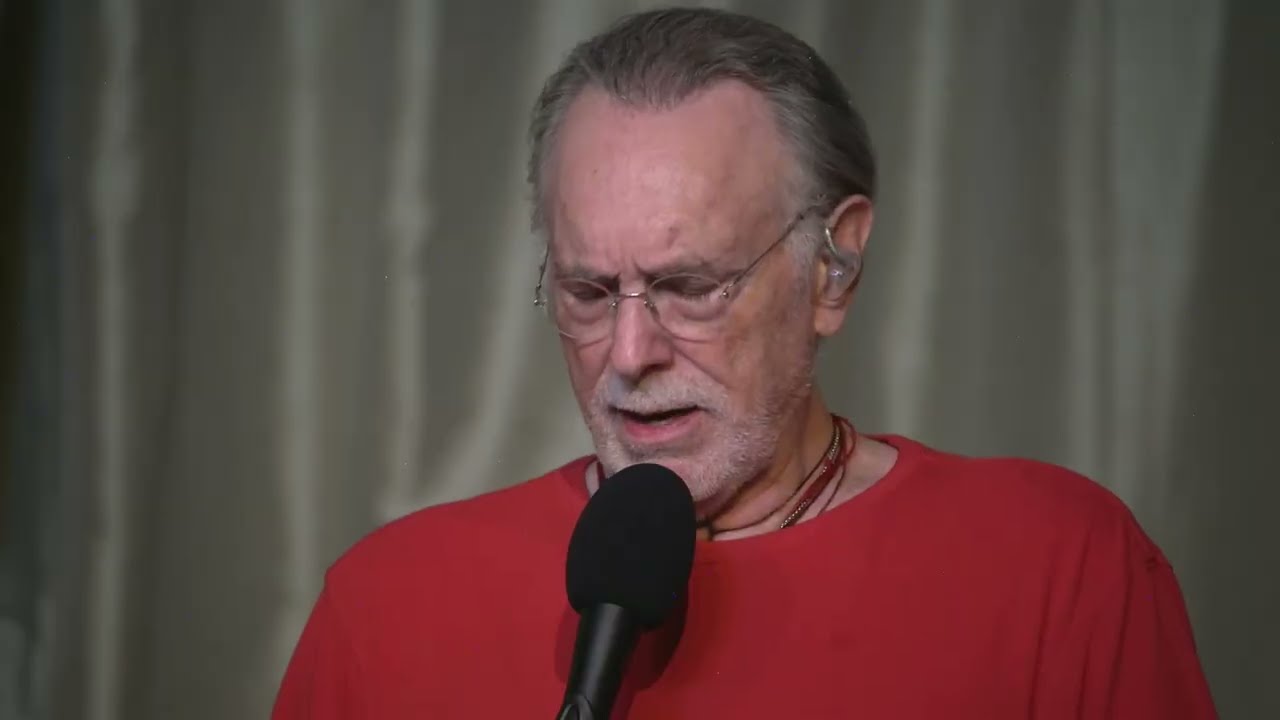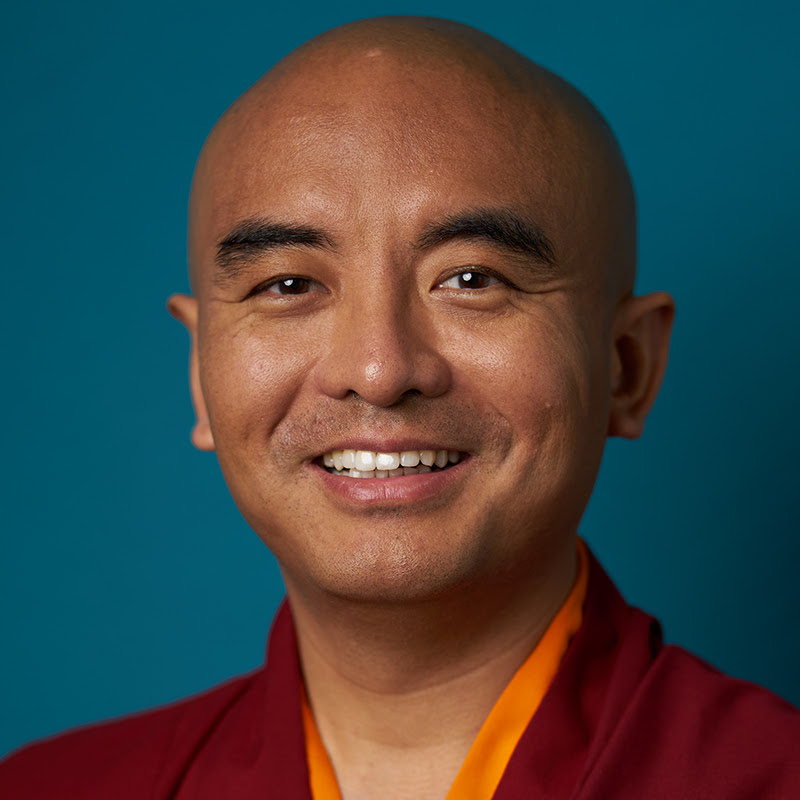
In this 14-minute guided meditation, Tibetan Buddhist master Yongey Mingyur Rinpoche leads practitioners through four progressively expanding layers of awareness: the physical body and its sensations, the surrounding sensory environment, boundless open space, and finally awareness itself — including thoughts and emotions. The central instruction throughout is deceptively simple: be aware, and let it be. Rinpoche draws on his father's teaching, the Dzogchen-inflected framework of joining body and mind, and an analogy of post-exercise rest to explain what it means to let the mind settle without forcing it. The practice is designed to be done in short sessions, frequently, integrated into any moment of daily life.
What Is the Structure of This Guided Meditation?
Rinpoche organizes the practice as a series of concentric expansions. You begin with the smallest, most immediate object of awareness — the physical body — and widen outward in stages until awareness itself becomes both the subject and the object of attention. This structure is not arbitrary; it reflects a core principle in Tibetan Buddhist meditation where the practitioner uses gross, tangible experience as a doorway to subtler dimensions of mind.
The four stages are:
- Body and physical sensation — relaxing the muscles, holding the spine upright, feeling gravity and physical sensations without trying to alter them.
- Sensory environment — expanding awareness outward to sounds, smells, temperature, and any phenomena in the surrounding space.
- Boundless space — releasing the boundary of the room entirely and resting in open, directionless space.
- Awareness of thoughts and emotions — opening the eyes, resting the mind, and treating mental activity the same way one treated body sensations: aware, and letting it be.
How Should You Hold the Body During This Practice?
Rinpoche begins with posture, but immediately undercuts any tendency toward rigidity: "Just straight, but don't worry too much about perfection" (25s). The spine is kept upright not as a performance of discipline but because it creates the structural condition for simultaneous relaxation and alertness. Each part of the body — from the head through the face, throat, arms, and legs — is consciously released, so that every segment rests on the one below it. The neck tilts slightly forward so that the weight of the head is supported effortlessly by the neck and spine.
This is not passive slumping. Rinpoche describes a balance: "you feel like you're resting but there's also some strength" (129s). The upright spine provides the strength; the relaxed muscles provide the rest. This dual quality — alert and at ease — is the physical expression of the meditative state Rinpoche is pointing toward throughout the entire session.
What Does "Joining Body and Mind" Mean in This Practice?
At the 191-second mark, Rinpoche shares a teaching from his father: "Let your body be on the cushion, and let your mind be in the body." This instruction is the hinge on which the first stage of the practice turns. In ordinary experience, the mind wanders into plans, memories, and fantasies while the body sits ignored. The instruction reverses this: attention is brought back into the physical container, sensing whatever is actually present — pleasant feelings like bliss or joy, unpleasant feelings like tightness or pain, or neutral sensations like tingling or numbness.
Crucially, none of these are evaluated or changed. The instruction is simply: "with any type of feeling, just be aware and let it be" (253s). This is the foundational move of the entire practice. Awareness is not a tool for fixing experience; it is the capacity to recognize what is happening without adding a second layer of reaction to it.
How Does the Practice Expand from Body to Surrounding Space?
Once body awareness is established, Rinpoche invites an expansion outward to the sensory environment (286s). Sounds, smells, temperature, traffic noise, neighbors — all of it is included without preference. The instruction mirrors the body instruction exactly: "Just be aware. Just know. Just recognize there are sounds." Nothing needs to be blocked out or concentrated upon. Awareness simply becomes, in Rinpoche's words, "more open, and vaster" (364–369s).
From the immediate surrounding, Rinpoche then guides attention to the space itself — the volume above, around, and beyond the room. He uses a classic Buddhist metaphor to anchor this: "All the phenomena are occurring in the space, changing in the space, dissolving back into the space. Like clouds, they come into the space, remain in the space, and dissolve into the space" (448–473s). The practitioner is encouraged to move awareness beyond the clouds, into the boundless space in which all phenomena arise. This is not a visualization exercise; it is an invitation to notice that awareness itself has no fixed boundary, just as space has no edge.
Rinpoche adds a gentle reassurance at 517s: "Be there. Don't worry, you're not going to get lost." The fear of losing oneself in open awareness is a common obstacle, and he addresses it directly without dwelling on it.
What Is the "Post-Jog Rest" Analogy, and Why Does It Matter?
After instructing practitioners to open their eyes (544s), Rinpoche shifts to explaining how to rest the mind — not just the body. He uses an analogy that is deliberately ordinary: imagine finishing an hour-long jog and then sitting on a patch of grass with a big sigh, just resting (575–625s). "You don't have to meditate, just let your mind rest as it is" (634s).
The analogy is carefully chosen. After physical exertion, the body rests naturally — nobody has to instruct it. Rinpoche is pointing to the same capacity in the mind. Natural rest does not require effort or technique; it requires the absence of the usual compulsion to do something. This is the open-eyed phase of the practice: sitting without an agenda, letting the mind be as it finds itself.
How Does Mingyur Rinpoche Recommend Working with Thoughts and Emotions?
The most common obstacle meditators report is the sense that their mind is too busy to meditate. Rinpoche addresses this directly, and his answer is consistent with the rest of the session. He names thoughts and emotions colloquially as "blah blah blah" (703s) — a deliberate deflation of their apparent urgency — and instructs practitioners to simply look at the "blah blah blah" and be aware of it. The relationship to thoughts is identical to the relationship to body sensations: awareness without alteration.
"Let them come, and let them go" (724s). And for moments when even that level of awareness is not available — when the mind is simply quiet — Rinpoche names that too as a valid state: "You're in a non-conceptual state of mind" (734s). Neither a busy mind nor a quiet mind is an obstacle. Both are objects of awareness.
This non-hierarchical approach to mental content — where thoughts, emotions, sounds, body sensations, and the absence of all of these are all treated identically — is characteristic of Rinpoche's teaching style and reflects the Tibetan Buddhist view that awareness itself is the medicine, not the content of what is being noticed.
How Is This Practice Meant to Fit Into Daily Life?
Rinpoche closes the session with a clear directive that is also a philosophy of practice: "Short time, many times, everywhere, anytime. Seven days a week, 365 a year" (814–833s). The emphasis on brevity and frequency over long formal sessions is a hallmark of his teaching approach. The practice is not reserved for a cushion or a retreat center; it is applicable to any situation, any activity.
The fruit of this approach, he says, is filling the mind with "joyful, peaceful experiences" and developing "inner love, compassion, and wisdom" (844–859s). These are not outcomes that require years of isolated practice; they arise from the repeated, brief act of recognizing awareness in ordinary moments.
Where to Go from Here
This guided session is an entry point into a much larger framework. Rinpoche's Tergar organization offers the Joy of Living meditation program, which covers this style of open awareness practice in structured depth, and Vajrayana Online for those drawn to the Tibetan Buddhist context from which these instructions emerge. For beginners, the most direct next step is simply to take the instructions from this session — spine straight, muscles relaxed, aware and letting be — and apply them in short moments throughout the day: waiting for coffee to brew, sitting on a train, pausing between tasks. The practice requires no equipment, no particular setting, and no prior experience. It only requires the willingness to notice what is already present.